A case for ethical captioning in photography.
For at least four years I have added an ‘Ethical Note:’ to the bottom of all of my posts on the main social media accounts where ethical considerations are paramount. This process has attracted all sorts of interesting comments over the years from “what’s the point in that?” to “that’s actually super important!”. I believe that it should be a requirement and in this post I’m going to try to convince you to believe the same.
A Brief History
I don’t want to go into the details about ethical wildlife photography here. It is a deep, complex, complicated, and ultimately messy topic to try and get into, and I’m still trying to navigate it myself. Regardless, here is a quick run down for the uninitiated.
Ethical wildlife photography is the notion that photographers should be careful not to cause disturbance or harm to wildlife or their habitats during a shoot. I would argue that it also extends to the wider context of ‘being a photographer’ in the sense that to practise ethical wildlife photography one must also carry these values into the dark/lightroom and onto the platforms with which one shares their photographs. Put simply, and at danger of oversimplifying:
- Do not disturb or harm animals when you are photographing them.
- Do not damage natural habitats when you are practicing photography.
- Do not mislead viewers of your photographs by holding back information.
- Do not use photographs to promote harmful practices.
Again, this is a simplification and is not exhaustive.
The Need
If you spend a few minutes scrolling through wildlife photographs on Instagram or Facebook, I can guarantee you will see at least one which was taken/produced unethically. It might not be that the photographer was being malicious, they may just not understand how their actions can be harmful. It can be a challenge to spot when a photograph was taken/produced unethically, and in some cases impossible.
This means that those who consume photographs online can become desensitised by the content they see, and think that it is acceptable to do what is necessary to create those photographs themselves, or just support photographers who are doing real world harm. This is a problem and as more people pick up a camera the impacts on nature are amplified.
Here’s an example, there are countless stories in local press about people being injured by deer when getting too close to take a photograph. Why do these people think it is acceptable to approach a large animal to take its photograph? The reason is simple, they have seen closeup photographs of deer on their instagram. Unbeknownst to them, the photographer was 150 m away from the deer using a 600 mm telephoto lens.
In this example, the proper photographer is not being inherently unethical, but I just wanted to use this as an example of how easily photographs can cause harm when the background is not known to the viewer.
One of the most common unethical practises we see today is commercial hide photography. A photographer pays a few hundred £ to go and sit in a hide and photograph an animal. The animal frequents the hide because bait is used to lure them in. Perches are set up for the birds to land on, and bait is placed nearby. The photographer takes their photographs and goes home a happy bunny. Little do they know that their photographs are both mediocre and unethical. But when they share their photographs online, their following gives nothing but praise! ‘how did you manage that!?’, ‘Wow! you got so close!’, ‘that’s an amazing action shot!’. The viewers go away feeling impressed by what the photographer achieved, and the photographer bathes themself in likes and social approval.
I have to disclose that I have attended paid photography hides in the past. This was before I knew just how harmful they are. I did always do my due diligence to make sure they were not the really bad kind, the one where they nail bail down etc. This is one of the reasons why I make such a big deal about it now.
In The Real World
Let’s carry out a thought experiment…
A photographer attends a paid kingfisher hide, it cost them £250 for 4 hours. They sit in the hide while the owner drops a few sticklebacks he netted from a local stream into a small tank below the kingfisher perch. The kingfisher knows there is easy food here, after all, it is like shooting crabs in a barrel! The bird dives, the photographer clicks, it’s over…they have bagged the shot. It’s time to go home and share this wonderful photograph.
Now, our photographer supports Ethical Captioning. They post one of their photographs to Instagram and share a caption about how incredible these birds are. Below this the photographer places an ‘Ethical Caption’ in which they explain the bird was baited, they knew where it would dive, they have 15 attempts to get it right, and on one dive the bird hit the bottom of the tank which made it sit nice and still on the perch, dazed. What do we think the comments would be like?
You see this is what happens all the time. The birds become reliant on the hide. They injure themselves when they are forced to fish in dangerous situations. The birds are stressed by the presence of humans. In the end we have a bird which is stressed (in the ecological sense, not the human-centric sense), and a following who have unrealistic standards.
Now, imagine someone is searching ‘kingfisher photographs’ and they stumble upon our friends photograph. They are amazed because it is such an achievement! So sharp, vibrant, detailed, and intimate. This photographer deserves some attention - FOLLOW! Then the photograph of a genuine ethical photographer shows up in the selection, it was taken by sitting for hours waiting for a bird to stop by on a pond. It was the fifth time they’d been here with no luck, but today, they got the shot! It’s not perfect but its real, ethical, and authentic! But the viewer doesn’t see any of this, and as such it’s viewed as inferior.
This is where unethical photography becomes sinister. It harms wildlife, directly and indirectly, and creates unrealistic standards for new photographers. I trust you now see the need for a solution?
My Proposal
I’ll keep this short because this post has gone on a lot already. My proposal is simple, we move towards a world where it is frowned upon not to share an ethical caption alongside your photograph. We are already seeing options to add an ‘AI’ tag on instagram so this isn’t out of the realm of possibility.
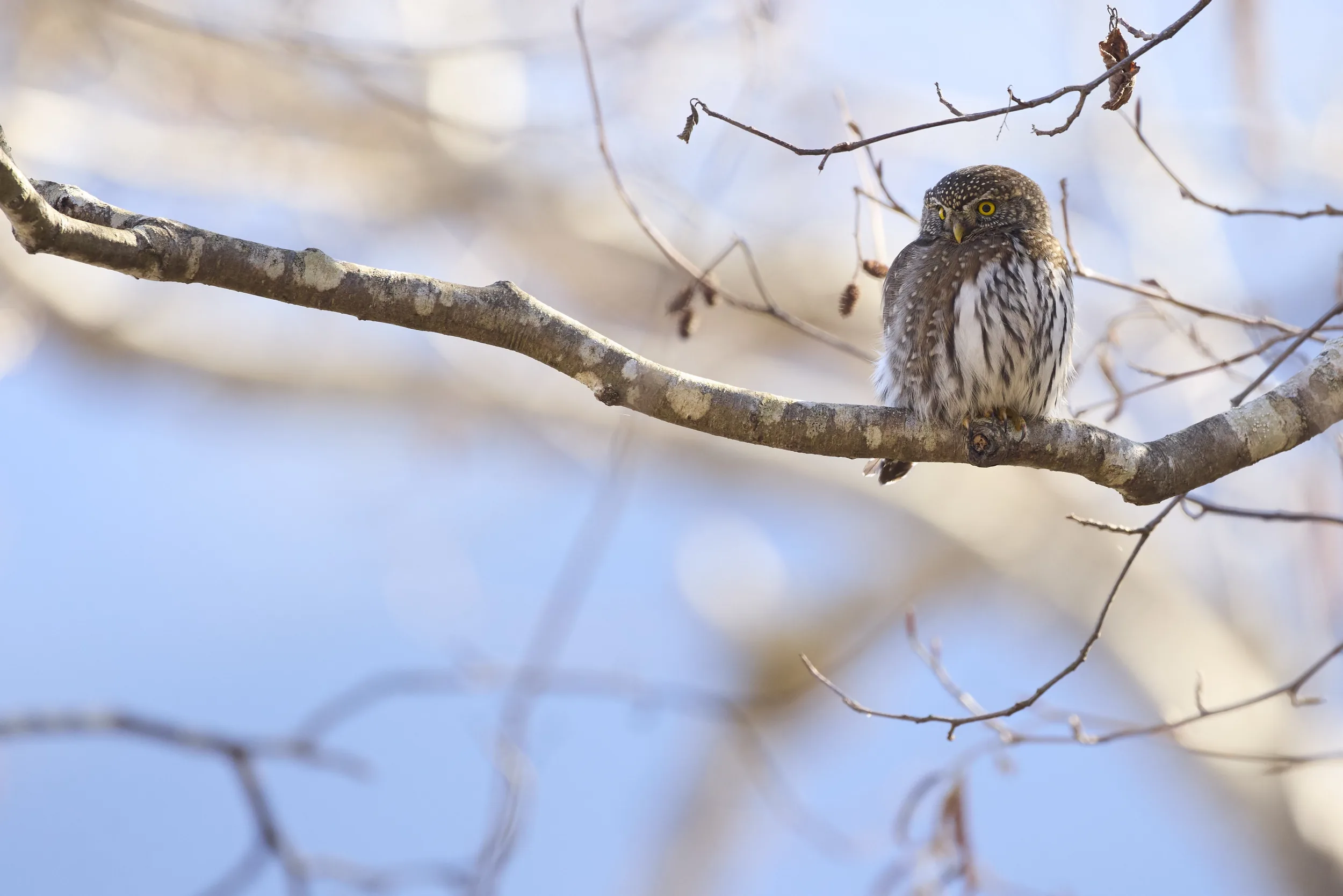
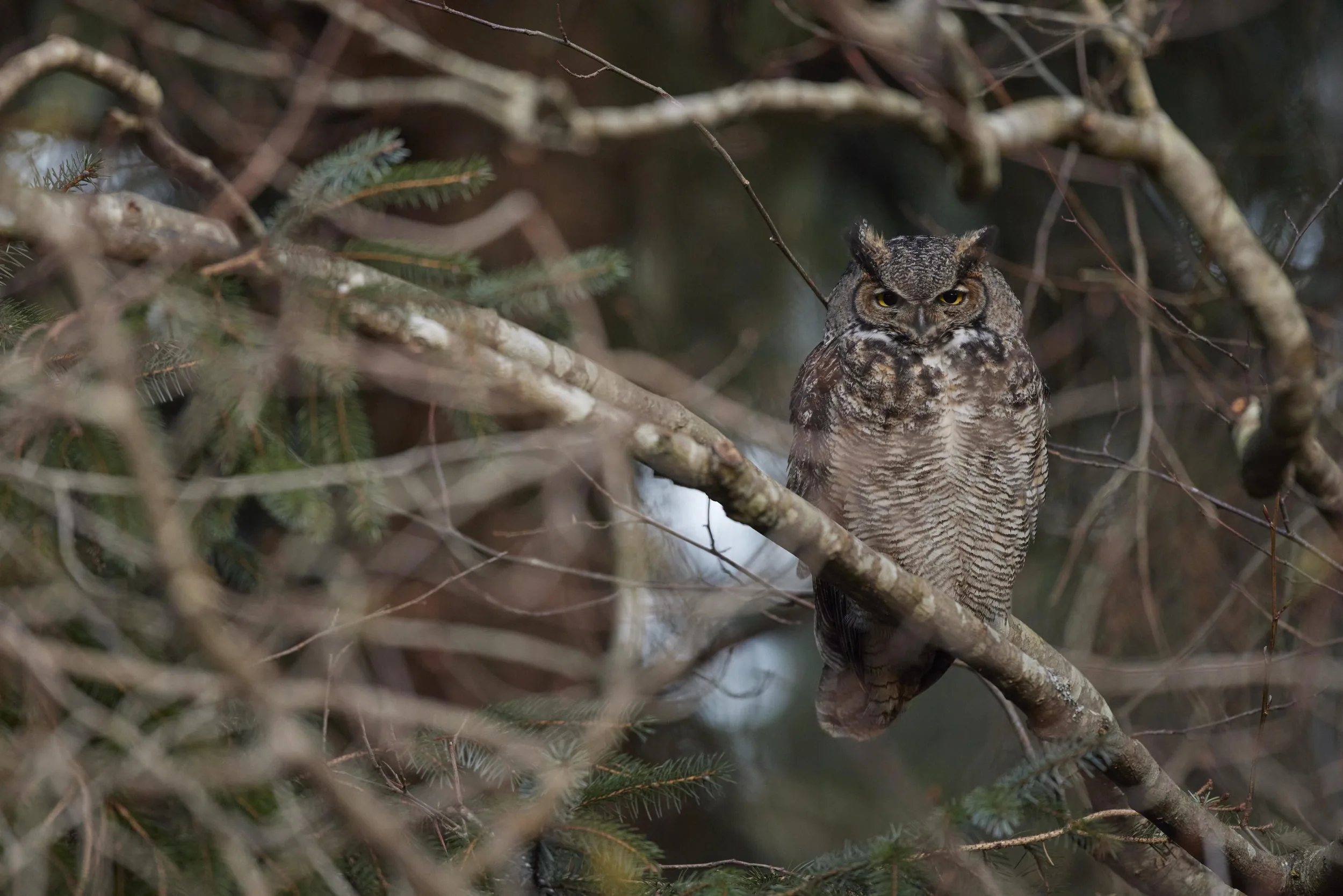
What do I think this should look like? I don’t think it should be prescriptive. Simply a nod to the ethical considerations in the caption would do, or a distinct caption as I do. I do think it should at least have a disclosure “Ethical Caption: I took this photograph in a paid hide.” would suffice. But more would always be welcome “Ethical Caption: This photograph was taken from an appropriate distance. After 10 minutes of observing the owl, we left so not to cause undue stress. The owl was still there when we passed an hour later so we stopped by for a few more photographs.”. It really doesn’t need to be difficult!
I’ve rabbited on for a while now, and I think you get the gist. Share your thoughts with me, I’d love to hear them. Lets make #EthicalCaption a thing and start chipping away at this disease plaguing wildlife photography.