
“Authenticity is the moral ideal of the modern world”
I began exploring the topic of authenticity while thinking about what it means to be an ethical photographer, and what us photographers should push for if we were to improve wildlife photography ethics across the community.
Authenticity is a concept thrown around all the time but rarely do we stop to ask what it is to be authentic, and more importantly, is the claim of authenticity true. Here is a selection of my thoughts about authenticity, what it might mean for general life, and how it might integrate into ethical photography.
Virtuous
Society generally regards authenticity as a highly important trait, be it of a human, an organisation, or an experience. Generally we feel if something is authentic it has some intrinsic value that we appreciate.
- An authentic person is true to their values and behaves in agreement with their core beliefs.
It is no wonder this core value has become so engrained in society. It acts like a stamp of approval, certifying anyone and anything as virtuous.
Value of Authenticity
I perceive authenticity as a metavalue. To be authentic is a product of one respecting their other values. In of itself, one cannot be authentic if authenticity is the core value in question…if so what does it mean to be authentic?
Take, for example, a woman who believes, among other things, that creativity is the key to a fulfilling life. However, she no longer engages in painting because she prefers to watch television instead. This person is not being authentic, she is not being true to herself, to her core values. She might be entirely unaware of the problem it causes, especially if she does not profess to be authentic (in which case this becomes a moot point). But it may also trigger a feeling of existential dissonance if she really does believe that creative is the key to a fulfilling life but acknowledges that she no longer acts creatively.
This kind of inauthenticity is not malicious, or even outwardly obvious. Its rooted in a core belief which is not being upheld.
In Photography
Authenticity is a value suited nicely to those who produce photographs. In a sense this applies equally to any form of art, and by extrapolation, any other action which is rooted in a core value. But for this exploration I want to define the scope as ‘in photography’, specifically nature photography.
I’m a photographer and I have core values. My values feed into to my photographic style by shaping my thoughts and guiding my decisions. I believe that passion as a core value aligns with my drive to pour into an interest, my entire attention, and to pursue it relentlessly with no seeming end in sight. It is this value which drives me to photograph everything and anything I can, and to try and do so better and better each time. It is the burning desire to tell stories of the world around me through a medium which speaks strongly and powerfully. With this in mind, for my photographs to be considered authentic, I must be sure that they are true to my values, those values which I use to shape my photographs.
The complexity starts to become apparent when we consider the depth and breadth of our core values. For example, I believe that living sustainably is important, and as such I should minimise my negative impact on the environment around me (social, economic, natural). So when I’m out looking for black bears to photograph, I not only have to consider how my photographs convey my sense of passion for the subject, the photograph, the act, but also that I should do so in a way that does not contradict my value of living sustainably. This gets complicated.
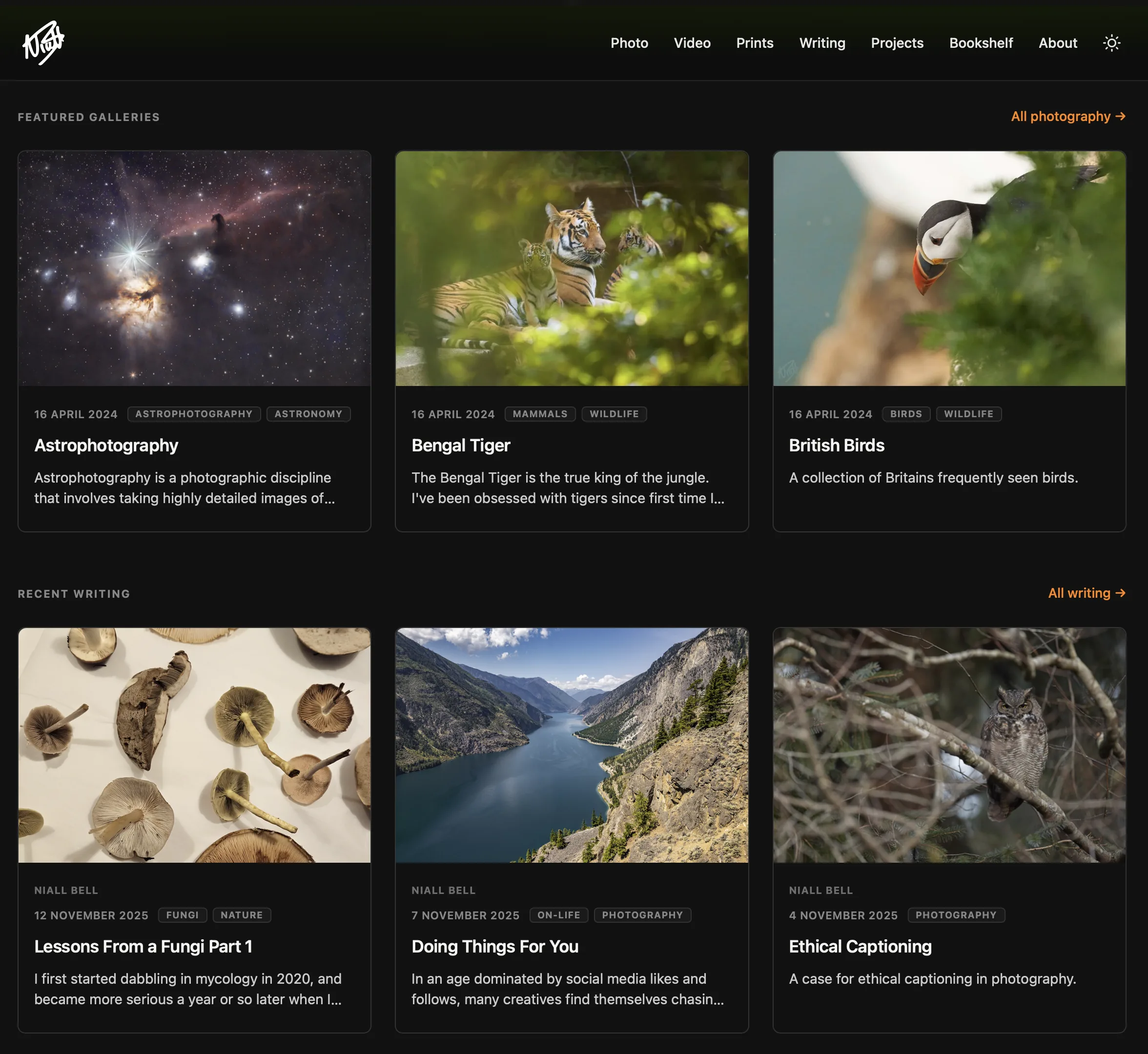
Take for example this hypothetical situation, photographing an owl. These birds are usually nocturnal and expend lots of energy flying so prefer to save flight for important business. If I produce some photographs of an owl which reflect my passion for this bird, its conservation, and telling it’s story, but in the process of capturing that photograph I flush the bird, accidentally drop some litter (but ignore it so not to miss the shot), or worse still, trample on an endangered plant because I went off trail to get a better angle, I am contradicting my value of living sustainably. In the moment it is easy to rationalise these feelings, I’d argue that we all, at some point, have experienced a sense of existential dissonance at some point in our photographic careers. Nobody is perfect, what really matters is how we avoid these mishaps in future.
This means my photographs are not authentic; as the photographer who created them, they are not in agreement with my core values which pertain to photography. Put another way, I am being inauthentic.
Ethics
You might be thinking, “there’s an easy way out of this, just don’t have any particular values towards photography which are easily contradicted”, and you would be right, that would be an easy way out. But the world is not that simple.
Wildlife photography has ethical considerations; values which we agree on collectively as a community. Here lies the power of community. Together we can set values (ethics) which must be reflected and upheld in our work. In doing so, we can be sure that a photograph and photographer are authentic, and agreement with the values of photography. Add to this the flair of the individual, and you end up with something beautiful.
There is much more to be said on this, such as how it interlinks with integrity, and if it is truly possible to be an authentic photographer. I will keep this updated as I develop my thoughts. But I wanted to get these ideas out already to help inspire more thoughts.
So I guess I should leave you with this: