
Over the years I’ve used a whole range of camera gear from beginner kits to expensive professional grade gear. Many people who are wanting to get a start in photography, or upgrade their existing gear, ask me what I would recommend they buy. This is never an easy question to answer, and it’s full of ifs and buts. However, there are some generalisations that can be made which account for a wide range of uses.
In this post I share my recommendations for those wishing to either start nature/wildlife photography, or for those wishing to upgrade their existing gear. I’ve organised this write up based on budgets as this is usually the constraining factor, however I have noted alternatives which take into account weight and size of the gear.
Finally, there is some preamble for new photographers about which systems might be worth a look at and what the pros and cons are to each.
Disclaimer: While I have photographed extensively with both Sony and Canon, I do now shoot exclusively with Canon.
Camera Brands
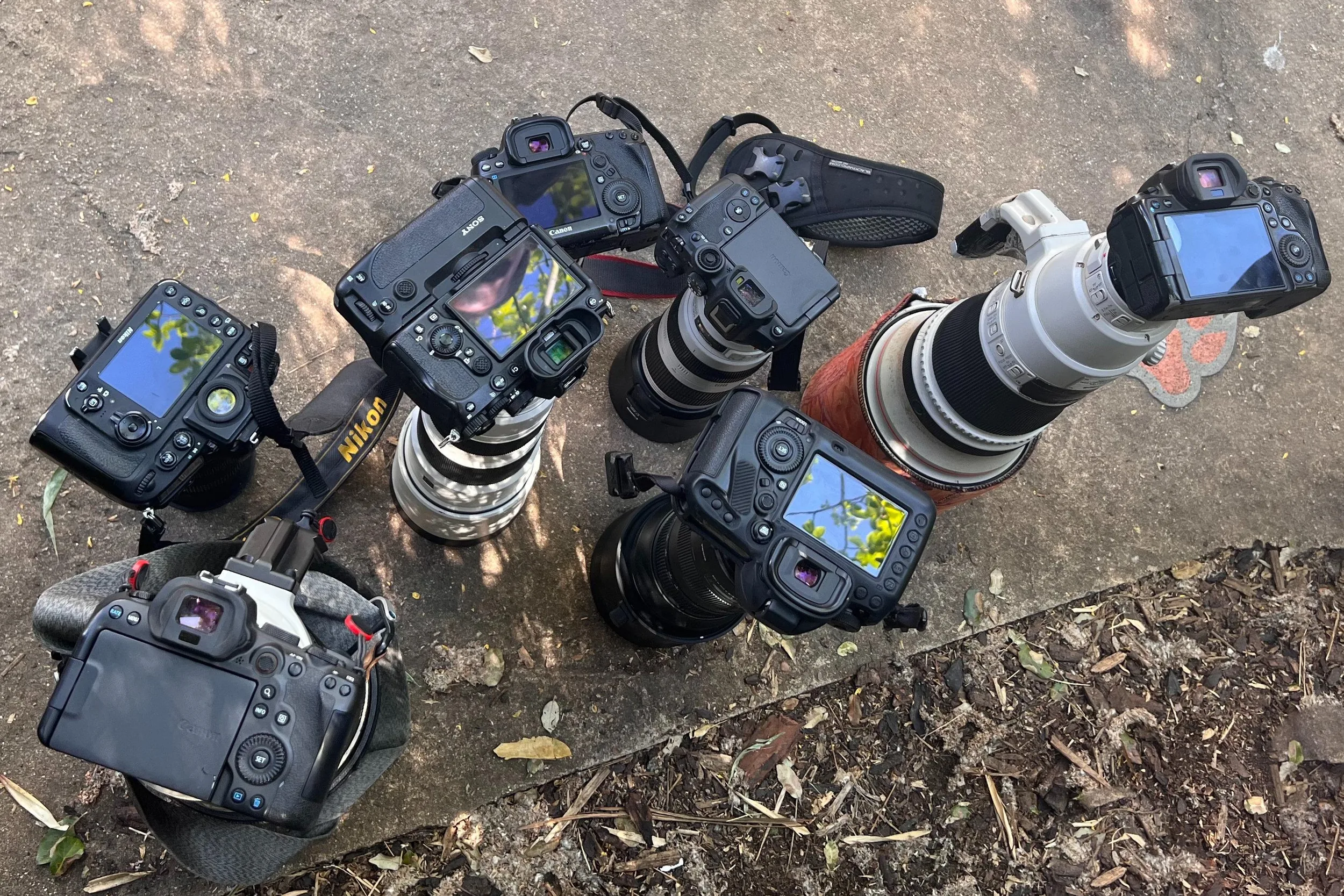
In the photography world there are a fair few big names making cameras. For those looking at wildlife photography I would nudge you towards one of the main three, Canon, Sony, and Nikon. There are other brands such as Fuji, and while there are benefits to such systems such as lens size and weight, I’m not a proponent of the sensors they use (micro 3/4) for wildlife photography.
I will be recommending Canon gear here as I believe it offers the best value for money and offers room to upgrade your gear in an affordable way due to the thriving second hand lens market.
| Brand | Pros | Cons |
|---|---|---|
| Canon | 1. Huge range of second hand lenses available. 2. Affordable older lenses. |
1. Not the quickest to innovate. 2. Currently not supporting 3rd party lenses on their RF mount. |
| Nikon | 1. Incredibly well built cameras. 2. Excellent image quality. 3. Innovative and cutting edge features. |
1. The 2nd hand lens market can be confusing. 2. Some people dislike the colours produced by Nikon cameras in wildlife settings. |
| Sony | 1. Excellent image quality. 2. Innovative camera features. 3. Support 3rd party lenses. |
1. Expensive 2nd hand lenses with limited selection. 2. Cameras not ergonomic for larger hands or long sessions. |
Budget Tiers
These are the budge tiers I’ve chosen to go at. It goes without saying but the more you spend, the more capable the camera you will have. Not that this doesn’t mean a more expensive camera will allow you to take better photographs, thats where practise comes in! The tiers are arranged with a base tier and then a plus tier. The plus tier represents a small uplift but will improve the gear on offer.
| Tier | Budget Cost |
|---|---|
| Low | < £300 |
| Low Plus | £300 - £400 |
| Medium | £400 - £500 |
| Medium Plus | £500 - £700 |
| High | £700 - £1000 |
| Very High | £1000 - £1700 |
| Money is no Object | > £1700 |
Here I only recommend second hand gear as I believe it gets you the best value for your money. Most reputable companies such as MPB.com, WEX.com and Harrisons Cameras offer generous warranties on their 2nd hand gear. And, it’s better for the environment by reducing overconsumption, manufacturing and e-waste.
Low (< £300)
In the low tier it’s difficult to recommend anything other than a point and shoot camera (lens is built in). these cameras offer a moderate zoom range allowing for wider shots such as landscapes while giving a reasonable zoom for photographs of animals. Unfortunately, wildlife photograph does have fairly high entry cost and it sits at around this price point. If you can stretch to £400 you will see a large jump in capability.
Sony Cyber-Shot RX100 II
Second hand cost: ~£300 Resolution: 20.2 Megapixels Zoom Range: 28-100 (3.6x) Video Recording: Yes (1080p)
Low Plus (£300 - £400)
In this tier there is a bit more flexibility and room for movement. I’ll propose a few setups however most will revolve around the Canon 2000D as it’s affordable and capable for it’s price. In terms of lenses, this can be paired with either a Canon 18-135 or a Canon 18-55 and 75-300 to give a good shooting range.
Canon 2000D
Second hand cost: ~£230 Resolution: 24.1 Megapixels Frames Per Second: 3 Video Recording: Yes (1080p)
Lens Option 1:
This is a catch all lens which will work for landscapes (18mm) and some wildlife (135mm).
- Canon 18-135: ~£140
Lens Option 2:
This is the better option as the 18-55 gives a good range for landscapes and general shooting with the 75-300 giving much longer reach for wildlife.
- Canon 18-55: ~£50
- Canon 75-300: ~£140
Medium (£400 - £800)
In this tier, the extra £100 allows for a slight upgrade to both the camera and the lens. I still recommend the same 18-55 as in the previous tier, but add to it a third part Tamron 70-300 for better wildlife images. The higher grade camera body also offers some welcome improvements.
Canon 70D
Second hand cost: ~£250 Resolution: 20.2 Megapixels Frames Per Second: 7 Video Recording: Yes (1080p)
Lens Option 1
If you go for just one lens and want to hit the bottom end of the budget choose the 70-300.
- Tamron 70-300 £210
Option 2:
If you want a range of zooms, go with this:
- Tamron 70-300: ~£210
- Canon 18-55: ~£50
Lens Option 3:
If you are happy to spend a bit more, and wildlife is your main focus and want a high quality lens go for this:
- Canon 70-300 L USM: ~£550
High (£800 - £1000)
This is an easy price range as the gear available is very good. The 80D is a strong crop sensor DLSR with great features for wildlife such as frames per second and flip out screen.
Canon 80D
The 80D is the upgraded version of the previous tier. The camera boasts some modern features with fast shooting and great image quality.
Second hand cost: ~£350 Resolution: 24.2 Megapixels Frames Per Second: 7 Video Recording: Yes (1080p)
Lens Option 1:
If you think you need a range of zoom, then go for this, but if you’re mainly wanting to do wildlife, go with option 2 - You can always buy a wider lens later on!
- Canon 70-300 L USM: ~£550
- Canon 18-55: ~£48
Lens Option 2:
This will be a great lens for wildlife giving you a huge zoom range of 600mm (thats equivalent to 960mm on a full frame camera).
- Sigma 150-600 DG OS Contemporary: ~£650
Very High (£1000 - £1700)
In this tier we have lots of options but given the advancements in Canons lower end mirrorless it’s hard not to recommend them.
Canon R50
The R50 is a new camera that targets those wanting to enter the mirrorless range of cameras. This opens up the new lens mount lenses (RF), although I’d consider steering clear for now as they are expensive. The R50 boasts all the goodness of mirrorless from silent shooting, fast frames per second, new sensor technology and advanced autofocus. With the R50 you’ll need an EF to RF adapter to use older EF lenses.
Second hand cost: ~£550 Resolution: 24.2 Megapixels Frames Per Second: 12 Video Recording: Yes (4k)
Lens Option 1:
If you want to stick to older lenses and stay at the bottom end of this tier try these:
- Canon EF-RF Adapter: ~£150
- Canon 70-300 L USM: ~£550
- Canon 18-55 ~£50
Lens Option 2:
If you want lightweight lenses with the newest focus and stabilisation tech, go with these:
- Canon RF 100-400: ~£600
- Canon RF 50 1.8: ~£150
Canon R7
I’m amazed to be able recommend this in this tier. The R7 is a fantastic camera and can by bought brand new (grey market) for about £950. This body offers some best in class features which make it an incredibly versatile camera. I have one of these in my bag.
Brand New (Grey Market): ~£950 (£1200 2nd hand) Resolution: 32.5 Megapixels Frames Per Second: up to 30 Video Recording: Yes (4k)
Lens Option 1:
If wildlife is your sole focus, go with this.
- Canon RF 100-400: ~£600
Lens Option 2:
If you want a wider selection of lenses, try these:
- Canon EF-RF Adapter: ~£150
- Canon 70-300 L USM: ~£550
- Canon 18-55: ~£50
Money is no Object (> £1700)
Well, we’ve arrived at the top tier. If you have plenty of cash then here is a good selection of things you could look at. I’ll not list costs but they range from £1700 to several thousands of pounds.
Cameras
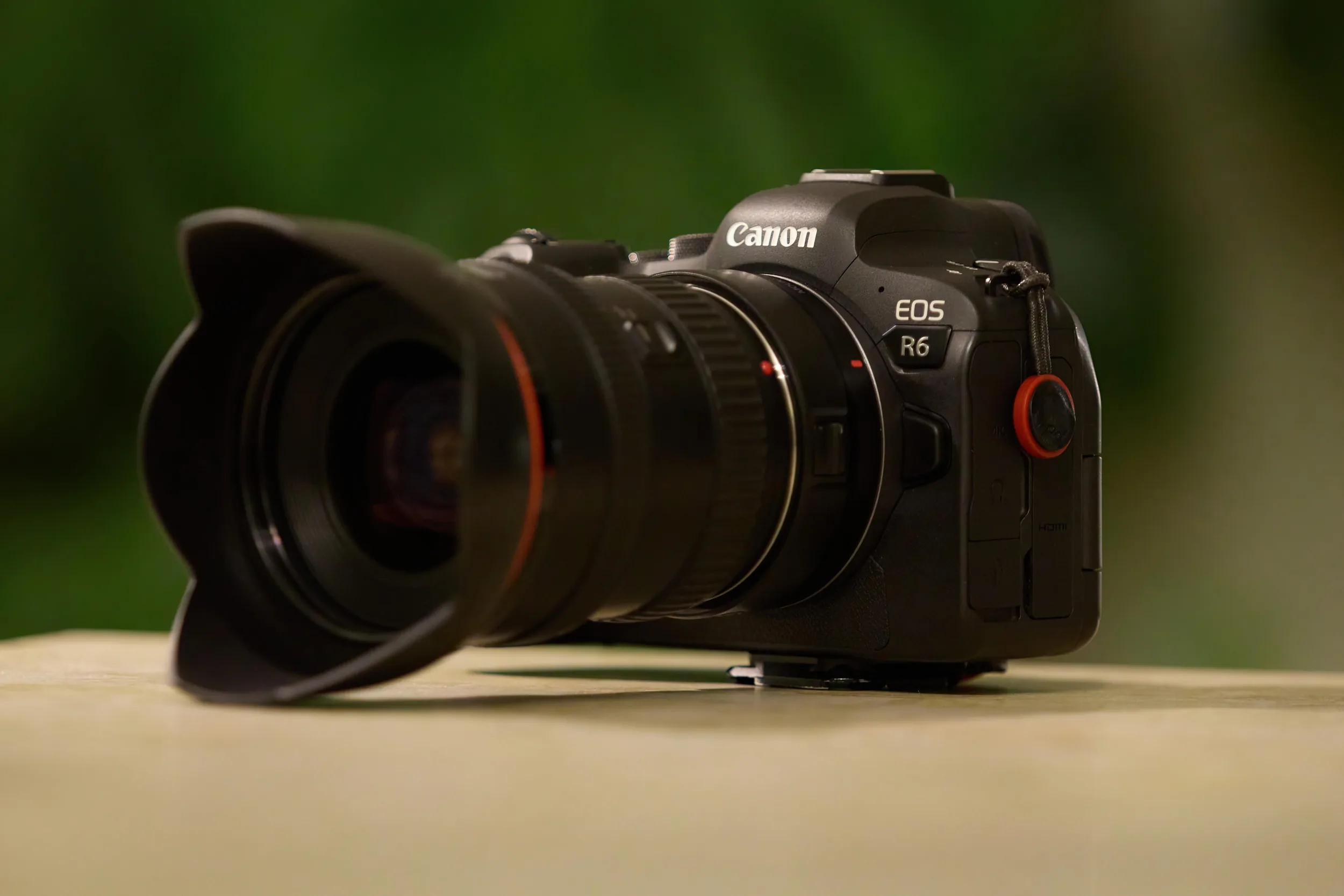
- Canon R6/R6II
- Canon R5
Lenses
- Canon 16-35 (EF and RF Versions)
- Canon 50 (EF and RF Versions)
- Canon 70-200 f2.8 (EF and RF Versions)
- Canon 100-400 MKII (EF)
- Canon 300 f2.8 (EF)
- Canon 500 f4 (EF)
- Canon 100-500 (RF)
- Canon 200-800 (RF)
Summary
In summary, I think this post shows how difficult it can be to recommend a certain set up. It all depends on what YOU need and want from your gear.
If you wish to chat over email, please get in touch. I’ll help advise best I can. Click here to send me an email