
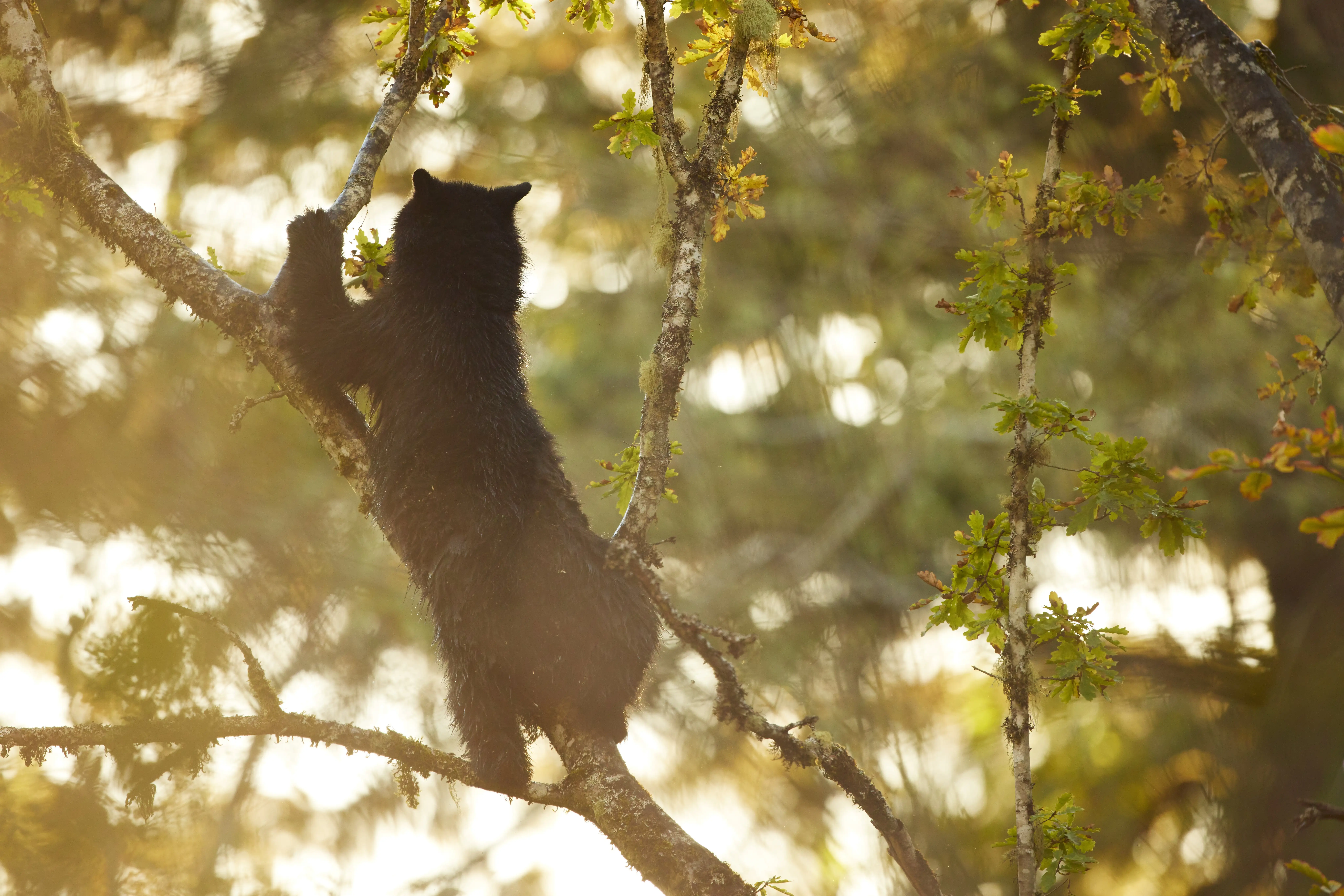
It’s nearly September and we are seeing a uptick in bear activity across the region; it can mean only one thing! Hyperphagia is setting in!
Hyperphagia is a life-stage which most bears experience in late summer. It is characterised by an insatiable desire to eat, hence the word which literally means ‘excessive eating’. During this time, bears are preparing for their winter hibernation and as such they must build their fat reserves to see them through to spring.
The Etymology
Before I get into the biology of hyperphagia, I wanted to first touch on the etymology of the term. Despite not having the best relationship with words, I’ve always found the origin of the words we use fascinating.
Hyper - (Prefix) Excessive.
Phagy - (Noun combining form) Eating of a (specified) type or substance.
ia - (Plural noun suffix) Things derived from or relating to (something specified).
Now that we know what makes up the word, what does it mean?
Hyperphagia - (Noun) Abnormally increased appetite for consumption of food frequently associated with injury to the hypothalamus.
This is the official definition, but I should be clear that when we are talking about bears, we can drop the ‘frequently associated with injury to the hypothalamus’. Hyperphagia is a totally normal process for bears across the globe!
What Triggers Hyperphagia in Bears?
The phenology (when and how natural process happen) of hyperphagia is as fascinating as the process itself. What causes bears to switch their eating habits overnight?
The literature identifies two main triggers for hyperphagia, although there may be more:
Photoperiod
It is hypothesised that day length is a strong trigger for hyperphagia in bears. Studies conducted on black bears found that even when starved, black bears will not enter hibernation, suggesting that day length is a key factor in hibernation.[1]
Leptin Sensitivity Changes
In brown bears, leptin sensitivity (leptin is the hormone which tells us when to stop eating), reduces during the observed phase of hyperphagia only to increase again right at the time of denning.[2] This mirrors observations of other, seasonal, mammals where photoperiod is known to drive leptin resistance.[3] It is plausible that changes in day length could trigger changes in leptin sensitivity and thus act as a trigger for hyperphagia. With that said, the connection between photoperiod and leptin sensitivity has not yet been proven in brown bears.
Food Availability
It is worth mentioning how food abundance ties in with the phenology of bear hyperphagia and hibernation. Some studies have found that brown bears exposed to abundant food can experience a change in when hyperphagia ends and denning begins.[4] This is the mechanism which appears to control whether or not a bear hibernates at all during winter. High food availability can result in a bear skipping hibernation altogether.[4]
Physiology of Hyperphagia
When a bear experiences hyperphagia, there are some interesting changes in how the bears body reacts to the process.
Insulin Sensitivity
During hyperphagia, bears experience an increased sensitivity to insulin, the hormone which allows our fat cells to store glucose (sugars) as fat efficiently. During this phase of high insulin sensitivity, the bears adipose fat cells will rapidly take in glucose from all the berries they are eating and stores it as energy rich fat, thus increasing their weight and energy stores for winter.[2]
Leptin Sensitivity During Hyperphagia
Research shows that brown bears are less sensitive to leptin in August than they are in October, underpinning the physiological reason why bears never feel full during August and September.[2] This reduced sensitivity is maintained until the bear is ready to hibernate in which a flip is observed and the bear becomes highly sensitive to leptin. This change in sensitivity could be what triggers hypophagia, a reduced appetite and desire to eat food, but is not confirmed.
References
A note on a related, retracted paper
An earlier, related study — “Grizzly bears exhibit augmented insulin sensitivity while obese prior to a reversible insulin resistance during hibernation,” Cell Metabolism, 2014 (PubMed) — found the same general pattern (increased insulin sensitivity in adipose tissue during pre-hibernation fat accumulation, via PTEN/AKT signalling). This paper was retracted in 2015 after Amgen’s internal review found that one co-author had manipulated data in two of the paper’s figures. The field-based co-authors (Washington State University, University of Idaho) maintained that the underlying physiological data were accurate and were repeating the mechanistic portions of the study independently. Given the retraction, this paper is not used as a citation above; [2] is used instead, as it independently supports the same insulin sensitivity finding using separate data.
Notes
Nelson et al., findings on black bear hibernation and food deprivation, referenced in a hibernation genetics review: Annual Reviews — hibernation genetics ↩︎
“Life in the fat lane: seasonal regulation of insulin sensitivity, food intake, and adipose biology in brown bears.” Journal of Comparative Physiology B, 2016. Springer / PubMed ↩︎ ↩︎ ↩︎ ↩︎
Tups A, Ellis C, Moar KM, Logie TJ, Adam CL, Mercer JG, Klingenspor M. “Photoperiodic regulation of leptin sensitivity in the Siberian hamster, Phodopus sungorus, is reflected in arcuate nucleus SOCS-3 gene expression.” Endocrinology 2004;145:1185–1193. Referenced in: Melatonin Controls Seasonal Breeding by a Network of Hypothalamic Targets, Karger ↩︎
“Hibernating or not hibernating? Brown bears’ response to a mismatch between environmental natural cues and captive management, and its welfare implications.” PLOS One, 2024. PLOS One / PMC ↩︎ ↩︎