
I have added some comparison photos to show the difference between the male and female bald eagle. Check them out at the bottom of this article.
Ever wondered how to tell the age of a bald eagle (Haliaeetus leucocephalus)? I have, so I set some time aside to do some research and then put it into practice by observing birds in the wild. Bald Eagle plumage varies by age for the first five or so years of their life. When birds exhibit this kind of plumage change they are said to have delayed plumage maturation. This can be useful as it makes it easier to derive the age of a bird from observation.
Below I’ll share images of birds in yearly stages from juvenile to full adult, starting at half a year when young birds develop their first full plumage.
The main indicators of age are:
- The head and tail feathers.
- The eyes.
- The bill and cere.
In case you’re not familiar with bird anatomy:
- Cere: is the part of the bill where the nostrils are.
- Bill: is another name for a bird’s beak.
- Axillaries: are the feathers which appear to be in the bird’s armpit.
- Terminal Band: is a dark band across the tail feathers.
- Hallux Talons: are the talons which face backwards.
- Talons: are a bird’s claws.
Body & Plumage
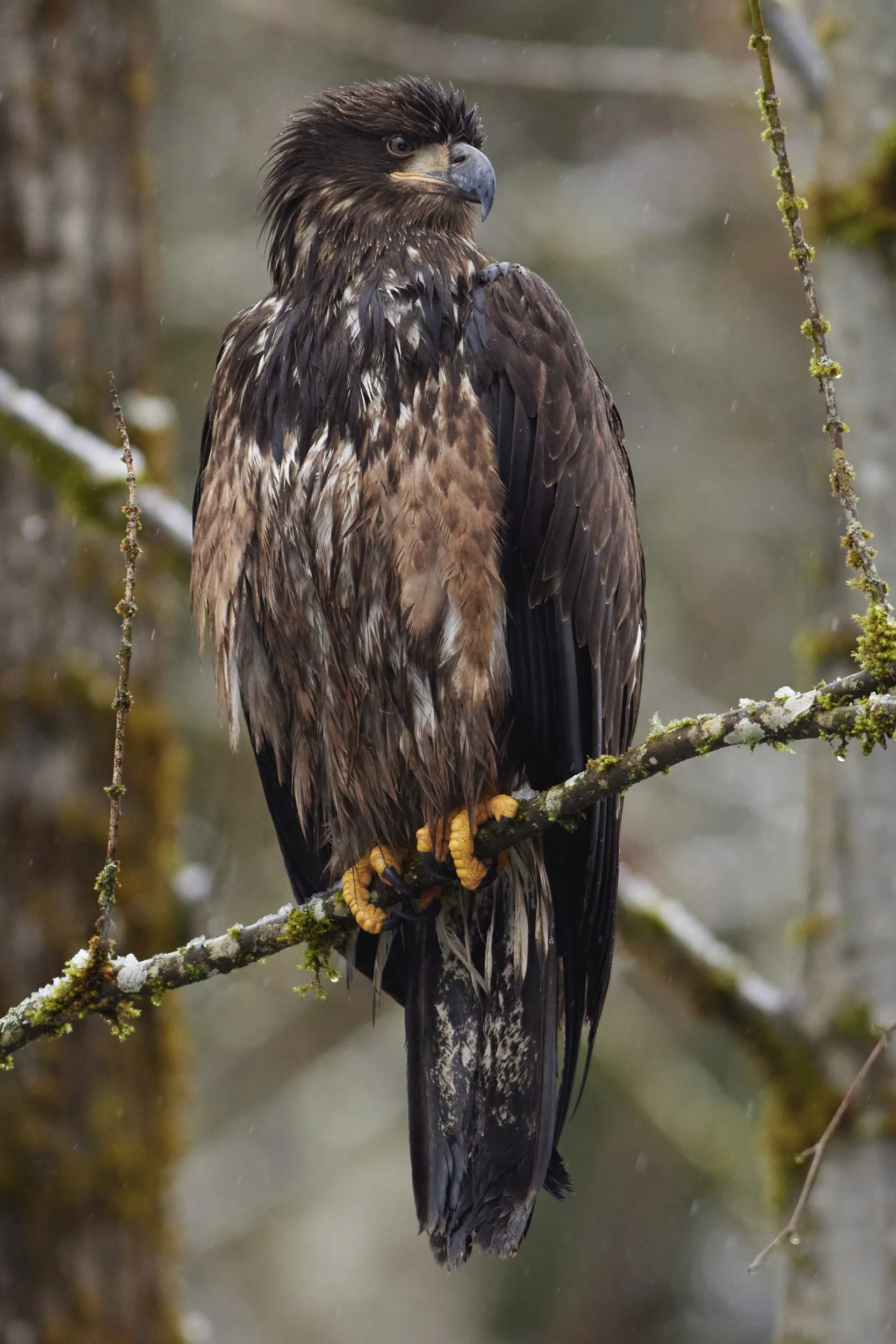
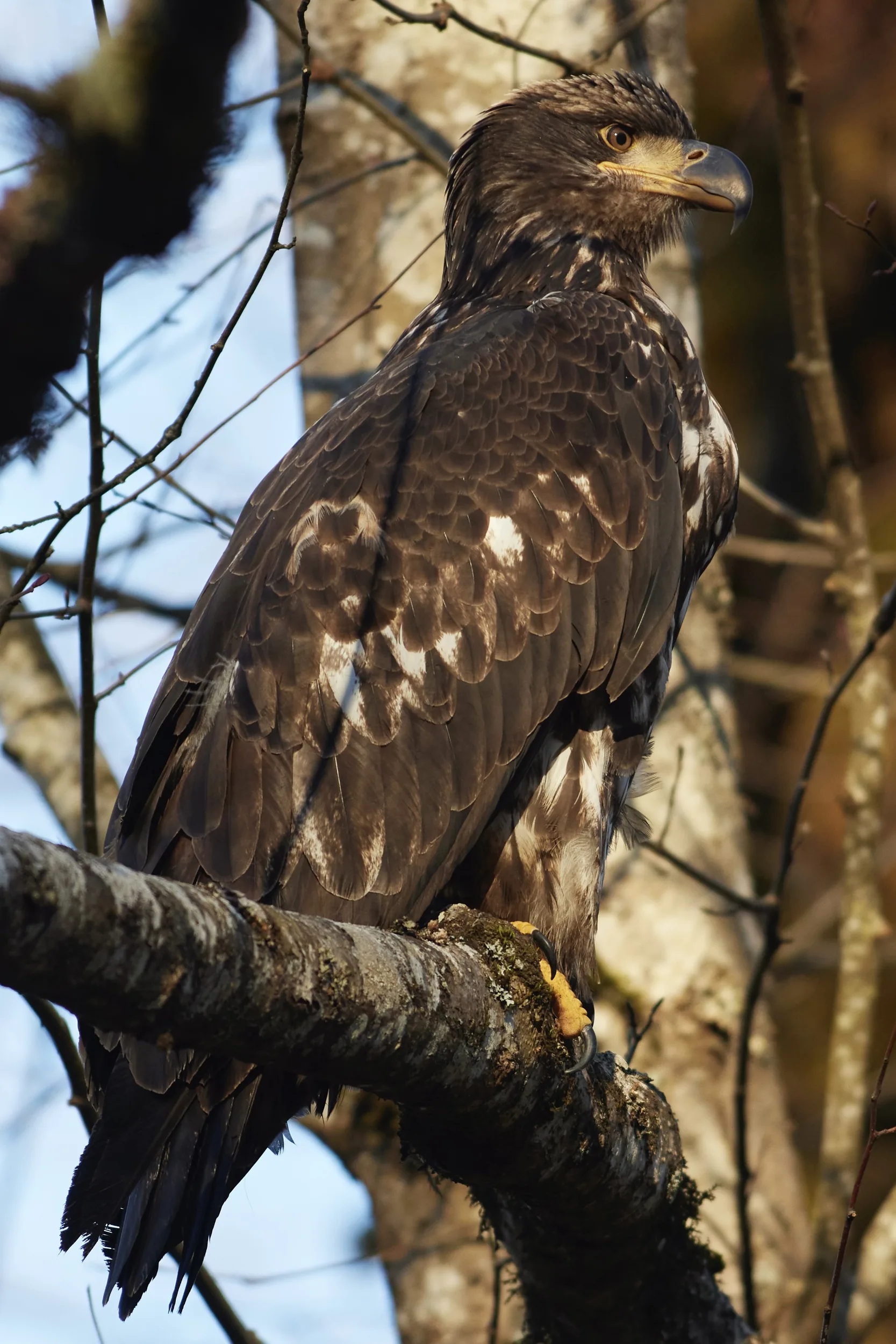
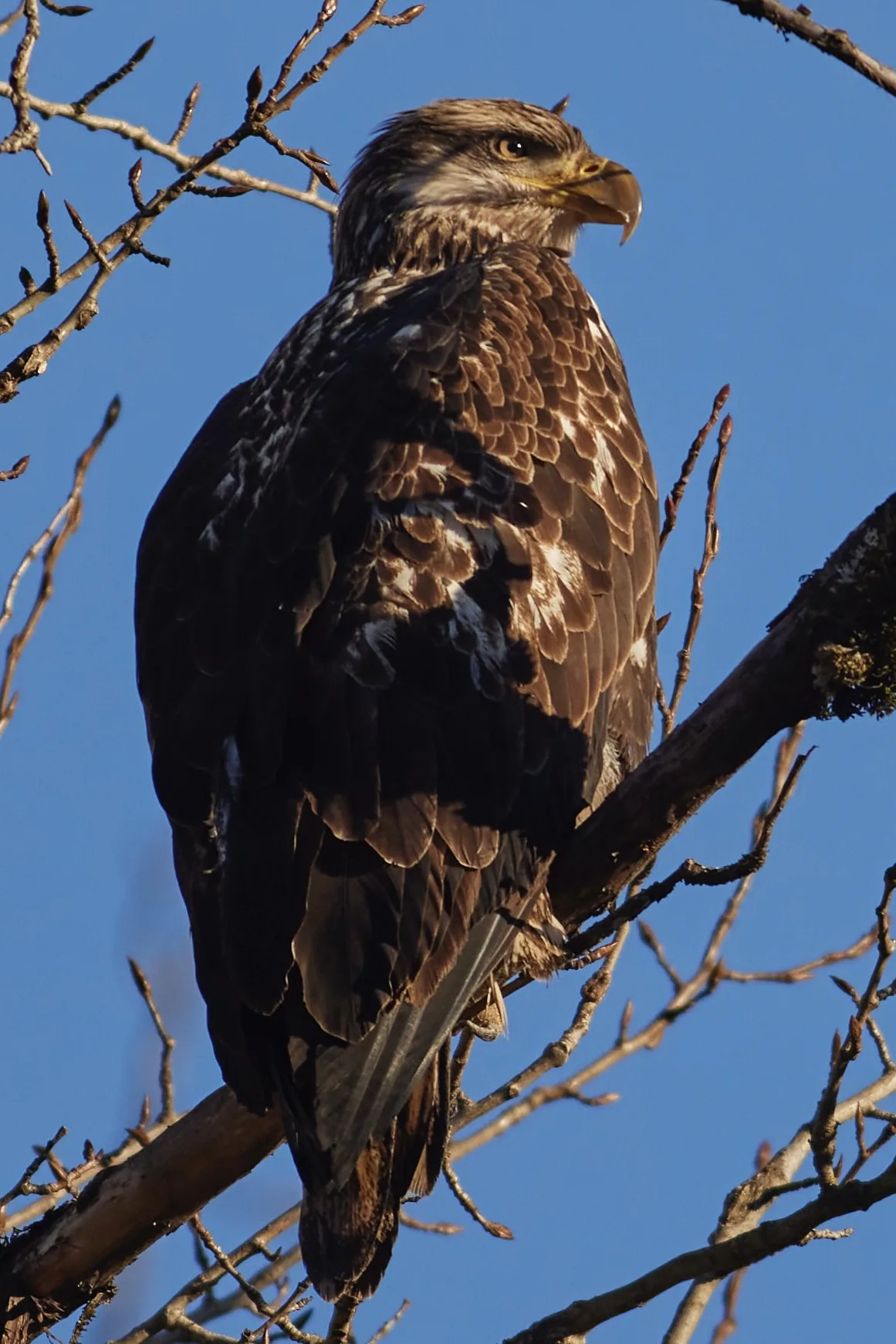
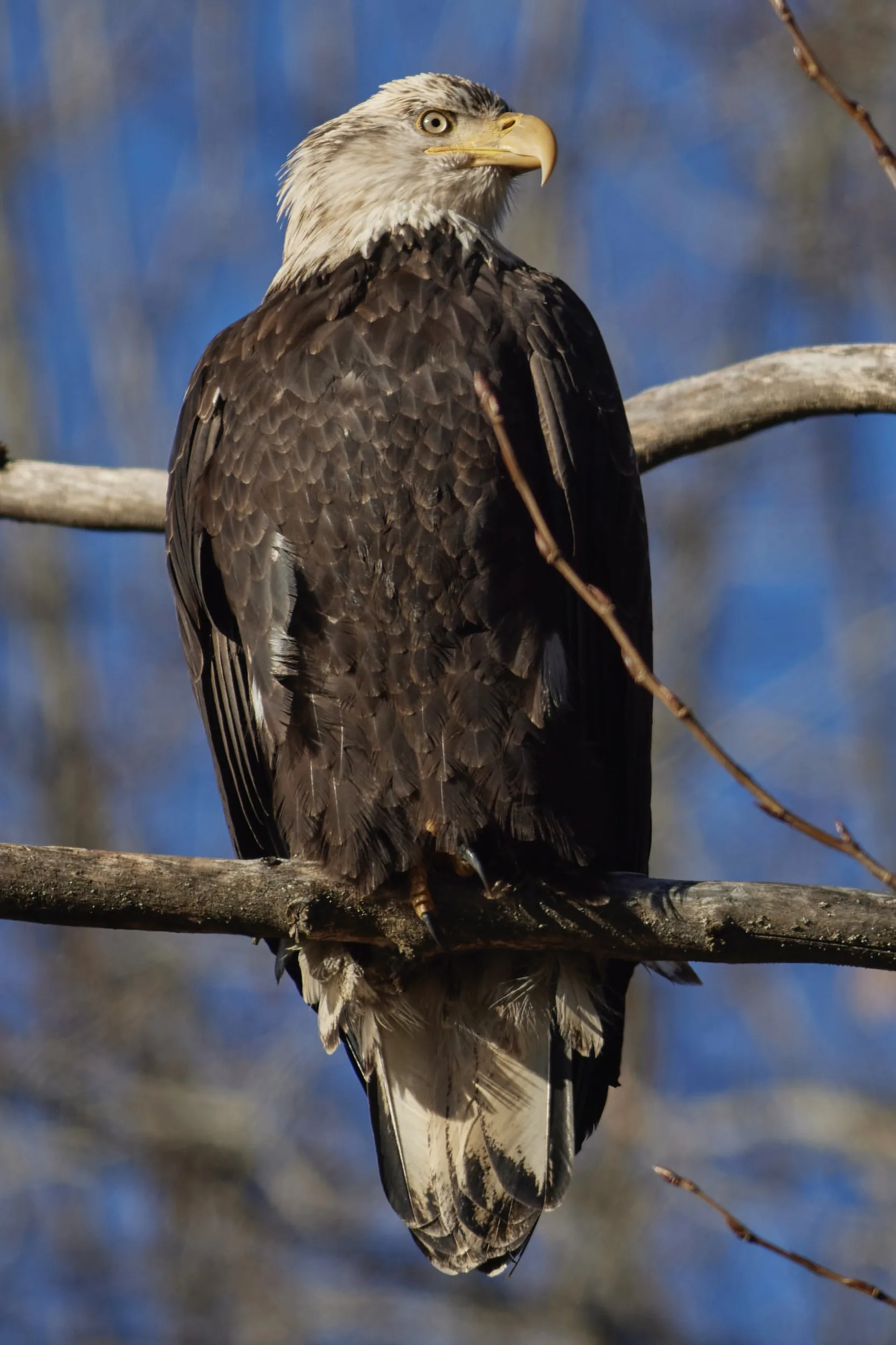
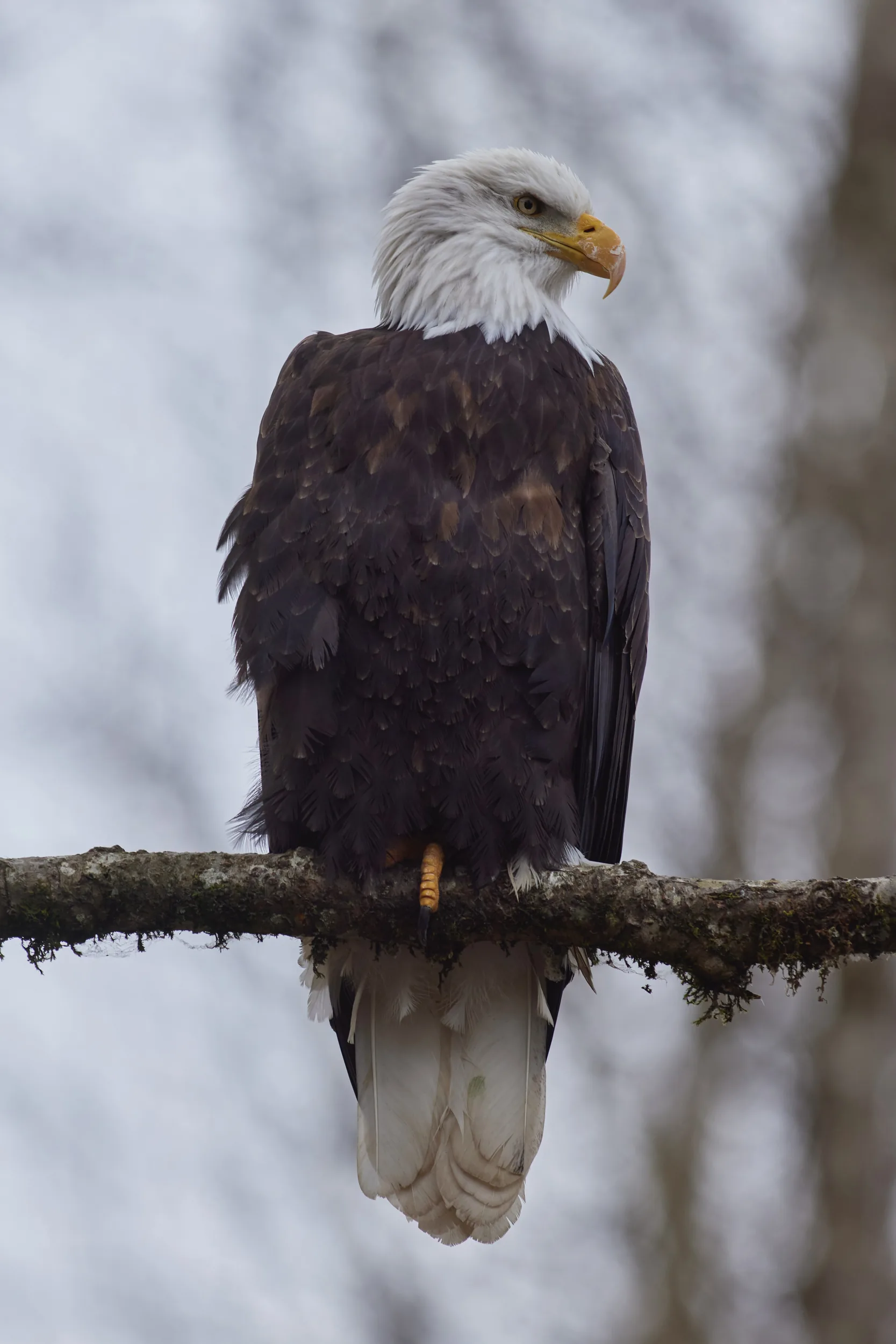
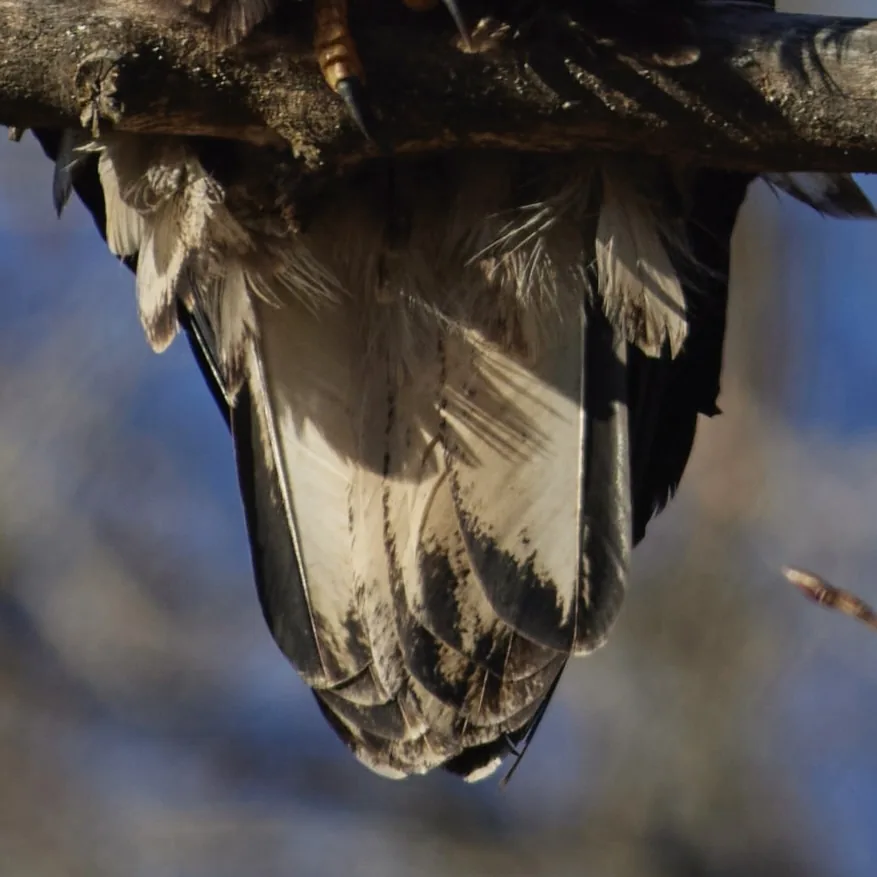
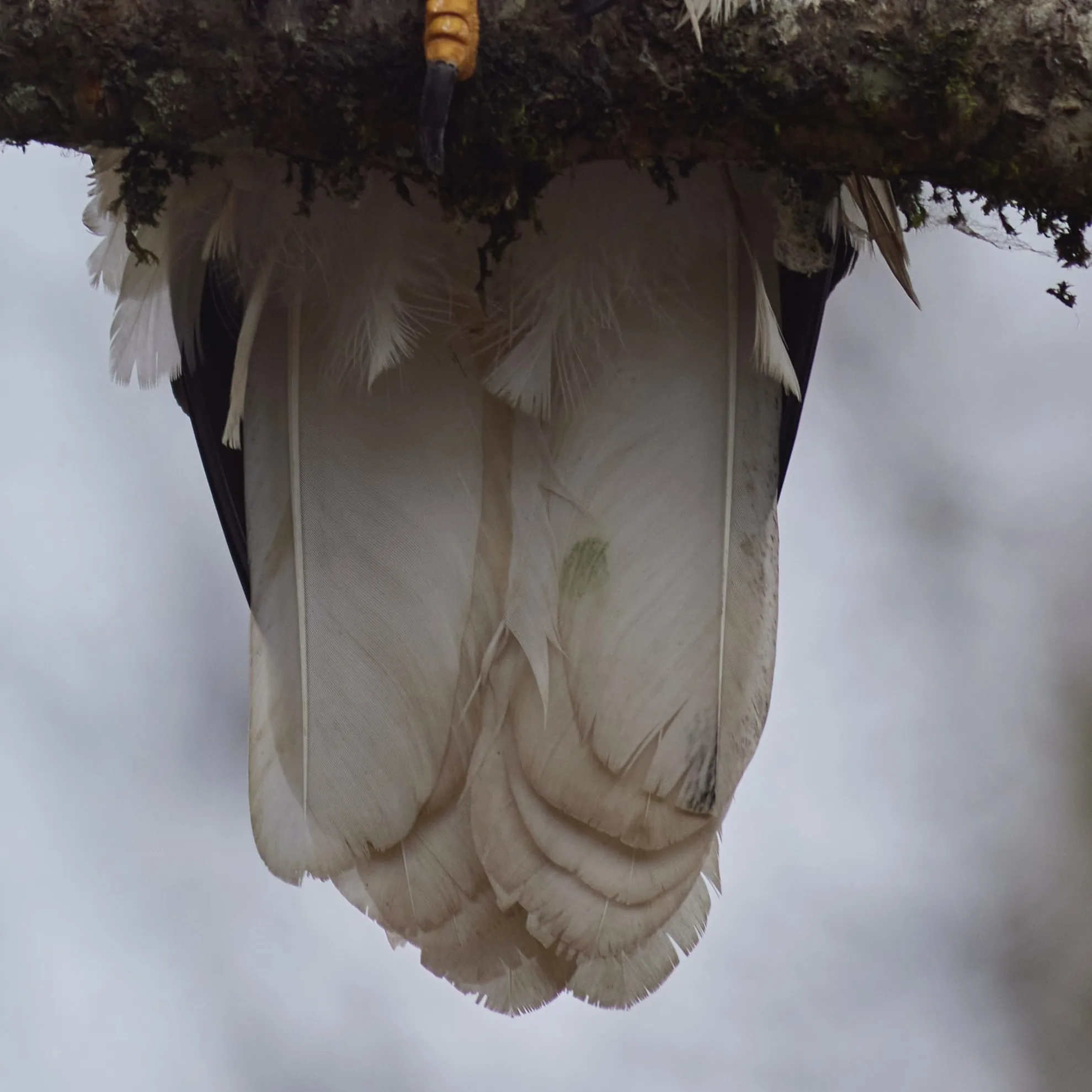
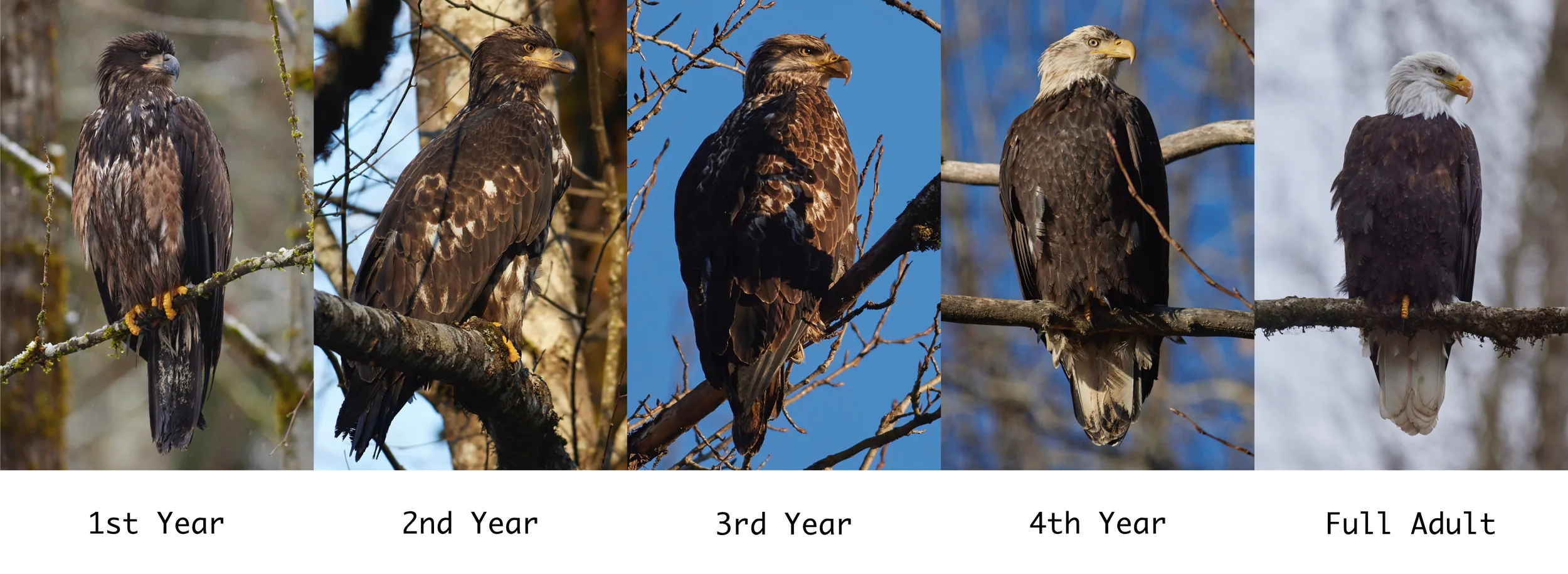
Body plumage changes dramatically across the first five years. In the first year, birds are mostly brown throughout, with the tail dark brown and the wing axillaries occasionally showing patches of lighter feathers. By the second year, scattered white feathers begin to appear across the body, though the overall impression remains brown. The third year brings a mottled look as white feathers increase, particularly around the head and chest. By the fourth year, the body feathers are almost fully brown and uniform, close to the adult pattern, with a dark terminal band becoming visible across the tail. The full adult has a rich, uniform dark brown body with a pure white tail and no terminal banding, known as definitive plumage.
First Year Body
First year birds have brown feathers throughout which can vary from light to dark brown. Tail is mostly dark brown. Wing axillaries can be more white than the rest of the plumage. /static/images/4C5LWrf.webp
Second Year Body
Second year birds are mostly brown with some white feathers throughout. The head is mostly brown with some white starting to show and the tail is all brown. /static/images/GUzK4vh.webp
Third Year Body
Third year birds are mottled throughout but start to show the dominant white on the head. /static/images/XJqbCZL.webp
Fourth Year Body
A fourth year bird showing an almost complete adult plumage. /static/images/s3KbuK6.webp
Full Adult Body
An adult eagle showing definitive plumage with a fully brown body and pure white tail. /static/images/ISMOKW8.webp
Fourth Year Tail
The black patches at the end of the tail feathers make up the terminal band. This indicates the bird has not yet reached full maturity. /static/images/J5pMhRg.webp
Full Adult Tail
In full adult plumage there is no terminal banding on the tail feathers. The tail is entirely white. /static/images/OdisaJH.webp
Head, Bill & Eyes
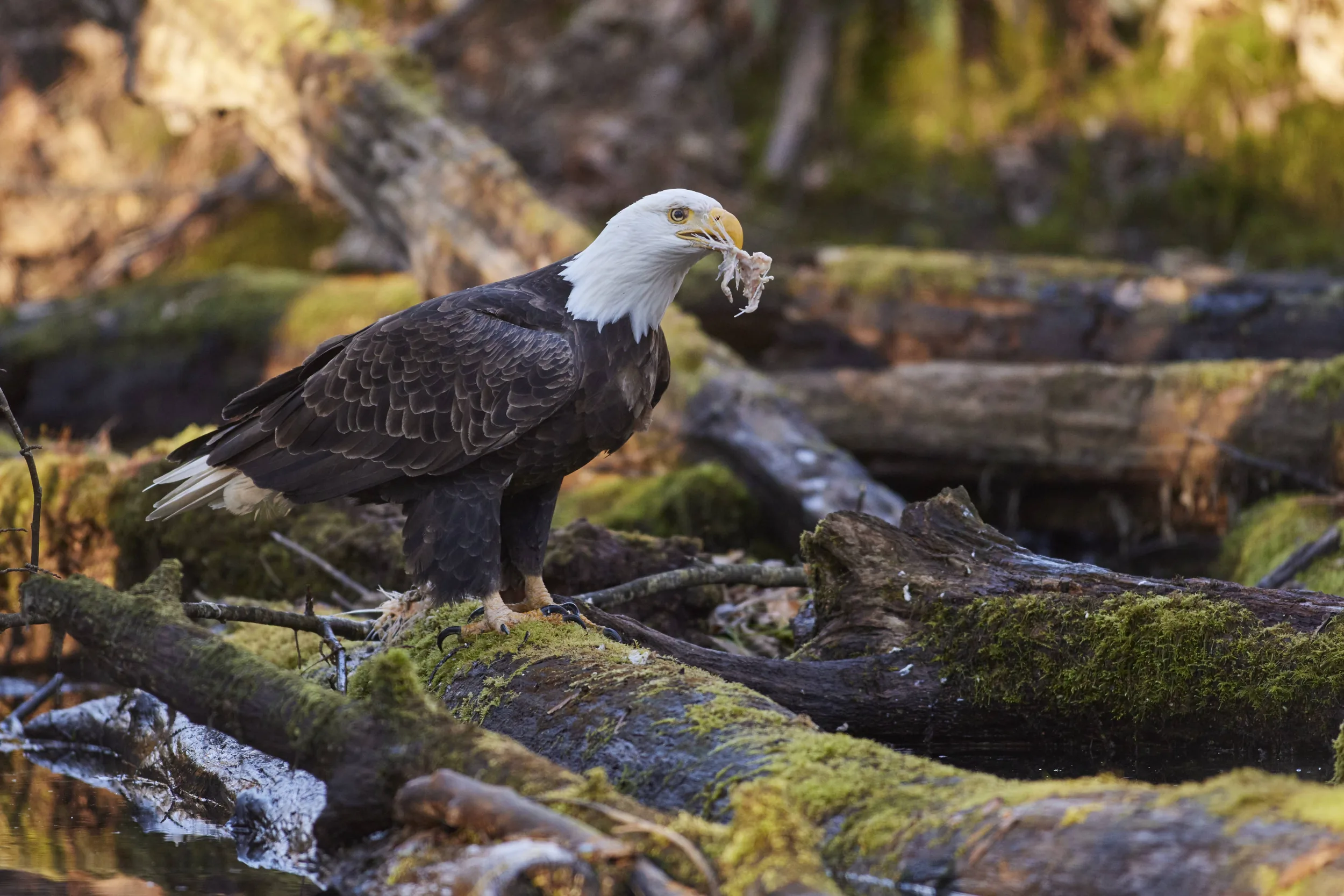
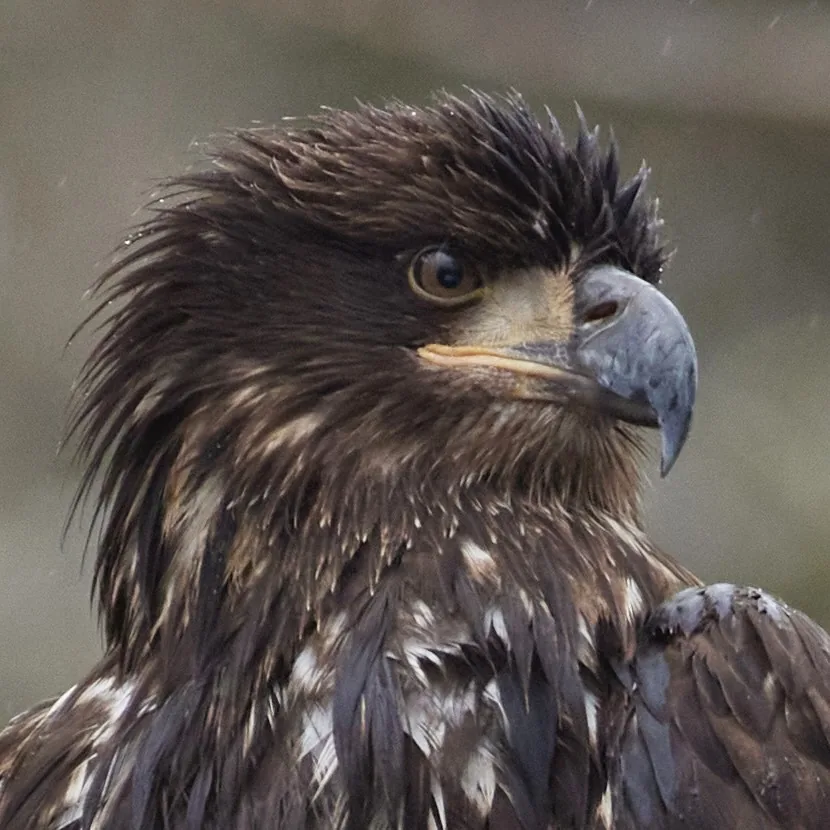
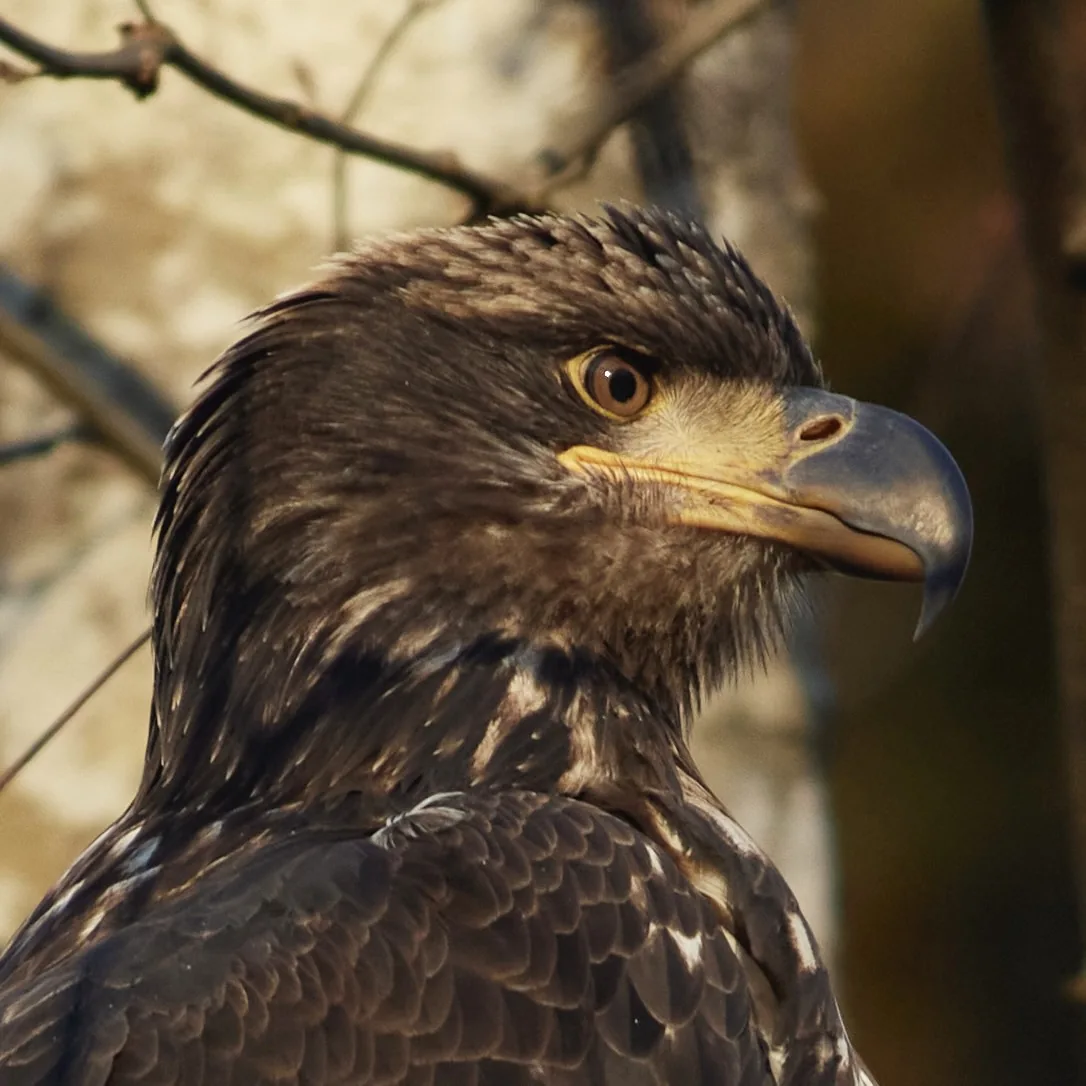
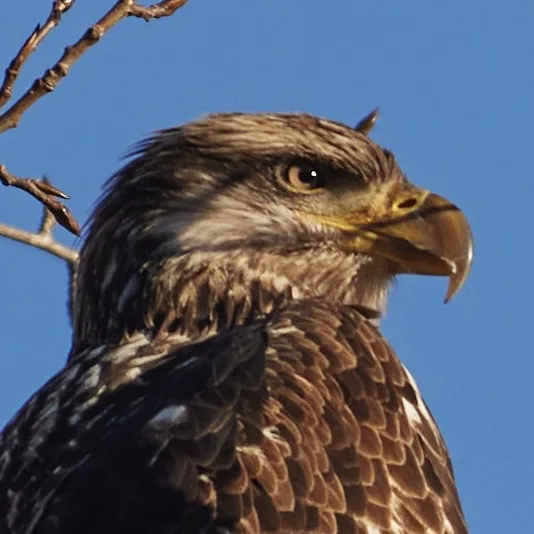
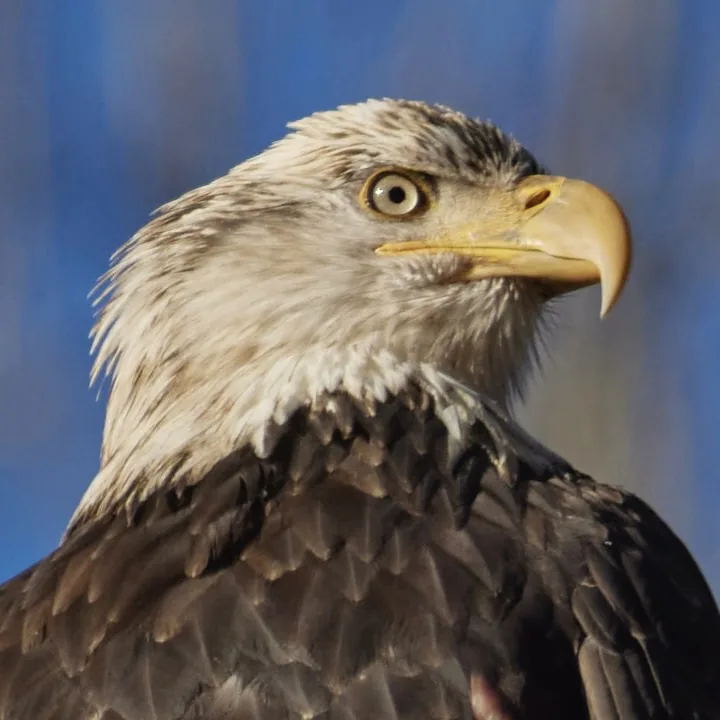
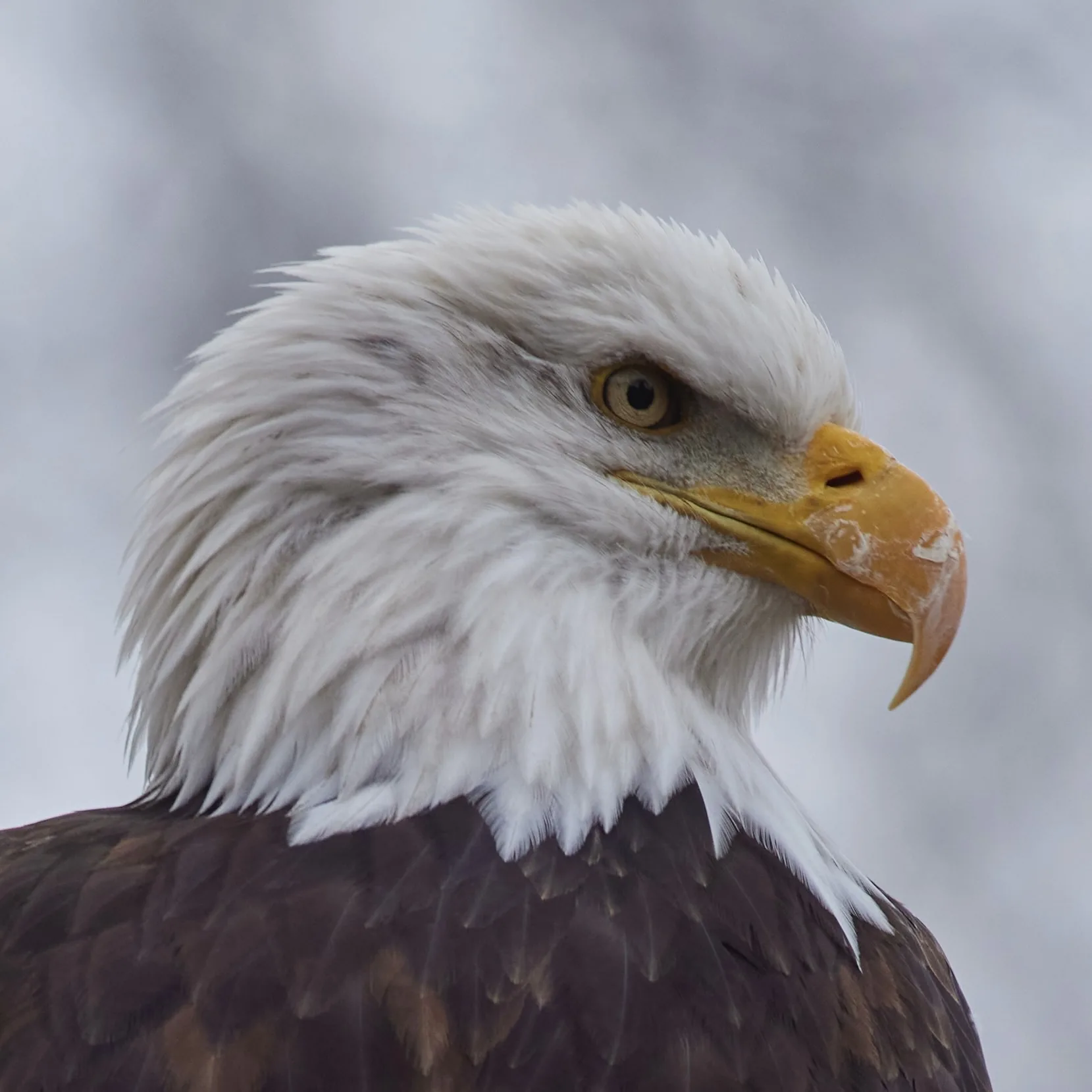
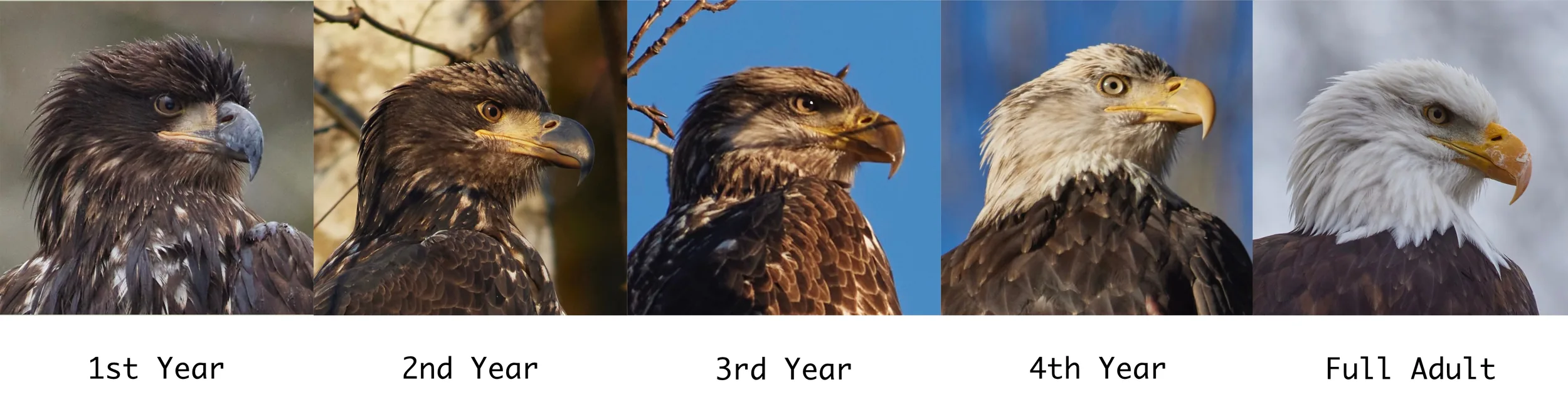
The head, bill, cere, and eyes are arguably the clearest indicators of age in the bald eagle. In the first year, the entire head is dark brown, the bill and cere are brown to black with no yellow, and the eyes are deep brown. By the second year, the first white feathers begin appearing on the head, the bill shows a slight yellow tinge, and the eyes remain brown. In the third year, the head is roughly half white and half brown, the bill is mostly yellow with some dark areas remaining, and the eyes are beginning to lighten. The fourth year brings an almost fully white head with only a few brown feathers persisting, a fully yellow bill, and noticeably pale yellow eyes. The full adult has a completely white head, a deep yellow bill and cere, and rich yellow eyes, all vivid and uniform in colour.
First Year Head
Eyes are dark brown. Bill and cere are brown/black with no yellow. /static/images/zFp7J7Y.webp
Second Year Head
The bill is dark brown/black with only a small amount of yellowing. The cere is mostly black with some yellow starting to show. The eyes are deep brown. /static/images/U3S3aUu.webp
Third Year Head
Notice the yellowing bill with subtle dark areas and a roughly 50/50 white and brown head. This indicates a young eagle in its third winter. /static/images/zbSyPu0.webp
Fourth Year Head
Yellow bill and cere, pale yellow eye, but patches of brown feathers remain on the head. This bird is nearing its full adult plumage but still has a season to go. /static/images/YNnED3t.webp
Full Adult Head
In full adult plumage the head is completely white with no brown feathers. The bill, cere, and eyes are all deep yellow. /static/images/XJExT3w.webp
Comparison Figures
These side-by-side strips make the progression clear across all ages at a glance.
Full Body Comparison
Head Comparison
Summary
I wanted to wrap this up by just covering a bit about the differences between male and female bald eagles. There are a few ways to try to tell the two sexes apart, but there isn’t really a fool proof method.
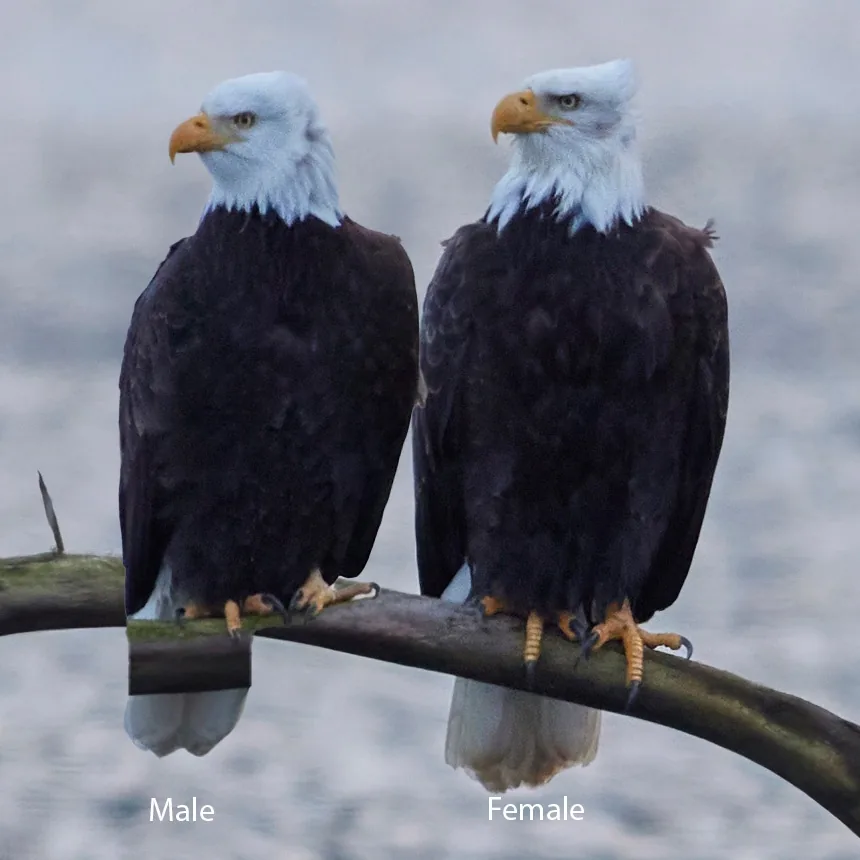
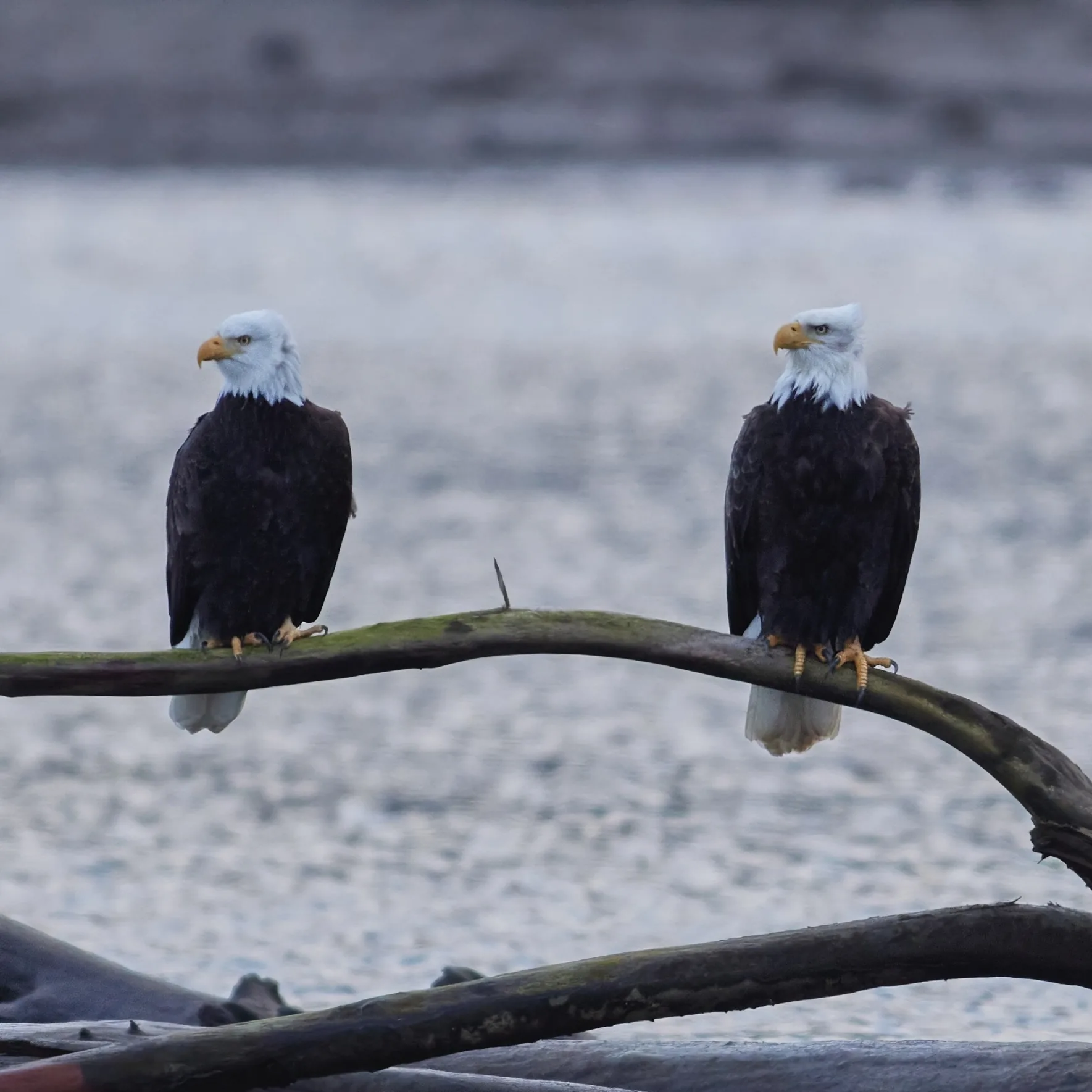
- Females are around 25% larger than males. This is obvious when two are perched side by side but not much use when they’re on their own.
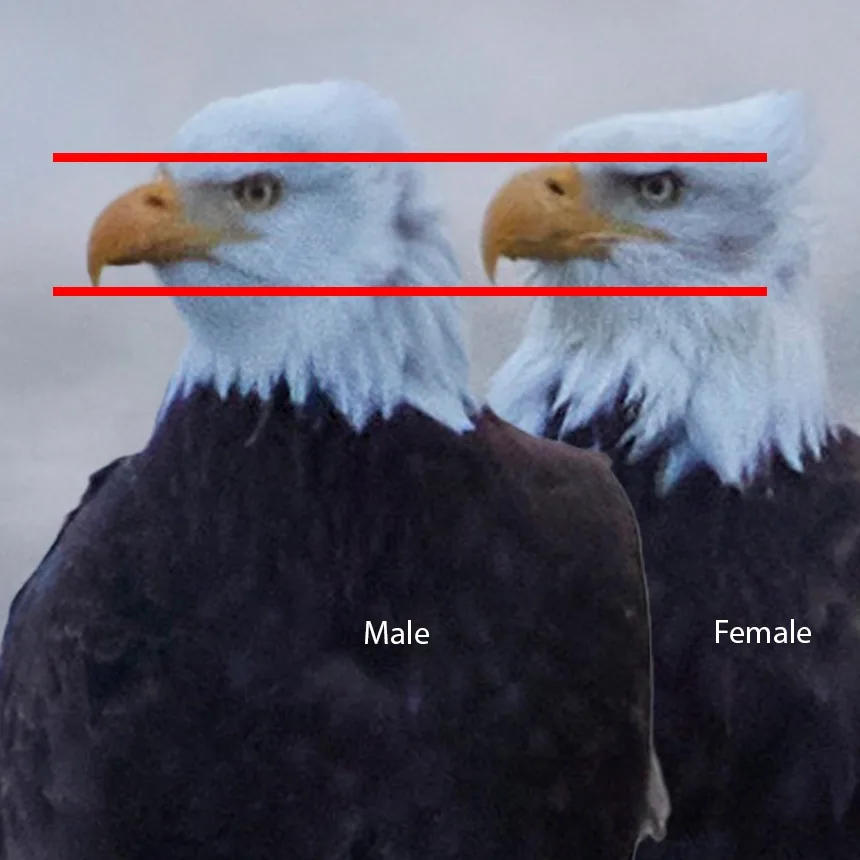
- Females typically have a deeper bill depth but again, hard to tell in the field.
- Females have longer hallux talons which can be twice as long.
- Finally, males are generally more slender and less stocky owing to their role as chief hunters during breeding.
Body Size
Male on the left, female on the right. The female can be up to 25% larger. Here you can see the bird on the right is a tad larger than the one on the left, which makes it easier to tell the sex of the bird. /static/images/GuGCvdF.webp
Bill Depth
Male on the left, female on the right. The female bill tends to be deeper than the male. The depth of the bill can be an indicator of sex, with the female bill being noticeably deeper. /static/images/l4G82P6.webp
Original Side by Side
The original unedited side-by-side photograph of a male and female bald eagle together. /static/images/9PWTwgz.webp
Thanks for reading, I hope you found this useful. If there is anything you think I should add, or if you noticed any errors please do let me know. I’m learning as I go here!
Niall