
Gallery
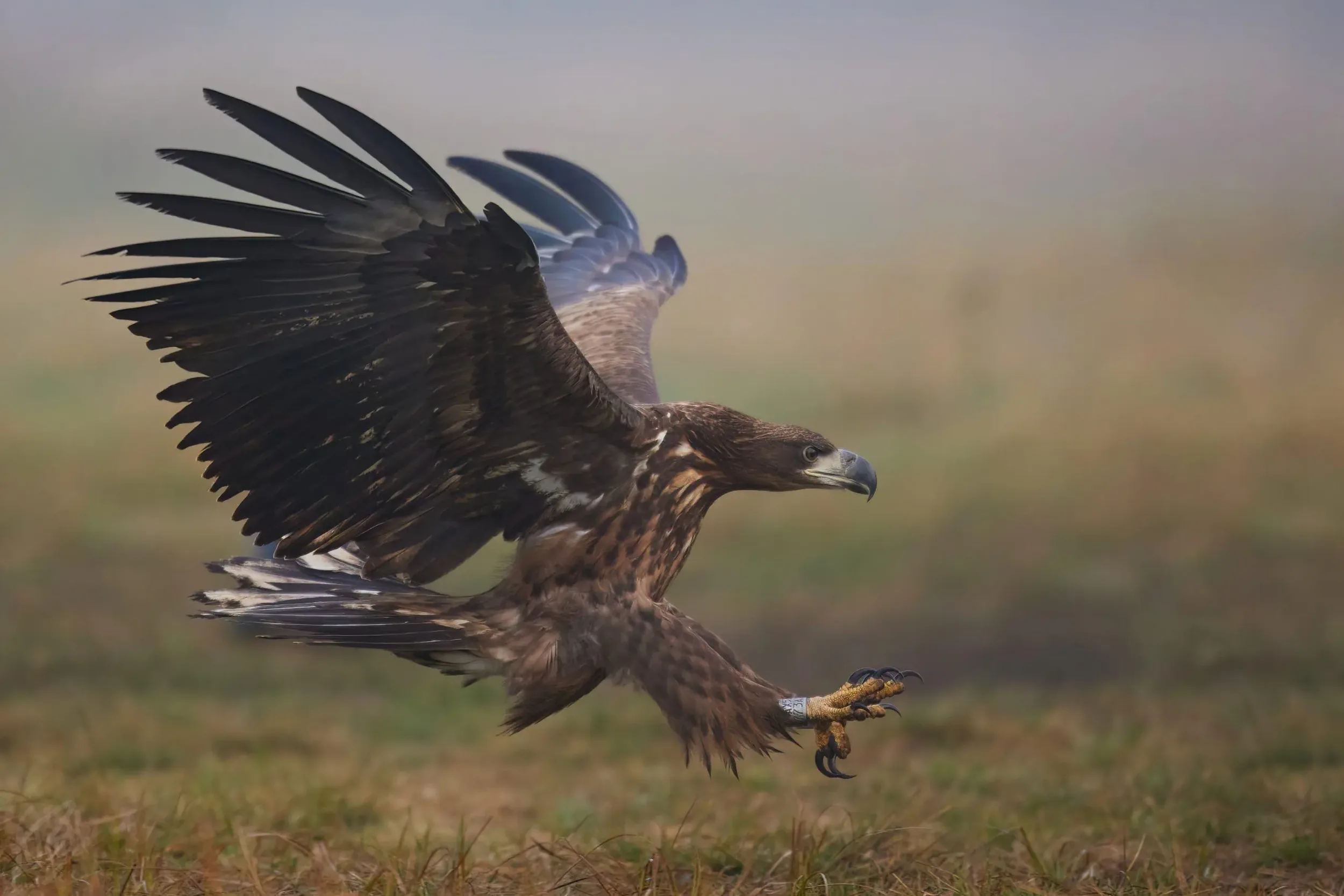
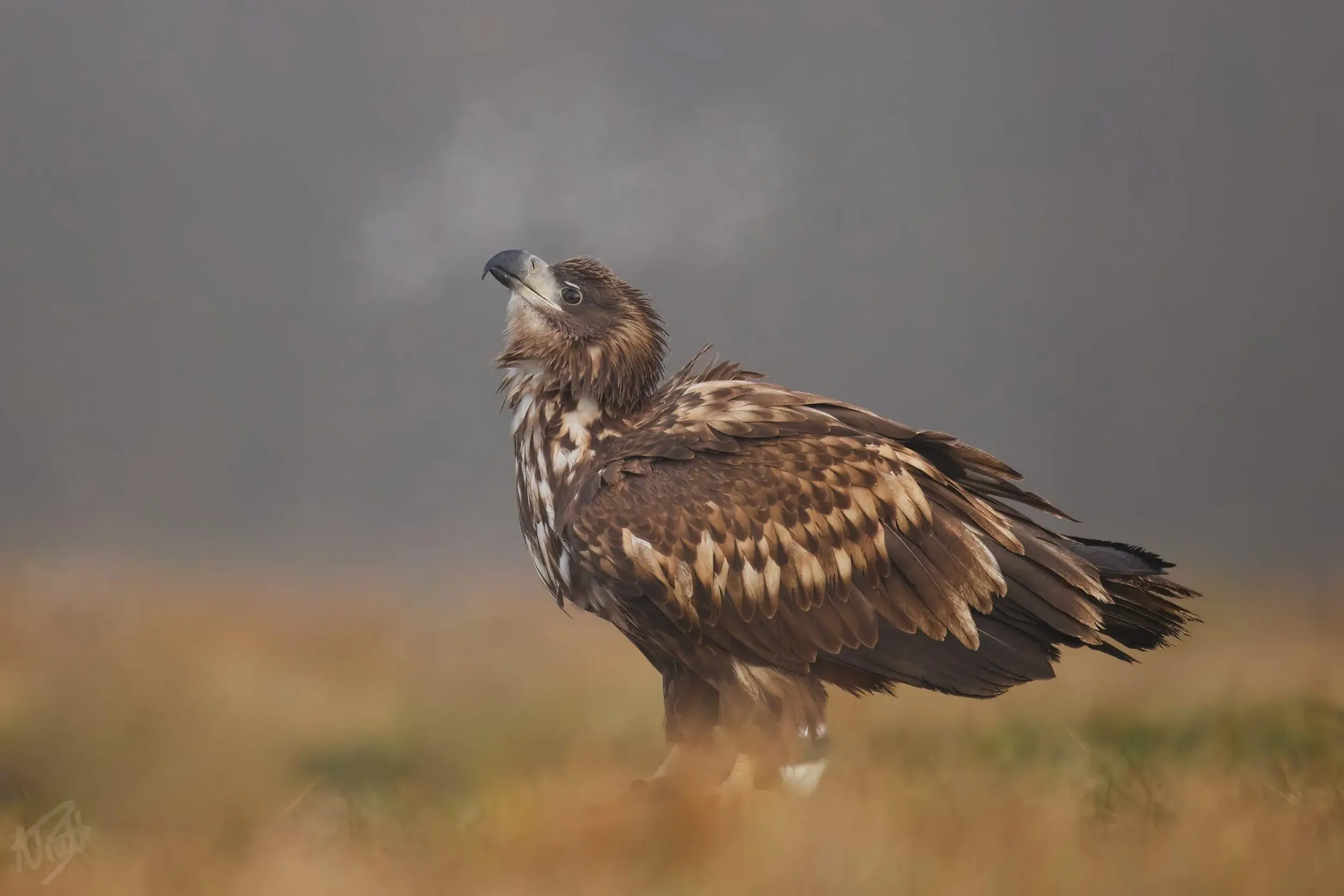

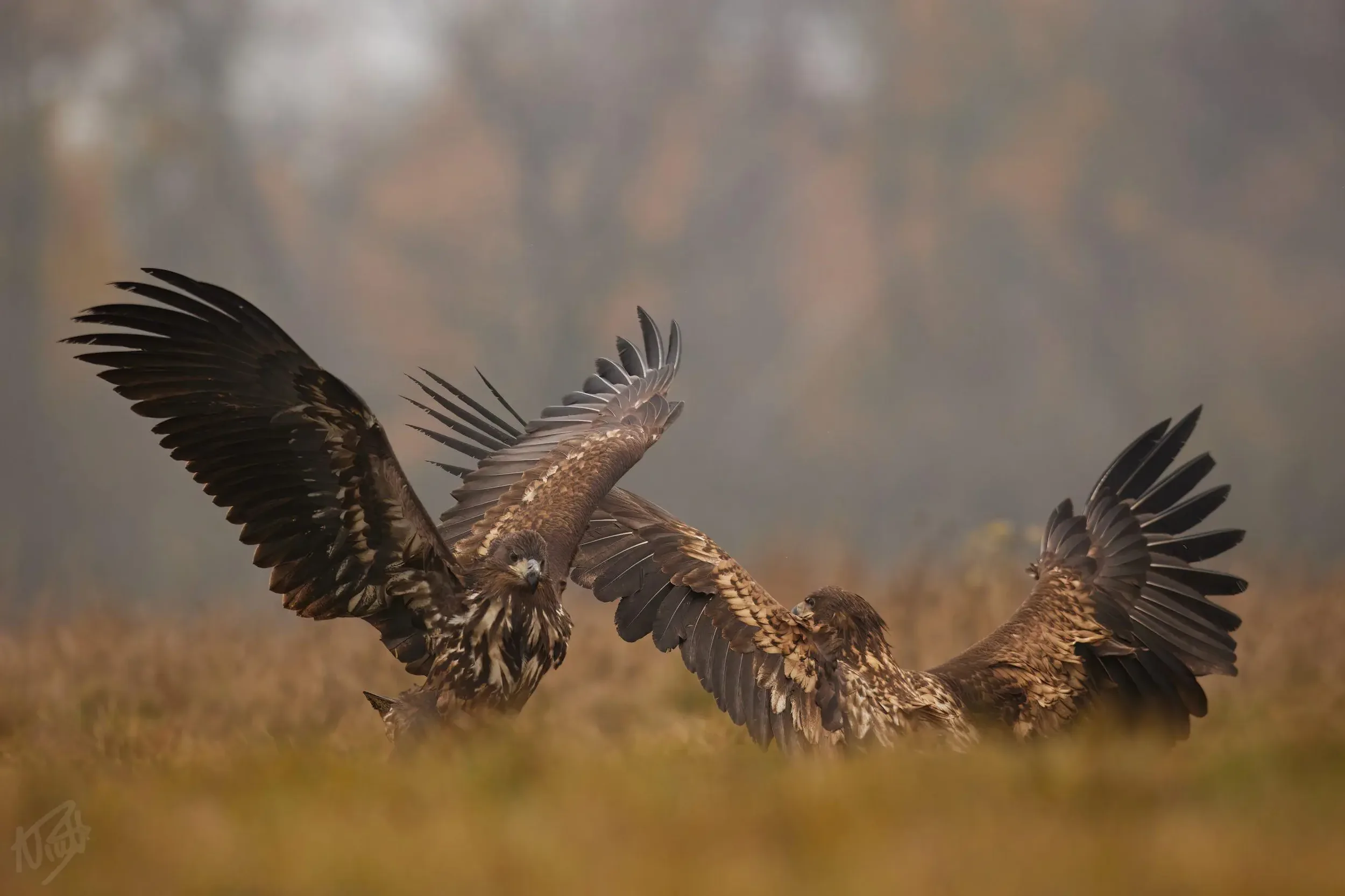
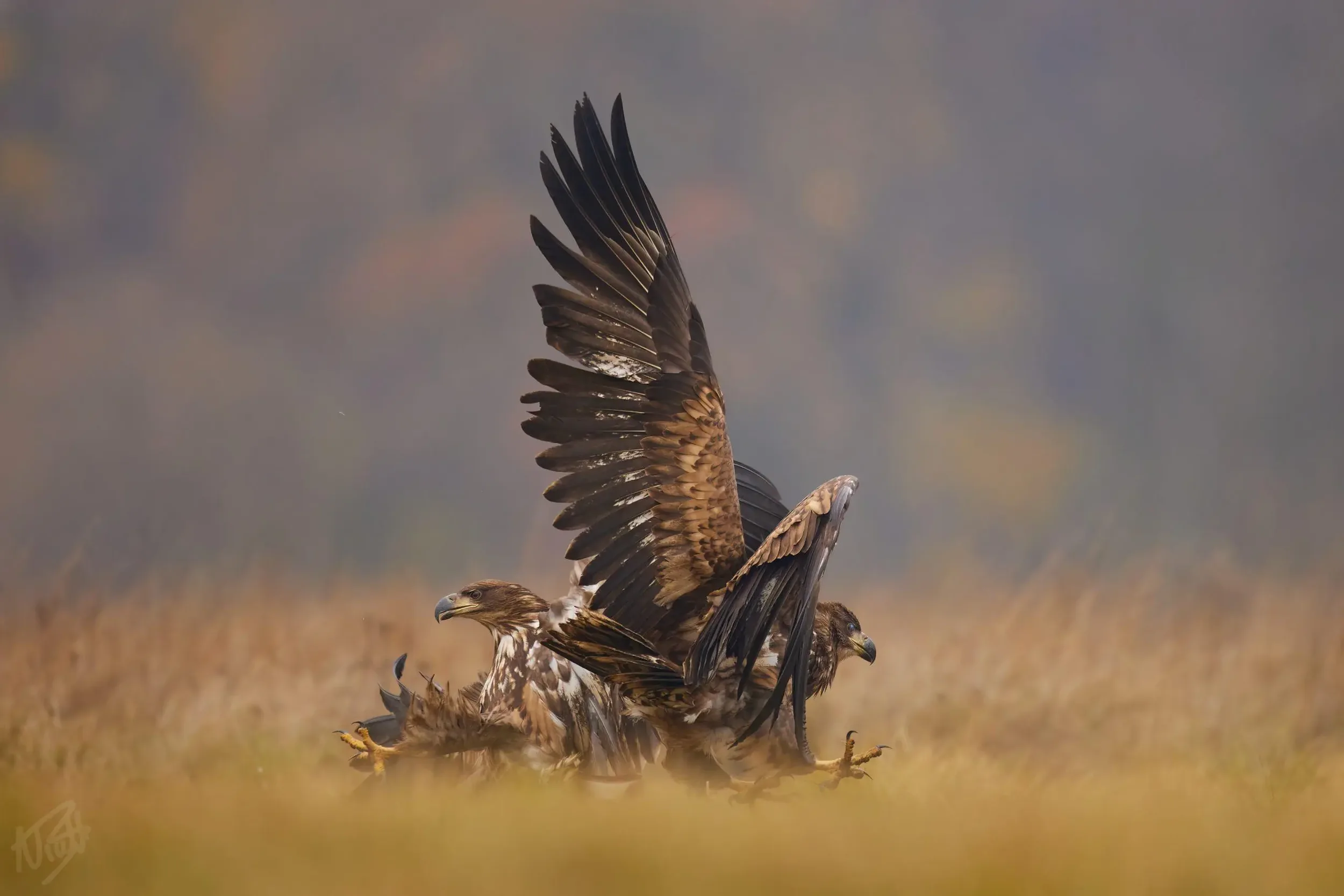
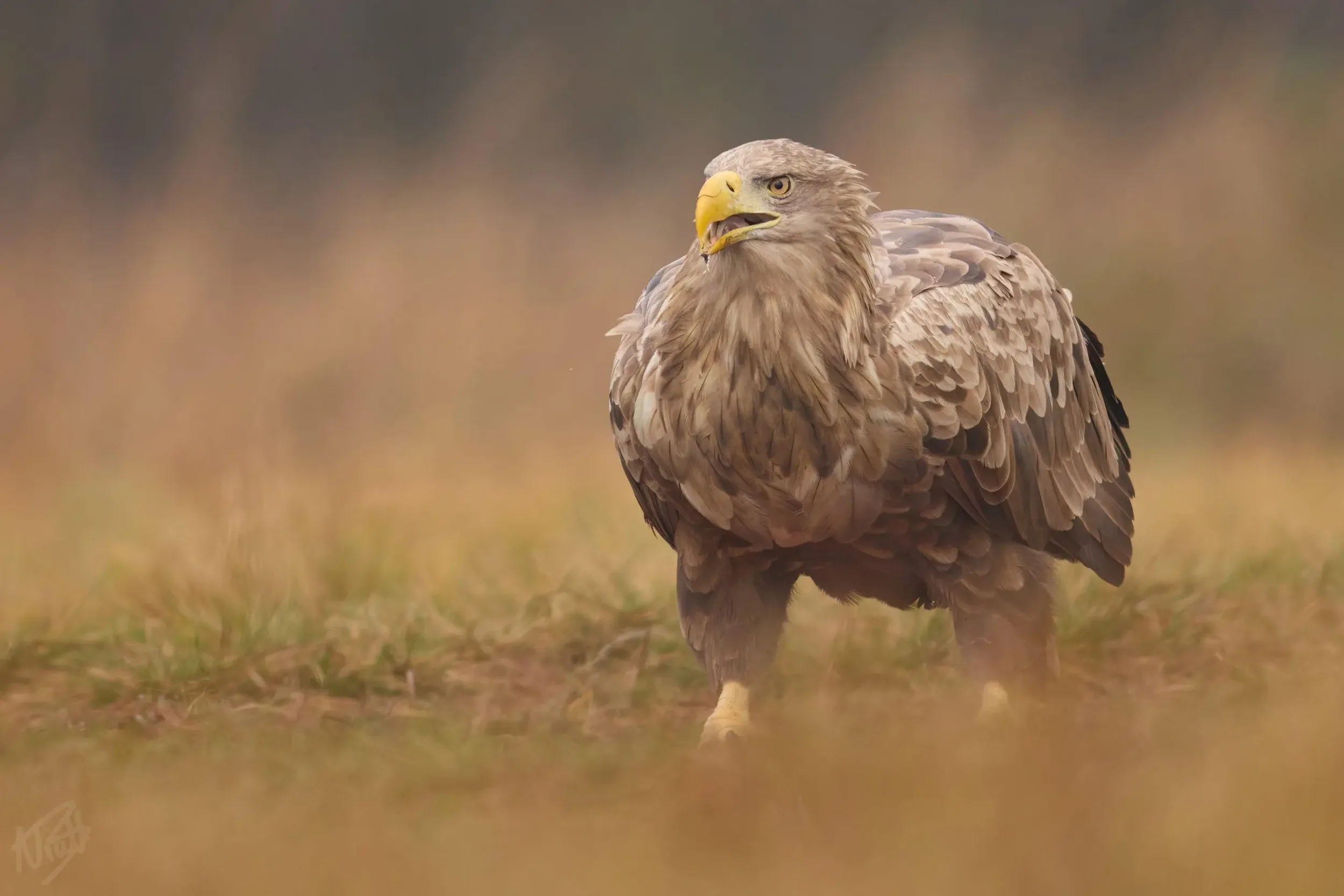
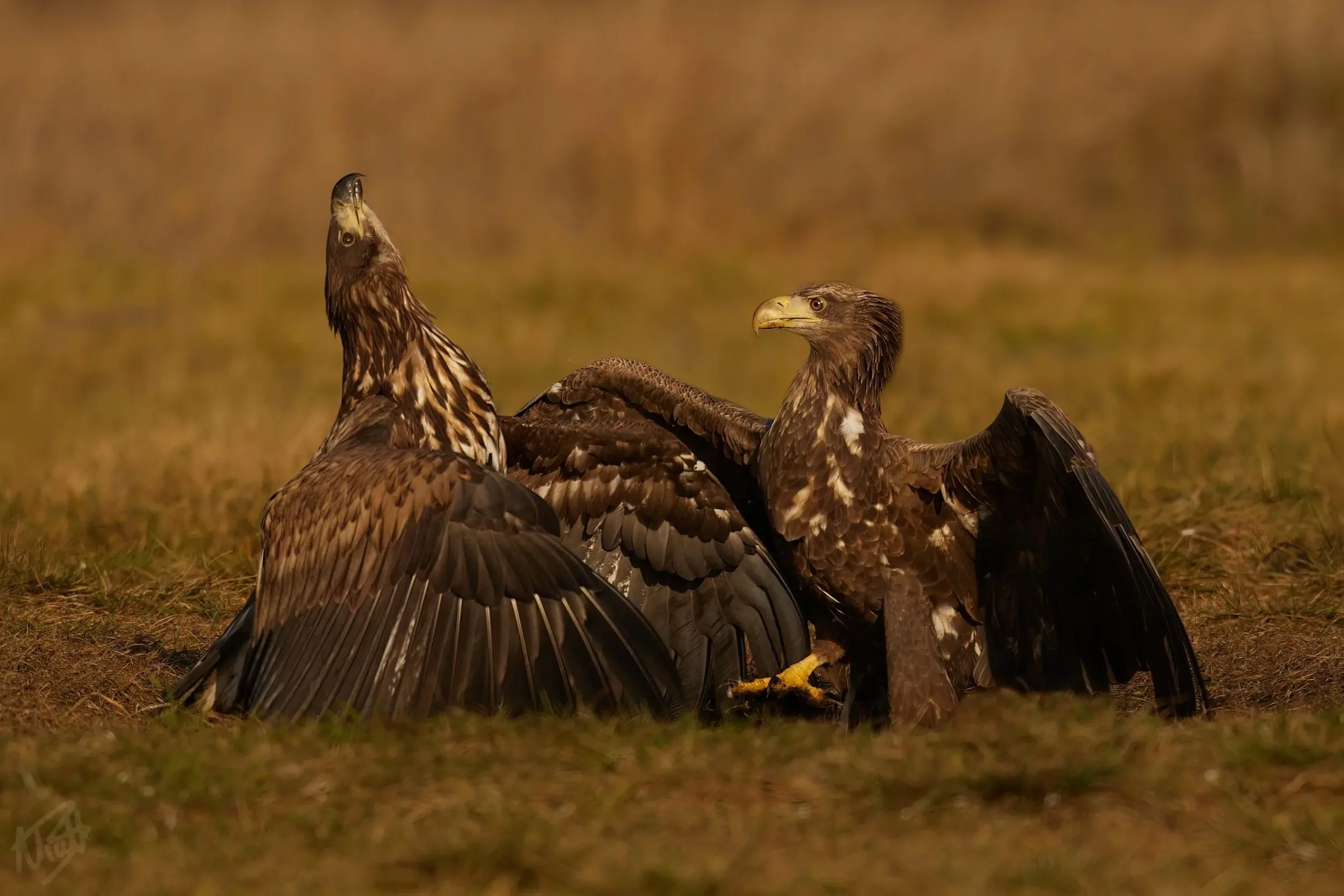
Juvenile Landing in the Mist
White-tailed eagles take four to five years to reach full adult plumage. Young birds are dark brown and heavily mottled, with a dark bill and no white tail. The gradual transition to adult colouring makes birds of different ages look almost like different species at first glance.
Young Eagle in the Fog
The white-tailed eagle is the largest bird of prey in Britain, with a wingspan reaching up to 245 centimetres. Young birds can be difficult to distinguish from golden eagles until the white tail and bright yellow bill of adulthood develop, a process that takes four or five years.
Eagle in the Mist
White-tailed eagles were extinct in Britain by 1918, persecuted out of existence. A reintroduction programme beginning in Scotland in the 1970s slowly rebuilt the population. Today several hundred pairs breed in Scotland, with ongoing reintroduction efforts extending into England and Ireland.
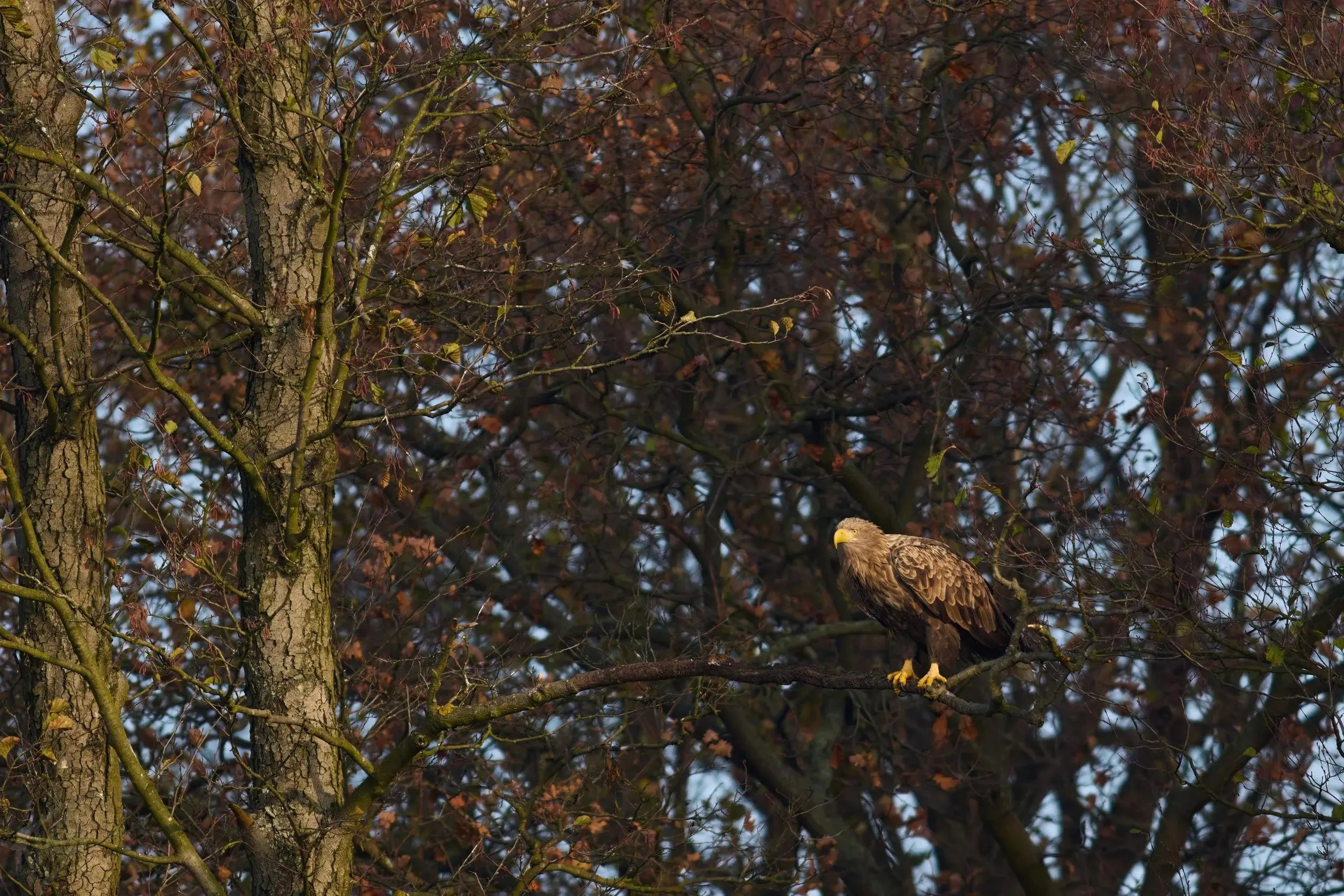
Adult Perched in Autumn Trees
Adult white-tailed eagles develop their characteristic white tail and bright yellow bill at around four to five years of age. Pairs are typically long-term, often mating for life, and return to the same nest site year after year, adding material each season until the structure becomes enormous.
Eagle With Prey
Fish form a major part of the white-tailed eagle’s diet, caught by swooping low and snatching prey from just below the surface. They also take waterbirds, small mammals, and carrion. Their large, powerful talons are well suited for gripping slippery fish securely in flight.
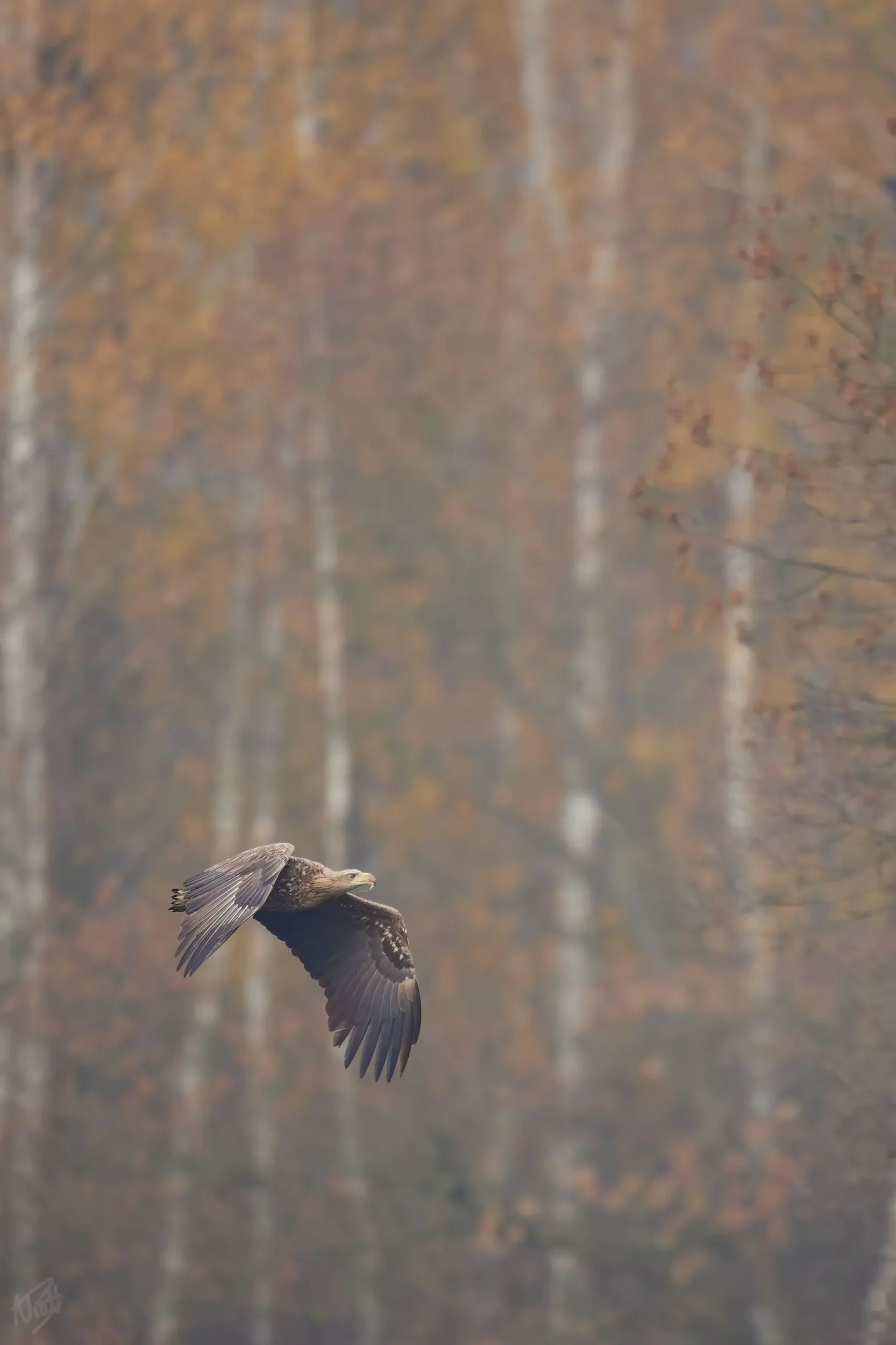
Eagle Over Autumn Forest
White-tailed eagles are widespread across Eurasia, from Iceland and Norway east to China and Japan. They favour large bodies of water, including lakes, rivers, estuaries and coastlines, where fish are abundant and tall nesting trees are available in the surrounding landscape.
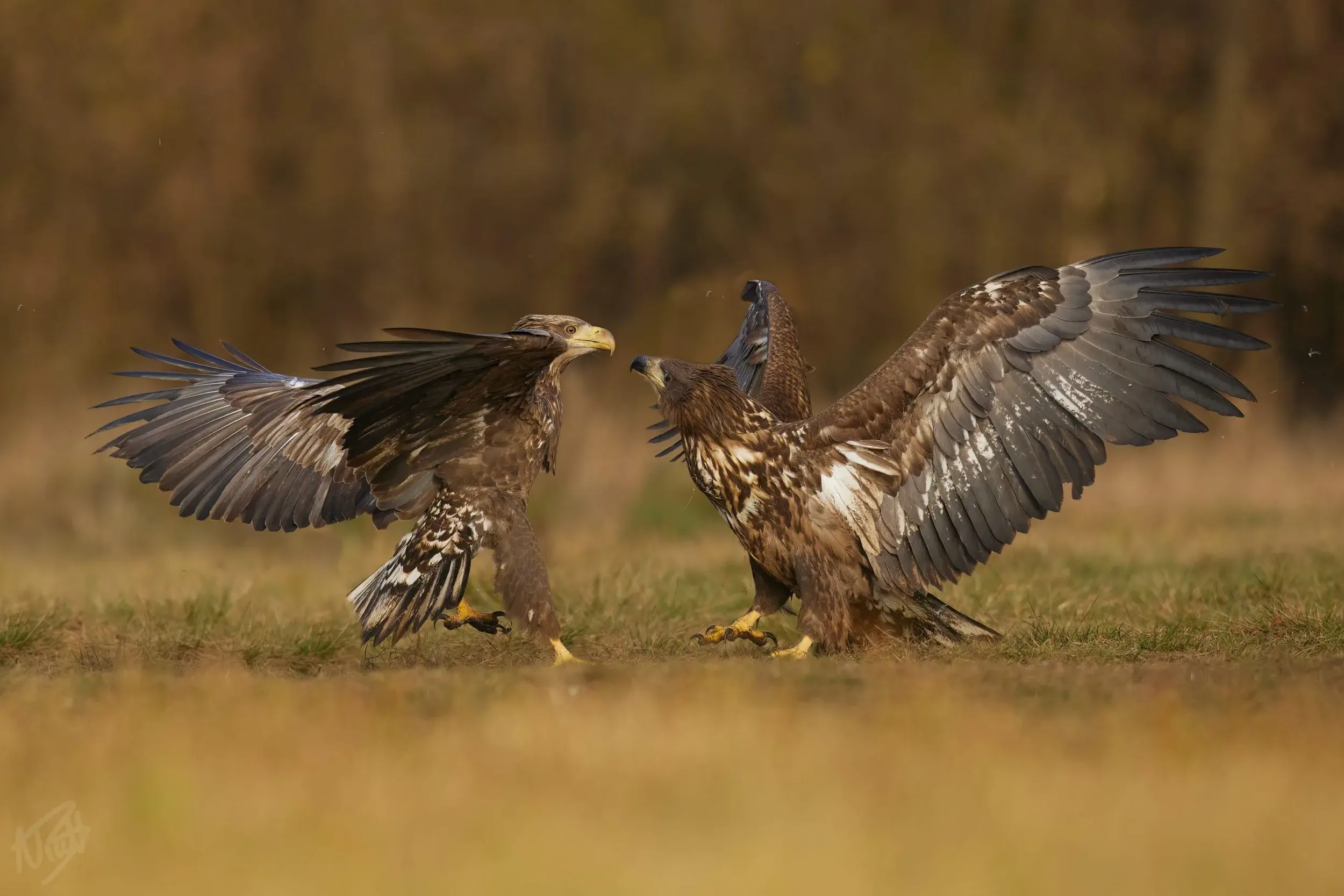
Two Eagles Confronting
White-tailed eagles are not strongly territorial outside the breeding season and may gather at reliable food sources. Disputes over food are common among young birds, which square up to each other with wings spread and bill pointed forward. Dominance is established through these displays before physical contact.
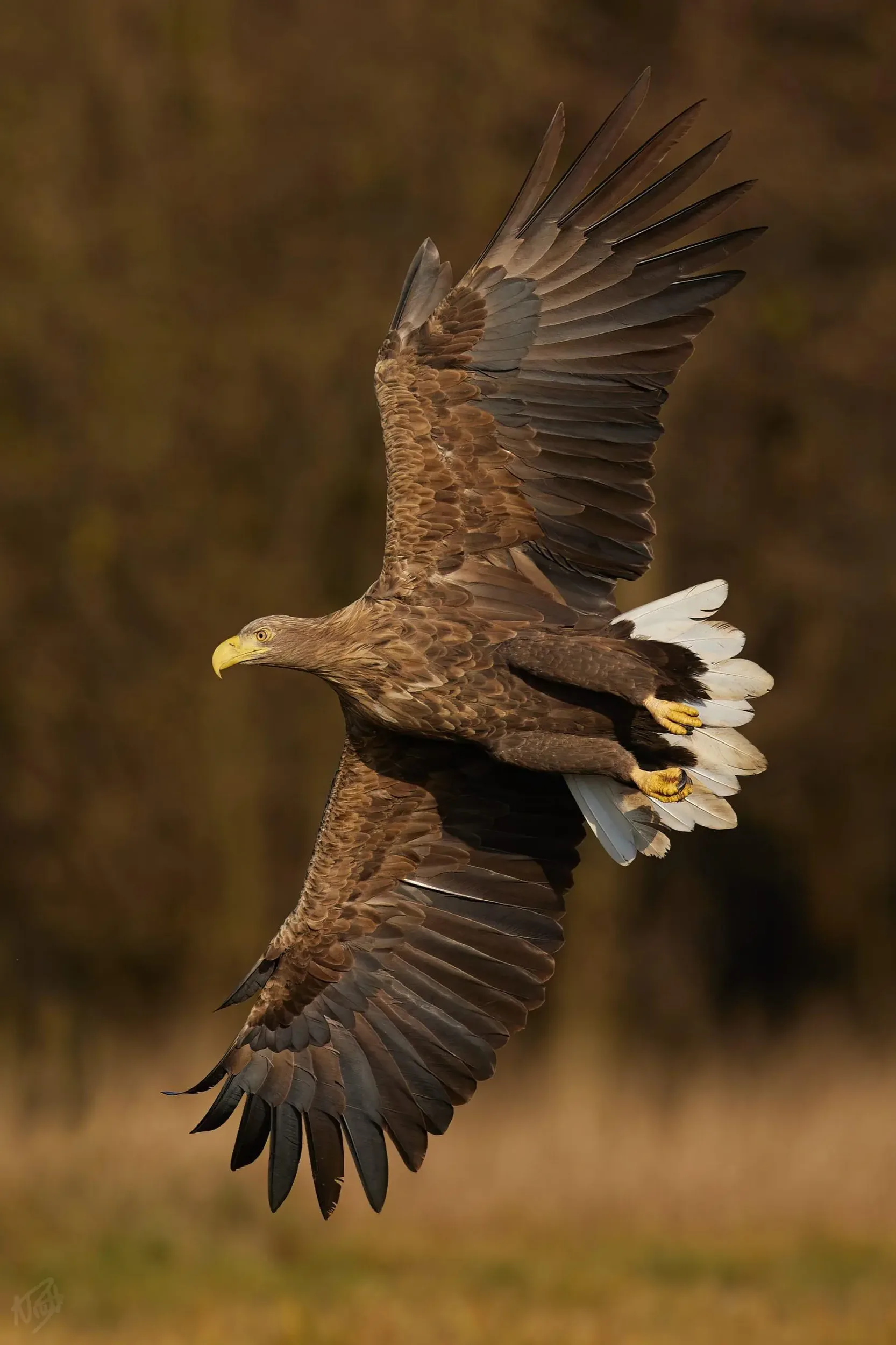
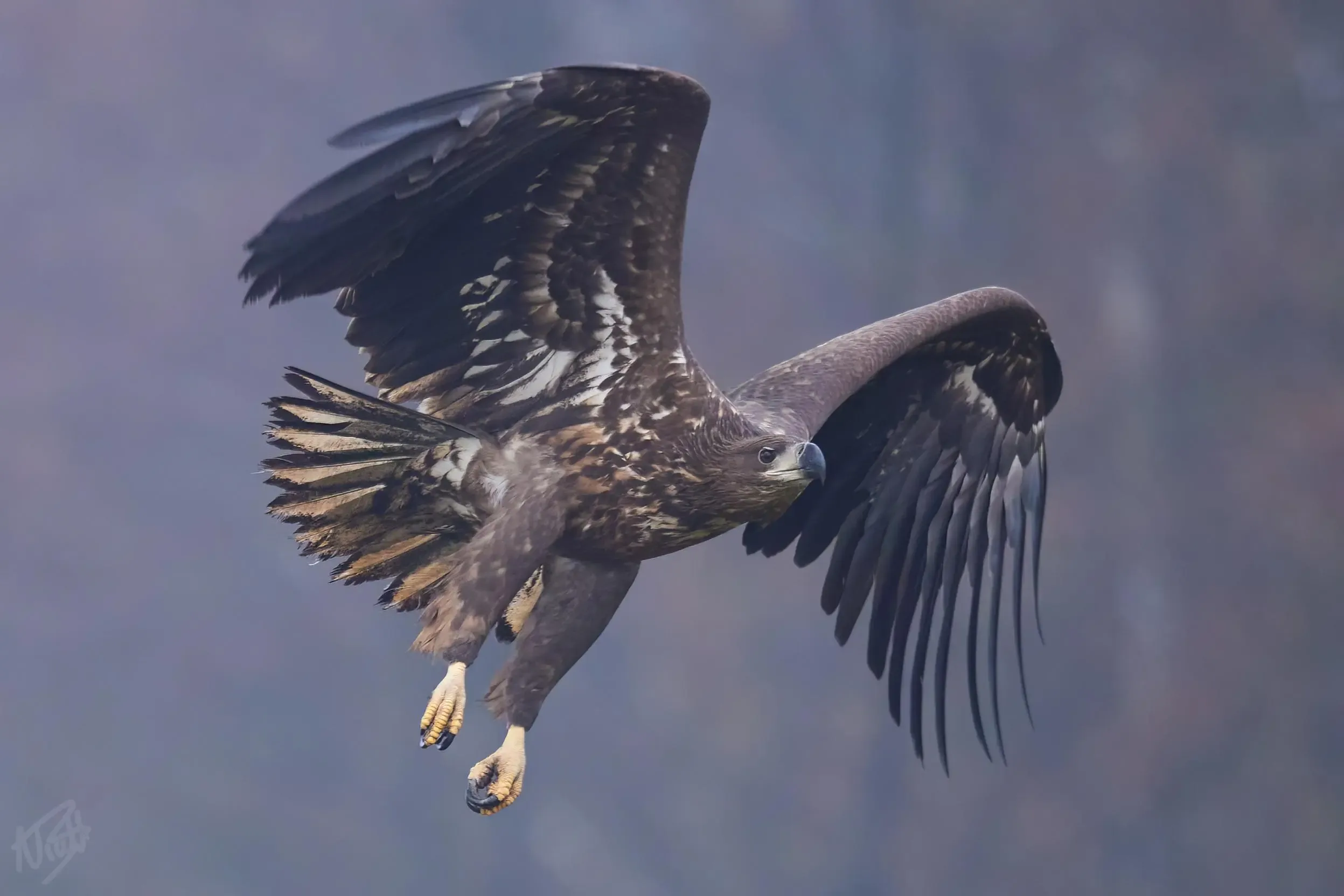
Juvenile in Flight
Young white-tailed eagles disperse widely from their natal territories in the first years of life, sometimes travelling hundreds of kilometres. During this period they are not yet breeding and spend their time developing hunting skills, often following rivers and coastlines where food is accessible.
Two Eagles Squaring Up
Food competition between white-tailed eagles is intense where multiple birds gather. Wing-spreading and bill-pointing displays are used to intimidate rivals. These interactions are most common in winter when food is less predictable and birds from a wider area converge on the same sites.
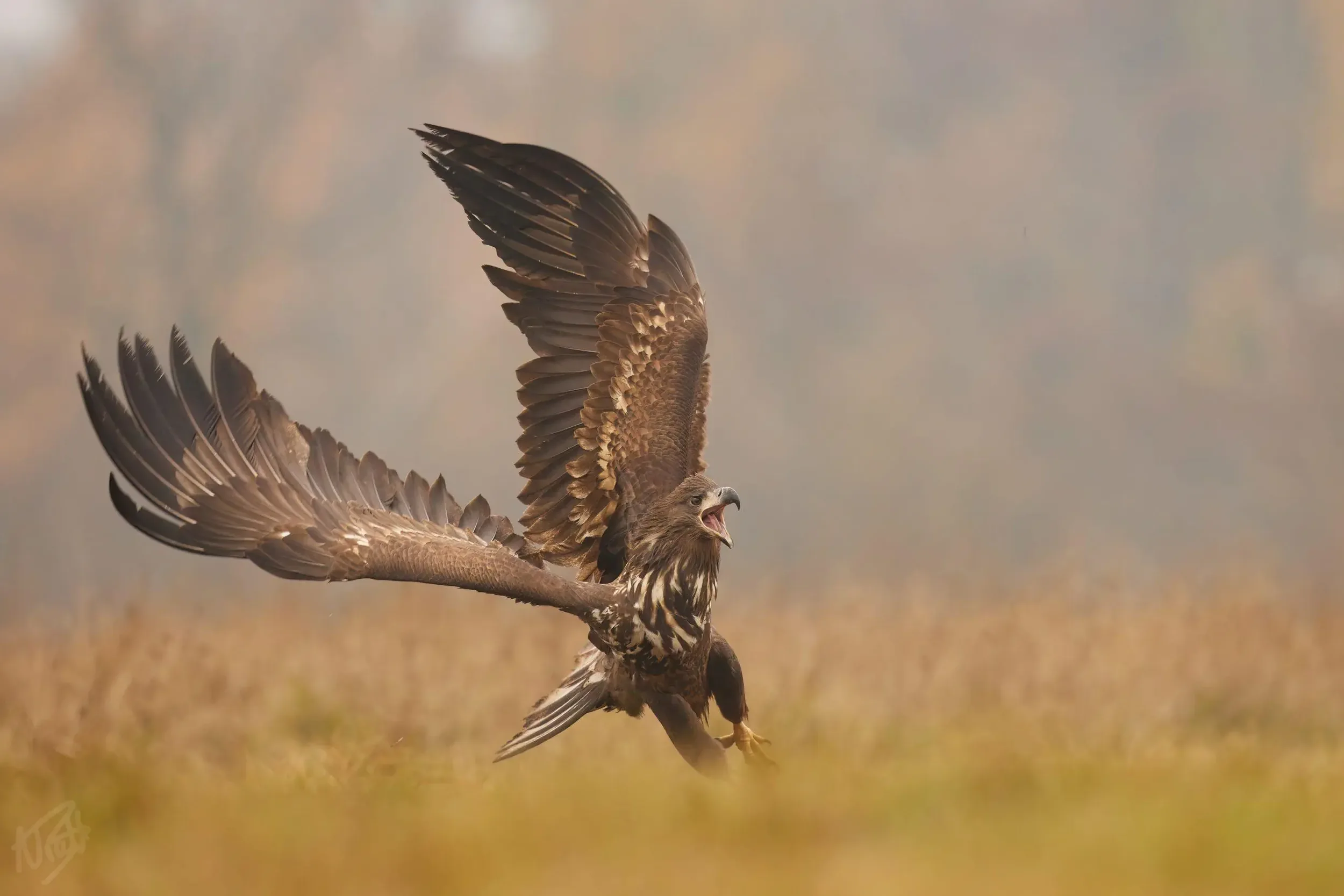
Calling on Approach
White-tailed eagles are largely silent birds but do vocalise, particularly around the nest and when competing over food. The call is a loud, barking series of notes. The enormous wingspan, often compared to a flying barn door, makes this eagle unmistakable in the sky.
Eagles Wrestling
Serious physical confrontations between white-tailed eagles occur over large food items. Younger, subordinate birds are typically displaced by adults, though they will not give up a meal without a contest. These interactions, though dramatic, rarely result in lasting injury to either bird.
Adult Portrait
The white-tailed eagle’s massive yellow bill is one of its most distinctive features, used for tearing apart large prey and carrion. The pale greyish-brown body plumage becomes lighter with age. Adults can weigh up to seven kilograms, making them one of the heaviest raptors in the world.
Two Young Eagles
White-tailed eagle chicks spend around eleven weeks in the nest before fledging. Siblings compete for food from the earliest age, with the older or stronger chick typically dominating at the nest. Most pairs raise one or two young per year when conditions allow.