
Gallery
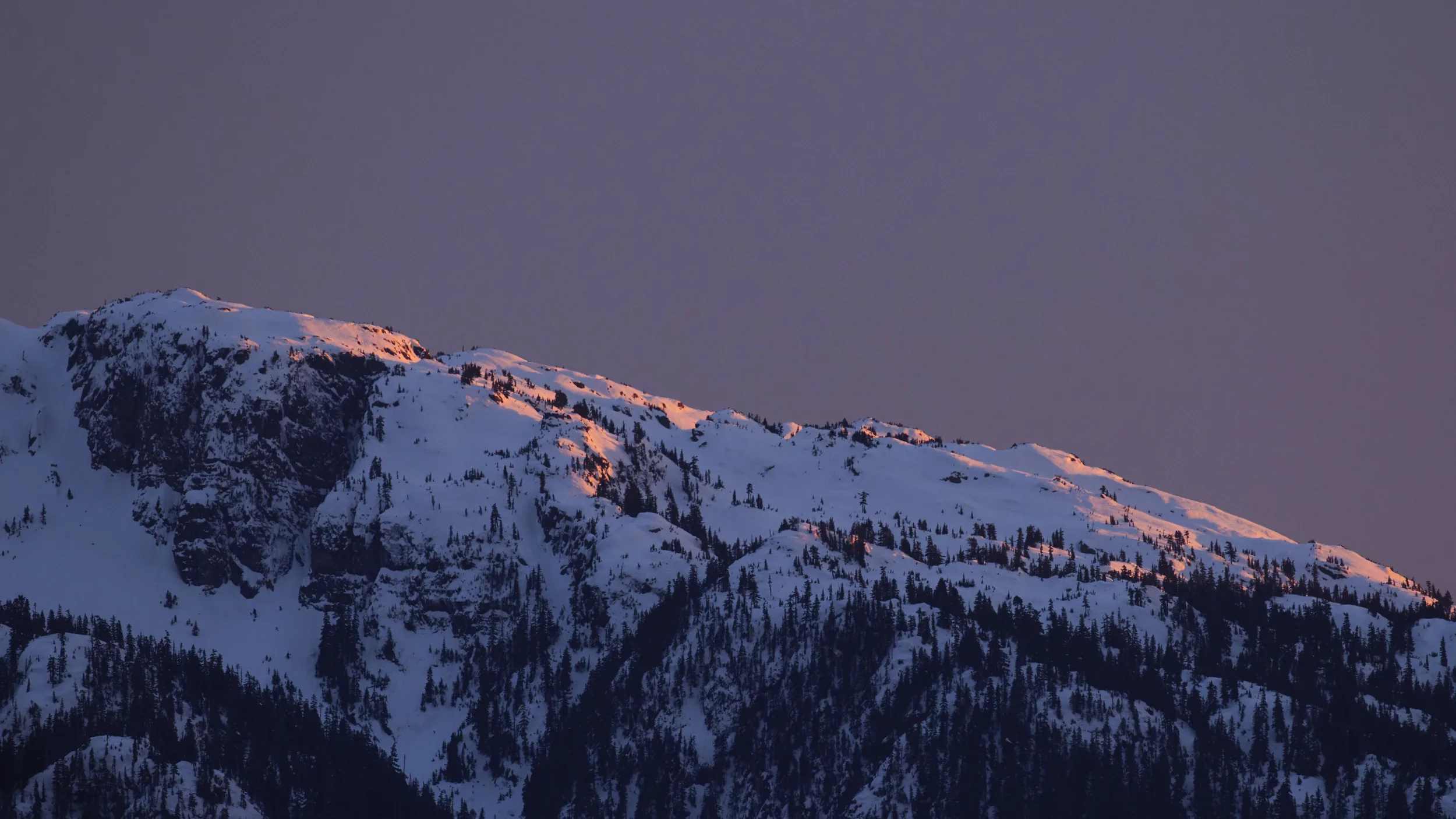
Alpenglow, Coast Mountains
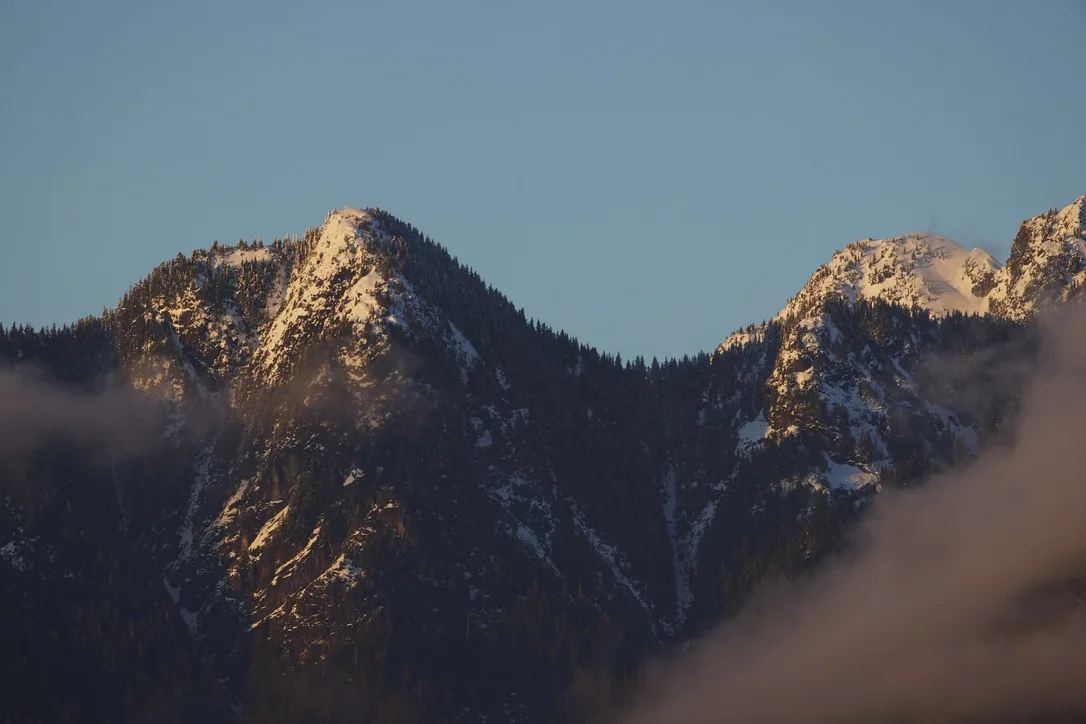
The last light of the day catches the upper snowfields of a Coast Mountain summit, turning them amber against a deep purple winter sky. Alpenglow occurs when the sun is just below the horizon and light bouncing off airborne ice crystals illuminates mountain peaks, producing colours often more saturated than those seen during direct sunlight.
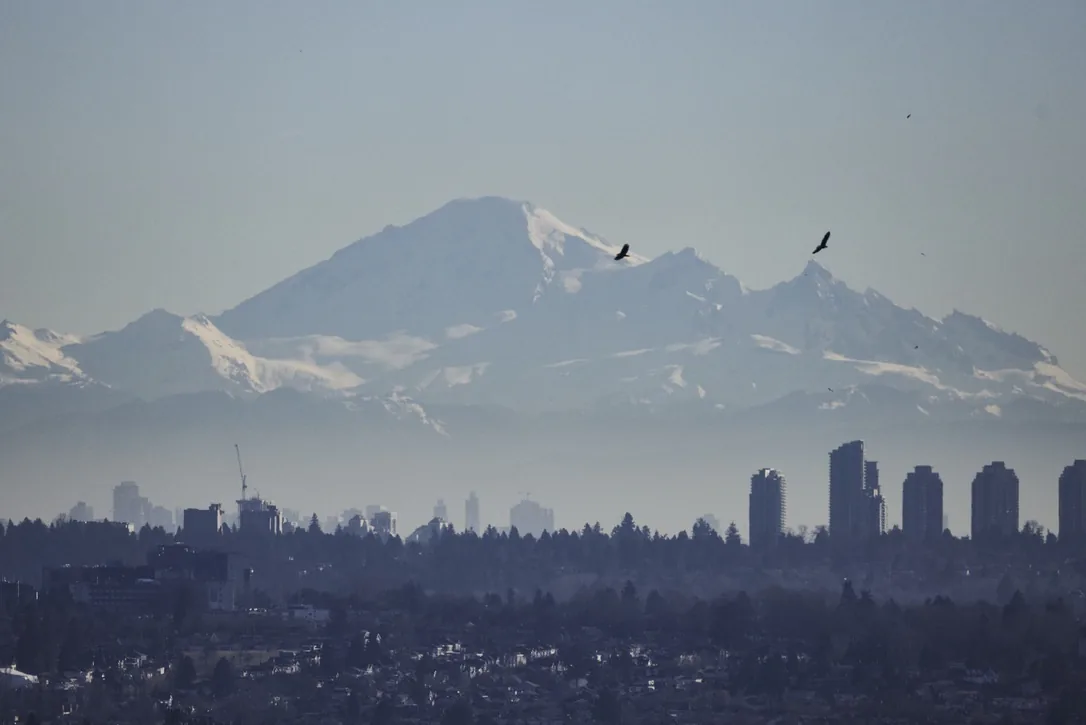
Mount Baker from the Lower Mainland
The snow-capped cone of Mount Baker rises 3,286 metres above the Fraser Valley, visible from the Vancouver suburbs on a clear winter day. Two bald eagles are silhouetted in the middle distance. A stratovolcano in Washington State, Mount Baker last erupted in 1880 and remains one of the most heavily glaciated peaks in the contiguous United States.
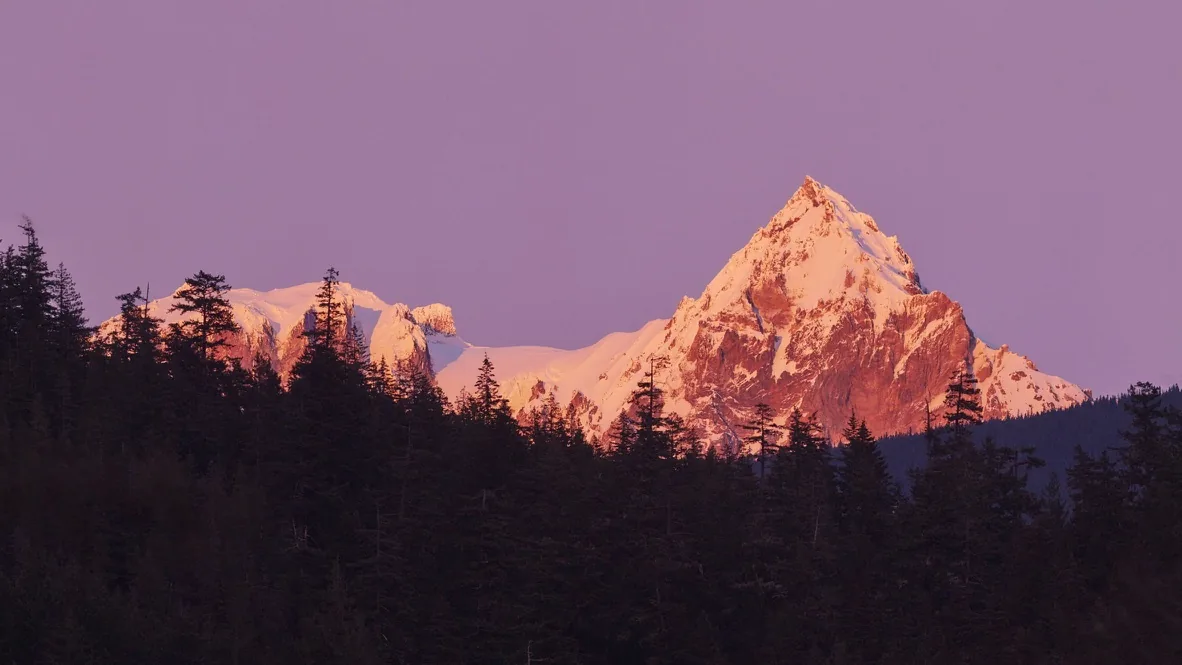
Mt. Garibaldi (Nch’kay’)
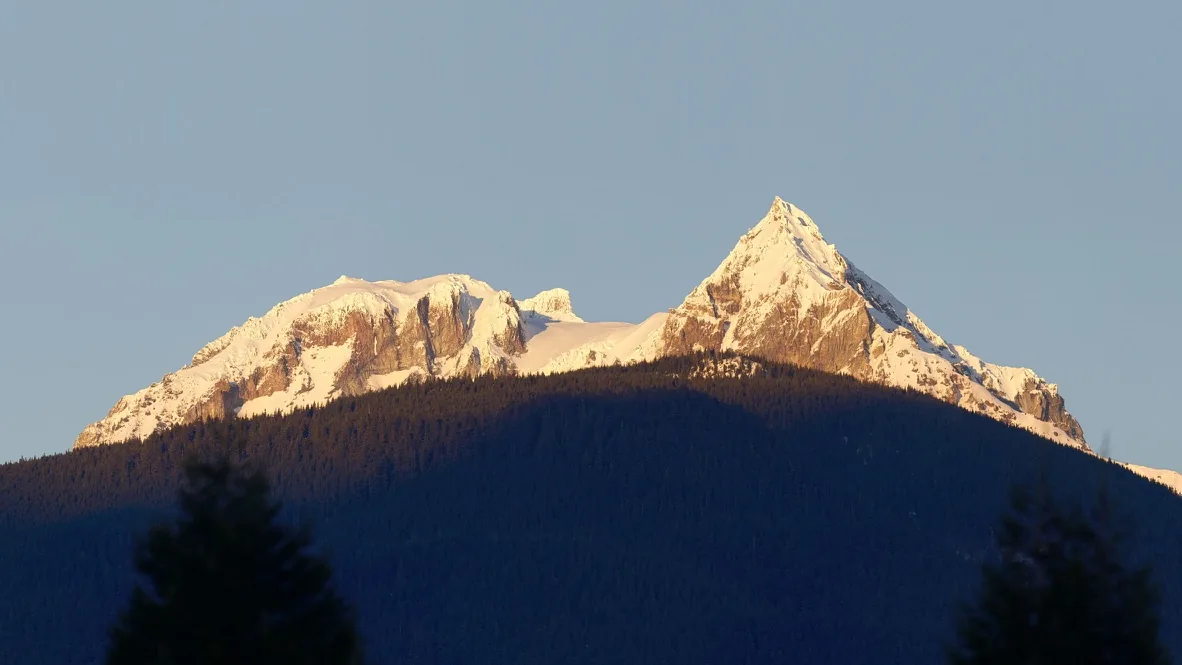
Then sharp glaciated Atwell peak glows vivid orange and pink against a purple sky at sunset, with conifer forest silhouetted below. Mount Garibaldi is located on the east side of the Cheakamus River between Squamish and Whistler. Mount Garibaldi has been the focus of intermittent volcanic activity over the last 260,000 years.
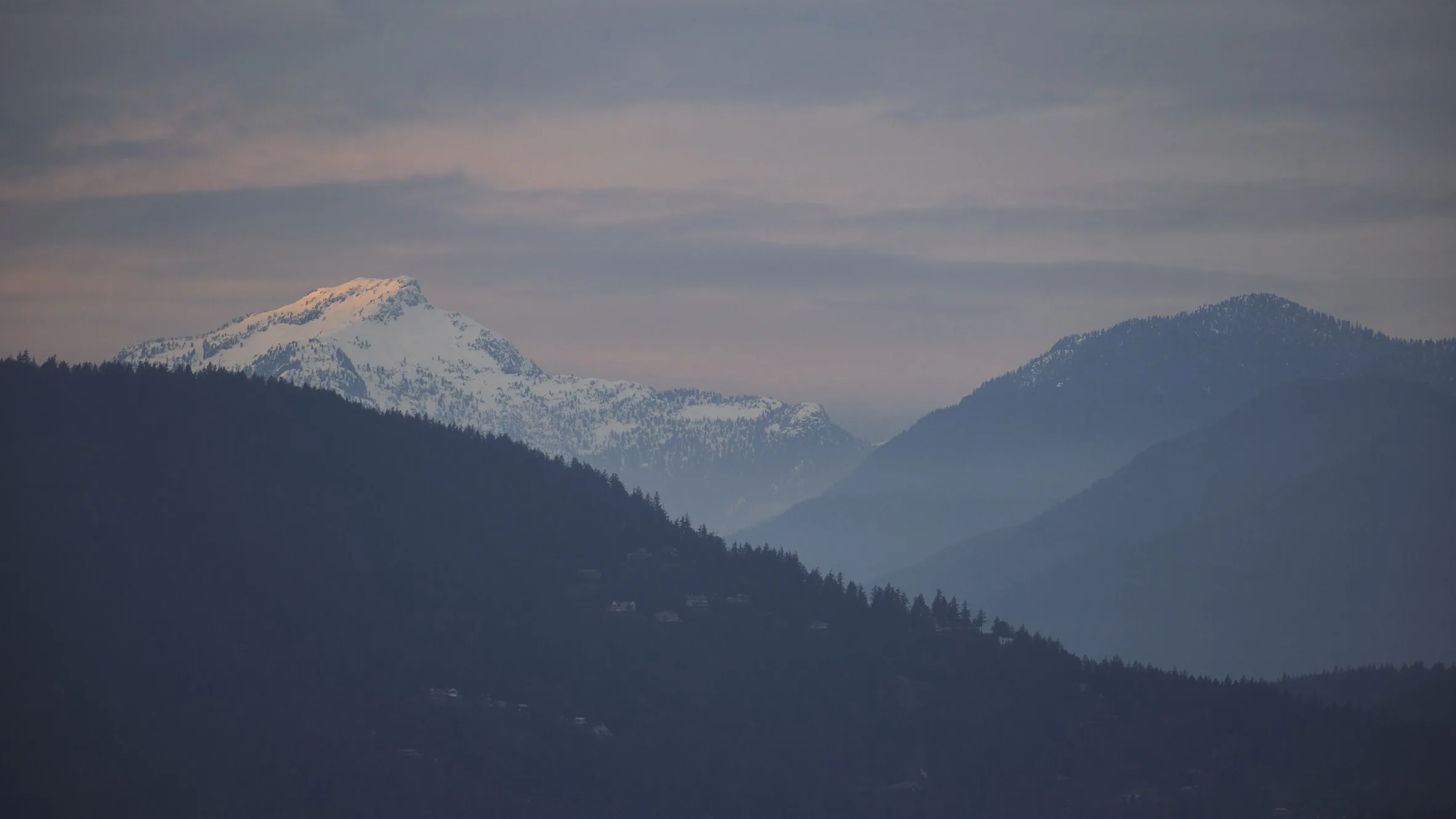
Layered Ridges
Multiple forested ridges recede into atmospheric haze under a grey-pink dusk sky, each successive ridge a progressively lighter shade of blue. Atmospheric perspective in mountain ranges is produced by the scattering of light by water vapour and particles, with each layer of air absorbing more of the shorter blue wavelengths from the reflected light.
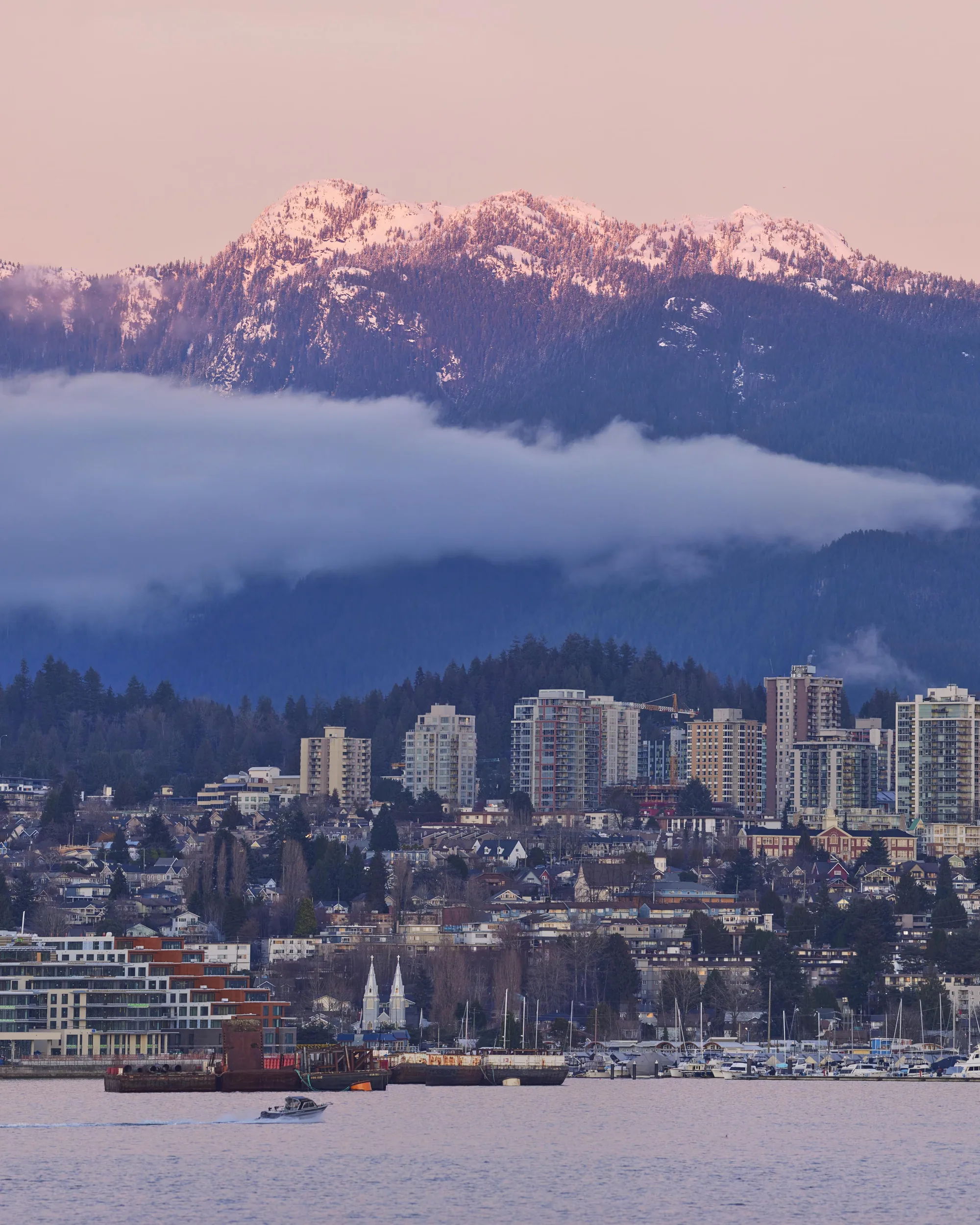
North Shore Mountains, Vancouver
The snow-capped peaks of the North Shore Mountains rise above the residential districts of North Vancouver, a cloud layer filling the valleys below the summits. These mountains form a dramatic natural wall behind the city of Vancouver and include the ski areas of Grouse Mountain, Mount Seymour and Cypress Bowl.
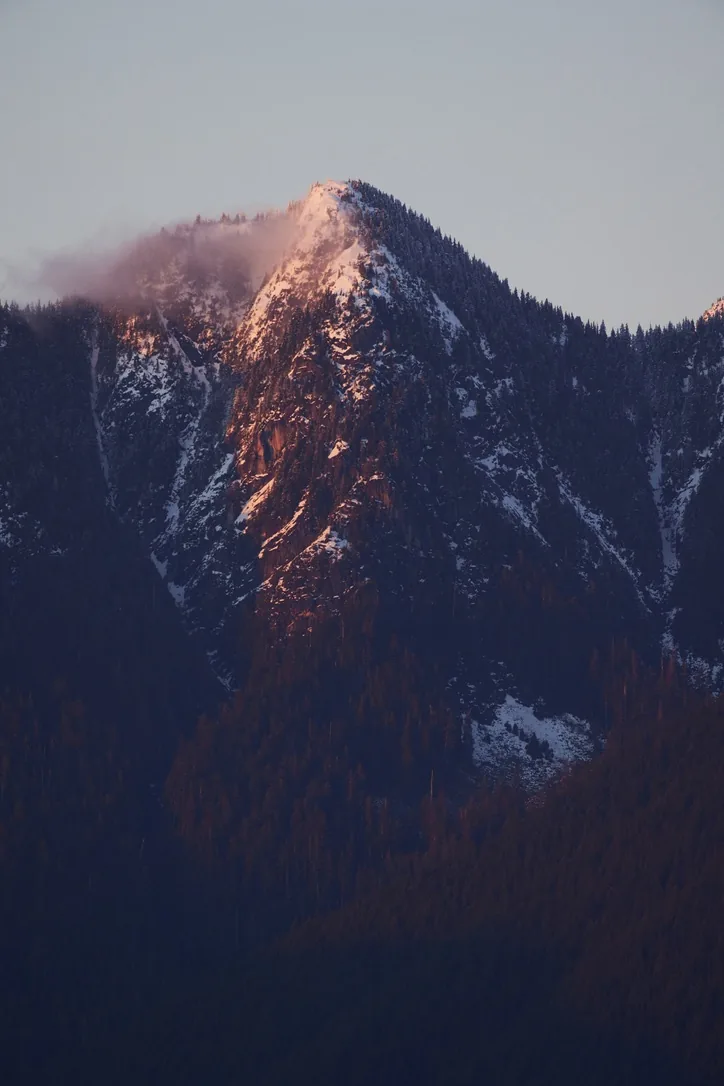
Summit at Last Light
A sharp rocky summit catches the final warm light of the day, its snow-covered face glowing amber with a wisp of orographic cloud forming at the peak. Orographic cloud develops when rising air is forced over a mountain and cools to its dew point, condensing on the windward side of the summit.
Granite Cliffs, Squamish
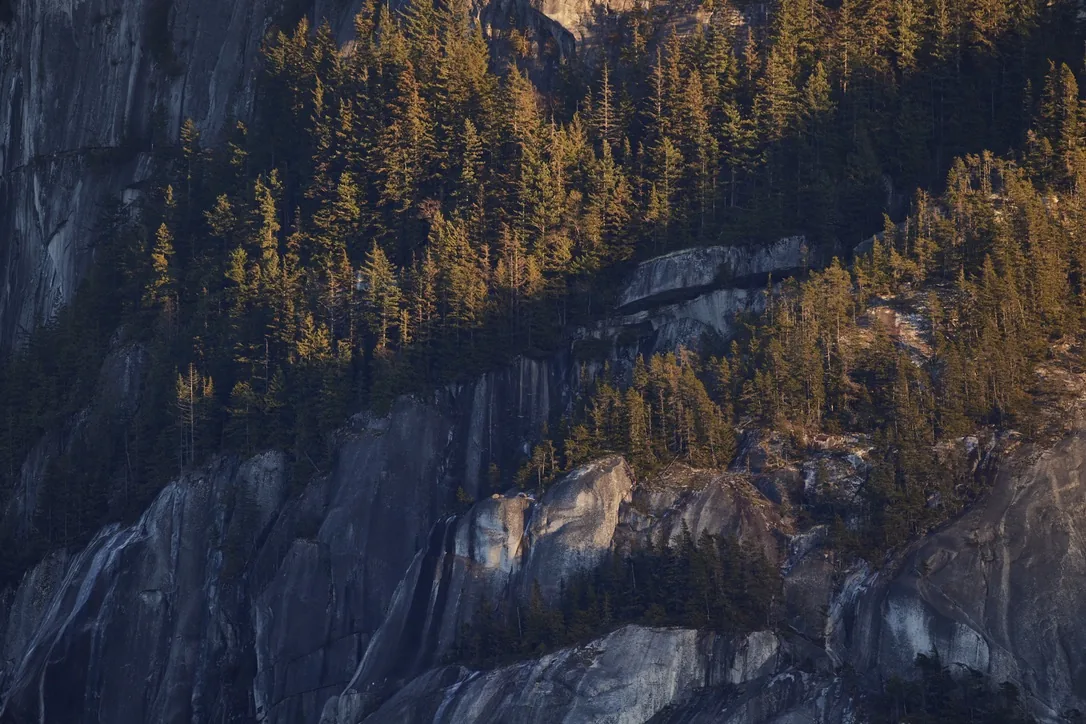
Bare granite cliff faces catch the warm light of the low sun, with conifer trees growing from ledges and crack systems in the rock. The Coast Mountains around Squamish are formed largely of granite intruded during the Cretaceous period, and successive glaciations have polished and plucked the exposed faces to create some of the largest vertical granite walls in North America.
Mountain Panorama
Snow-covered peaks and glaciers extend across the skyline above a dark conifer forest, a sharp pointed summit rising to the right. The glaciers here are part of the Coast Mountains icefield system, one of the largest concentrations of glaciated terrain outside the polar regions and a significant source of freshwater for southwest British Columbia.
Alpenglow on a Summit
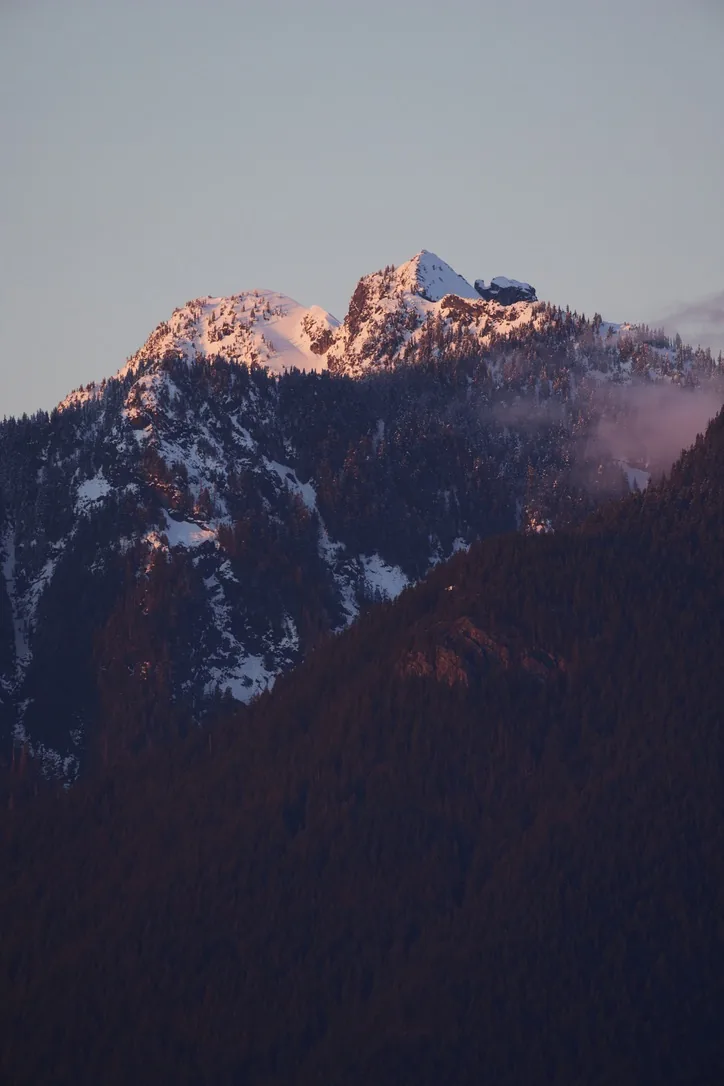
A rounded snow-covered summit catches the pink alpenglow of dusk, a small wisp of cloud trailing from its shoulder. The lower forested slopes are in deep shadow while the peak remains lit, creating a stark contrast between the warm tones of the summit snowfields and the blue-purple darkness of the valley below.
The Stawamus Chief, Squamish
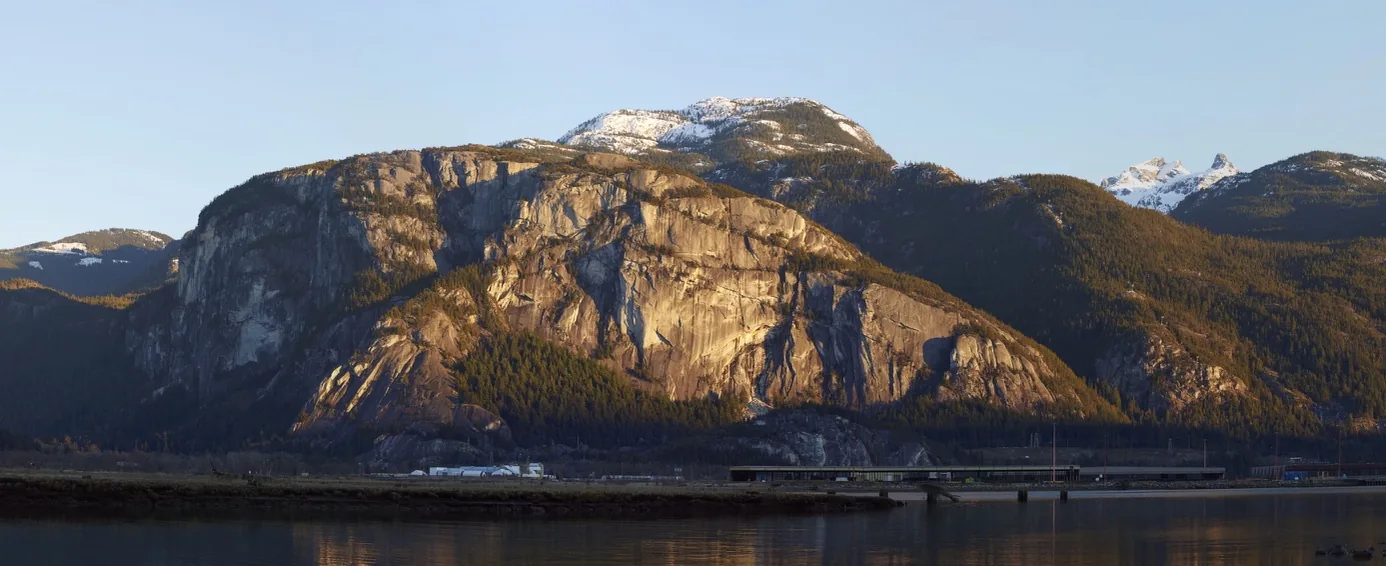
The granite dome of the Stawamus Chief rises above the Squamish estuary, its massive bare face reflected in calm water below. One of the largest granite monoliths in North America, the Chief stands 702 metres above the valley floor and offers over 1,000 established rock climbing routes across its three summits, attracting climbers from around the world.
Mountain at Dusk
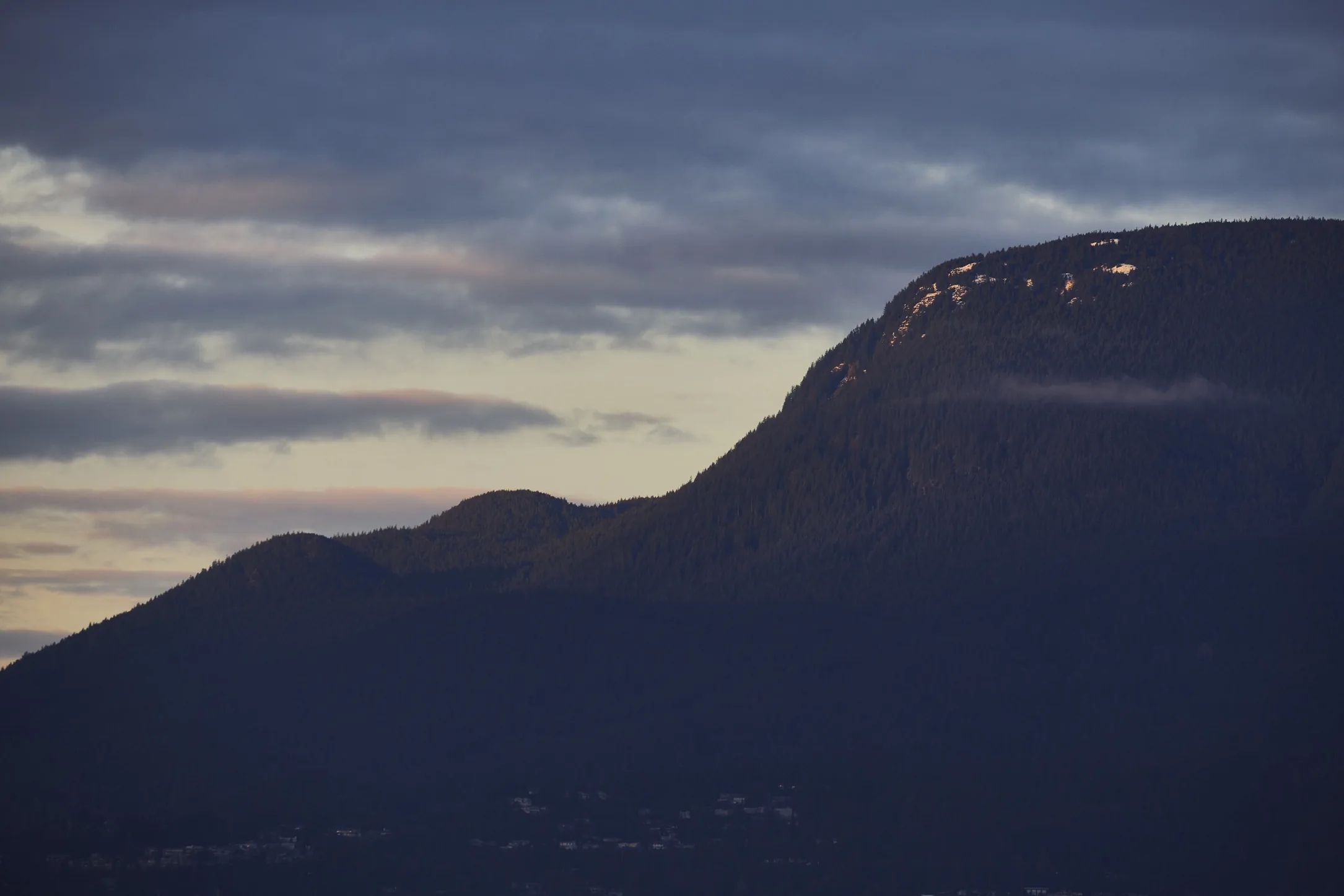
A rounded summit rises from dense conifer forest at dusk, a wisp of cloud clinging to its mid-slope. The last light catches a patch of snow near the summit while the lower mountain fades into blue-purple shadow. The Coast Mountains here receive some of the highest snowfall totals in Canada, supporting year-round glaciation at higher elevations.
The Lions
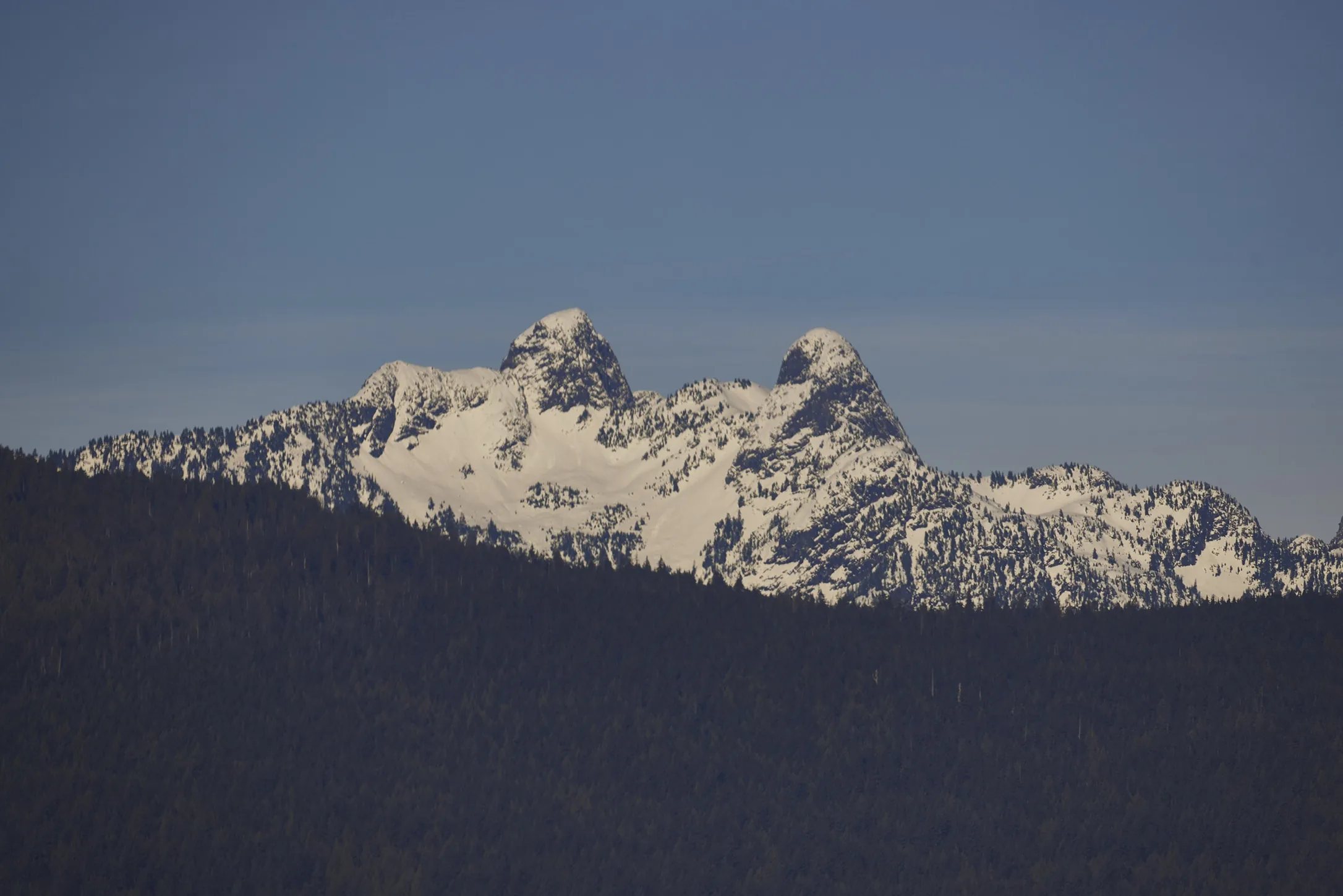
The two distinctive summits of the Lions rise above the North Shore forests, their double peaks a defining feature of the Vancouver skyline. The peaks reach 1,646 metres and form part of the traditional territory of the Squamish Nation, who know them as Ch’ich’iyúy Elxwíkn. They are visible from much of Greater Vancouver on clear days.
Coast Mountains at Golden Hour
Multiple snow-covered peaks and rocky ridges of the Coast Mountains are illuminated in warm golden light, cloud layers drifting at mid-mountain level. Shot with a telephoto lens from a distant vantage point, the image stacks successive ridgelines into a compressed panorama that emphasises the sheer density of peaks in this part of British Columbia.