
Gallery
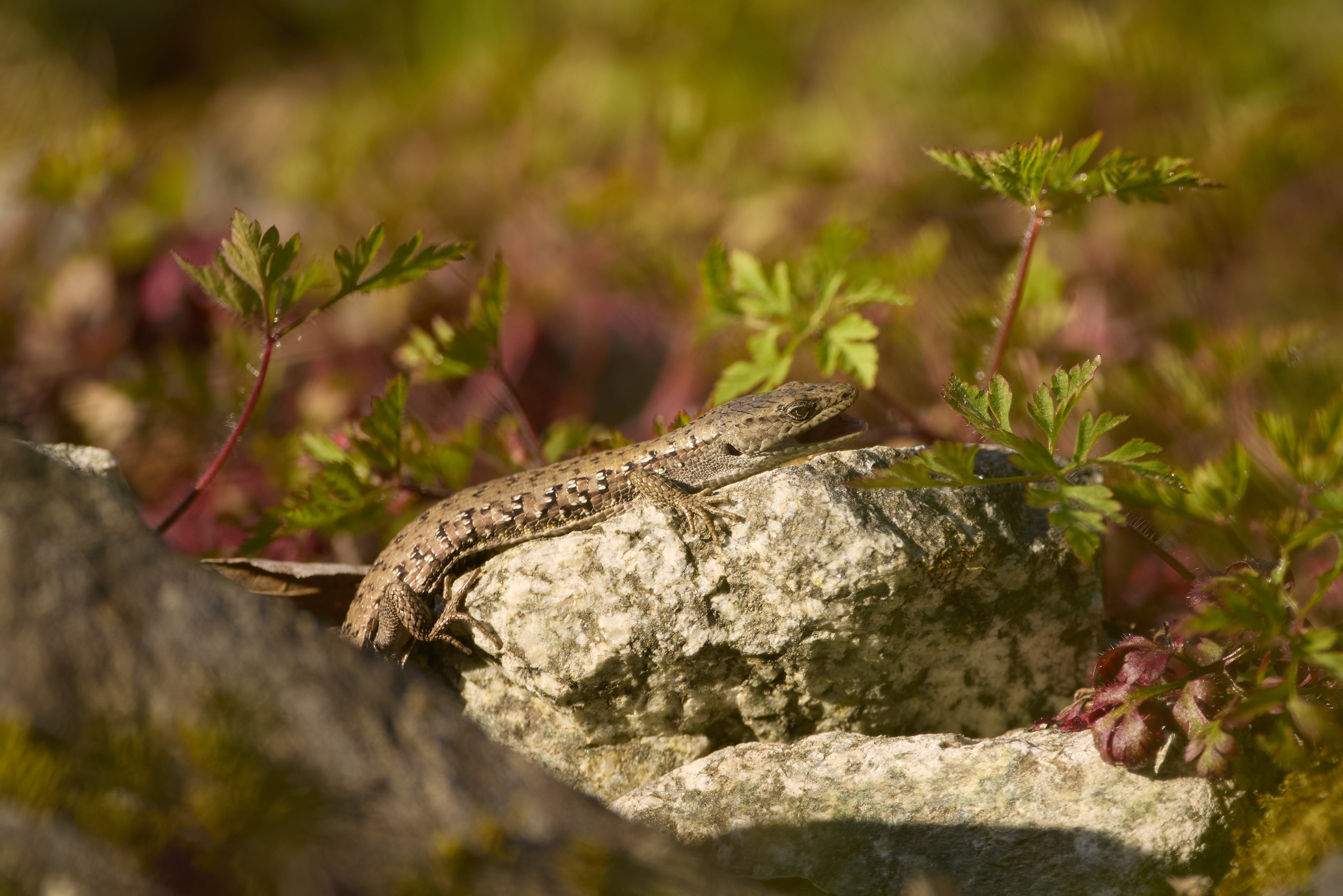
Northern Alligator Lizard
The northern alligator lizard is found in forests and shrublands from British Columbia south into California. It takes its name from the keeled, plate-like scales along its body, which resemble those of an alligator. These lizards bask in open areas and actively hunt insects and small invertebrates.
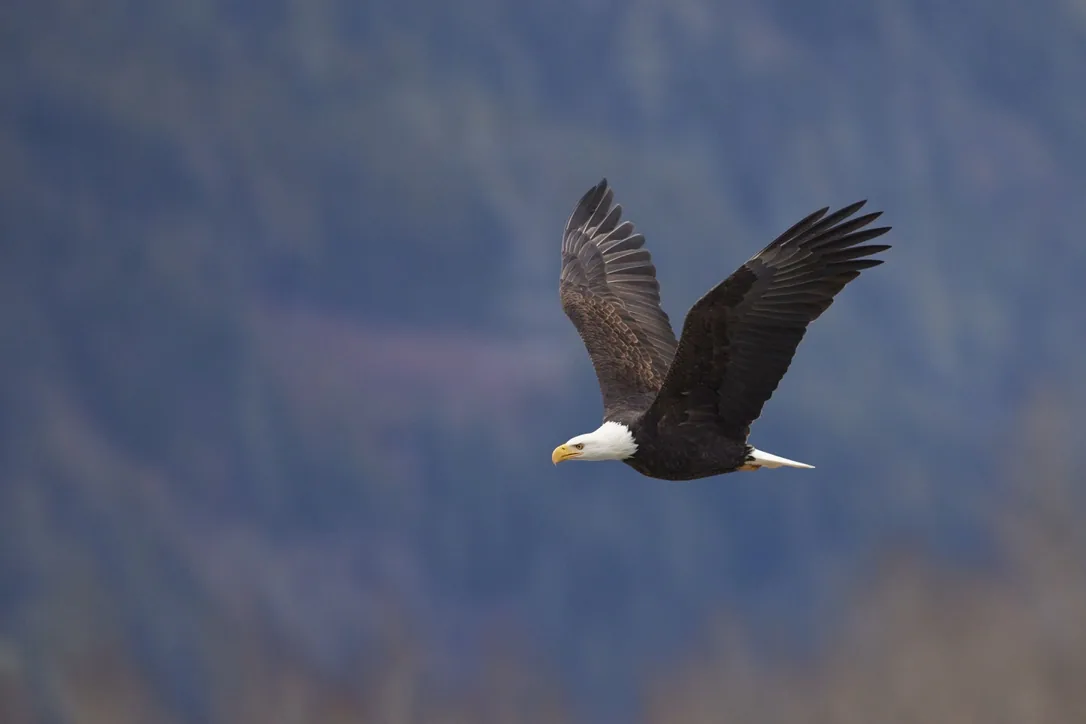
Bald Eagle in Flight
An adult bald eagle soars with wings fully spread against a mountain backdrop. Bald eagles use thermals and ridge lift to cover large territories with minimal effort. The white head and tail develop at around five years of age, when the bird reaches sexual maturity and acquires full adult plumage.
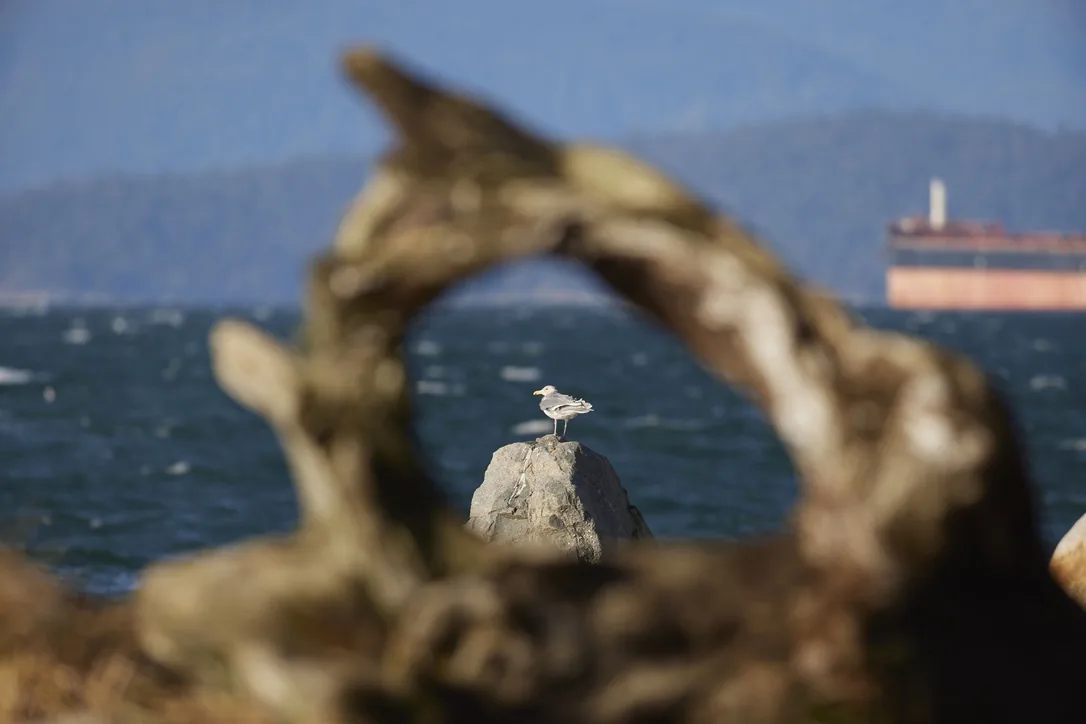
Gull Through the Driftwood
A gull perches on a coastal rock, framed by a twisted arc of driftwood. Several gull species are common along the British Columbia coast year-round. They are generalist feeders taking fish, invertebrates, and scavenged food, and are typically the most abundant birds along urban and semi-urban coastlines.
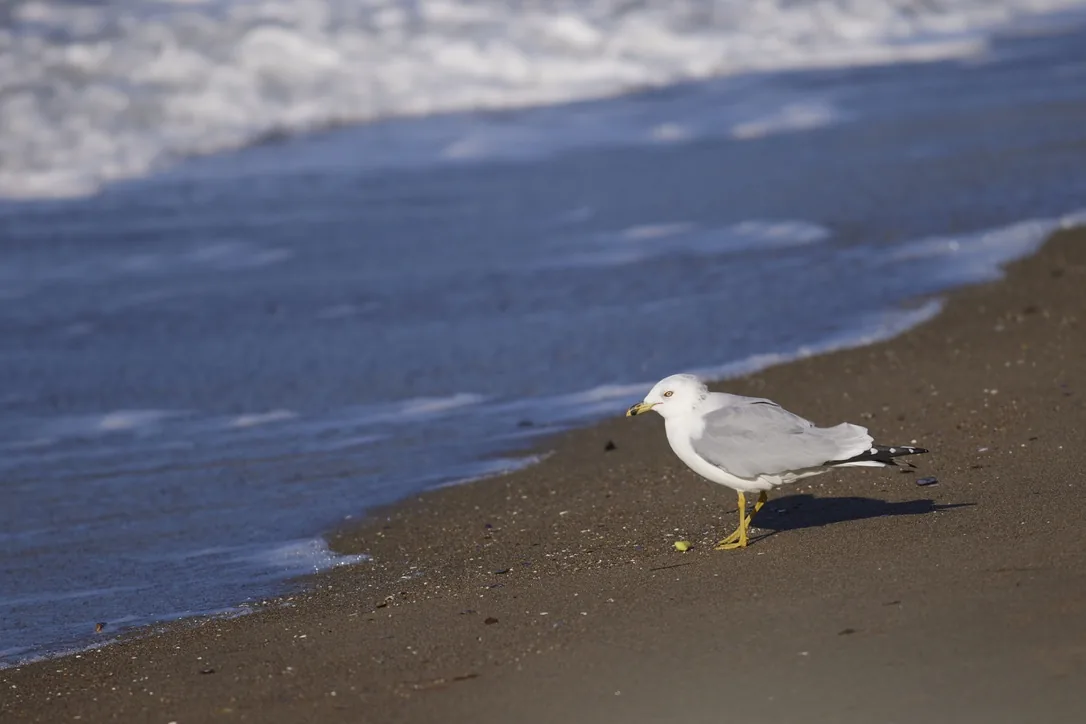
Ring-billed Gull on the Shore
A ring-billed gull walks along a sandy beach at the water’s edge. One of the most common gulls in North America, the ring-bill is identified by the dark band near the tip of its yellow bill. It feeds opportunistically on fish, invertebrates, and scraps along shorelines, beaches, and car parks alike.
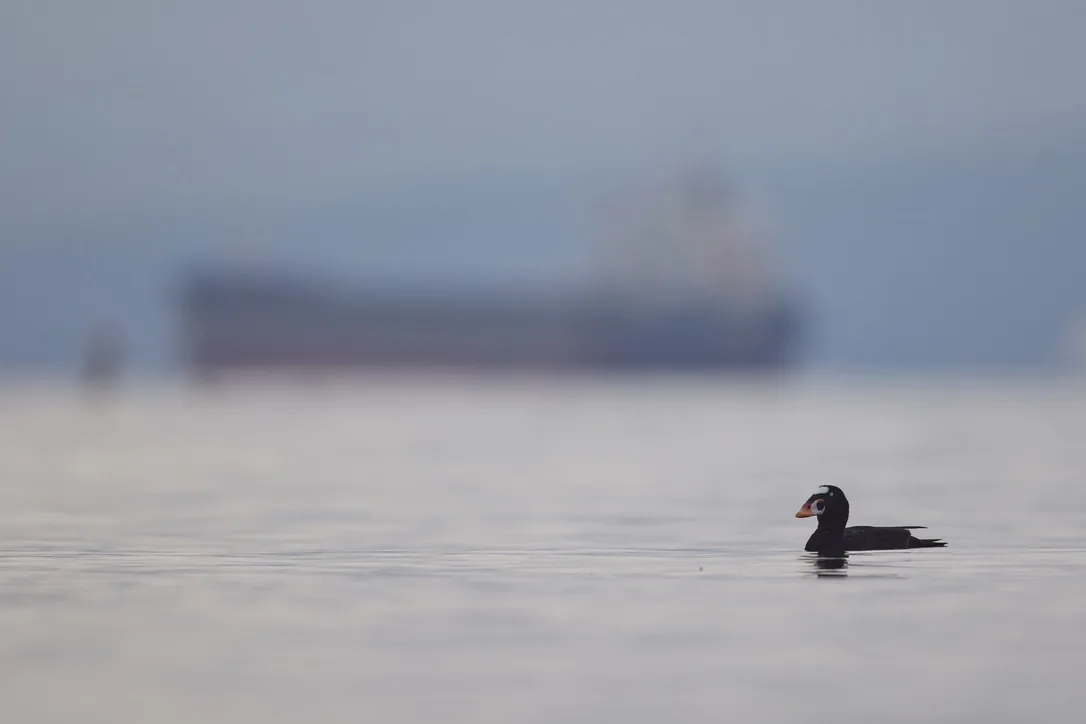
Surf Scoter
A surf scoter floats on a calm inlet with a cargo ship visible in the haze behind. This distinctive sea duck winters along the Pacific and Atlantic coasts of North America. The male’s striking orange-and-white bill and white head patches are unmistakable. Surf scoters dive to feed on mussels, clams, and benthic invertebrates.
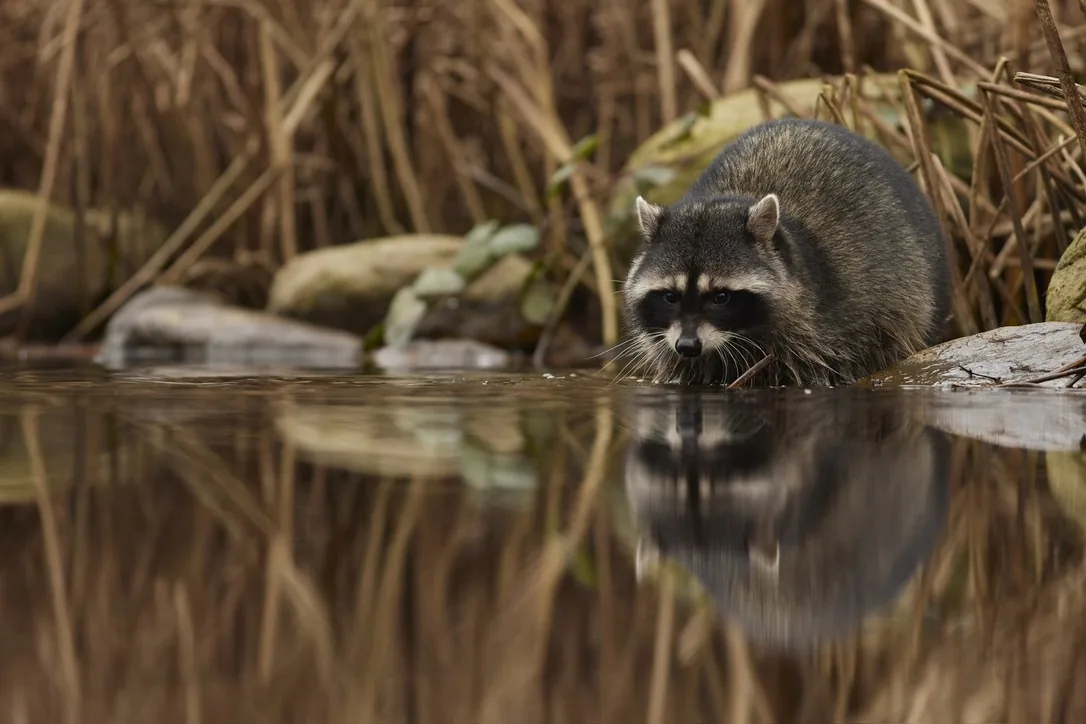
Raccoon at the Water
A raccoon crouches at the edge of a wetland channel, its reflection clear in still water. Raccoons are highly tactile feeders, using sensitive front paws to feel for food in water and mud. They are native to North America and have spread widely as highly adaptable generalists in both rural and urban environments.
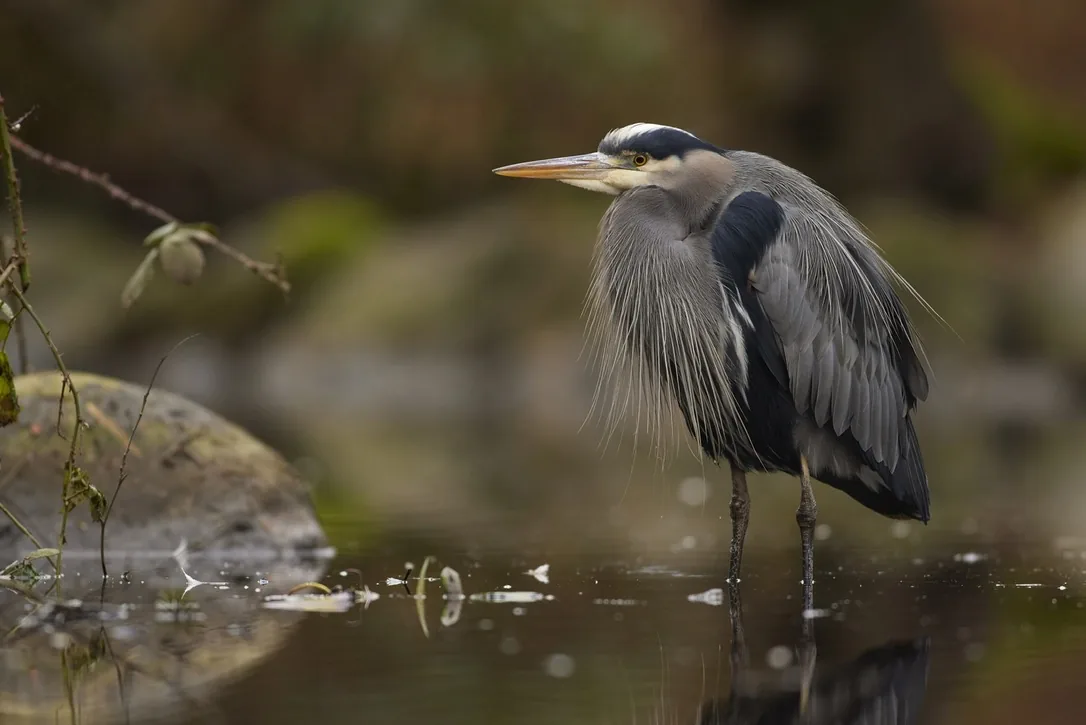
Great Blue Heron
A great blue heron stands hunched in shallow water, feathers ruffled against the cold. The great blue heron is the largest heron in North America, standing up to 1.2 metres tall. It hunts by standing motionless and striking at fish and amphibians with a sudden, rapid jab of its long, dagger-like bill.
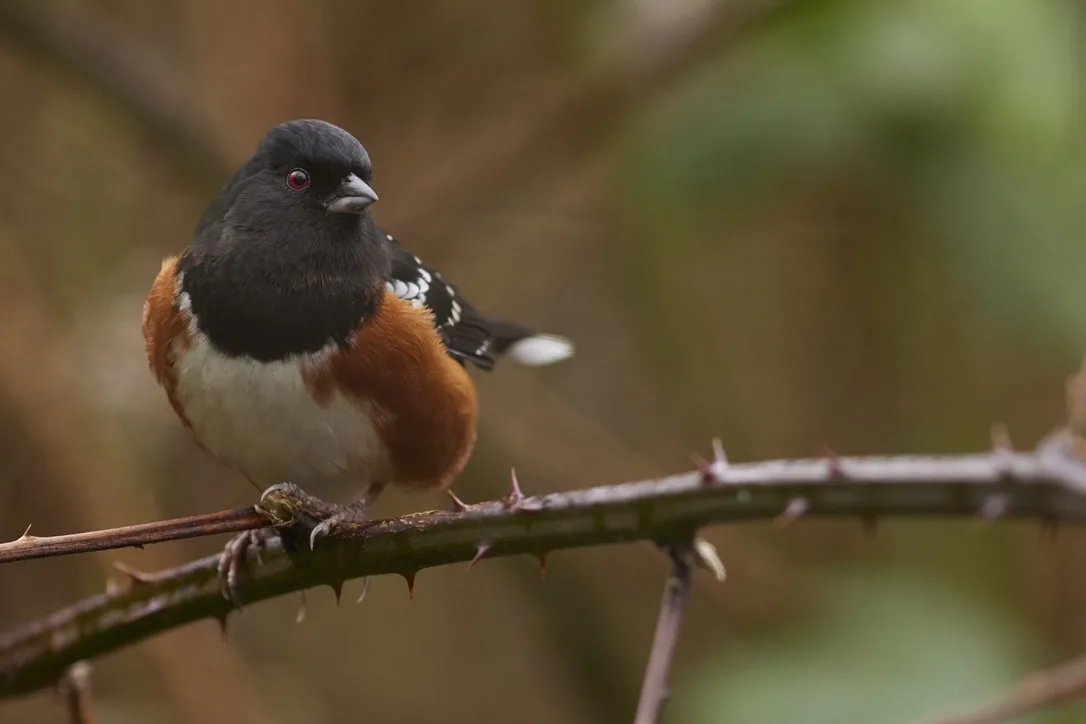
Spotted Towhee
A male spotted towhee perches on a thorny bramble stem in winter woodland. The spotted towhee is a large sparrow found across western North America, identified by its black hood, rufous flanks, and white wing spots. It forages on the ground, scratching through leaf litter with both feet simultaneously.
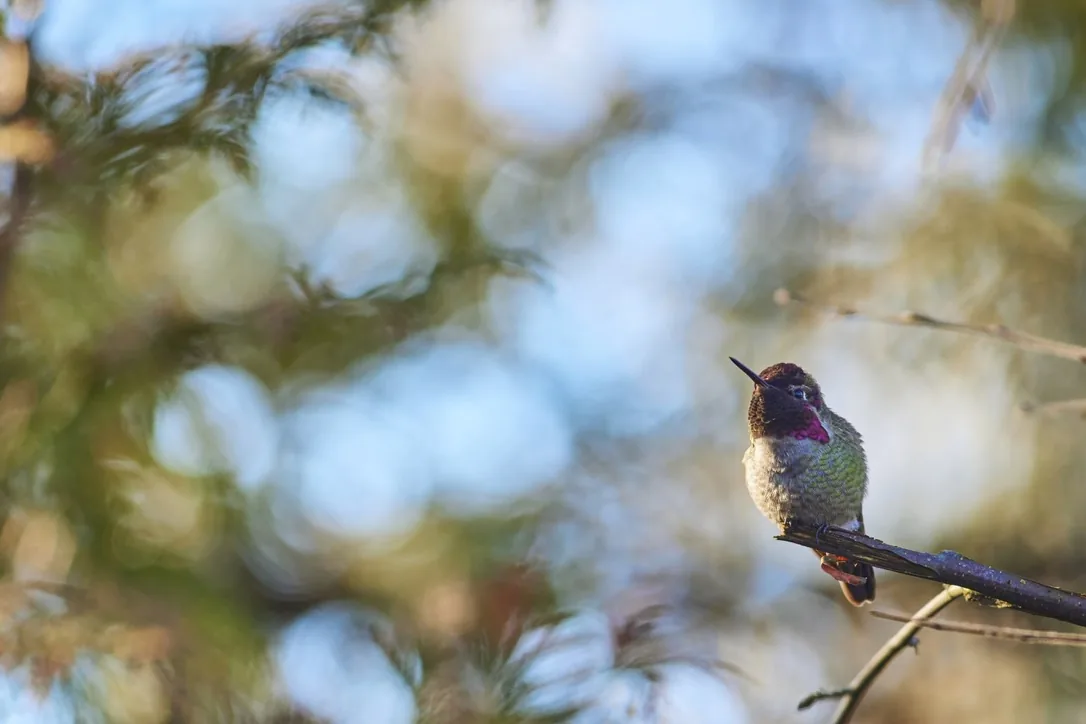
Anna’s Hummingbird
A male Anna’s hummingbird perches on a twig, his iridescent rose-pink gorget catching the light. Anna’s hummingbird is one of the few hummingbirds that overwinters on the Pacific coast rather than migrating south. Males sing a scratchy, buzzy song year-round to defend feeding territories, unusual behaviour among hummingbirds.
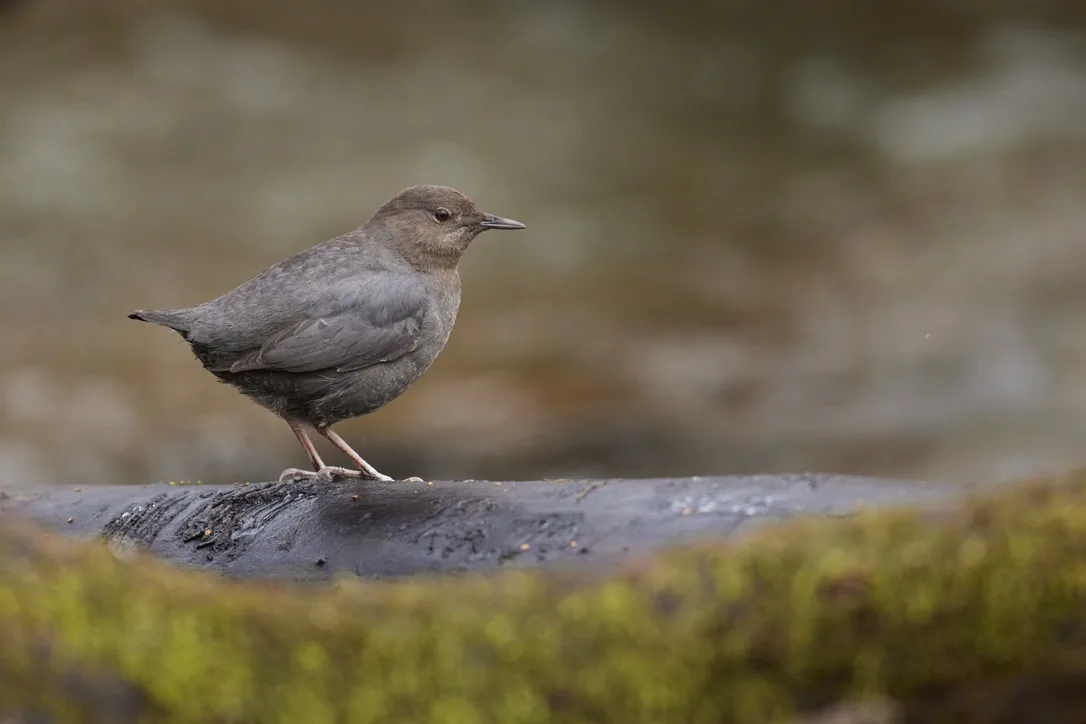
American Dipper
An American dipper perches on a mossy wet rock beside a fast-flowing stream. The dipper is North America’s only truly aquatic songbird, walking along riverbeds and swimming underwater to catch invertebrates and small fish. A dense, oily coat and high haemoglobin levels keep it insulated and active in cold mountain streams.
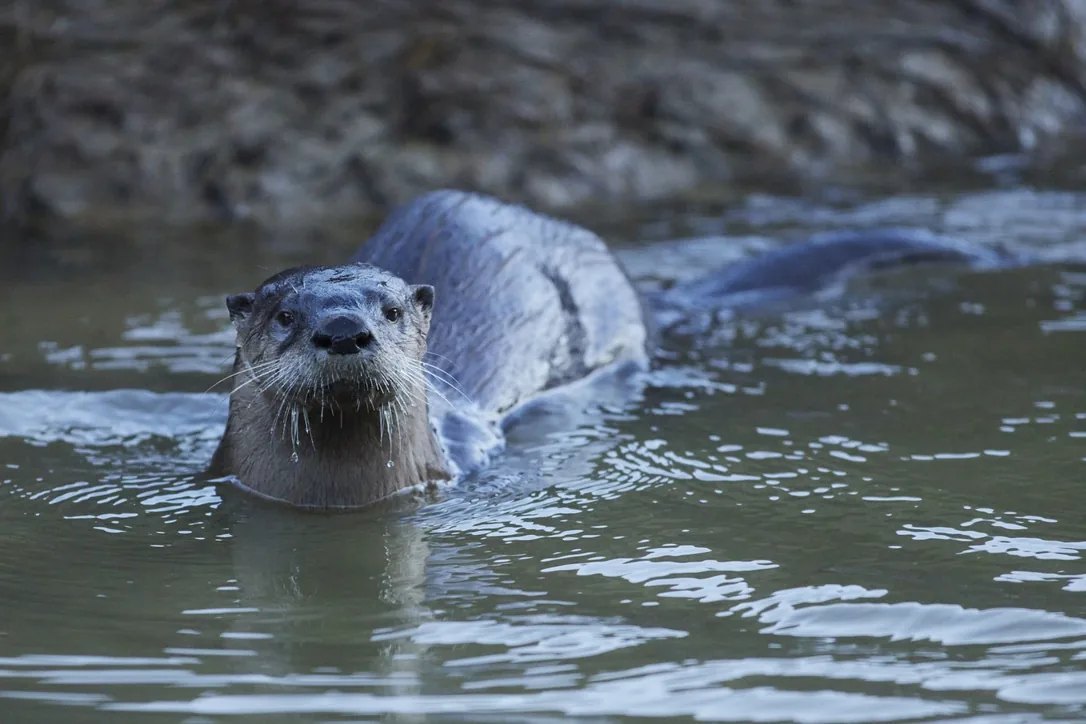
River Otter
A North American river otter surfaces in a river and looks directly at the camera. River otters are highly aquatic mustelids, capable of diving for several minutes and swimming at speed. They eat mainly fish but will also take crayfish, frogs, and small birds when the opportunity arises along riverbanks and estuaries.
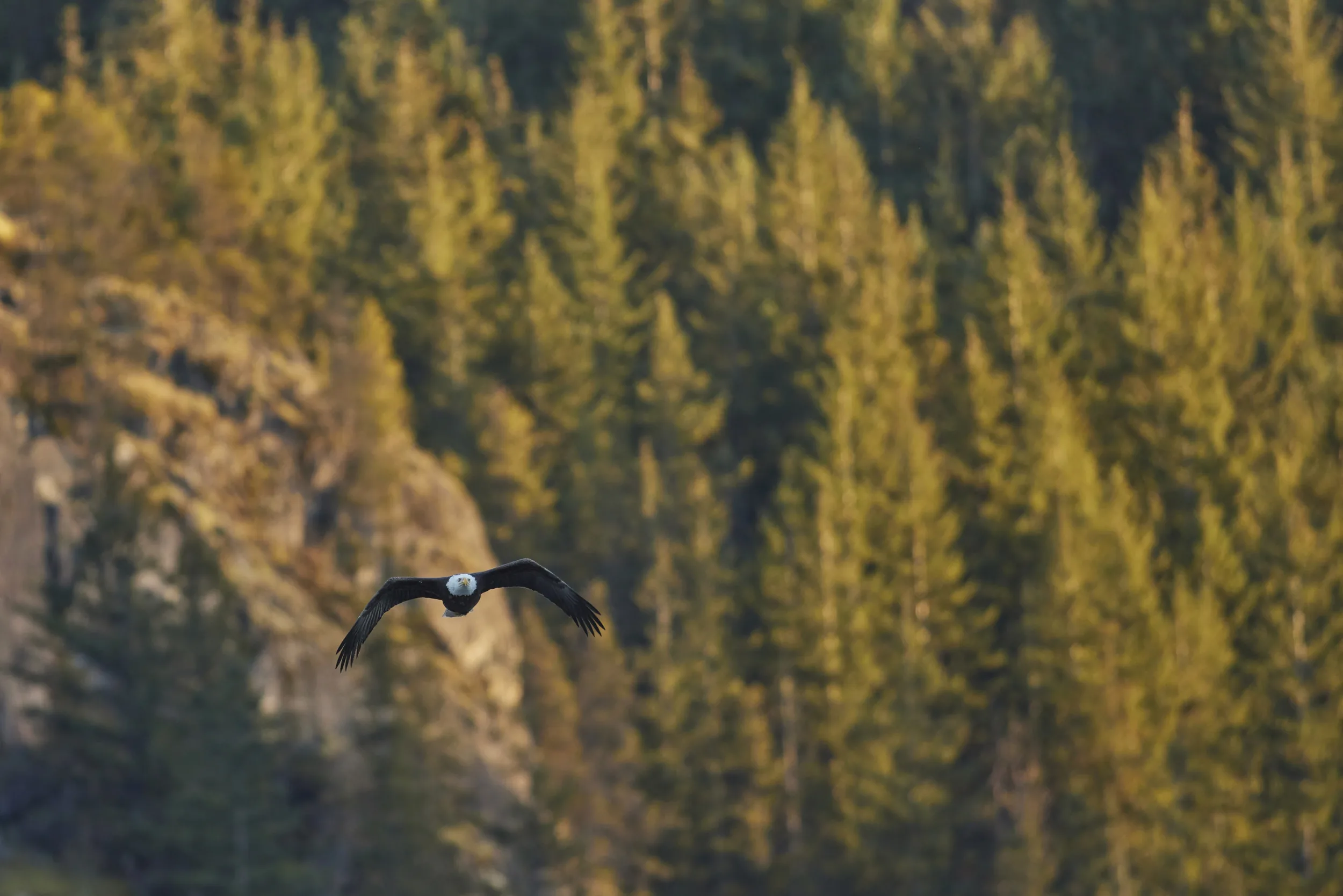
Eagle Over the Forest
A bald eagle flies level with a rocky cliff above British Columbia’s conifer forest. In BC, bald eagles are commonly seen along rivers and coastlines, particularly during salmon runs when dozens can gather at a single site. Their wingspan typically reaches over two metres, making them one of the most distinctive birds in the sky.