
Gallery
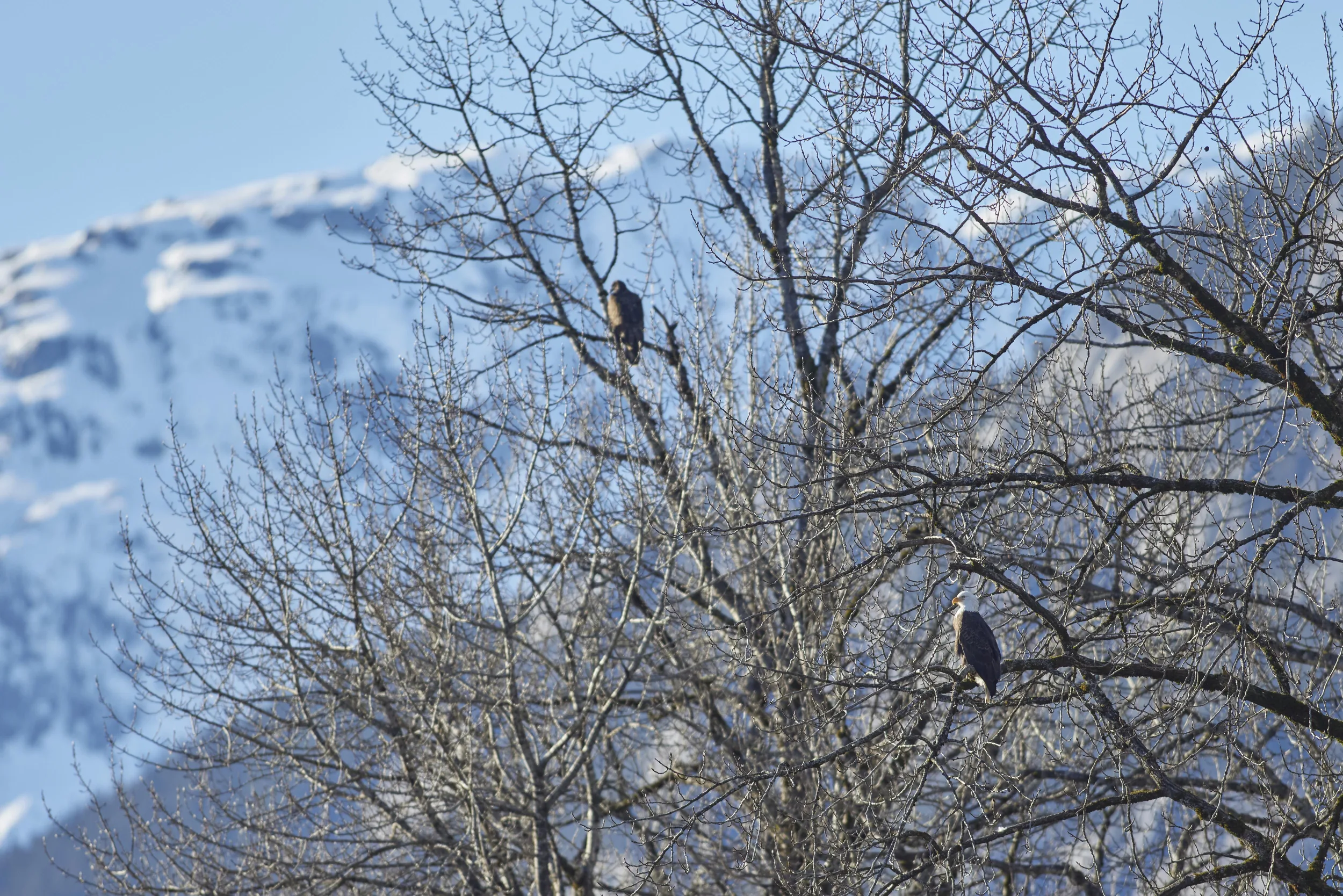
Two Eagles on a Winter Perch
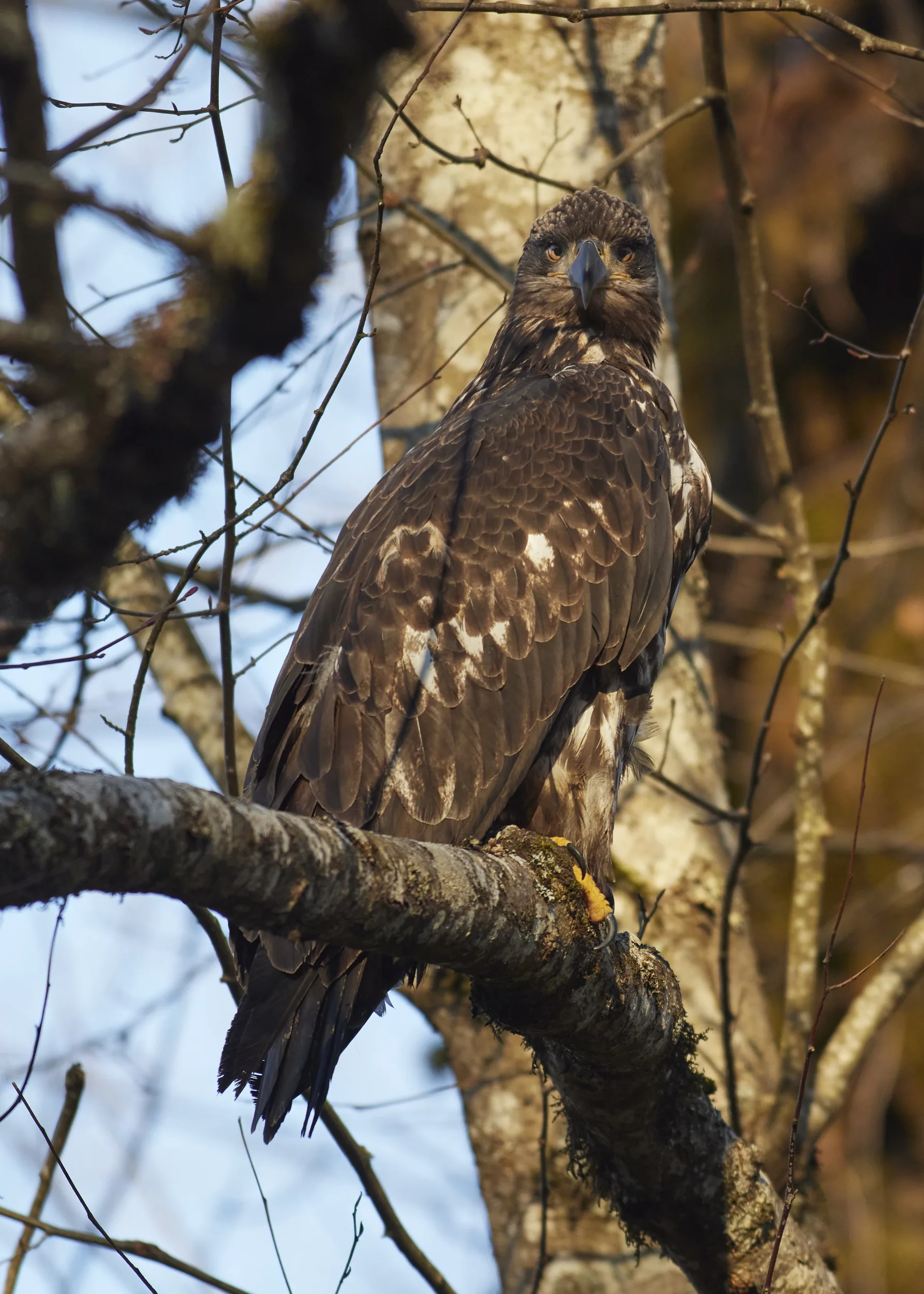
Bald eagles often roost communally in tall trees near rivers and estuaries, particularly in winter when salmon runs draw gatherings of birds. Adults are identifiable by their white head and tail, while younger birds are dark brown throughout, taking up to five years to gain full adult plumage.
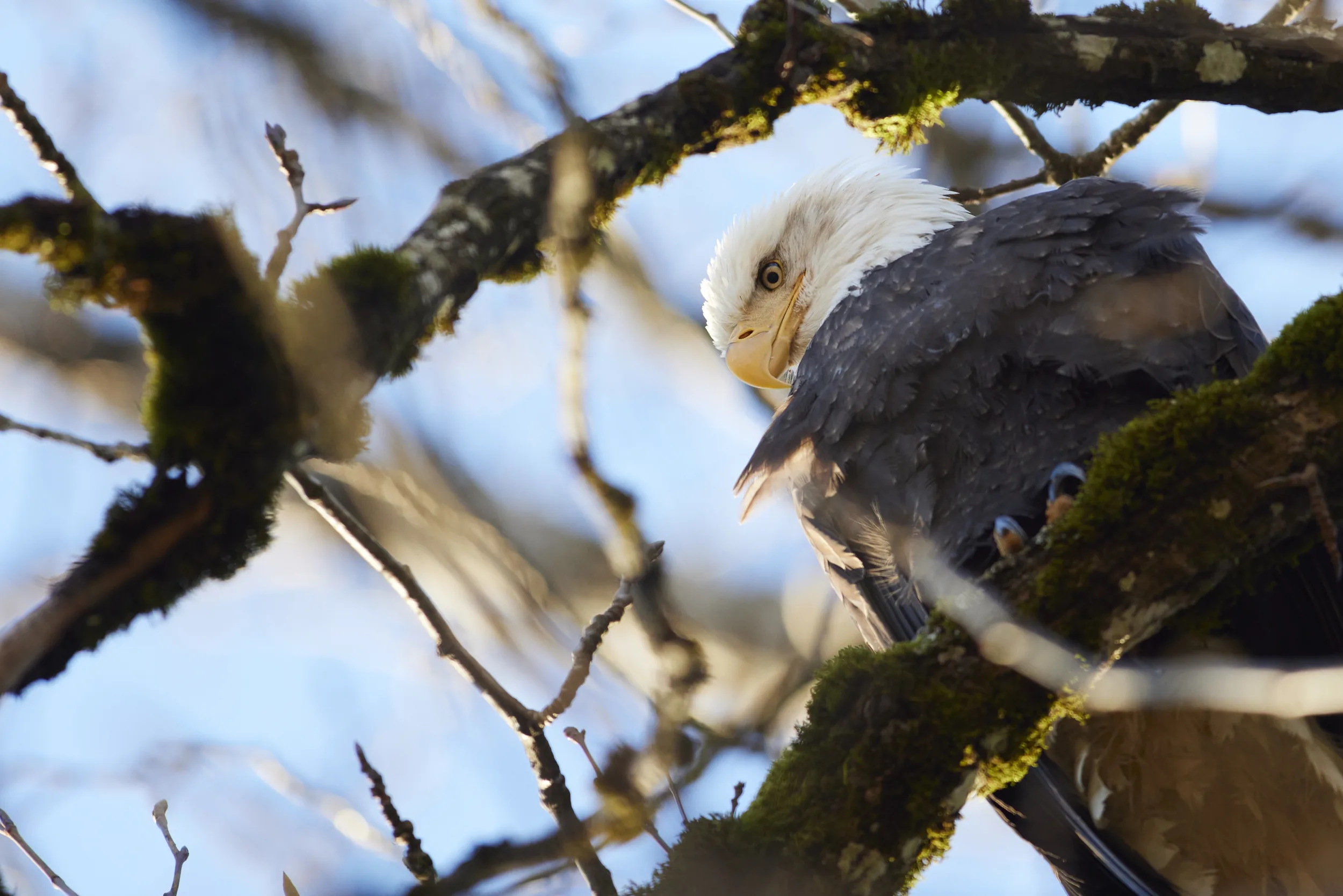
Watching From the Branch
Bald eagles spend much of the day perched in tall trees overlooking water, watching for fish and other food opportunities. They have exceptionally sharp eyesight, capable of detecting prey from hundreds of metres away. Their large hooked bill is bright yellow in adults and dark grey in young birds.
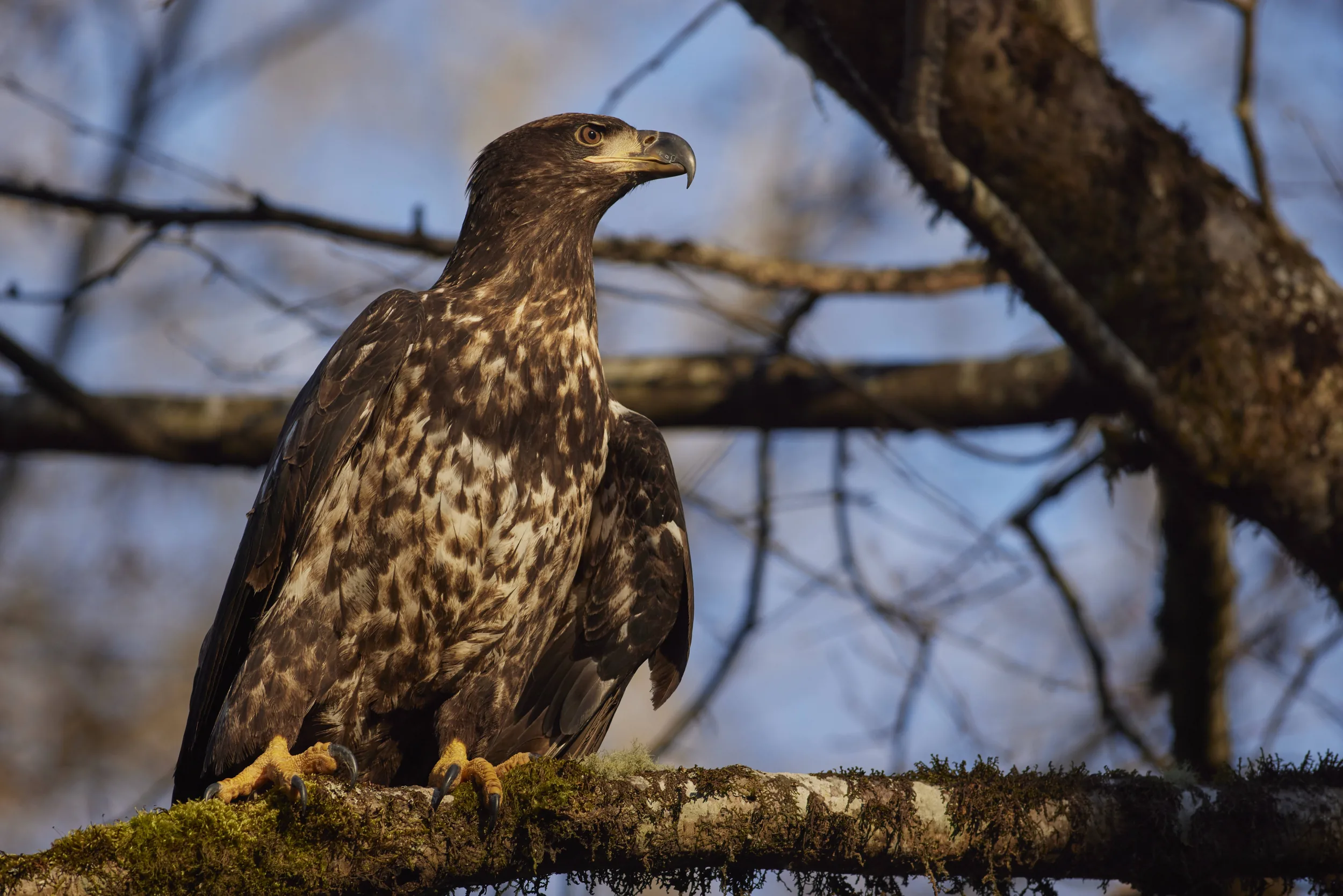
Immature Eagle on the Branch
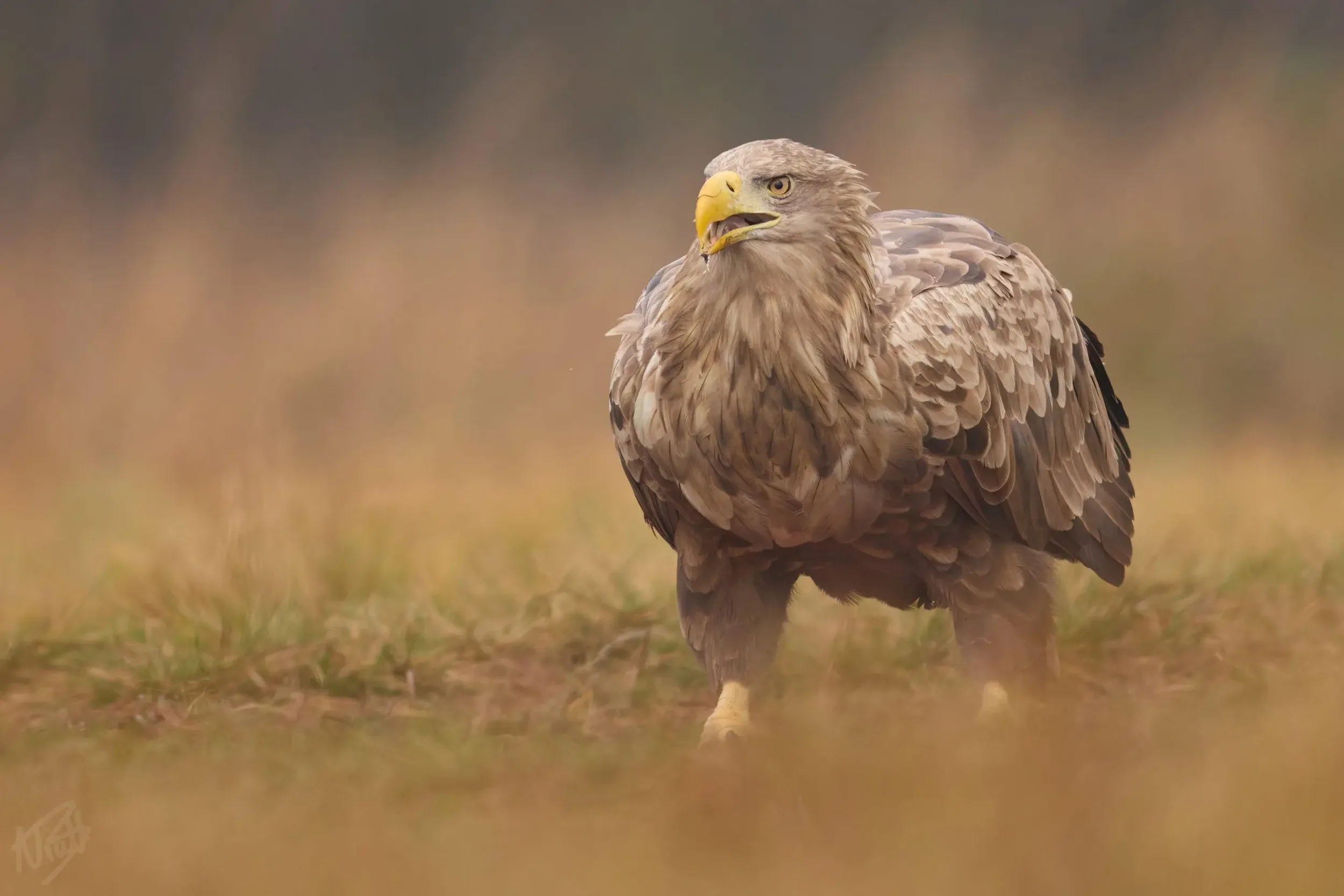
Immature bald eagles are mottled brown and white, with no distinct white head or tail colouring. Young birds can be confused with golden eagles, though the bald eagle’s heavier bill and different proportions help distinguish them. Full adult plumage is not reached until around five years of age.
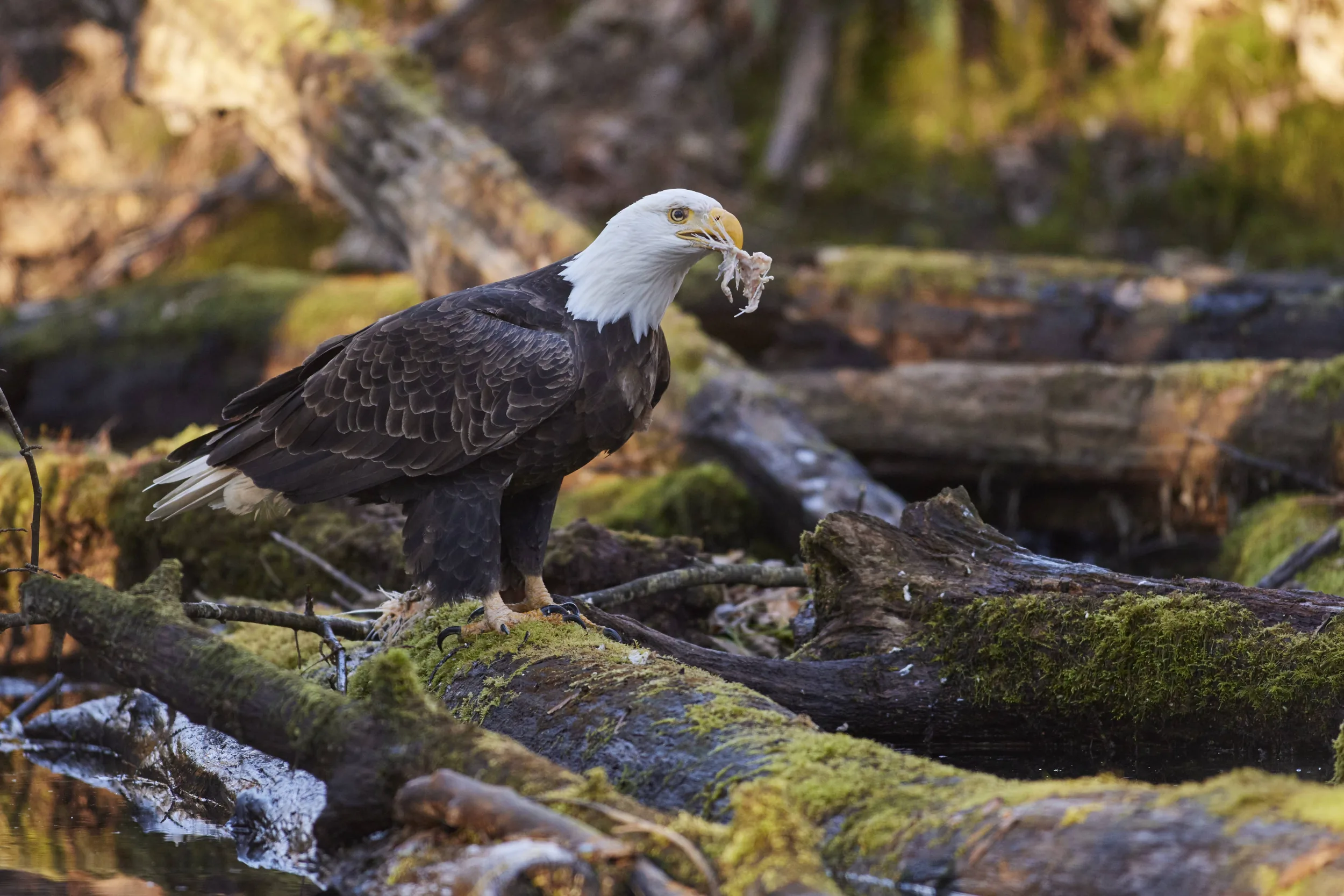
Adult Eating Salmon
Fish, particularly salmon, form the core of the bald eagle’s diet where they are available. During salmon runs, eagles gather in numbers to feed on spawned-out fish along rivers and streams. They will also scavenge carrion, steal food from other birds, and take small mammals.
Immature Eagle Alert
Young bald eagles spend their first few years ranging widely before settling in a breeding territory. They are not sexually mature until around four or five years of age. During this period they gradually develop their hunting skills, shifting from opportunistic scavenging toward catching live prey.
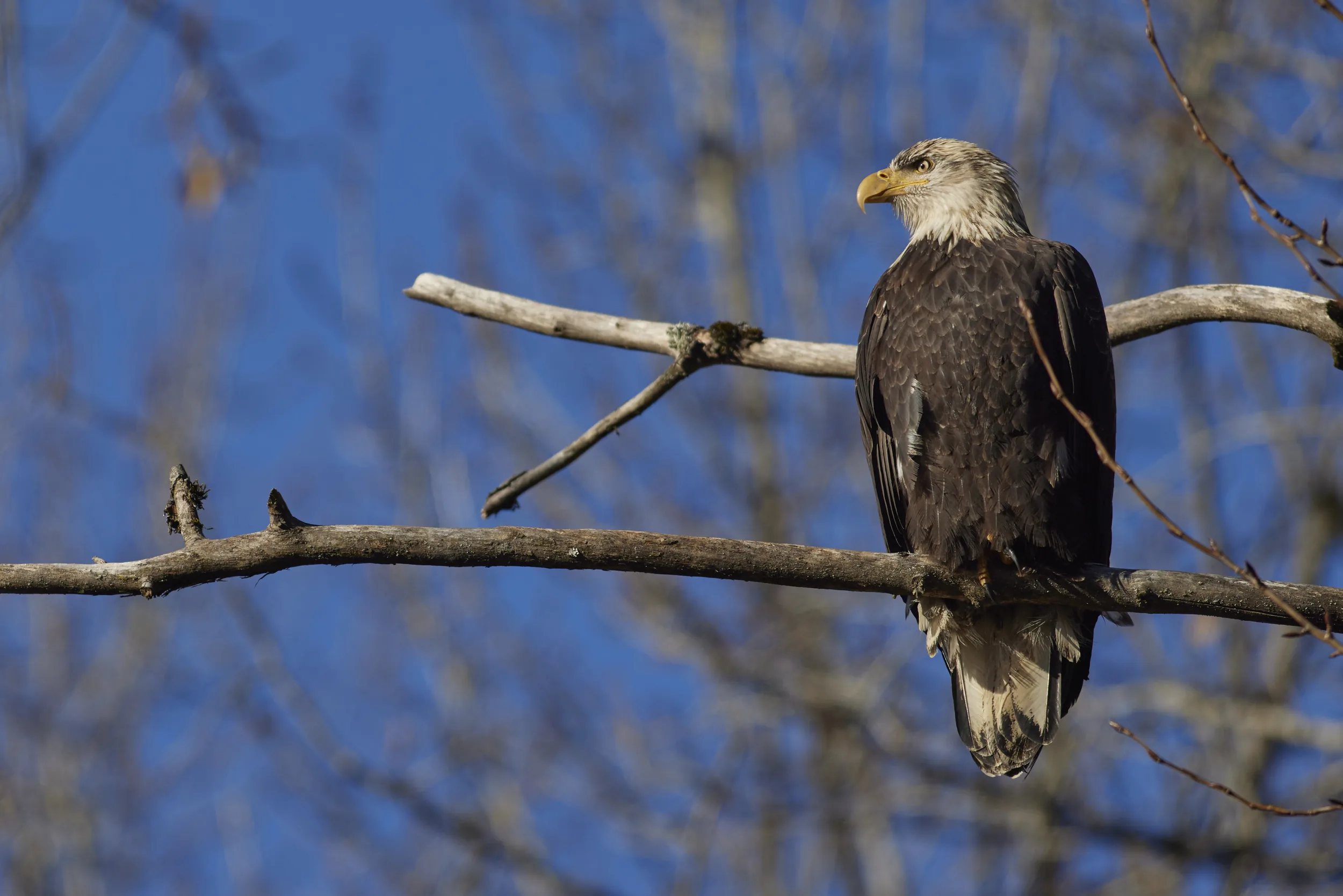
Adult on the Bare Branch
Bald eagles build some of the largest nests of any bird. Used year after year and added to each breeding season, some nests eventually reach over two metres across and can weigh more than a tonne. Pairs typically return to the same nest and the same mate year after year.
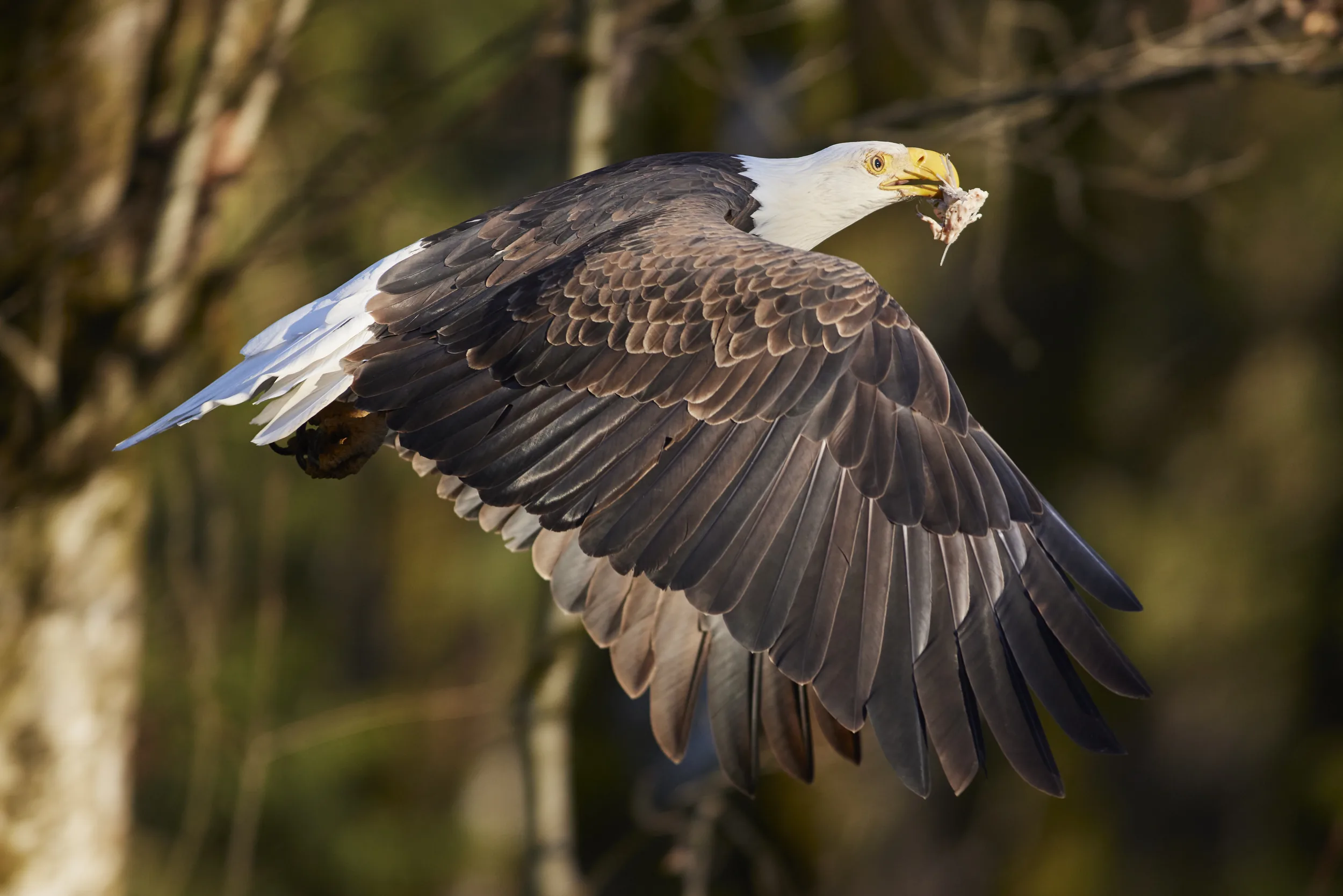
Eagle Carrying Fish in Flight
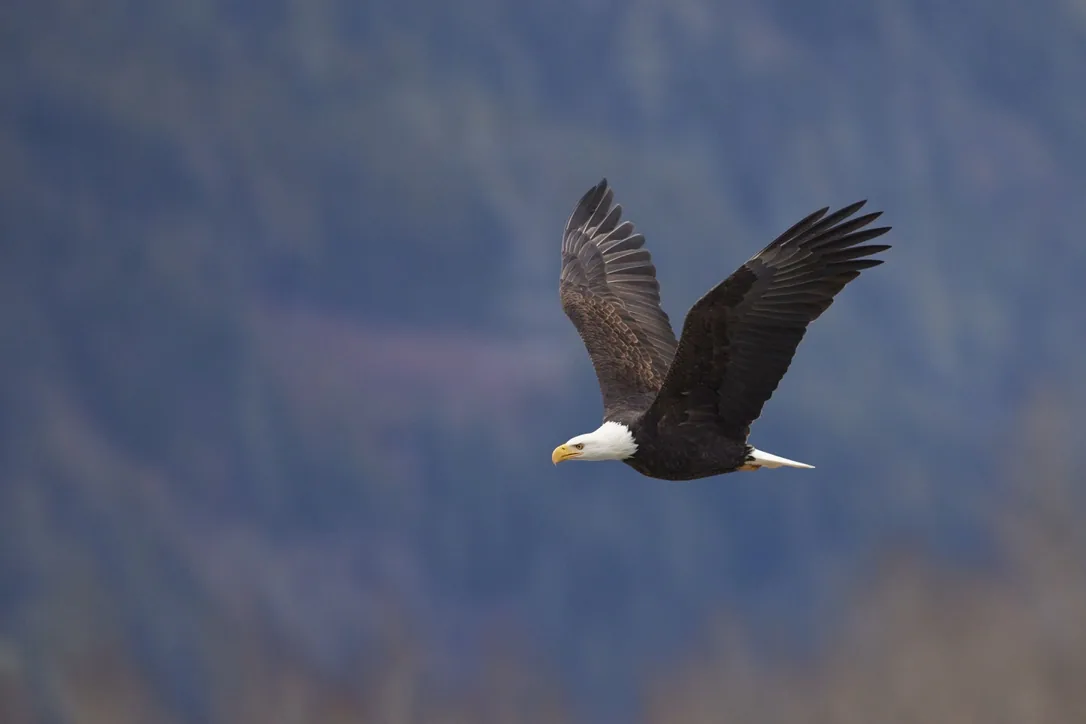
Bald eagles catch fish by swooping low over the water and seizing prey with their feet. Larger fish are sometimes carried in the bill rather than the talons. The soles of their feet are covered in rough, spiny pads that prevent slippery fish from twisting free during the flight back to a perch.