
Gallery
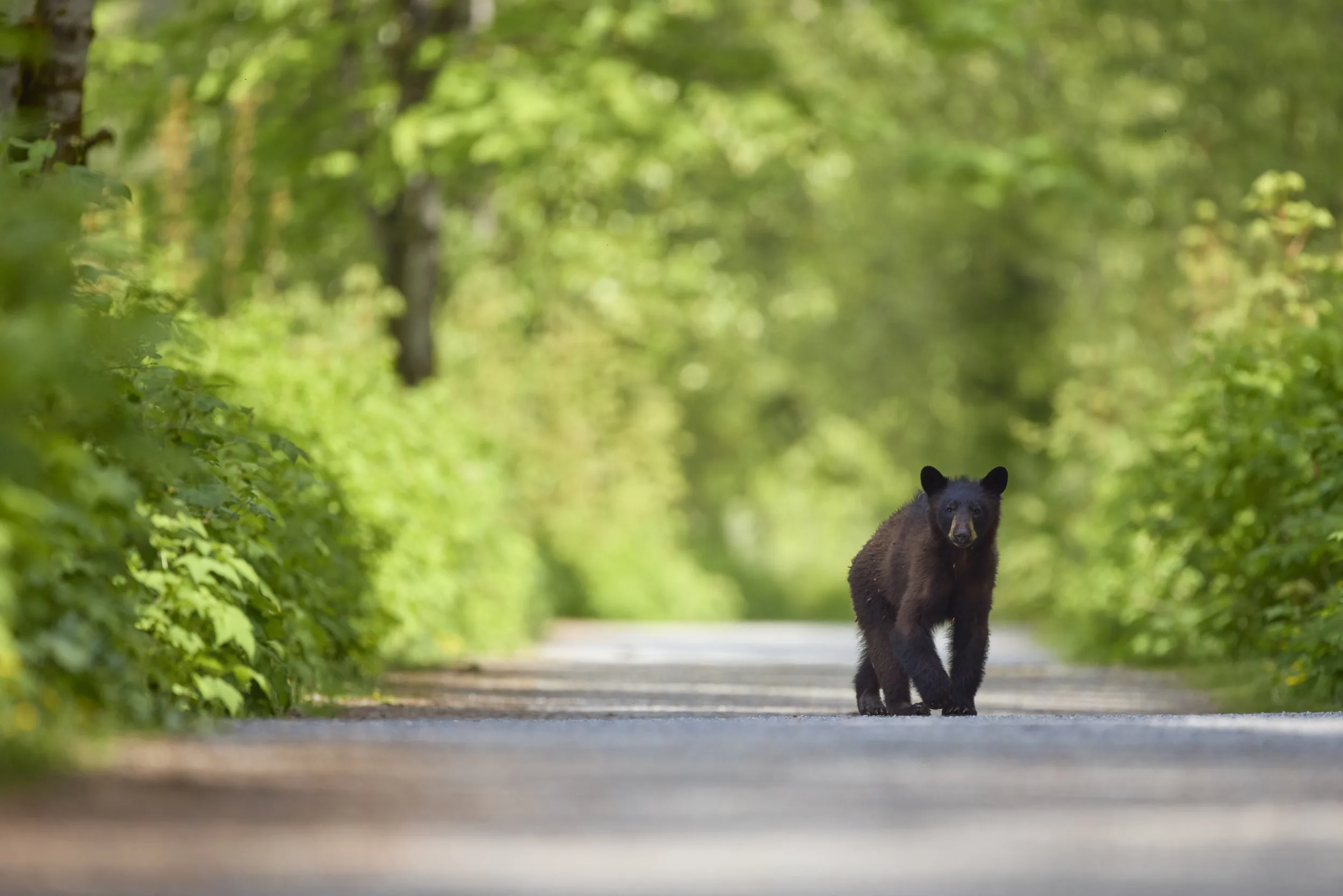

Trail Guard
Black bears take their name from their thick, black coat, which keeps them warm in winter and protects them in summer from the sun and the woody understory where they spend their time. Despite this, several colours occur in the wild including this chestnut brown “cinnamon bear”. Other colours include dark brown, white (Spirit Bear), and even blue-tinted (glacial).
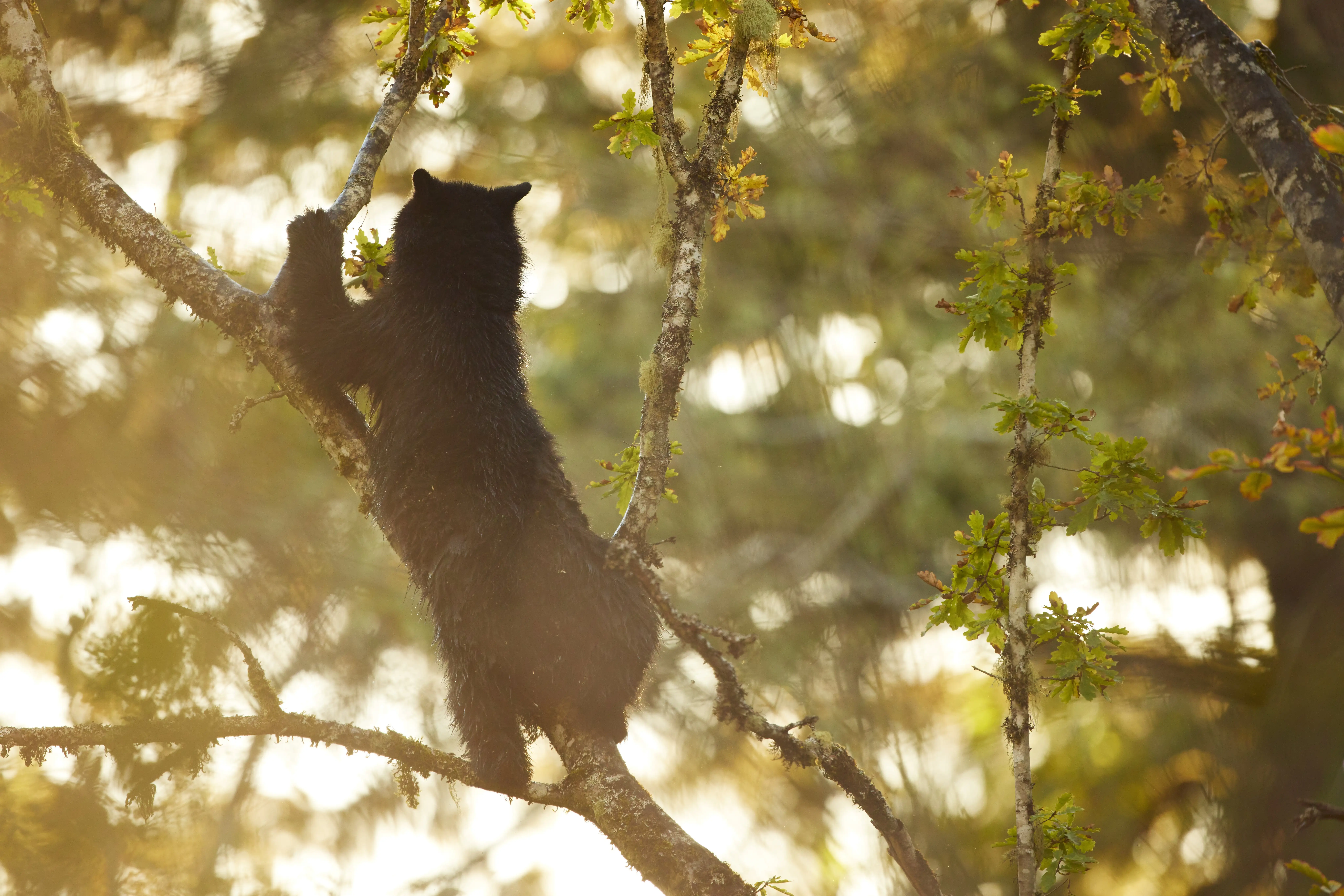
Watching the Sunset
A yearlong back bear feasts on oak acorns as the sunsets in the distance. Black bears in September experience hyperphagia which sees them increase their calorie intake fourfold. Acorns are a high calorie food for bears which pushes them to the tops of trees in search of more.
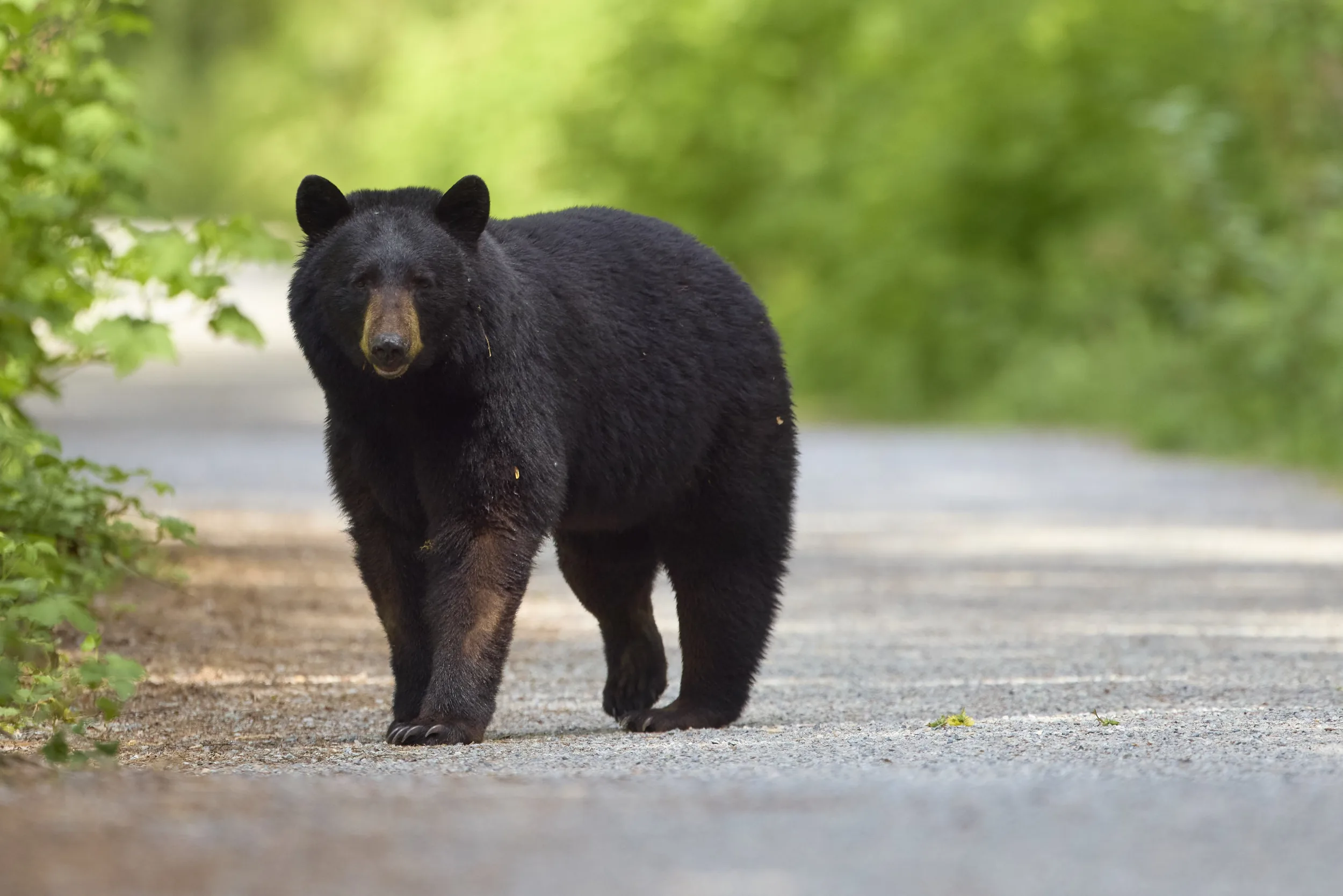
Healthy Sow
A female black bear is called a ‘sow’ and is responsible for raising the young bears. She will give birth during hibernation over winter, and if all goes well, emerge from her den in spring with one to five healthy, adorable, cubs. These young black bears, often called ‘cubs of the year’ will go on to learn from mum, and go into denning with her the following winter.
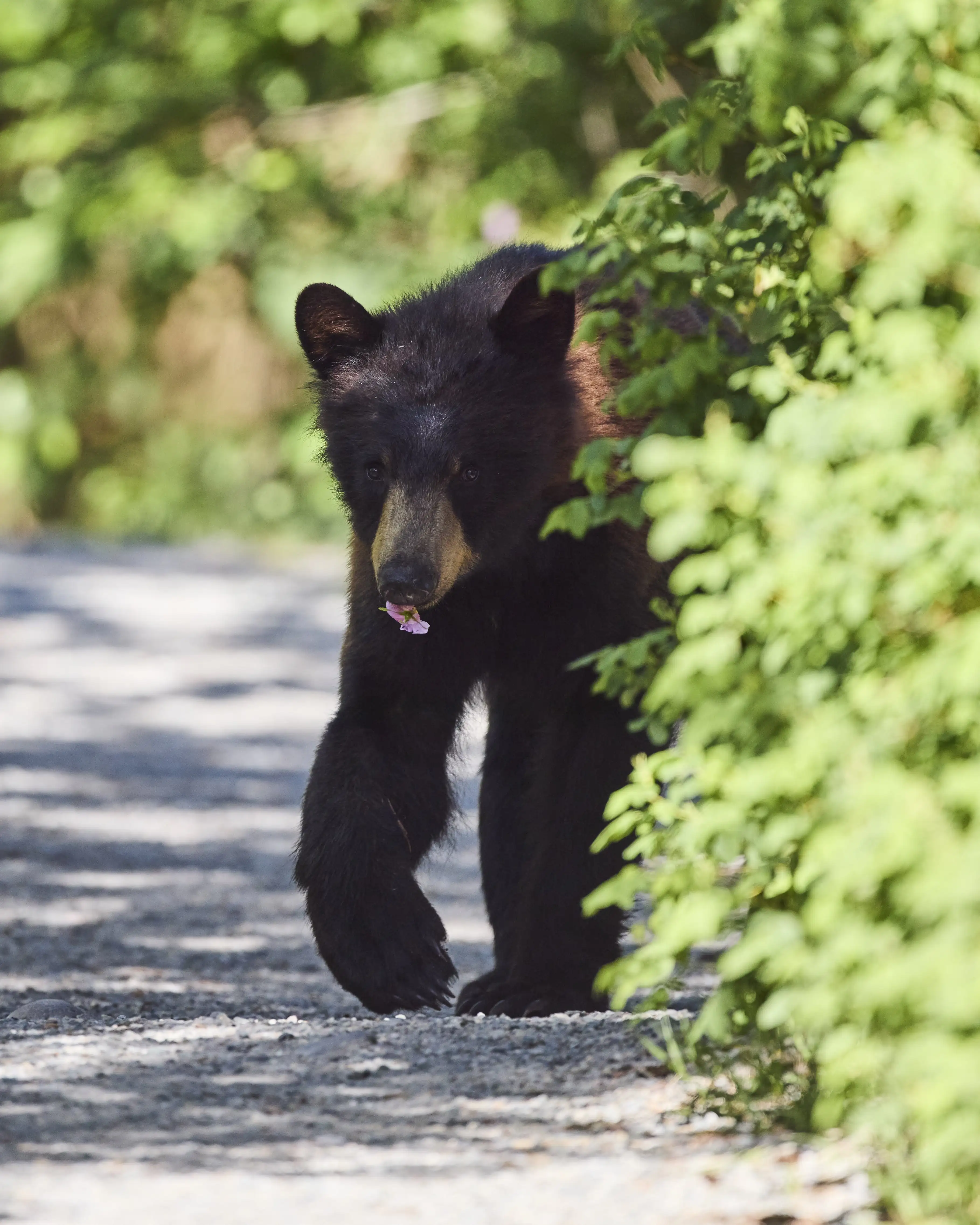
Bear & Flower
This yearling black bear slowly worked it’s way towards me and my group, pushing us back up the trail towards the trailhead. We maintained a safe distance and allowed the bear space to move. Right near the end of the trail, the bear plucked a pink flower from a bush and proceeded to walk towards us with the flower gripped between it’s teeth,
Sow & Three Cubs
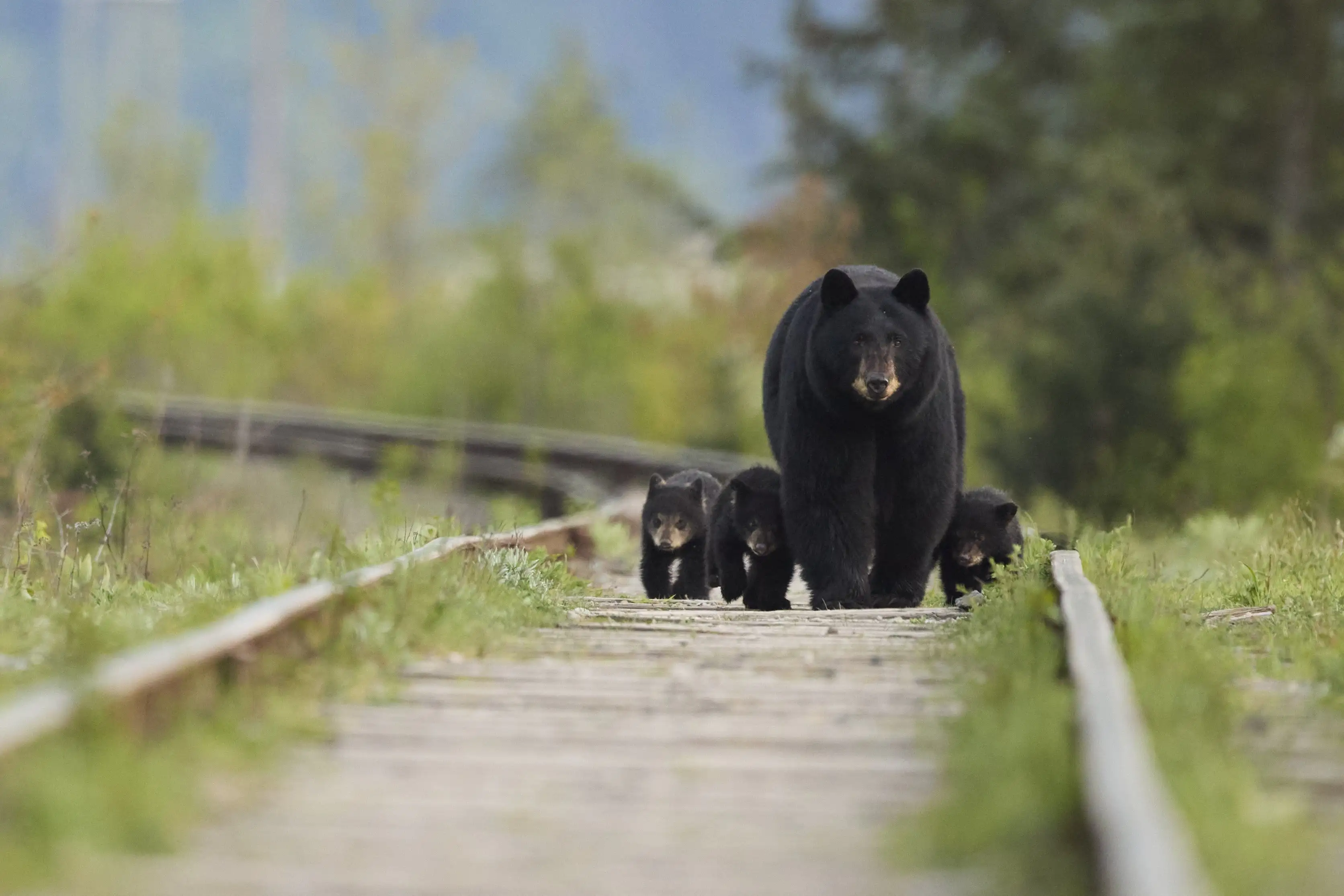
Here a healthy sow emerges from her den with three cubs of the year. For these cubs, this is their first experience of the outside world. Up until this point, all they have known is the warm safety of their mother and their den.
Black Bear Crossing the Tracks
In our area, one of the black bear hotspots is bisected by a seldom used railway line. Often the bears will forage on the berries along the edge of the tracks, often crossing from one side to the other.