
Gallery
River Watch
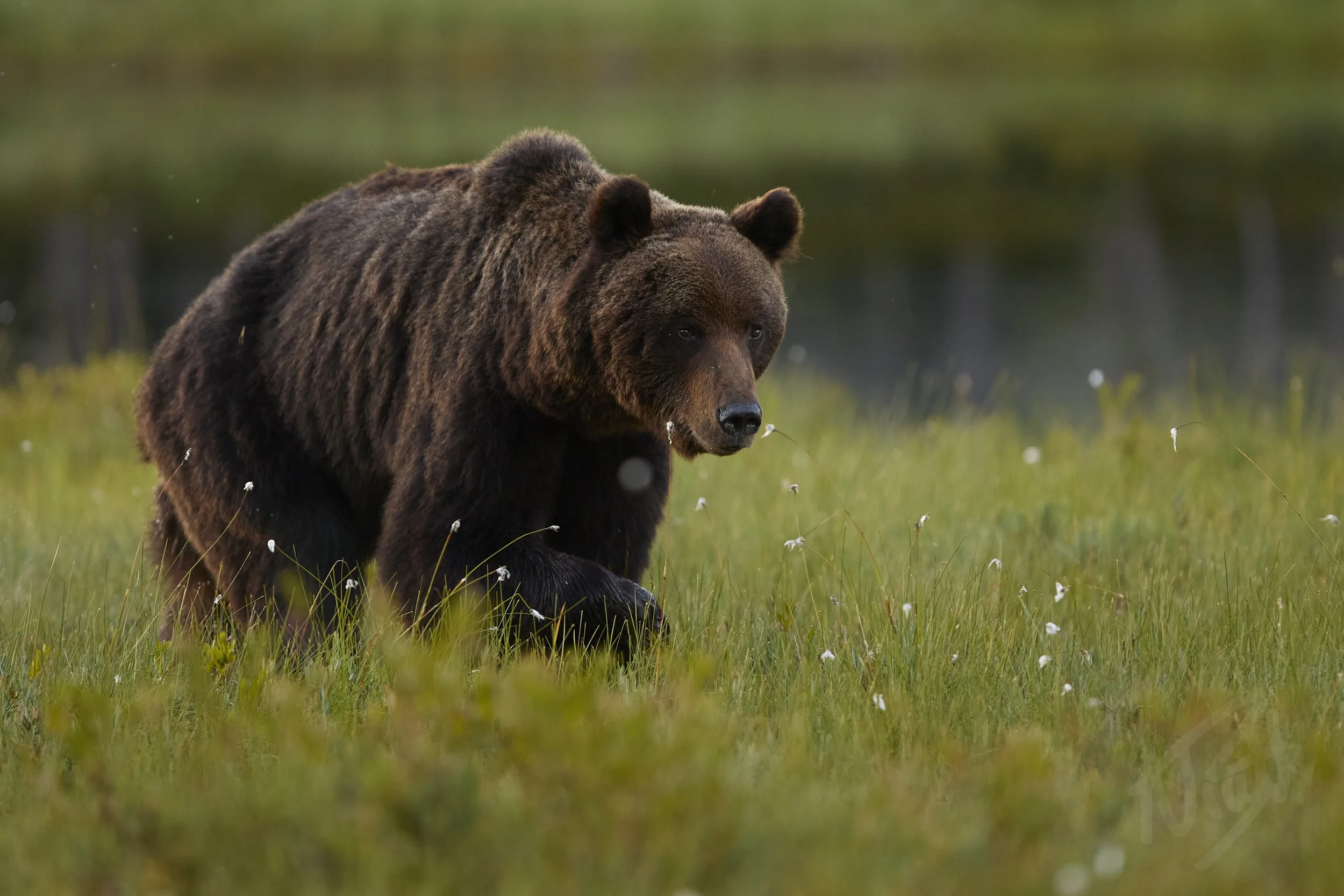
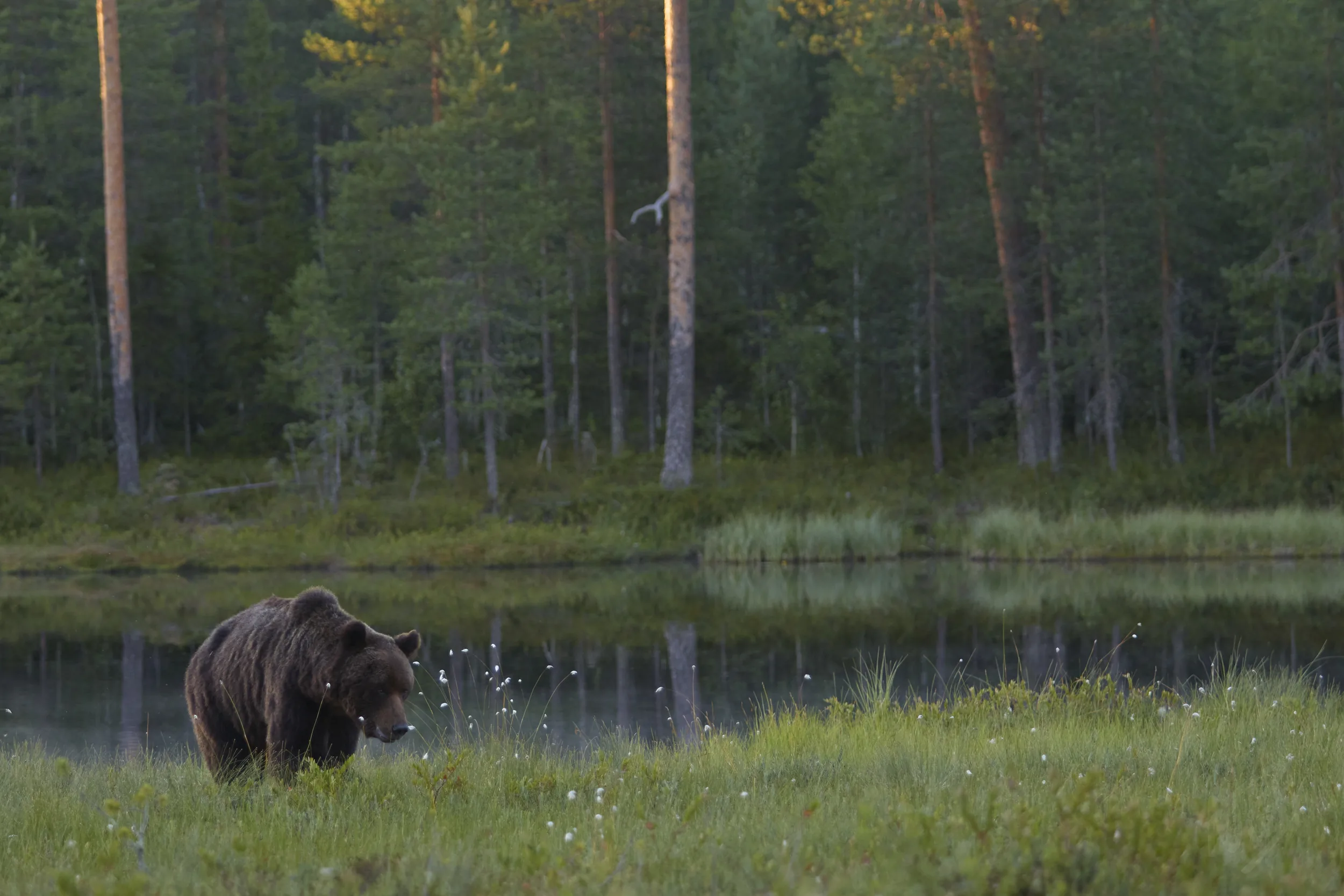
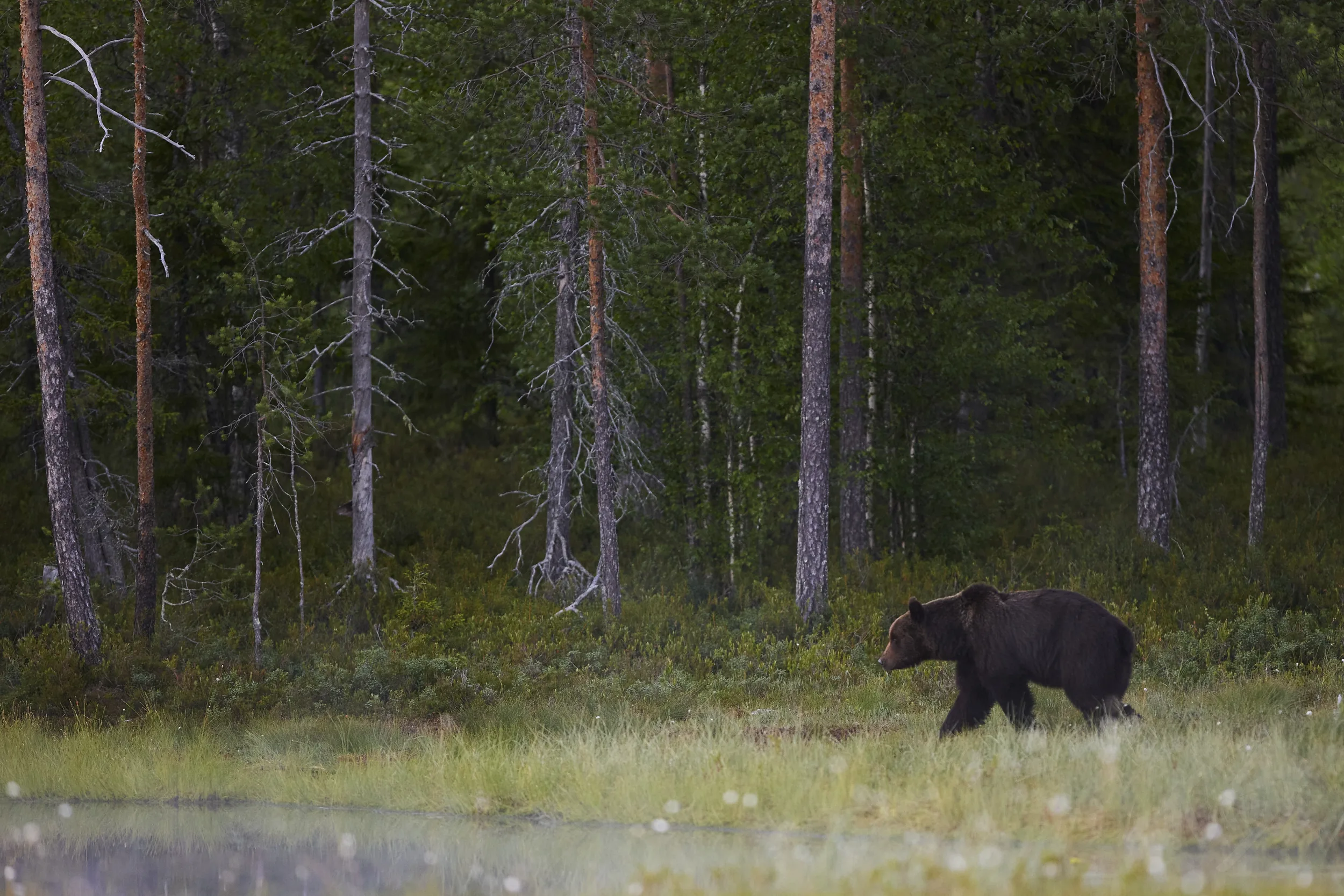
A brown bear moves through a Finnish cotton grass meadow at the forest edge. Brown bears are largely solitary and cover enormous home ranges, with males roaming up to 1,000 square kilometres. In Finland, the boreal forest provides both dense cover and the wetland margins bears favour for foraging.
Fishing
A brown bear forages at the edge of a taiga lake in the long Finnish summer twilight. Brown bears are highly omnivorous, and plant matter makes up the majority of their diet across most of the year. Fish and carrion become particularly important in the weeks before hibernation when bears must rapidly build fat reserves.
Rest Time
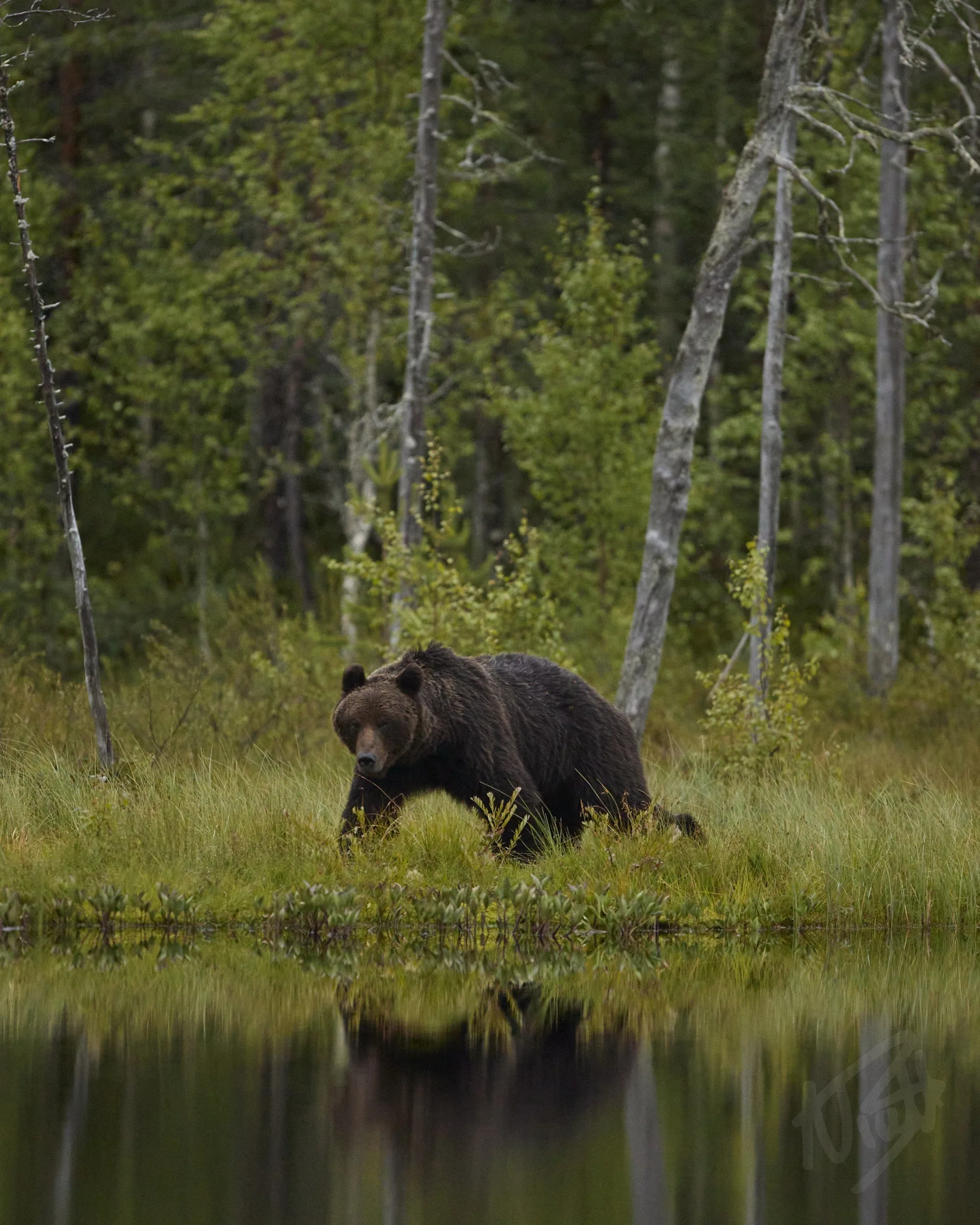
A brown bear walks along the shoreline of a Finnish forest lake, its reflection visible in the still water. Finland holds one of Europe’s healthiest brown bear populations, with over 2,000 individuals. Bears are most active at dawn and dusk, often emerging from dense forest to forage along water margins.
On the Prowl
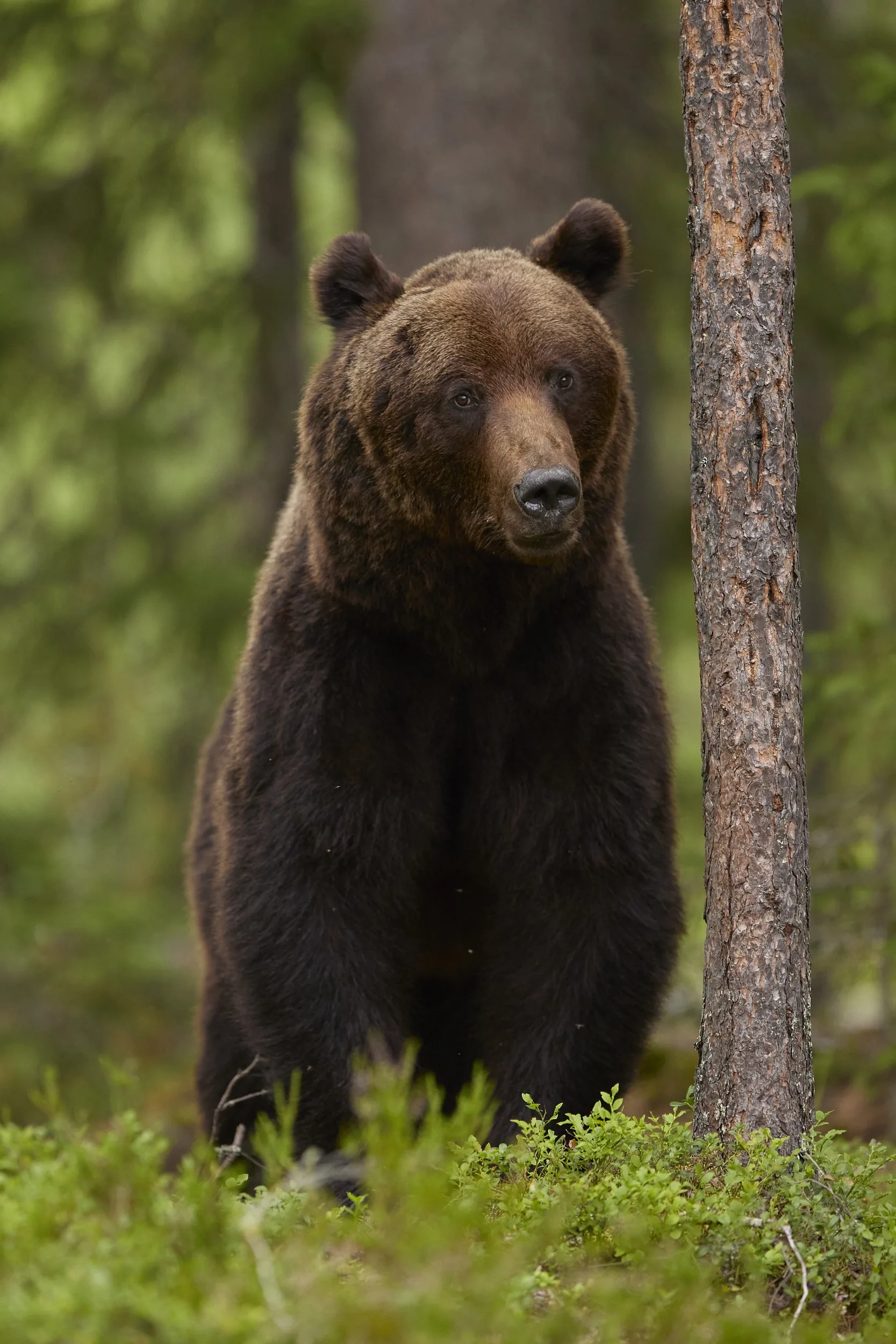
A large brown bear stands in boreal forest, facing the camera head-on. Adult males can weigh over 300 kilograms, making them one of the largest land predators in Europe. The prominent shoulder hump, formed from muscle, powers the digging used to excavate dens and unearth food.
Deep Forest
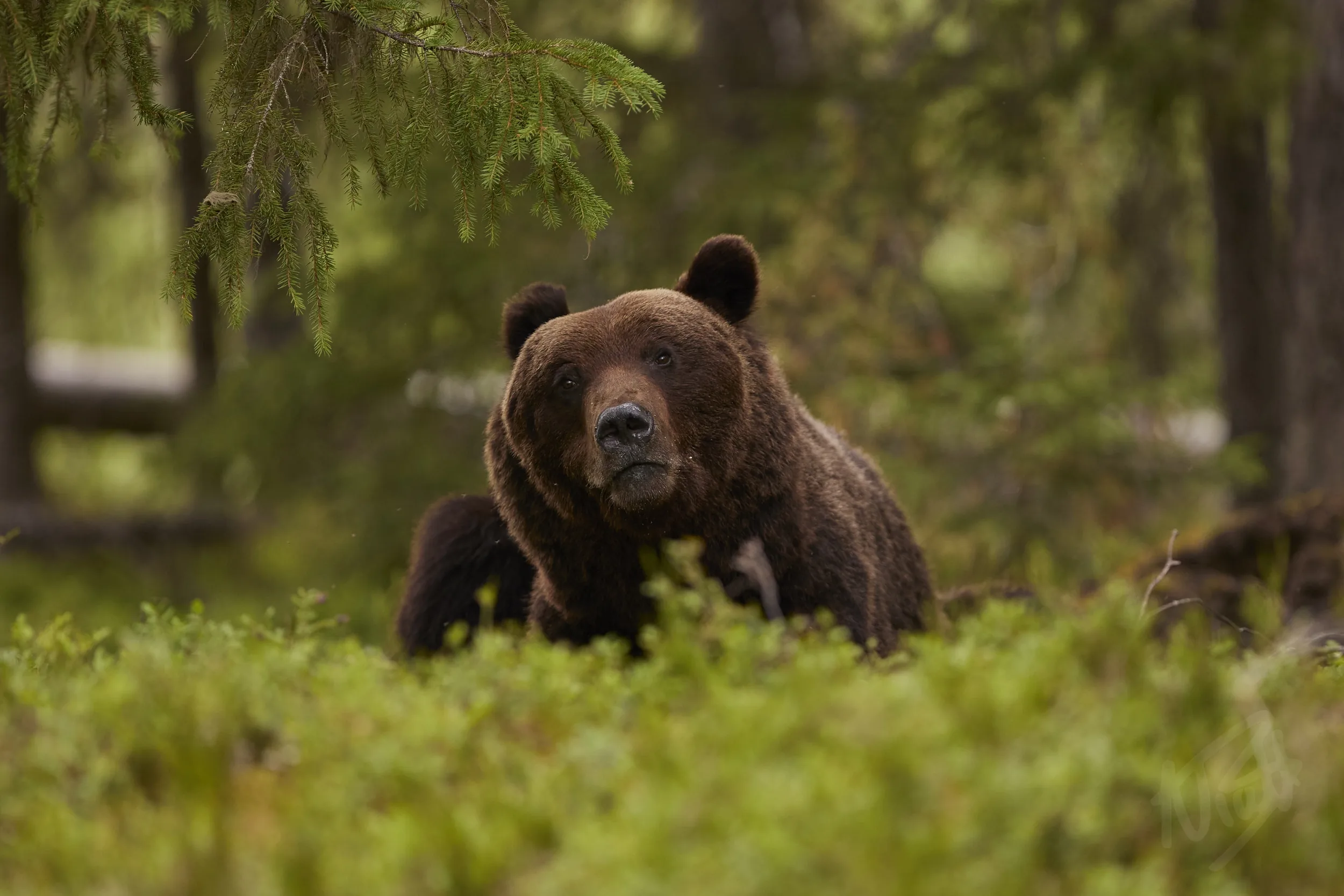
A brown bear rests low in green undergrowth in a Finnish forest, looking directly at the observer. Brown bears spend much of their time resting between feeding bouts, particularly during the heat of the day. Their eyesight is roughly comparable to a human’s, though their sense of smell is vastly more acute.
The Stare
A brown bear walks purposefully across a boreal meadow at the forest edge in fading evening light. Bears enter hibernation between October and December and emerge in spring, having survived on stored fat alone. Cubs are born in the den during winter and emerge with their mother in early spring.