
Gallery
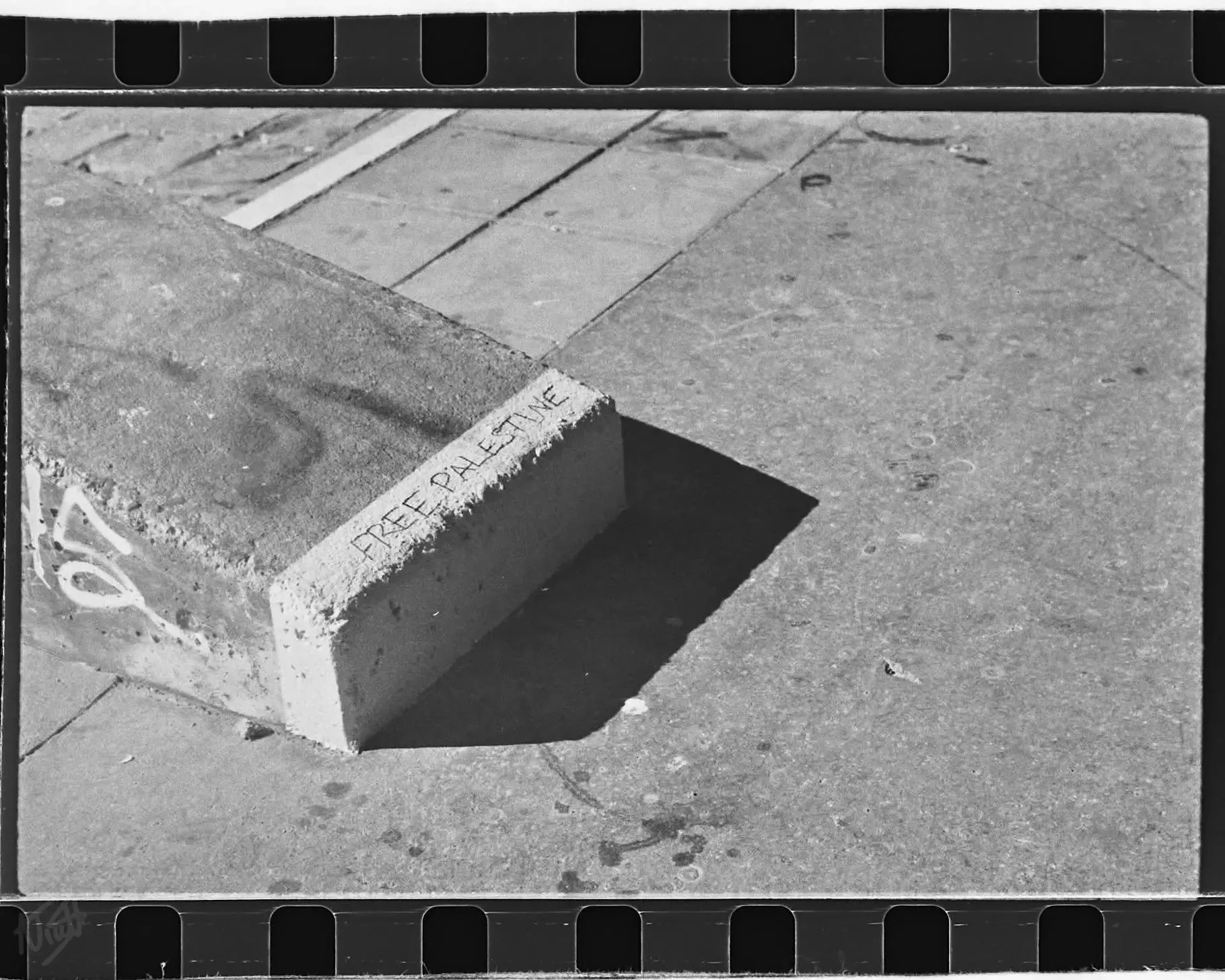
Free Palestine
Handwritten on the face of a kerbside concrete bollard, the words “Free Palestine” occupy the centre of the frame. The grain and contrast of black-and-white film lend the simple act of street inscription a documentary weight, compressing politics into a few square centimetres of rough stone.
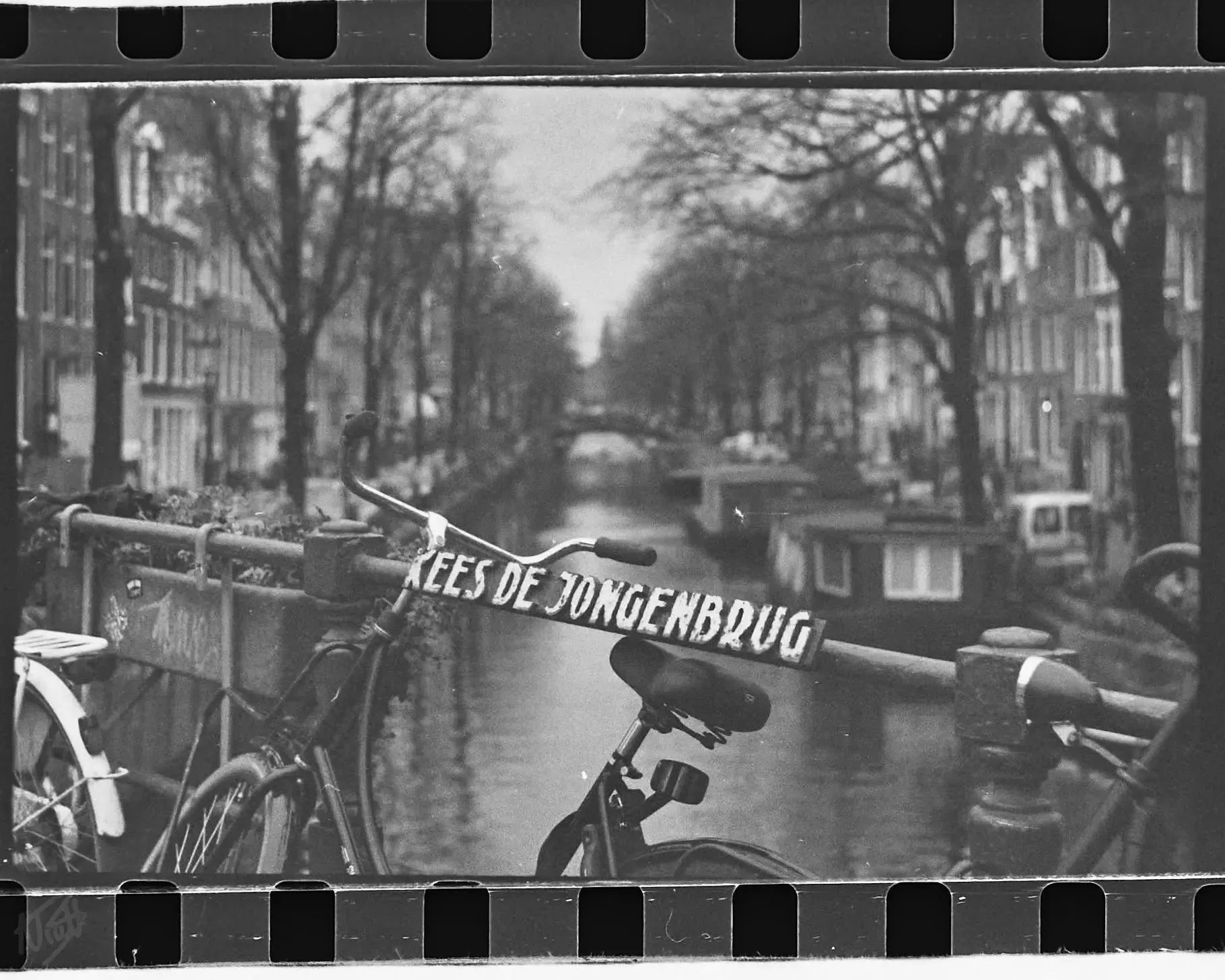
Rees de Jongenbrug, Amsterdam
Bicycles line the railings of a canal bridge bearing the name “Rees de Jongenbrug” in Amsterdam’s historic centre. Beyond, the canal recedes into a corridor of bare winter plane trees, with houseboats moored along both banks and a further arched bridge visible in the middle distance.
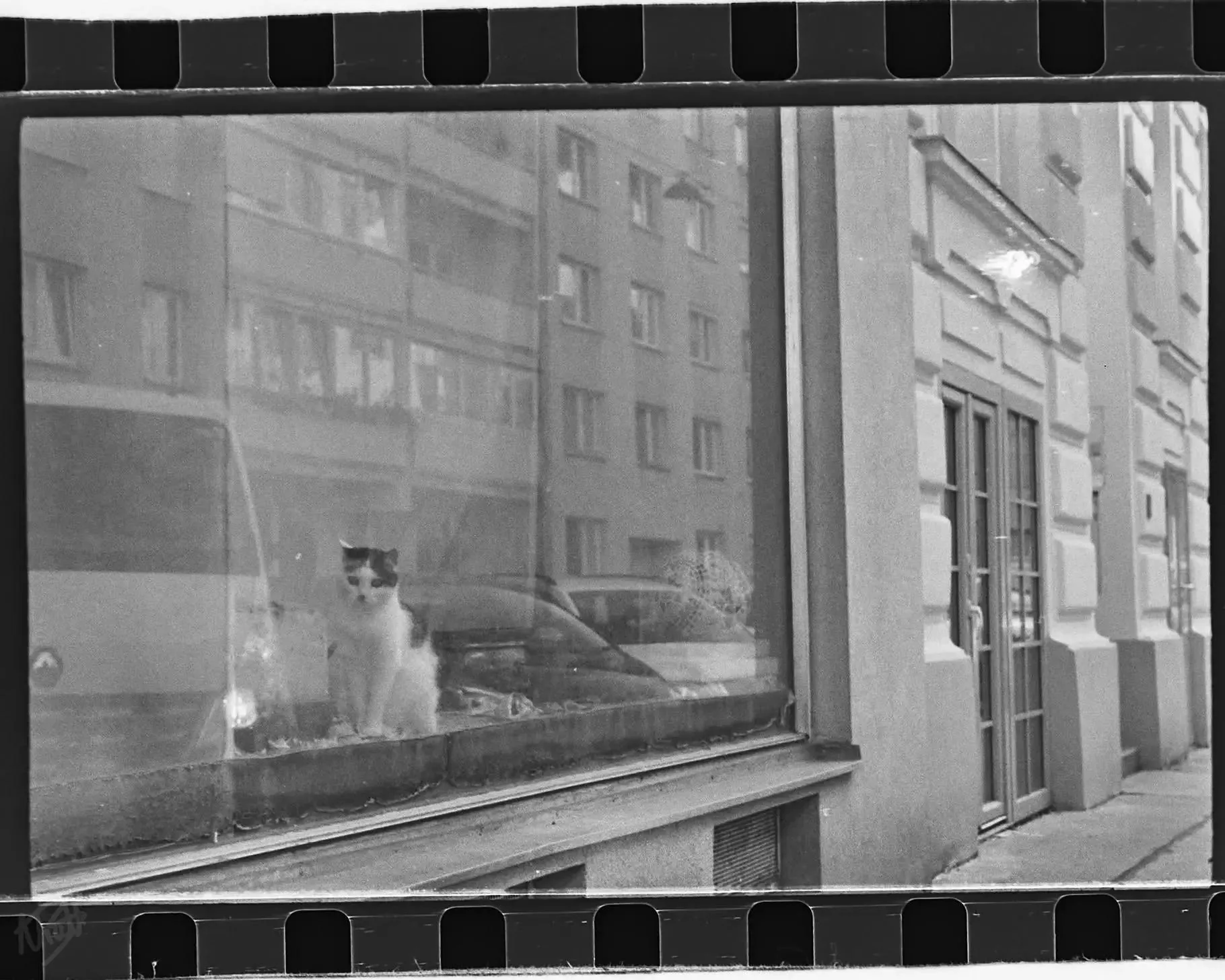
Window Cat
A tabby cat sits sentinel on a shop windowsill, framed by the reflections of the street outside. The building opposite, a concrete residential block with a grid of uniform windows, creates a doubled geometry in the glass, flattening the boundary between the interior world and the city beyond.
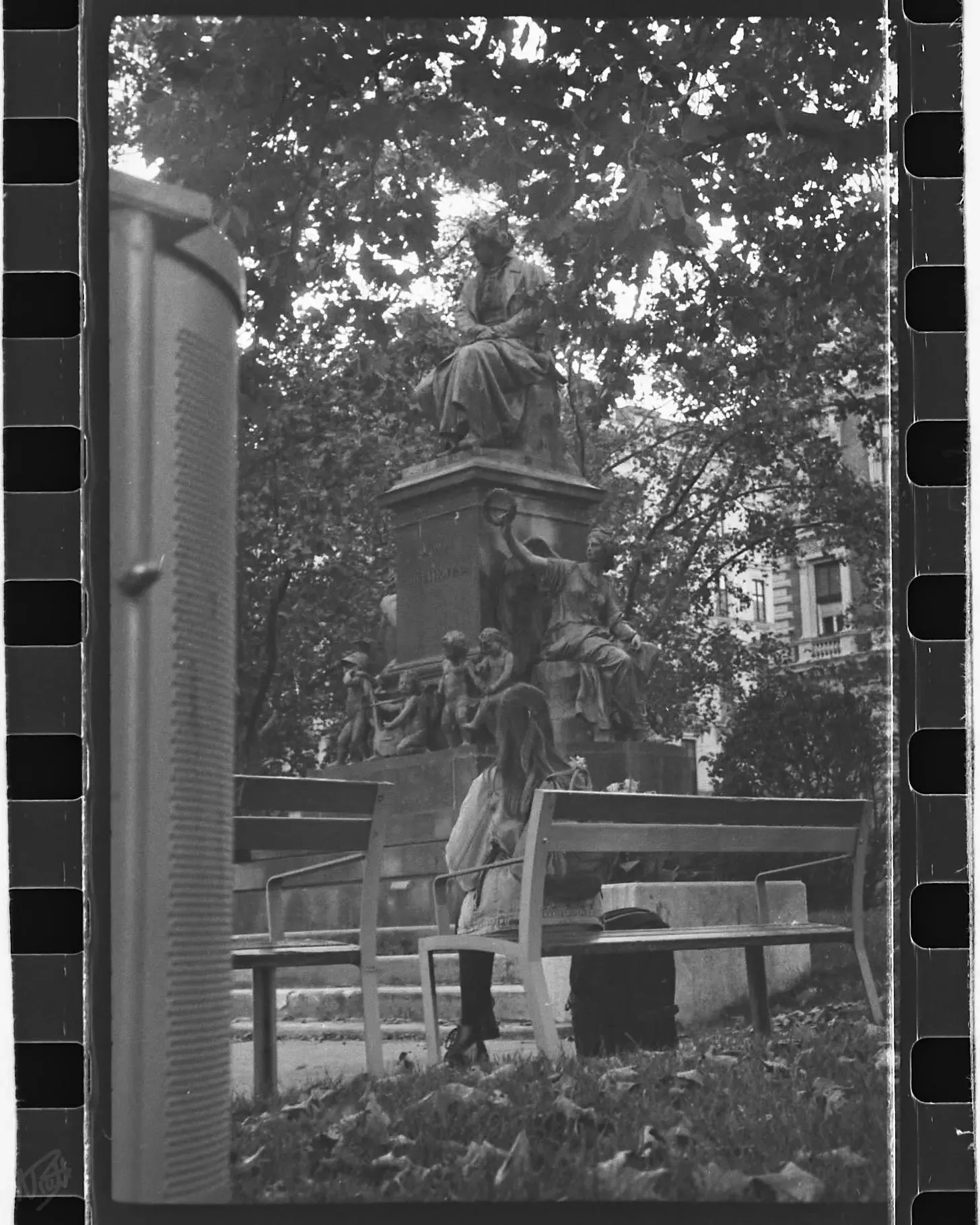
Park Monument, Vienna
A bronze commemorative statue stands framed against a canopy of mature trees, with a figure sitting on a bench below. A foreground element, part of a railing or post, is thrown out of focus, drawing the eye toward the statue while softening the surrounding cityscape into silver abstraction.
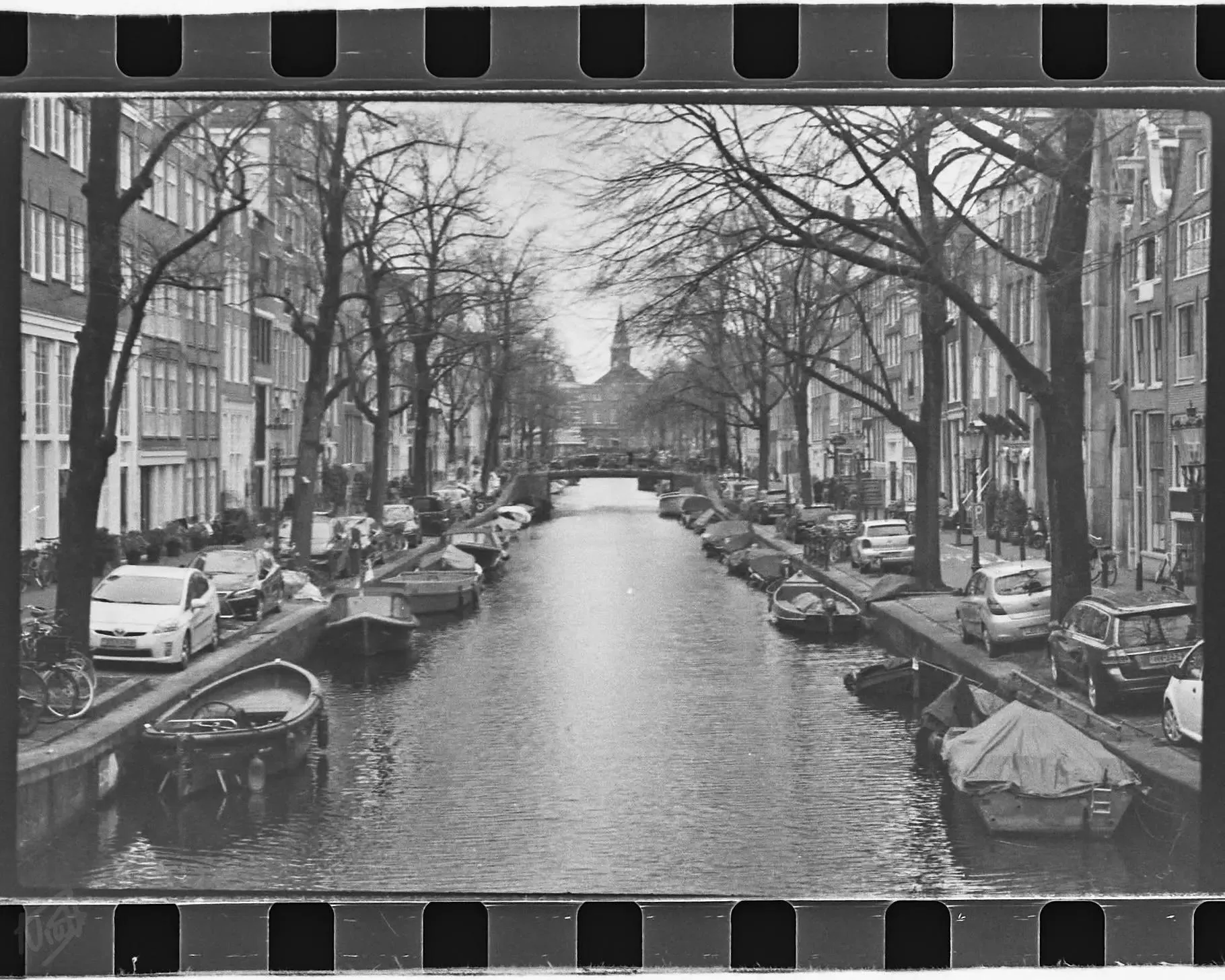
Amsterdam Canal
An Amsterdam canal stretches into the distance between rows of moored boats and leafless winter trees. A church tower punctuates the skyline at the far end, framed by the long straight lines of the quaysides. The still water reflects the pale sky, doubling the canal houses along each bank.
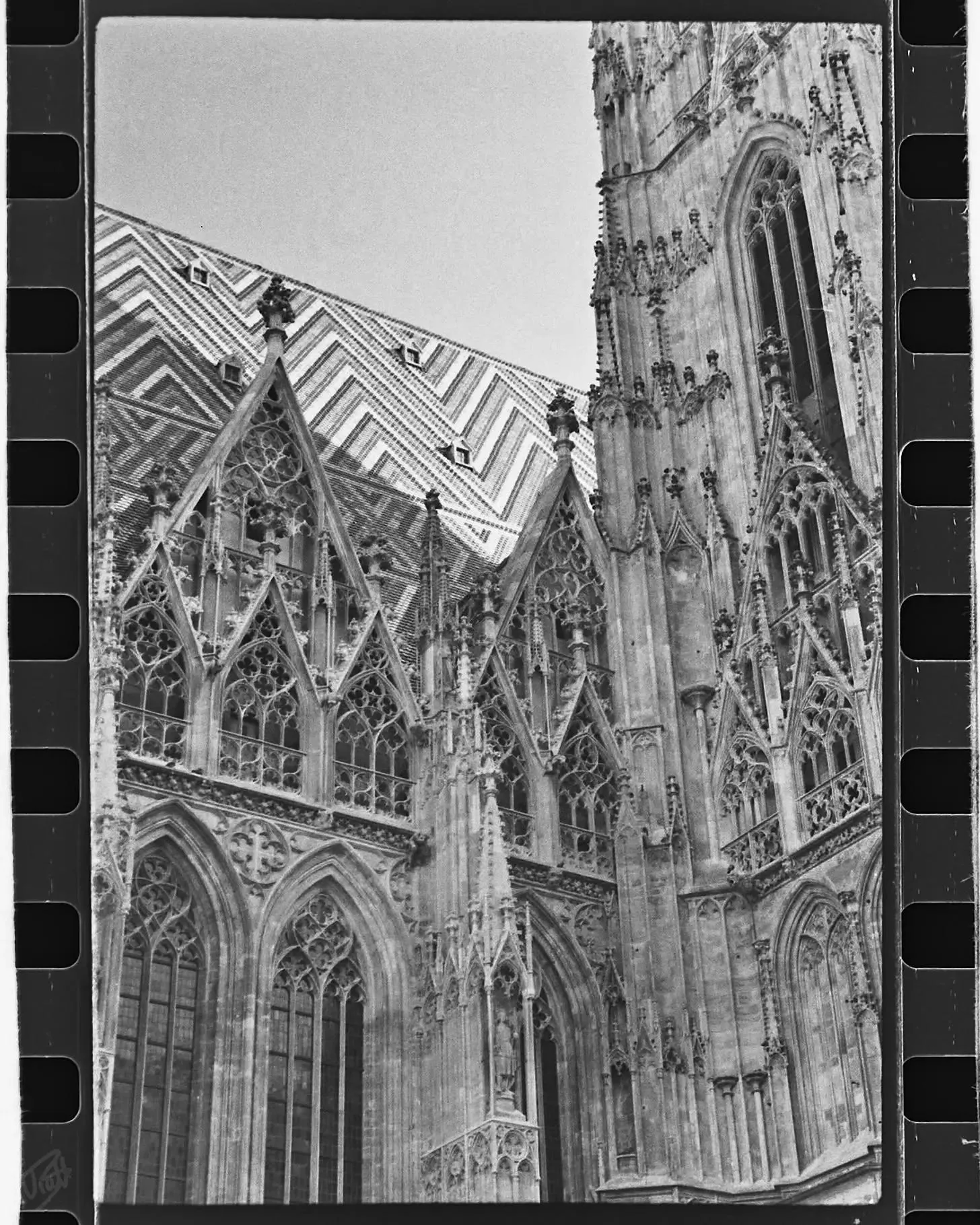
Stephansdom, Vienna
The south facade of St. Stephen’s Cathedral rises in a vertical rush of Gothic tracery and pinnacles. The cathedral’s distinctive chevron-patterned roof tiles in glazed ceramic are visible at the upper edge of the frame. Construction began in 1137 and continued under successive architectural styles for several centuries.
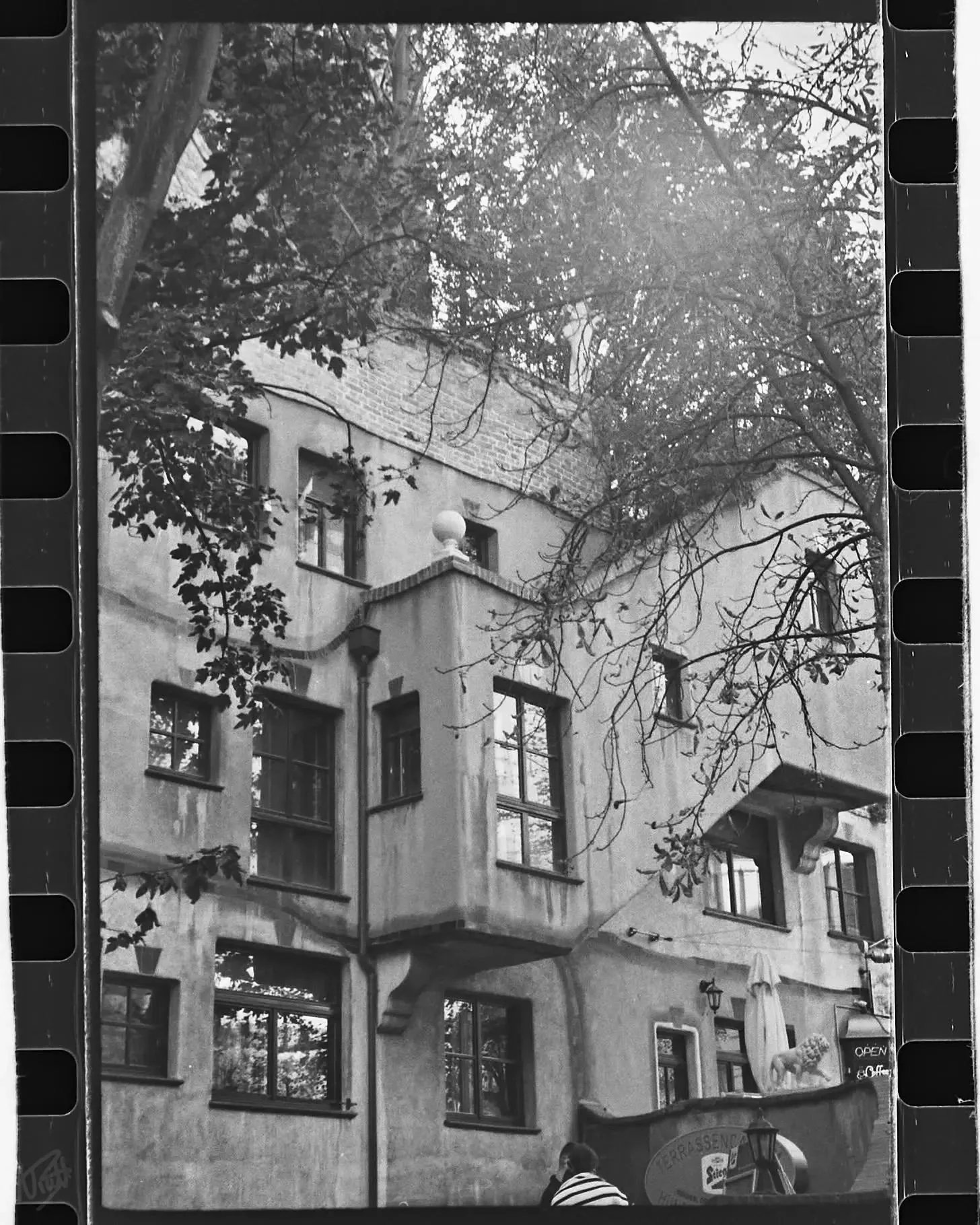
Hundertwasserhaus, Vienna
The Hundertwasserhaus apartment building in Vienna, designed by Friedensreich Hundertwasser and completed in 1985, displays its characteristic organic irregularity: rounded corners, uneven floor levels, and trees growing from within the structure. Hundertwasser believed the straight line was “godless and immoral” and banished it from his architecture.
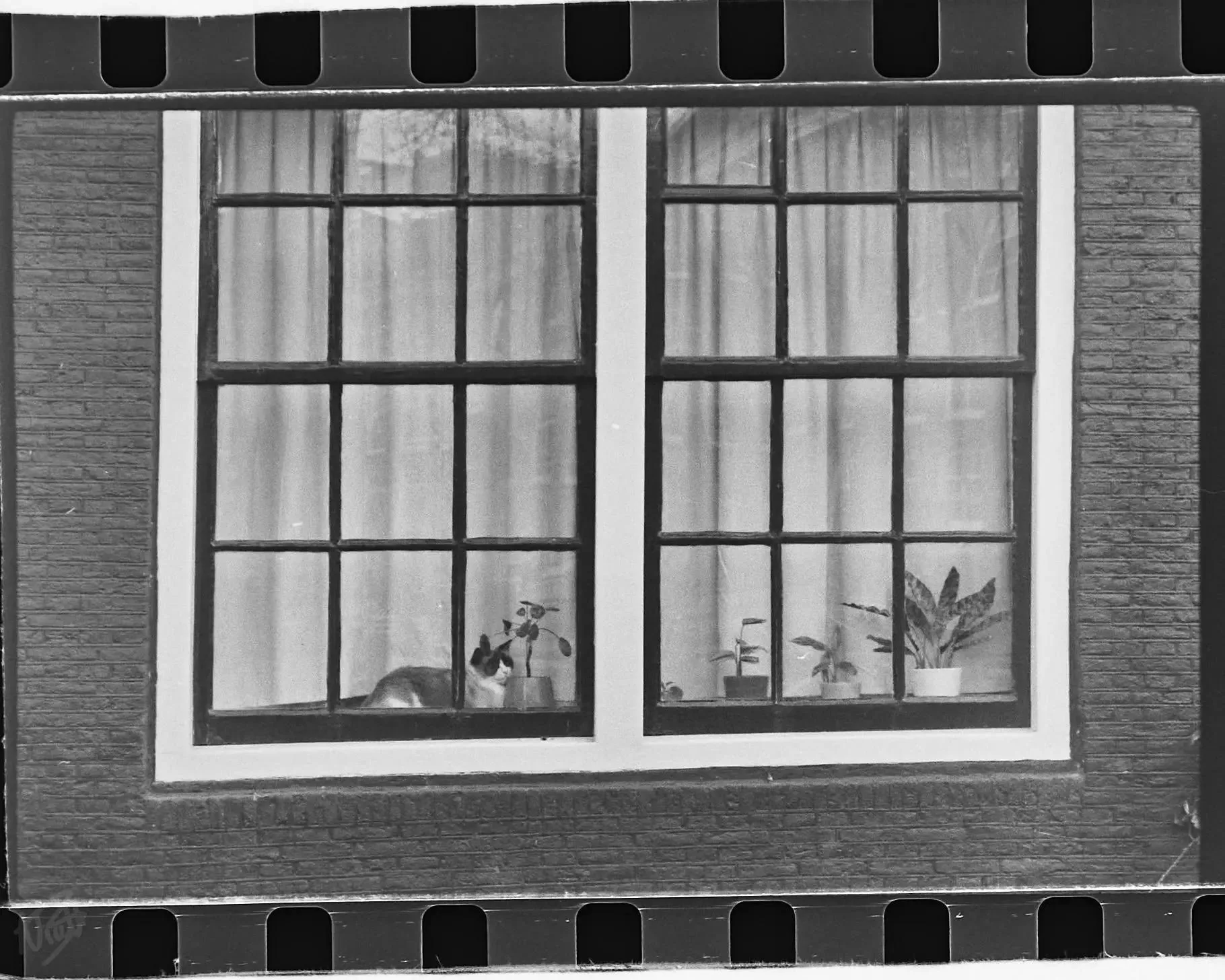
Canal House Windowsill
A cat occupies one corner of an Amsterdam canal house windowsill, sharing the ledge with several houseplants. The large, gridded Dutch window, characteristic of the city’s 17th-century canal houses, divides the scene into geometric sections, with sheer curtains softening the daylight behind the animals and plants.
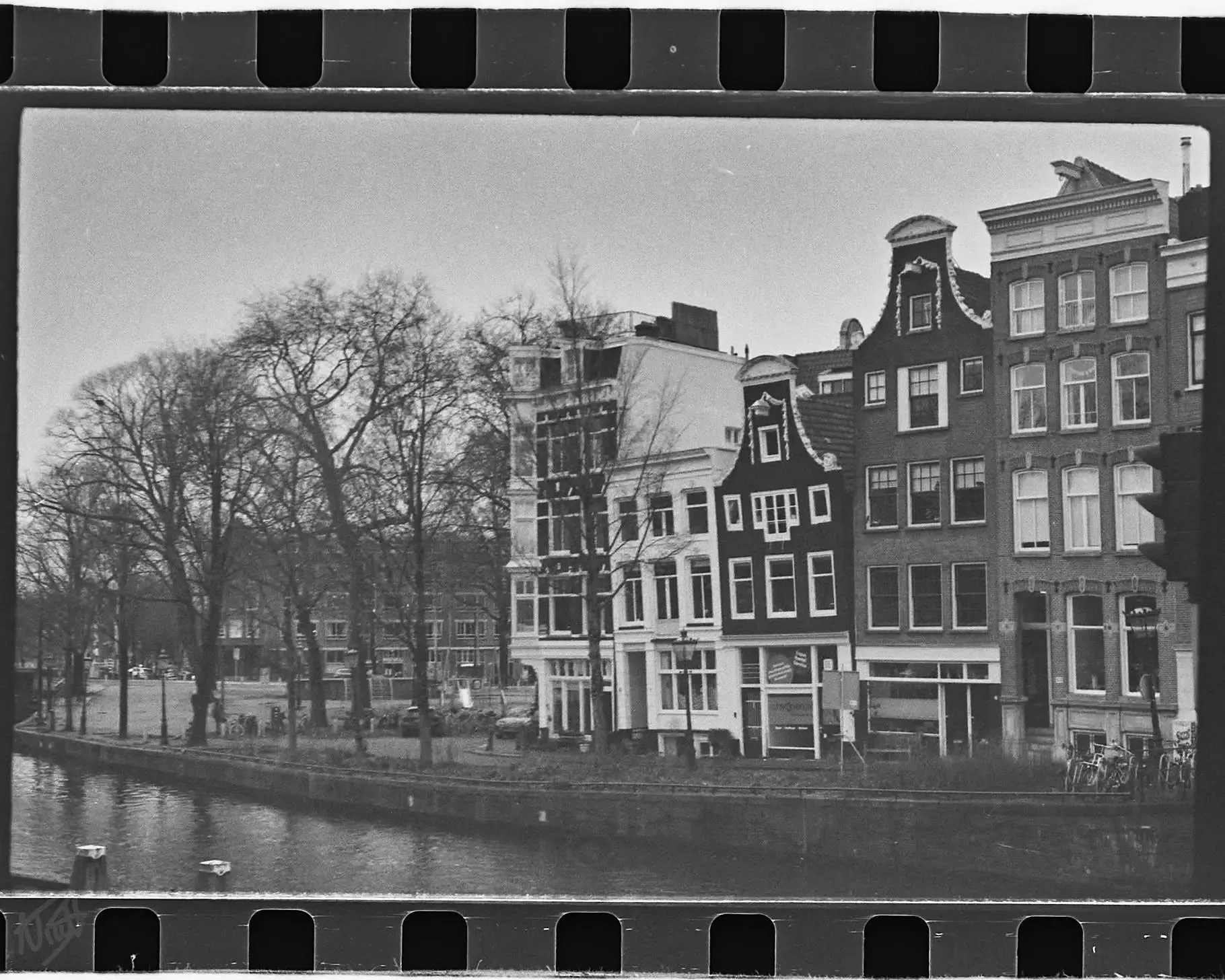
Amsterdam Gables
A row of narrow canal houses lines the waterfront in Amsterdam’s historic centre, their stepped and bell-shaped gables rising above the water. The canal house form evolved during the Dutch Golden Age to maximise narrow plot frontages; many buildings are as little as five metres wide at street level.
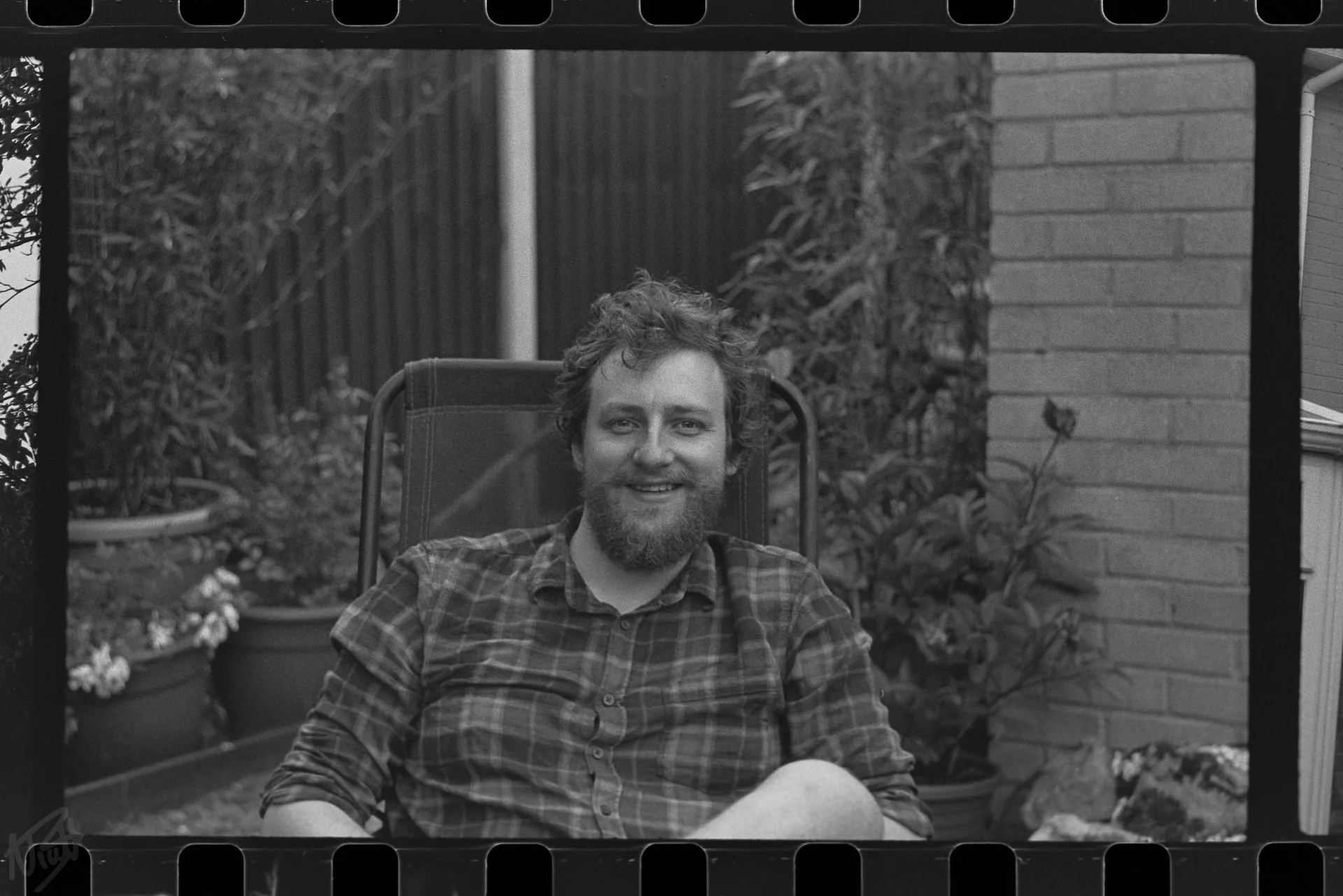
Garden Portrait
A bearded man sits relaxed in a garden chair, surrounded by potted plants in a sheltered outdoor space. Shot in natural light on black-and-white film, the image draws out the tonal range characteristic of the Helios 44 lens, from shadow detail in the shirt fabric to the bright foliage behind.
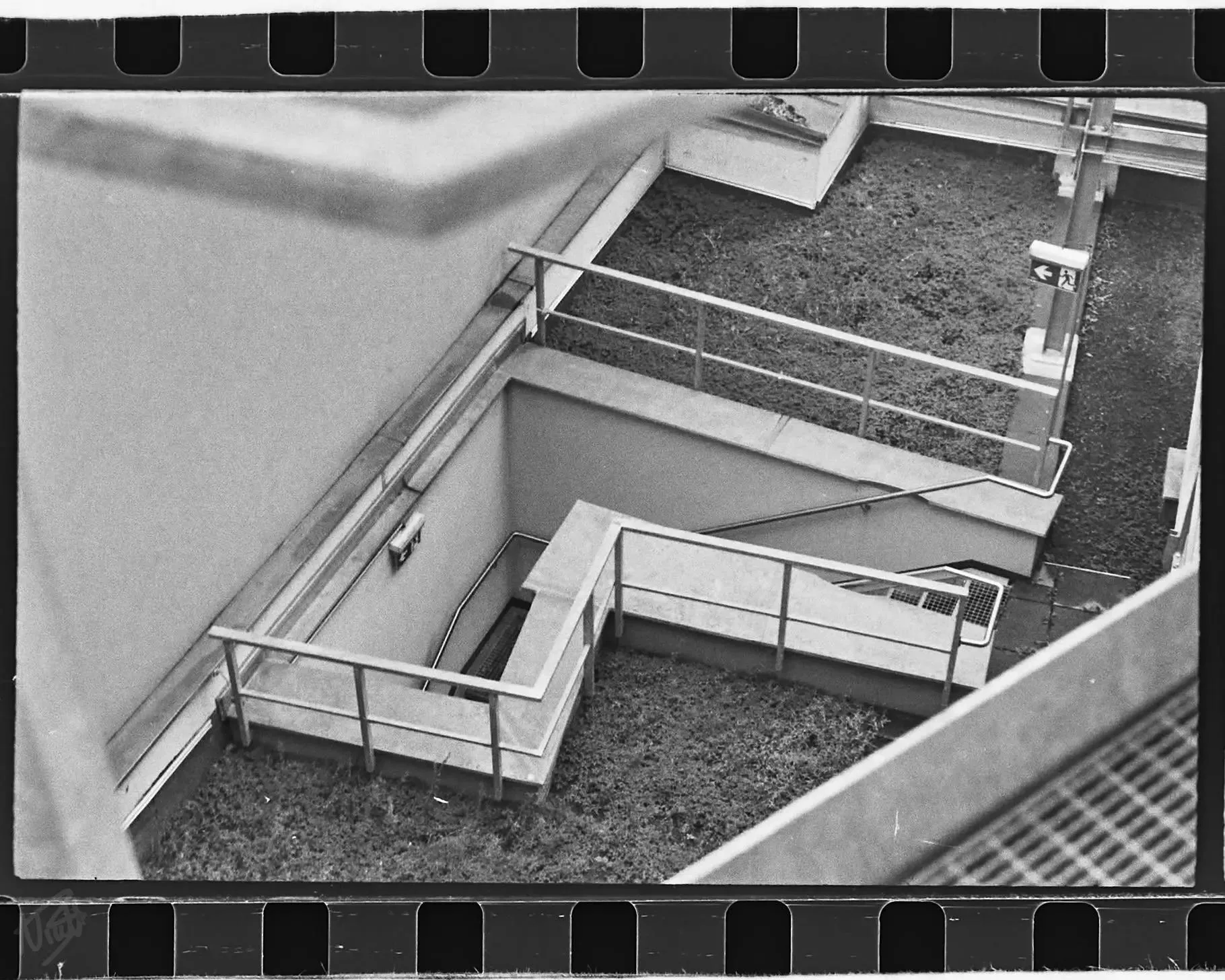
Brutalist Rooftop
Photographed from above, the geometric courtyard of a Brutalist building reveals its angular logic: concrete walkways, metal railings and small grass areas arranged in a rigidly orthogonal plan. The bird’s-eye view strips away human scale and context, turning the functional landscape into something close to abstract geometry.
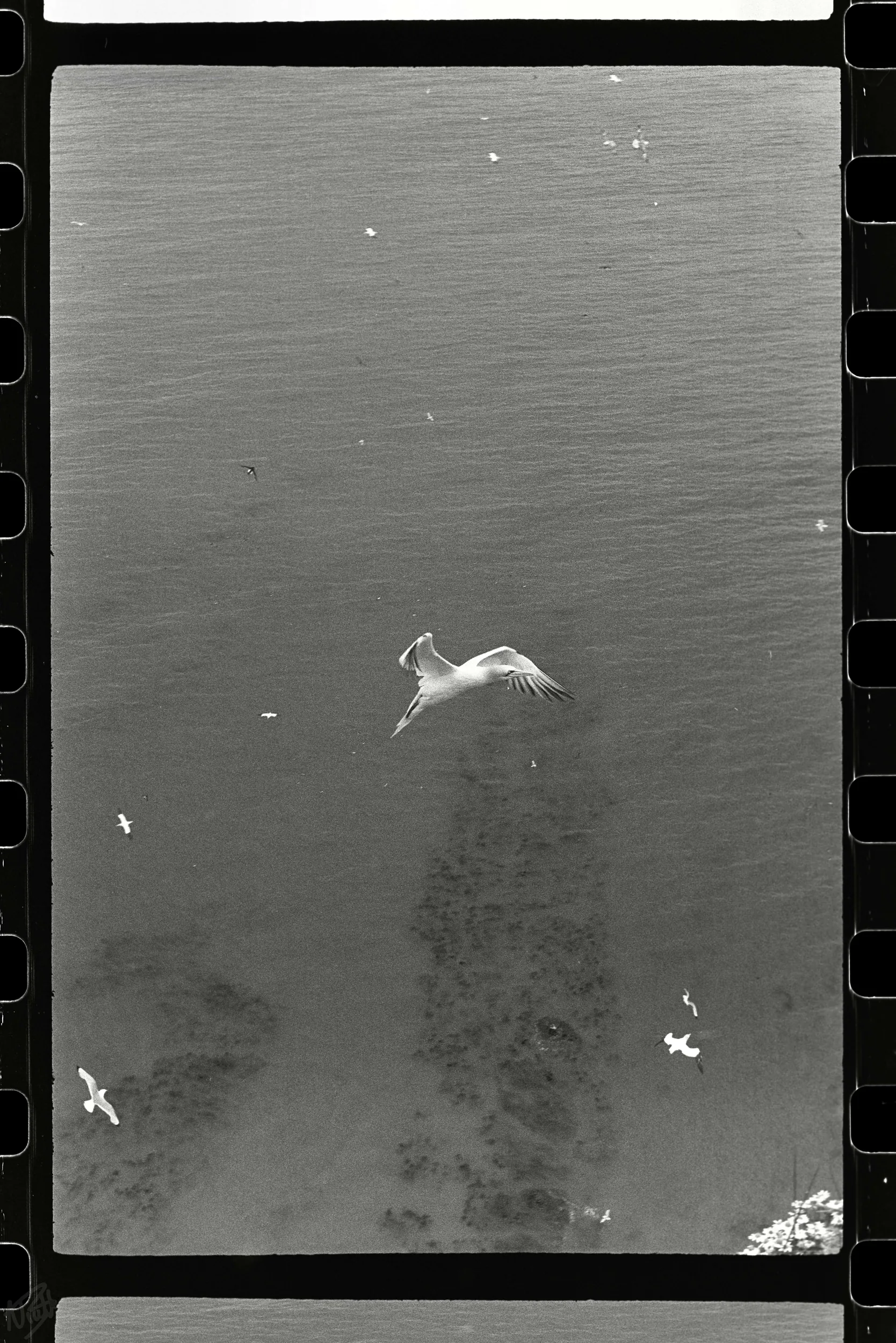
Gannet in Flight
A northern gannet (Morus bassanus) soars over the sea below the clifftops, its long pointed wings catching the light against dark water. Shot on black-and-white film from the cliff edge, the image captures the bird suspended in the vast space between rock and ocean, with smaller birds faintly visible below.
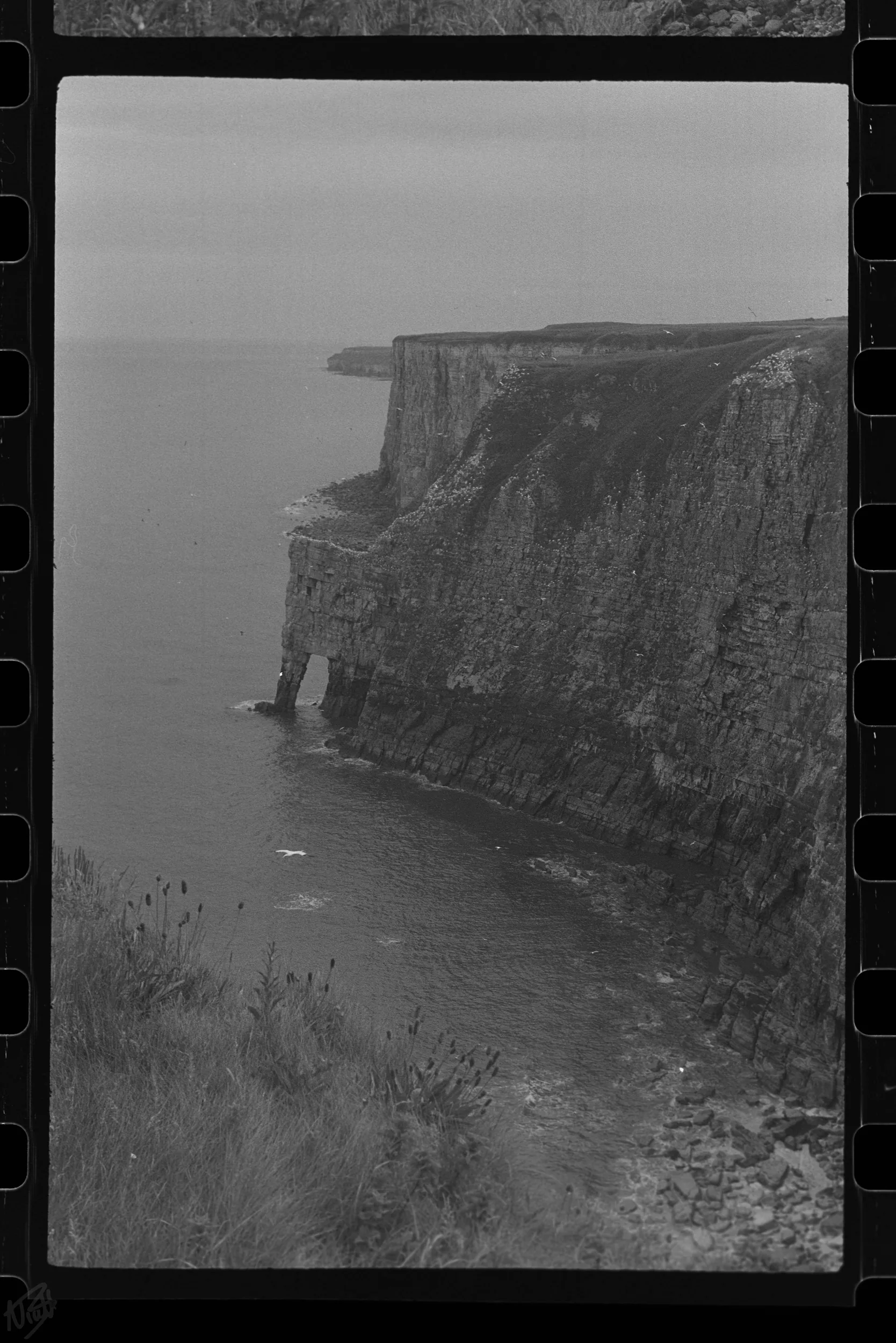
Sea Cliffs
Sheer limestone sea cliffs rise from a grey northern sea, a natural arch visible at the waterline where wave action has eroded softer rock from beneath. Wildflowers grow at the cliff edge in the foreground. Coastal cliffs of this type are among Britain’s most important nesting habitats for seabirds.
Upland Loch
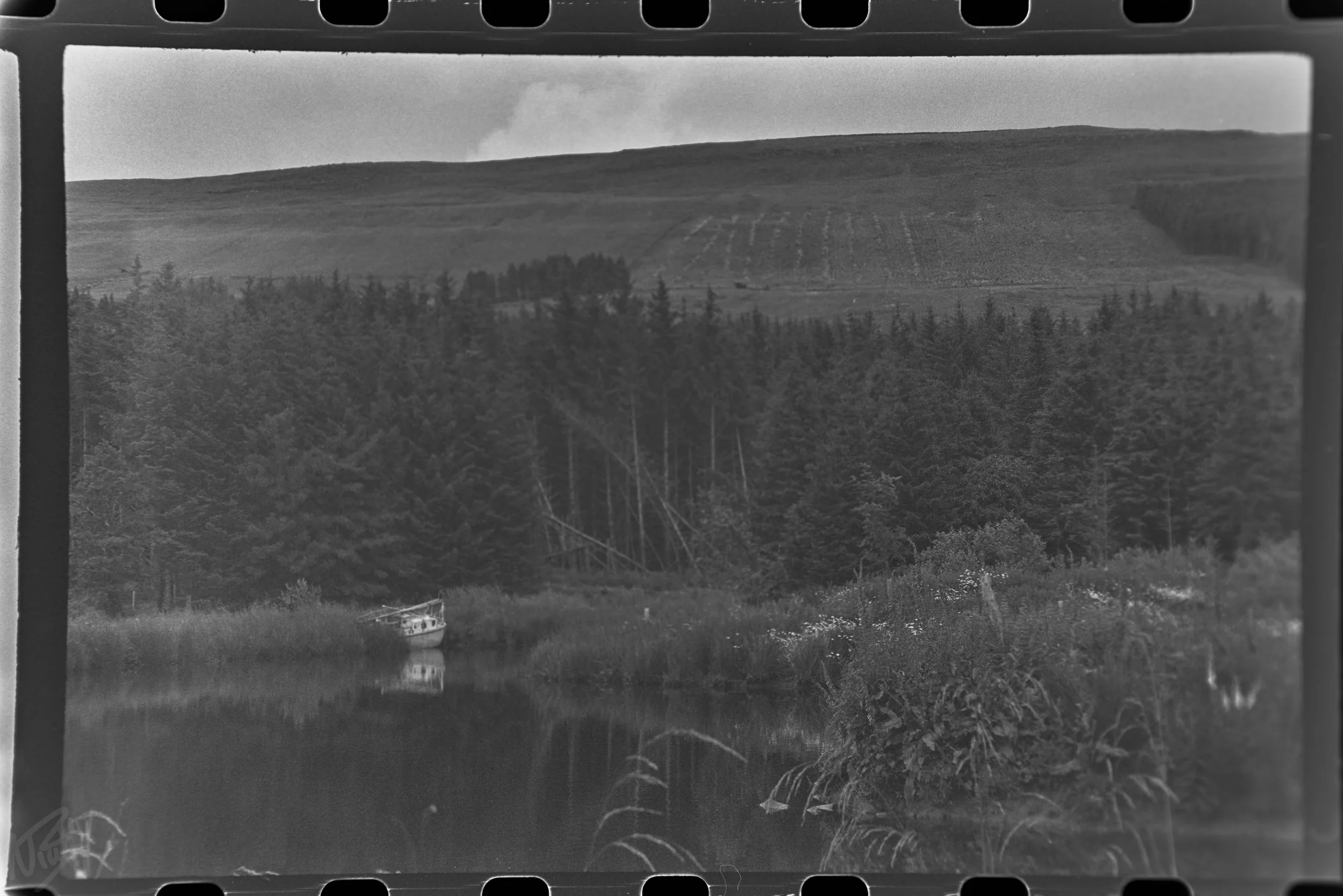
A small rowing boat sits moored at the edge of an upland loch, framed by a dense conifer plantation. Beyond the trees, open moorland rises toward a cloudy sky. Sitka spruce plantations of this kind were established across upland Scotland throughout the 20th century primarily for commercial timber production.
Walled Garden
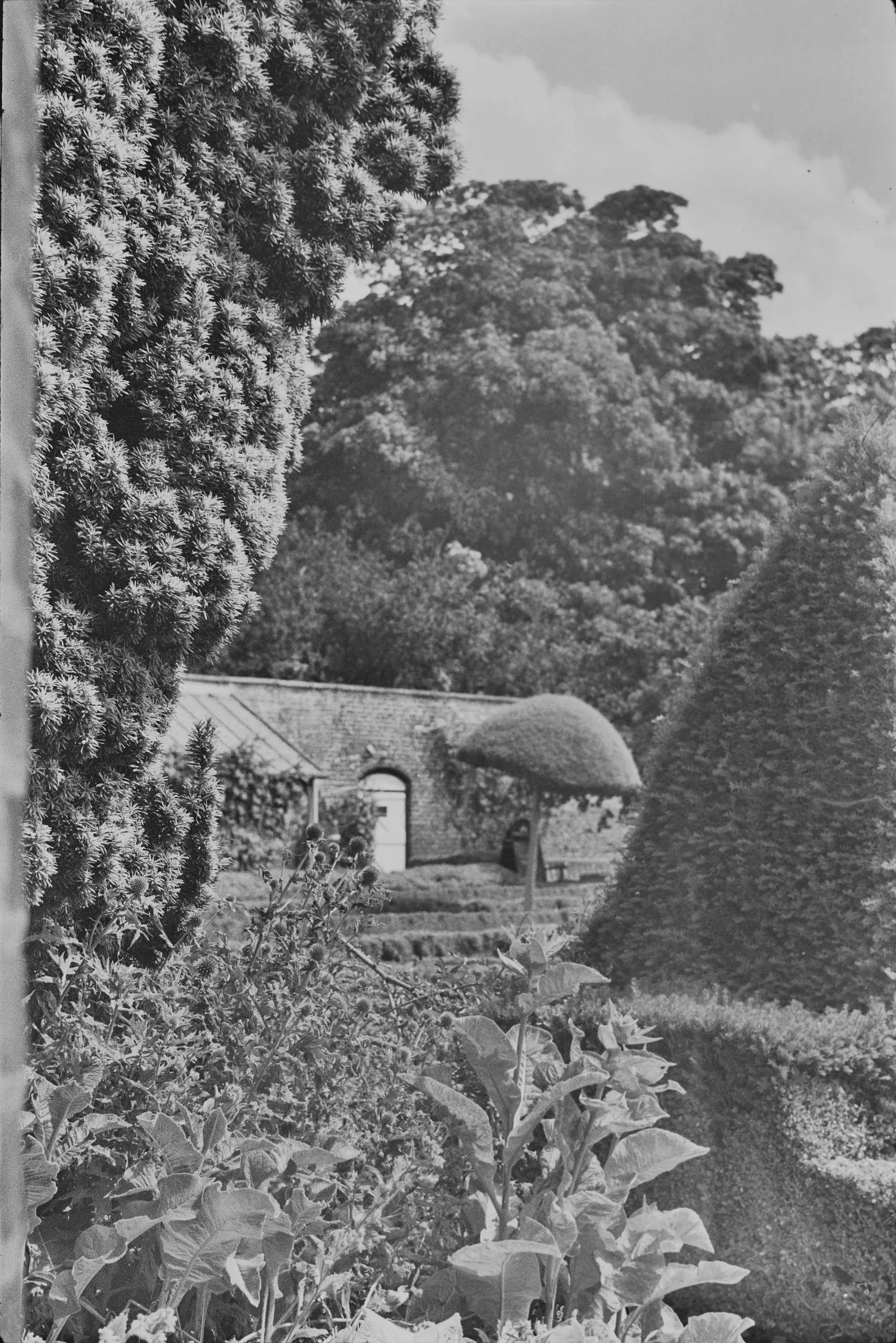
The interior of a formal walled garden, with clipped yew hedges, climbing plants and a stone archway leading to a further section beyond. Walled gardens were originally designed to trap solar heat and create a sheltered microclimate for growing tender fruits and vegetables in the cool British climate.
Camera on the Rocks
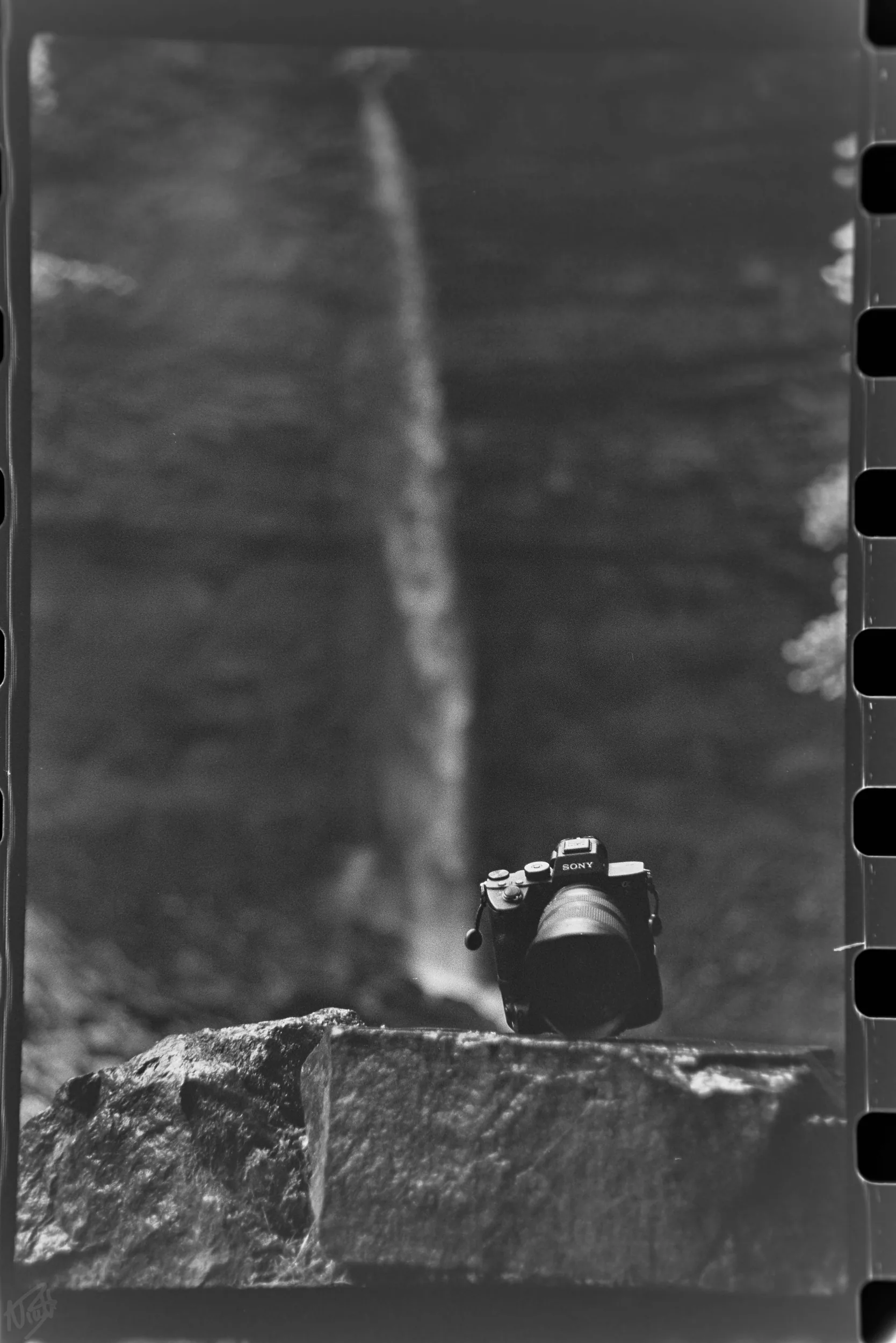
A Sony mirrorless camera rests on a rock ledge, a sheer cliff face and narrow waterfall filling the background. The image turns the instrument of photography into its own subject, the tool of the medium set down momentarily in the same landscape it has been used to record.
Woodland Bridge
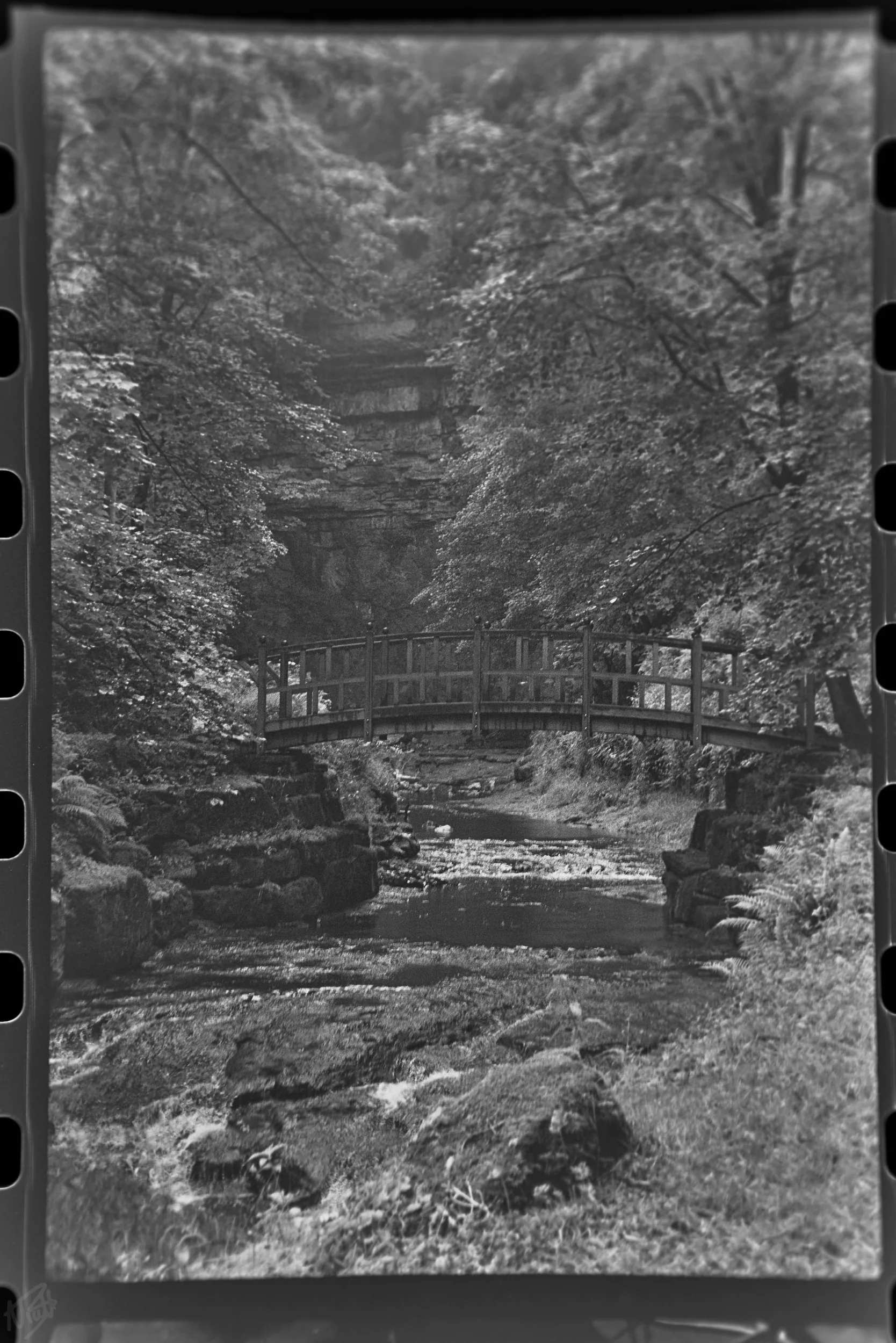
A wooden arched footbridge spans a small rocky stream in dense deciduous woodland. Mossy boulders line the stream bed and ferns grow in the shaded understorey around it. Bridges of this simple curved timber form have been used in British woodland and garden settings since at least the 18th century.