
Gallery
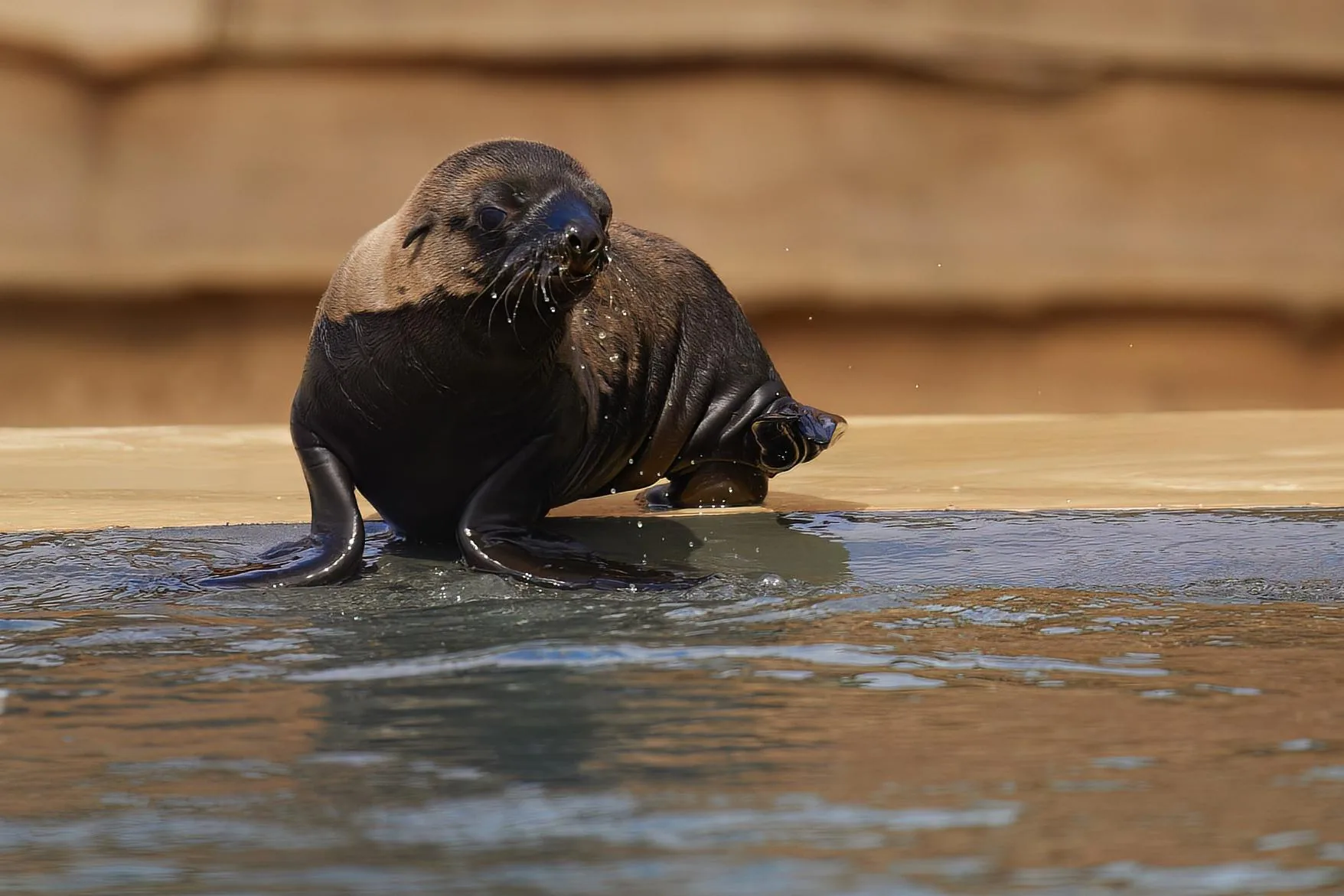
Fur Seal at the Pool
A fur seal hauls out at the water’s edge. Fur seals have thick underfur unlike true seals, giving them a denser, more insulating coat. They are eared seals, more closely related to sea lions than to grey or harbour seals, and can rotate their hindflippers to move on land.
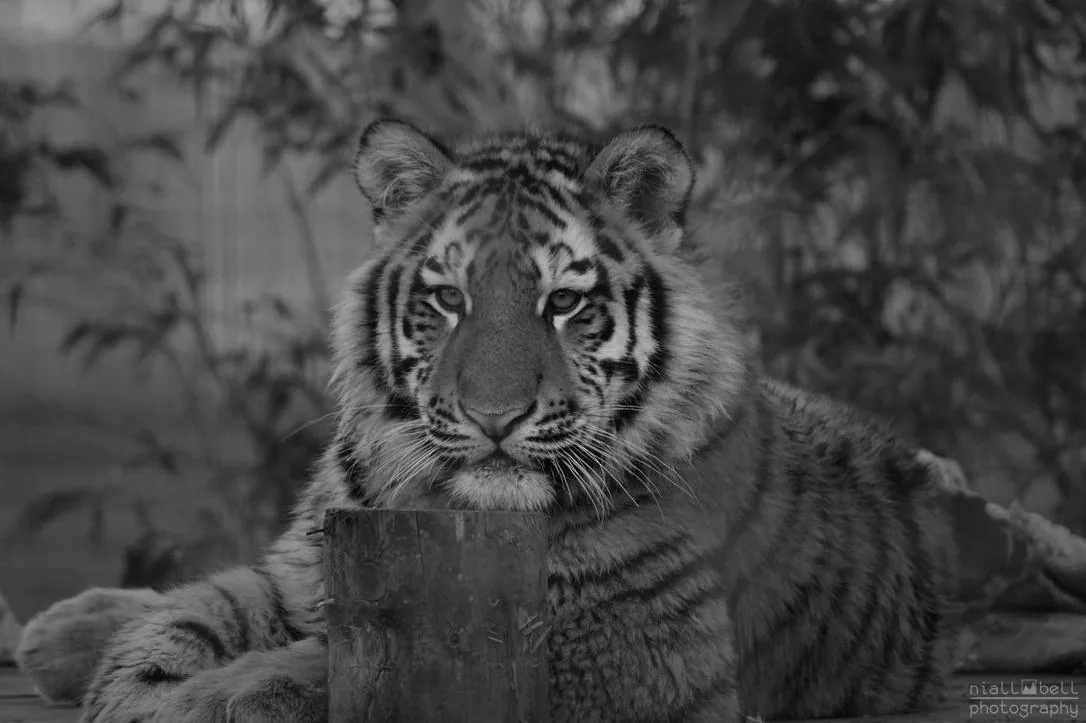
Tiger Cub Portrait
A young tiger rests its chin on a log, staring directly into the camera. Tiger cubs remain with their mother for up to three years, learning hunting techniques through observation and practice. The stripe pattern of each tiger is entirely unique, functioning like a fingerprint and never repeated between individuals.
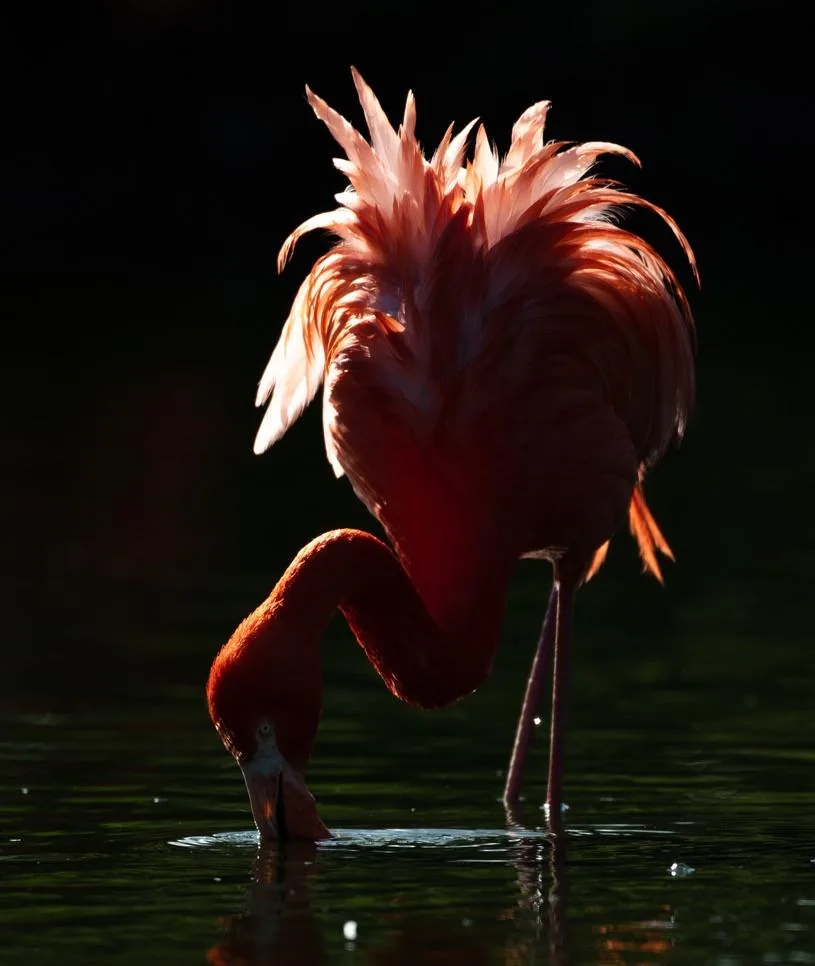
Flamingo Feeding
A flamingo feeds with its bill inverted in the water. Flamingos filter feed by pumping water through specialised lamellae, extracting algae and small crustaceans. The carotenoid pigments in their food are responsible for their pink colouring; without them, the plumage gradually fades to white.
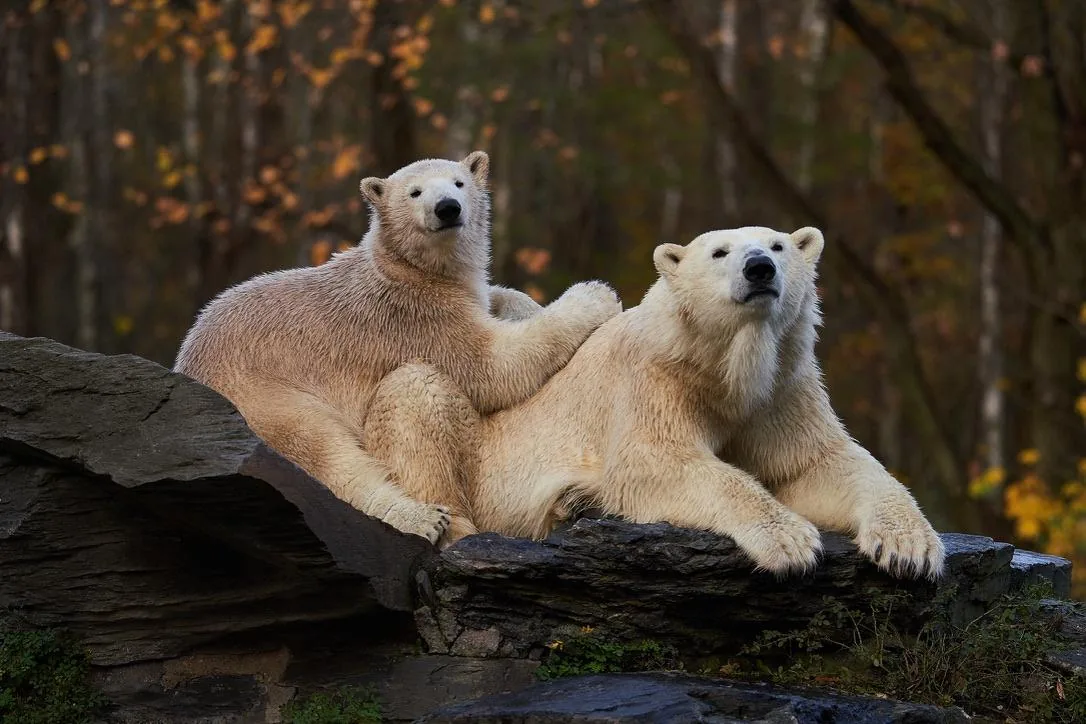
Polar Bears Resting
Two polar bears rest side by side on rocks in autumn light. Polar bears are the world’s largest land carnivore, with adult males weighing up to 700 kilograms. Their fur appears white but is actually transparent, scattering light in a way that makes it appear pale against most backgrounds.
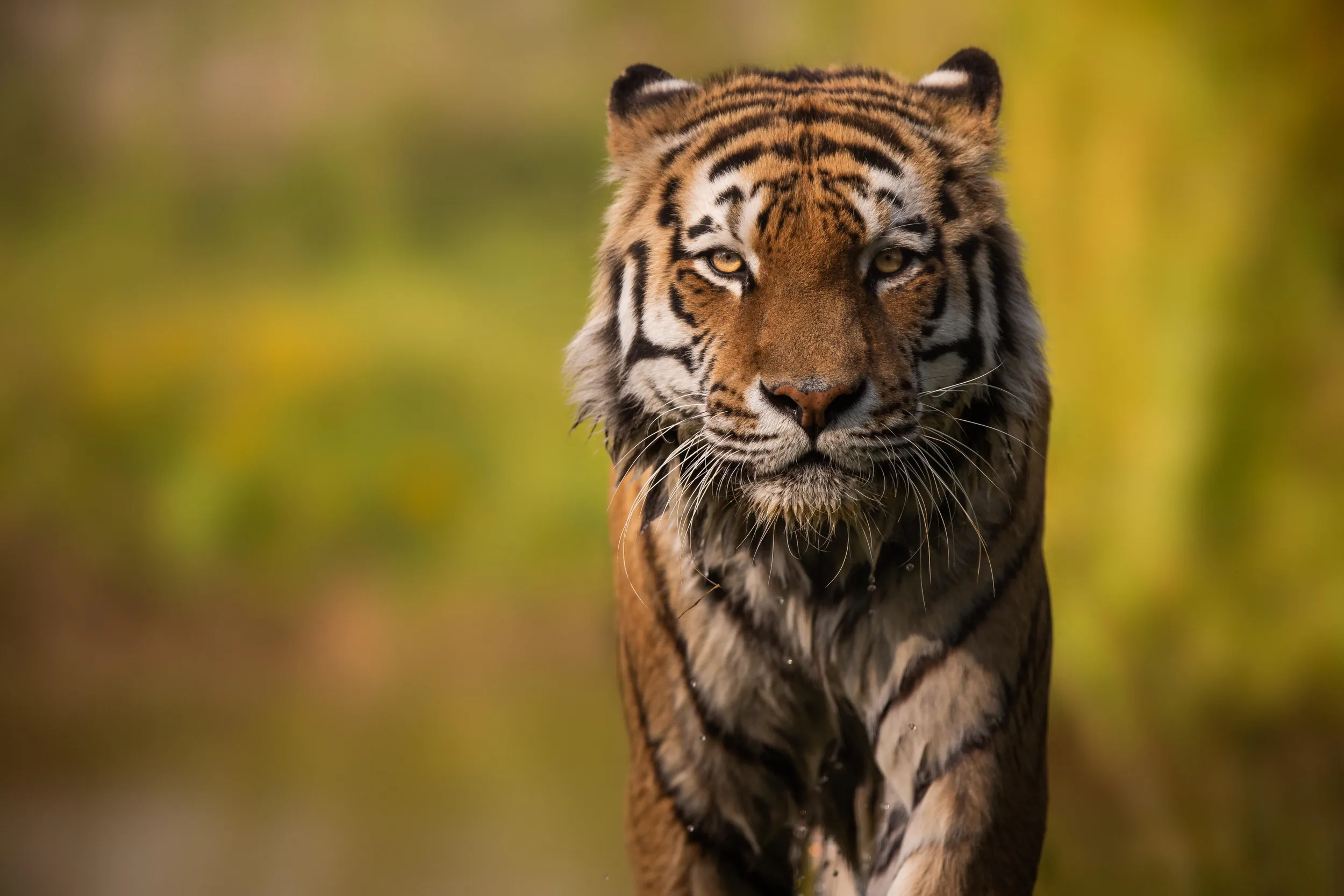
Amur Tiger Approaching
A wet Amur tiger walks directly toward the camera with focused intent. The Amur tiger is the largest tiger subspecies, with males reaching up to 300 kilograms. Fewer than 600 individuals survive in the wild, making it one of the rarest large cats remaining on the planet.
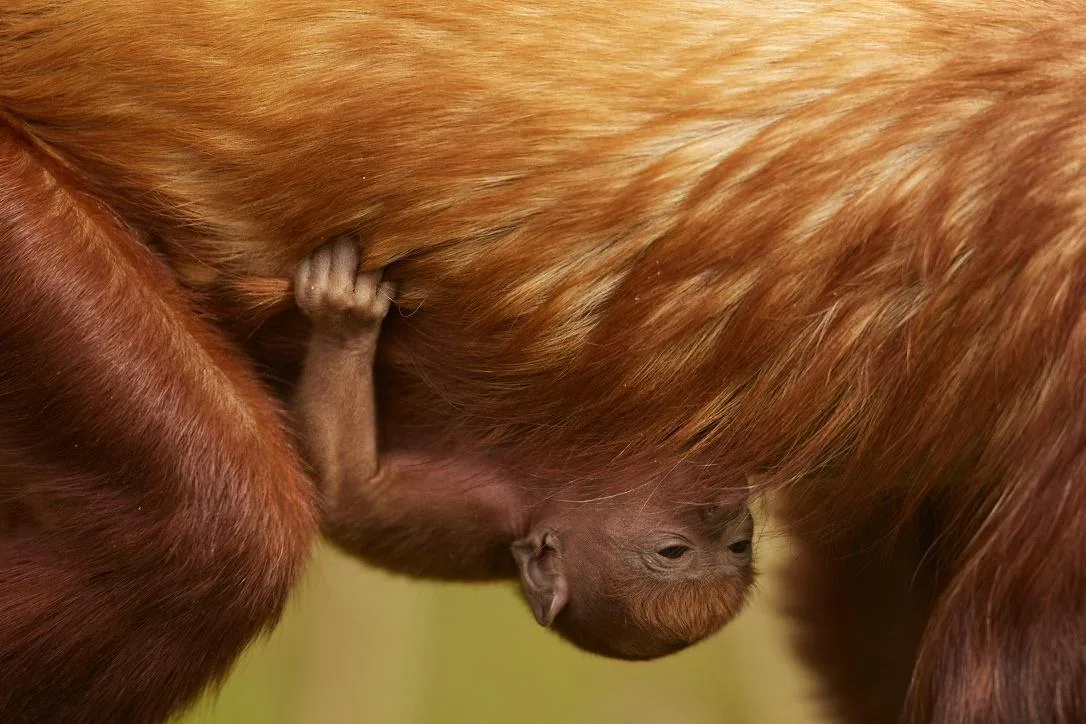
Infant Howler Monkey
A newborn red howler monkey peeks out from its mother’s fur. Howler monkey infants cling tightly to their mother for several months after birth. Red howlers are named for the loud call produced by males using a specialised enlarged hyoid bone, which can carry up to three kilometres through dense forest.
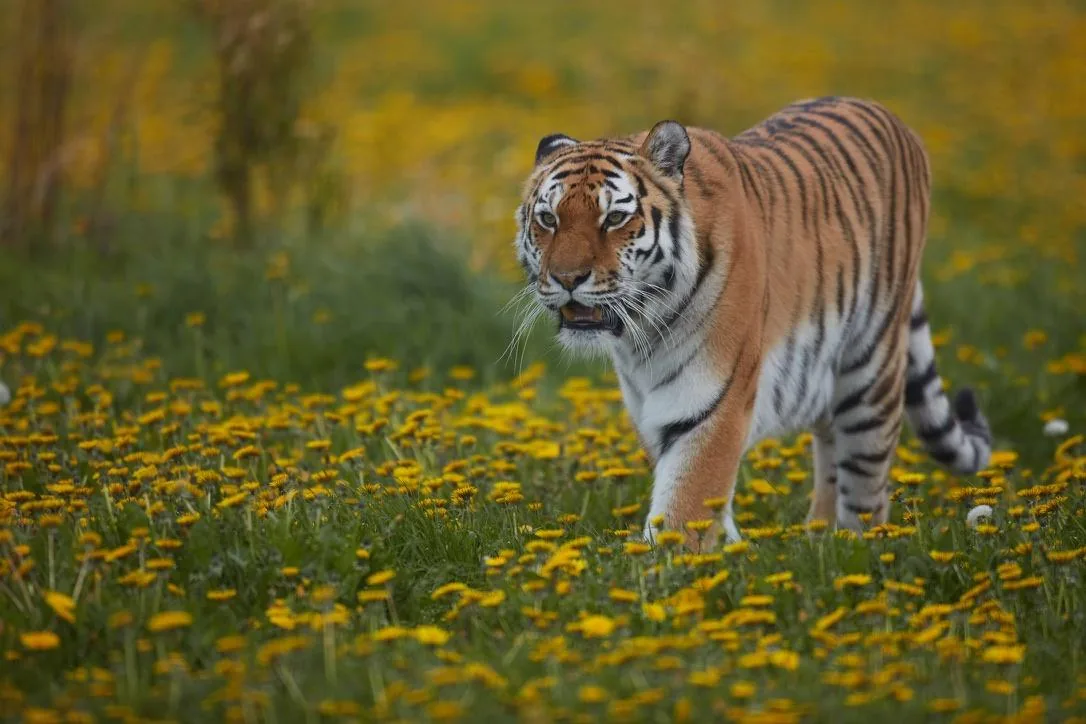
Tiger Among the Dandelions
An Amur tiger walks through a field of dandelions in spring. Tigers are solitary and territorial, each maintaining a large home range. They are obligate carnivores requiring a diet of large ungulates to sustain their body mass, and hunt primarily at night using ambush rather than pursuit.
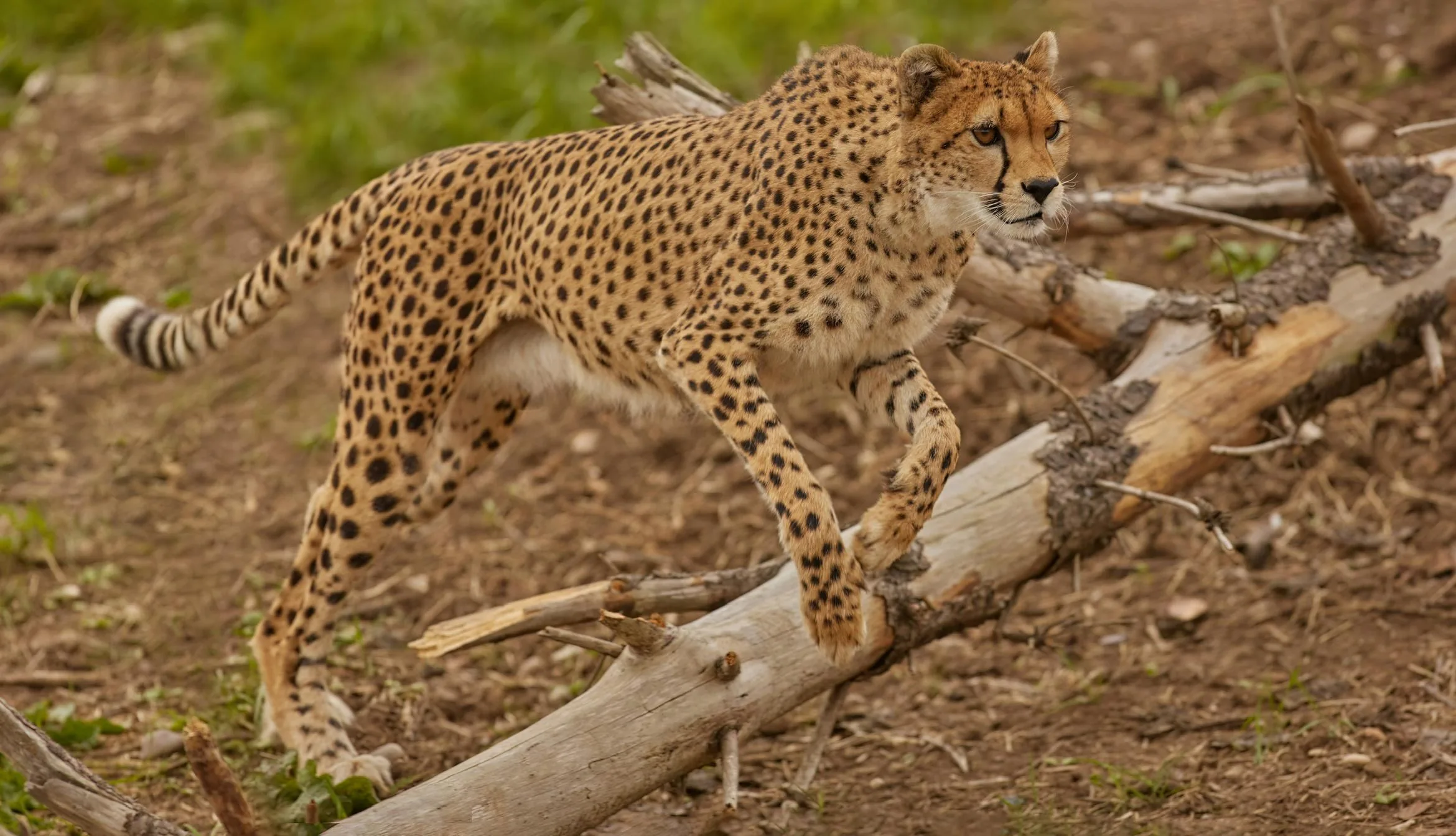
Cheetah on the Move
A cheetah steps over a fallen log at a purposeful pace. The cheetah is the fastest land animal, reaching 112 kilometres per hour in short bursts. Its partially non-retractable claws function like running spikes, providing traction during high-speed chases across open grassland terrain.
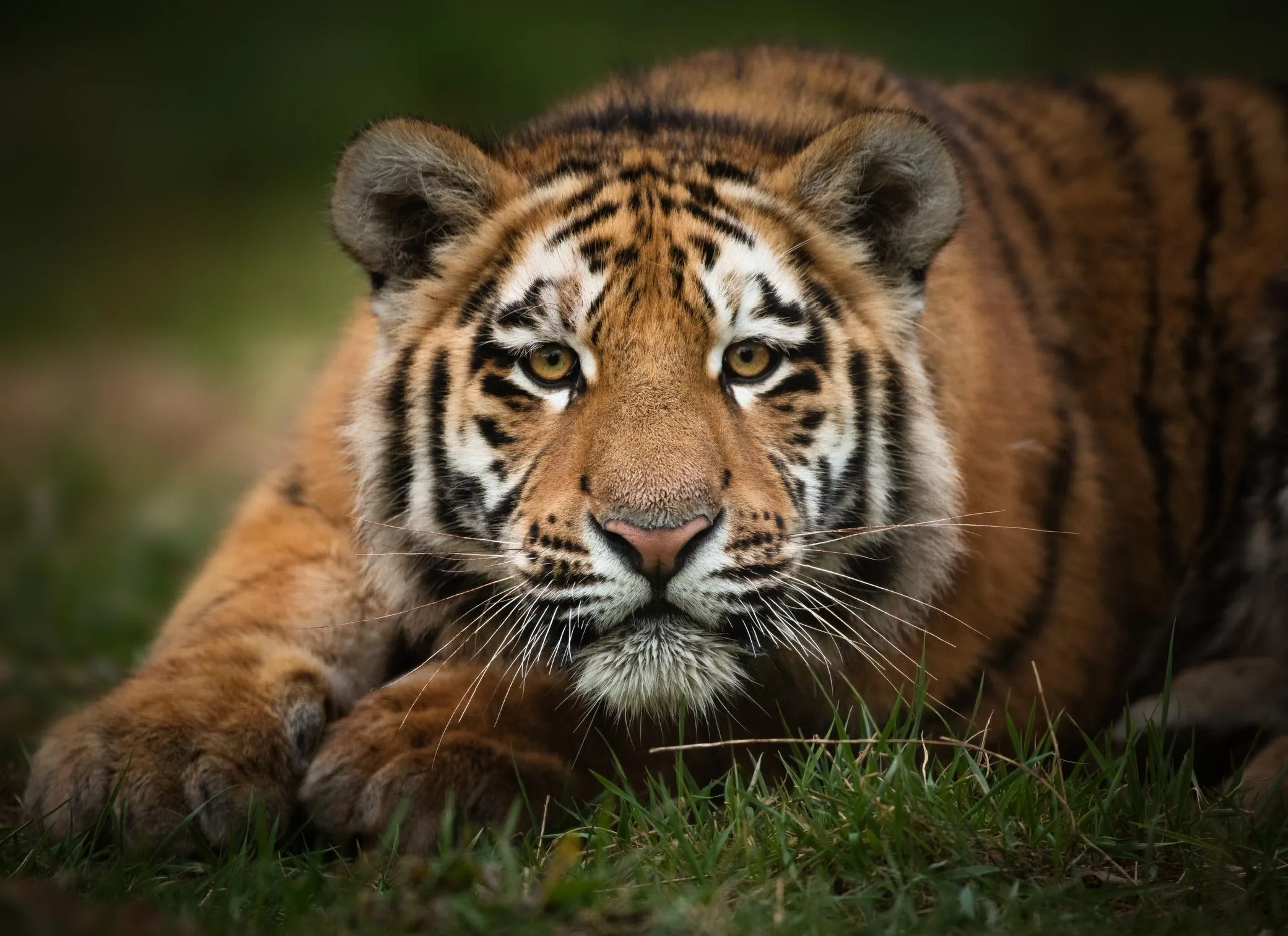
Young Tiger Portrait
A young Amur tiger rests low to the ground, fixing the viewer with a direct golden-eyed stare. Tiger stripe patterns are unique to each individual and present from birth. The disruptive colouration helps break up the animal’s outline in tall grass and dappled forest light while hunting.
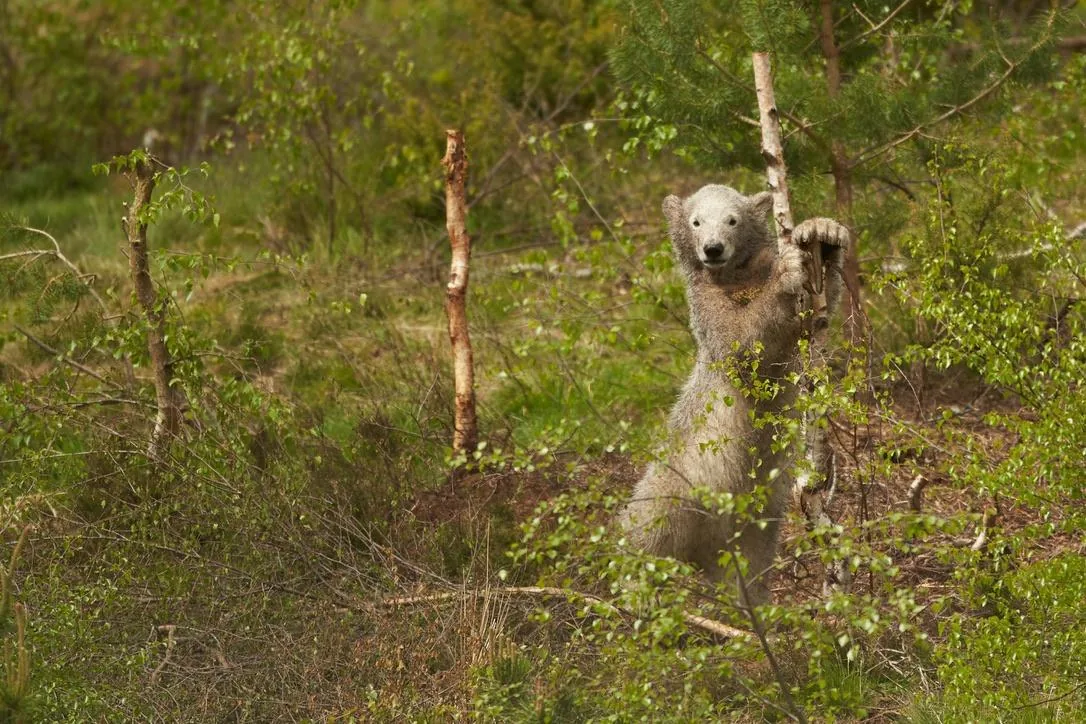
Polar Bear Cub in the Trees
A young polar bear cub grips a slim tree trunk while standing upright in summer vegetation. Polar bear cubs are born in dens in midwinter weighing under a kilogram, dependent entirely on their mother. They remain with her for up to two and a half years before becoming independent.
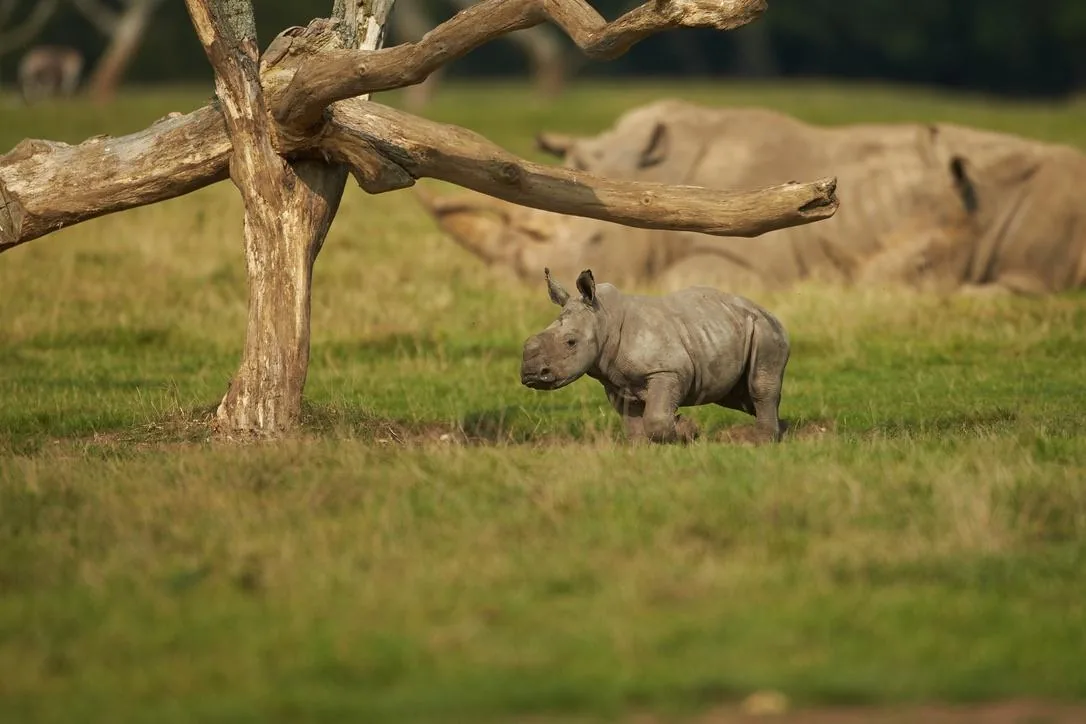
White Rhino Calf
A very young white rhino calf walks through open grassland while adults rest behind it. White rhinos are grazers, using their wide, flat lips to crop short grass close to the ground. The horn is composed of compacted keratin rather than bone and continues to grow throughout the animal’s life.
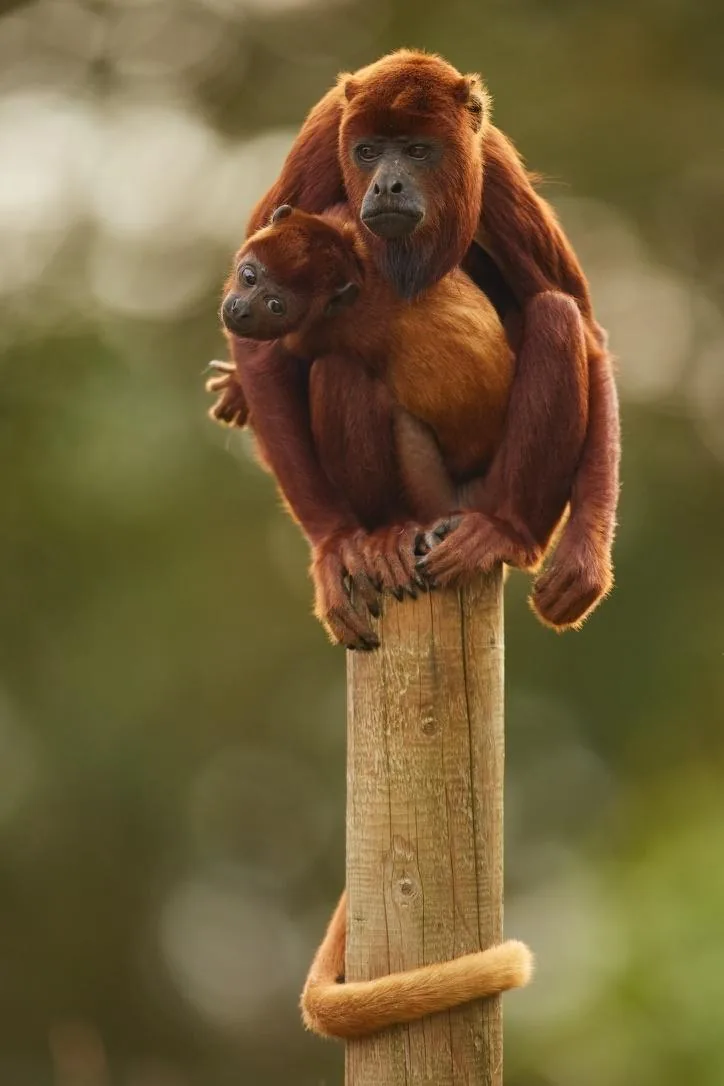
Howler Monkey Mother and Infant
A red howler monkey mother sits atop a post with her infant clinging to her. Red howlers live in groups dominated by a single adult male. Their resonant calls serve as territorial advertisements between groups, with sound carrying up to three kilometres through dense South American rainforest canopy.
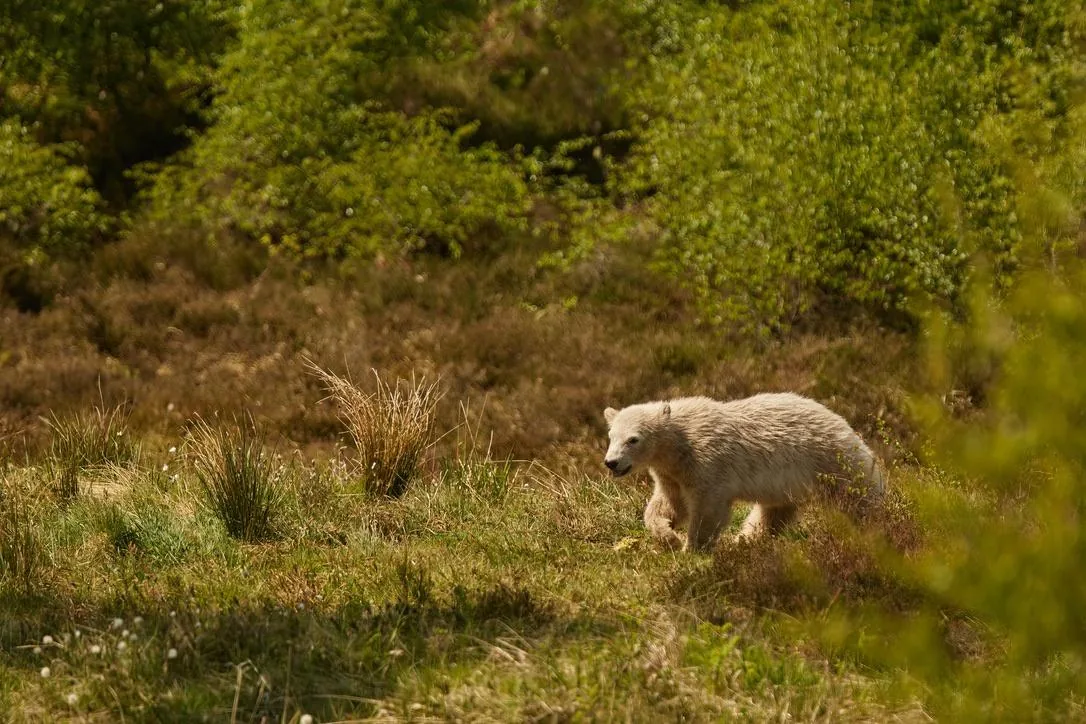
Young Polar Bear Roaming
A young polar bear moves through summer heathland vegetation. Polar bears are classified as marine mammals due to their dependence on sea ice and the marine food chain. With Arctic ice declining rapidly, bears are spending increasingly long periods on land, often in poor body condition.
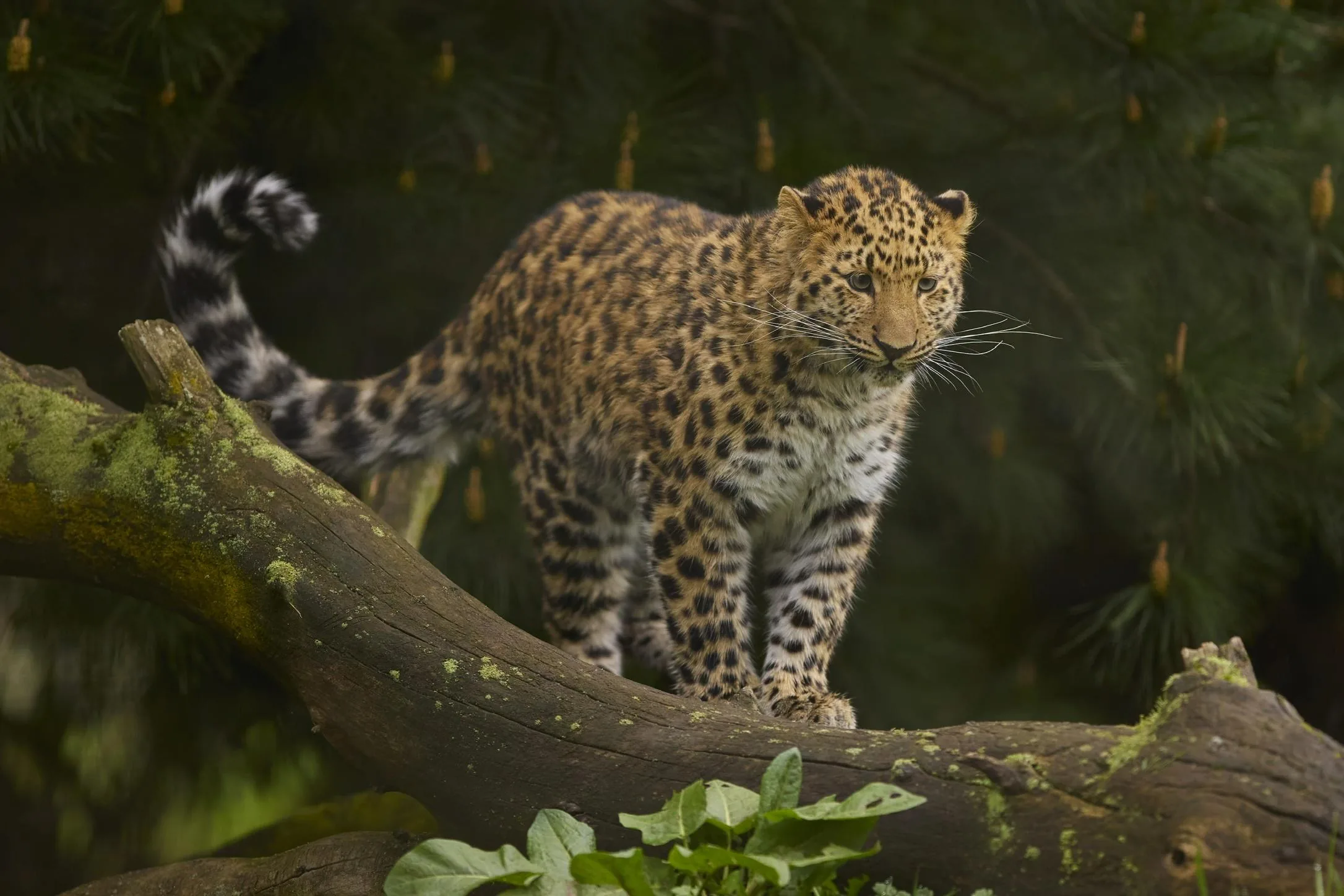
Amur Leopard Cub
An Amur leopard cub explores a mossy log with cautious curiosity. The Amur leopard is the world’s rarest big cat, with around 100 individuals surviving in the Russian Far East. It is adapted to cold climates, with longer, paler winter fur and broader paws than its African relatives.
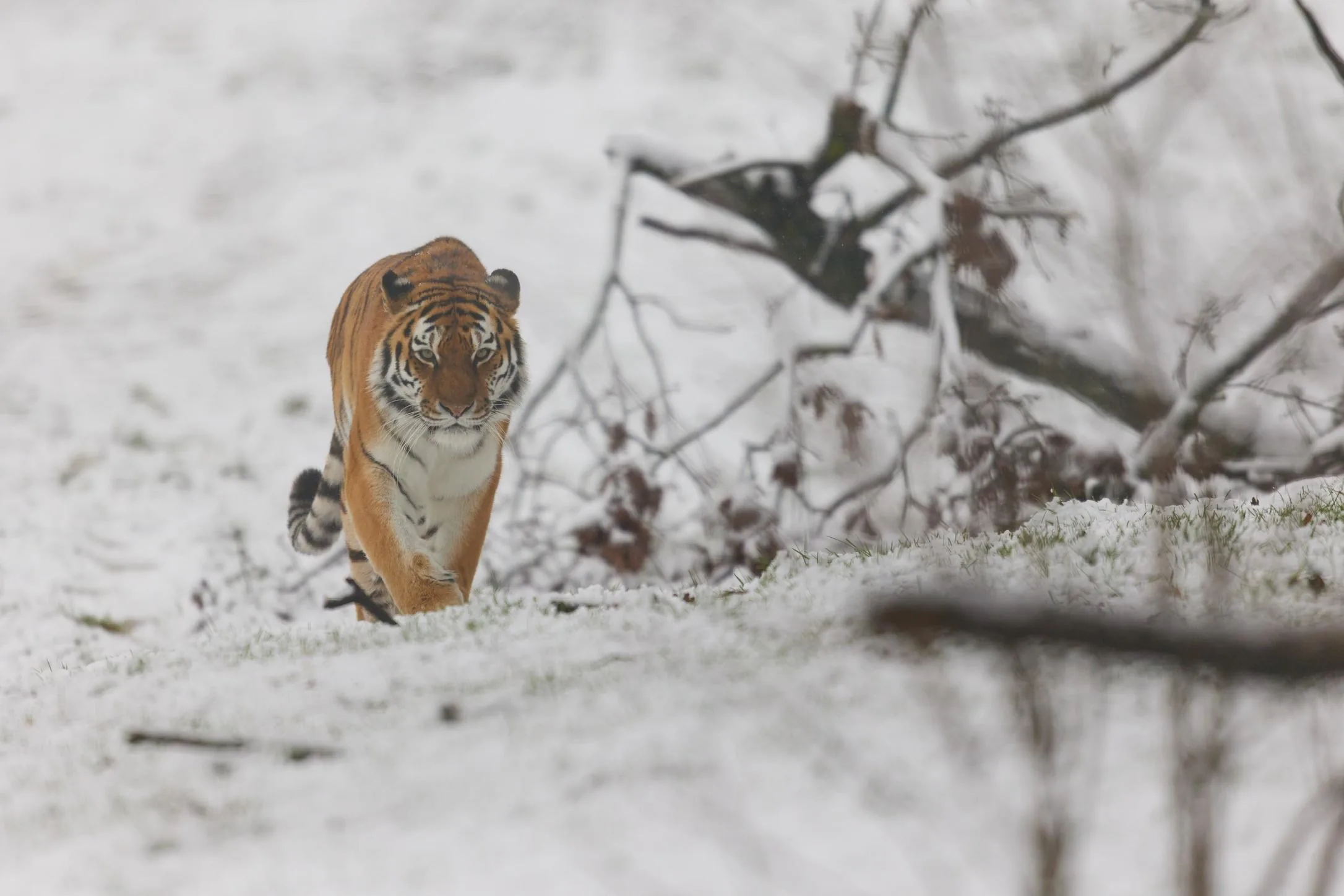
Amur Tiger in Snow
An Amur tiger walks through a snowy winter landscape. Amur tigers are uniquely adapted to cold environments, with thicker fur and a layer of fat on their flanks. Their prey in the Russian Far East includes elk, wild boar, and sika deer, hunted year-round through deep snow.
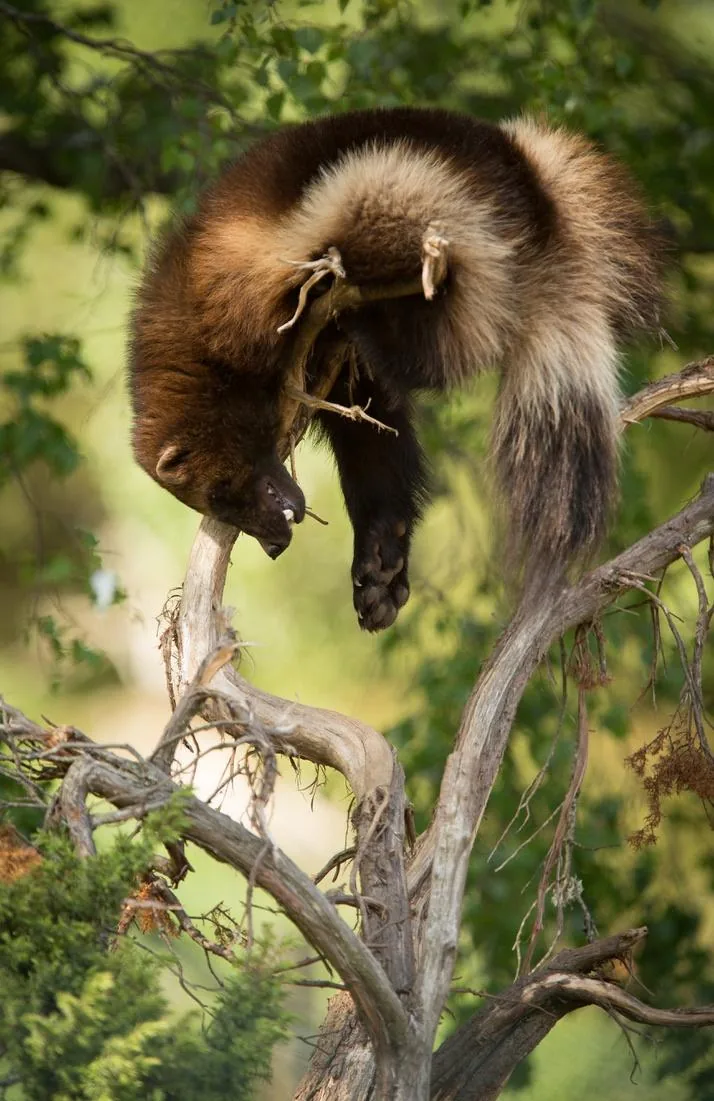
Wolverine in the Trees
A wolverine climbs through a tangle of dead branches. Wolverines are the largest member of the mustelid family, known for their extraordinary strength relative to body size. They are opportunistic feeders capable of crushing frozen bone and can track prey across vast distances in deep winter snow.