
Gallery
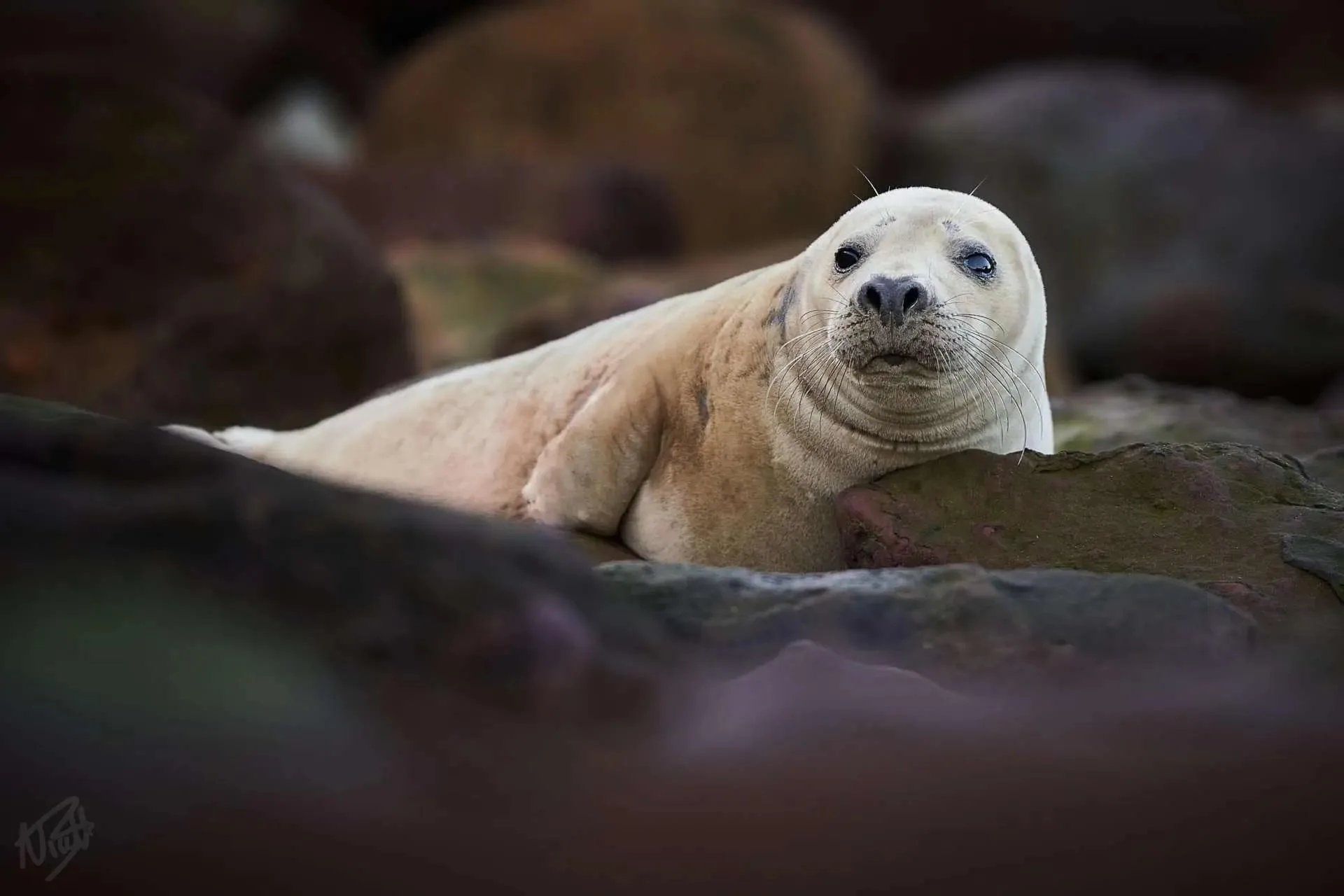
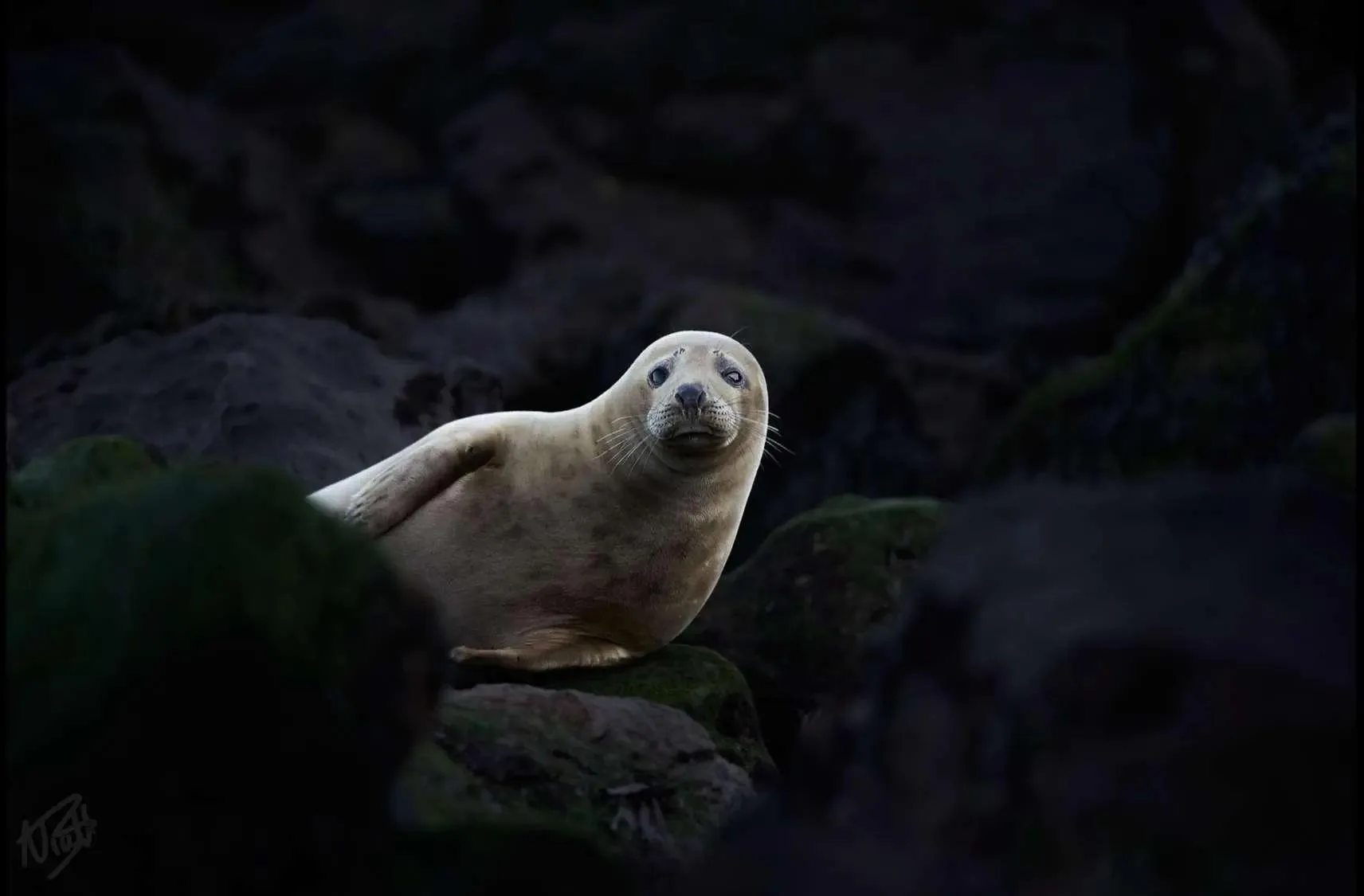
Seal Pup on the Rocks
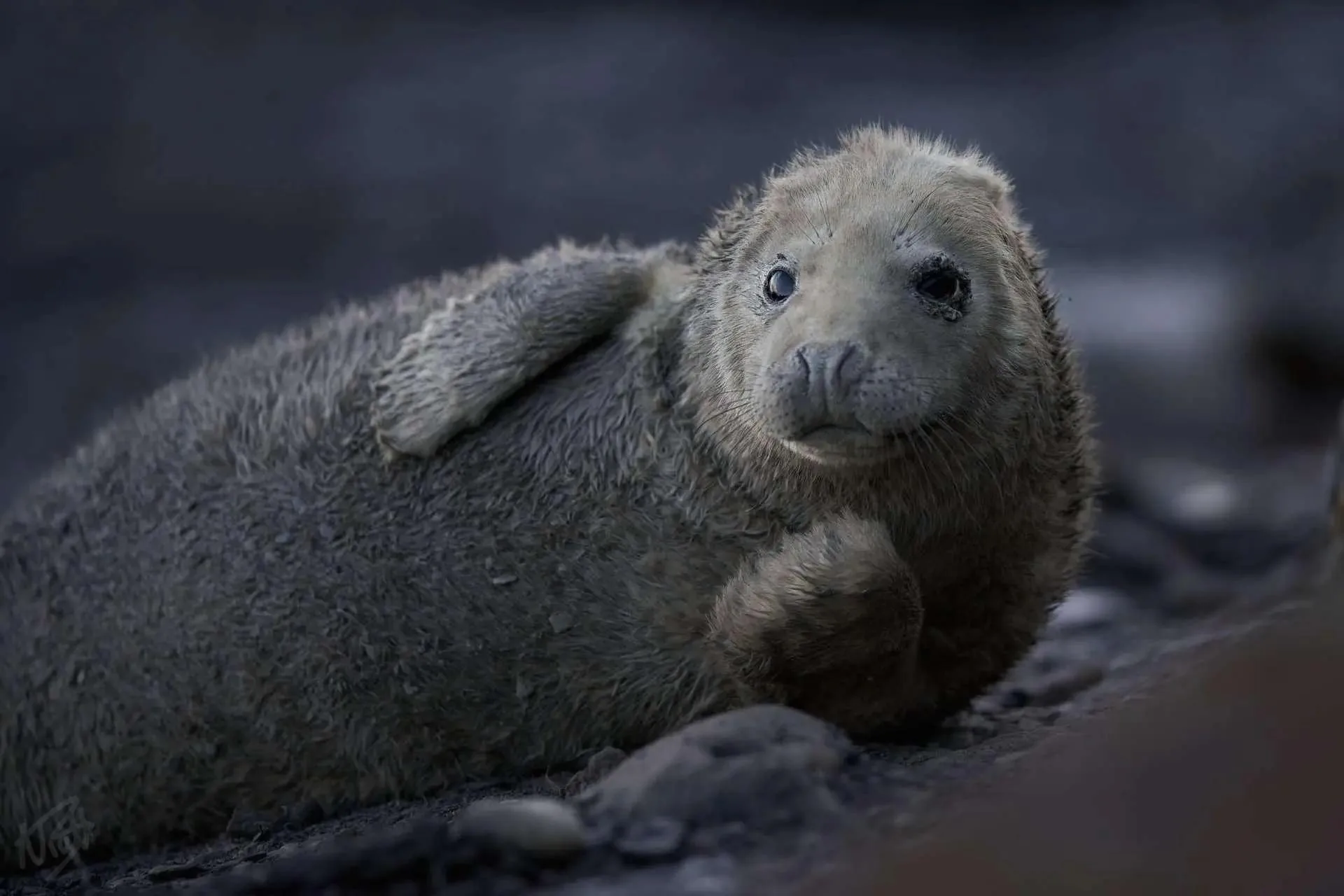
A grey seal pup rests on coastal rocks during the autumn breeding season. Grey seal pups are born with a white lanugo coat which is shed after around three weeks to reveal the spotted adult coat beneath. Pups more than treble their birth weight during this short nursing period.
Fluffy Pup
A newborn grey seal pup in its white lanugo coat rests on dark rocks. Grey seal pups are suckled for just three weeks, gaining up to 2 kilograms per day on rich maternal milk. After weaning, the mother departs and the pup must fast until it learns to swim and catch fish independently.
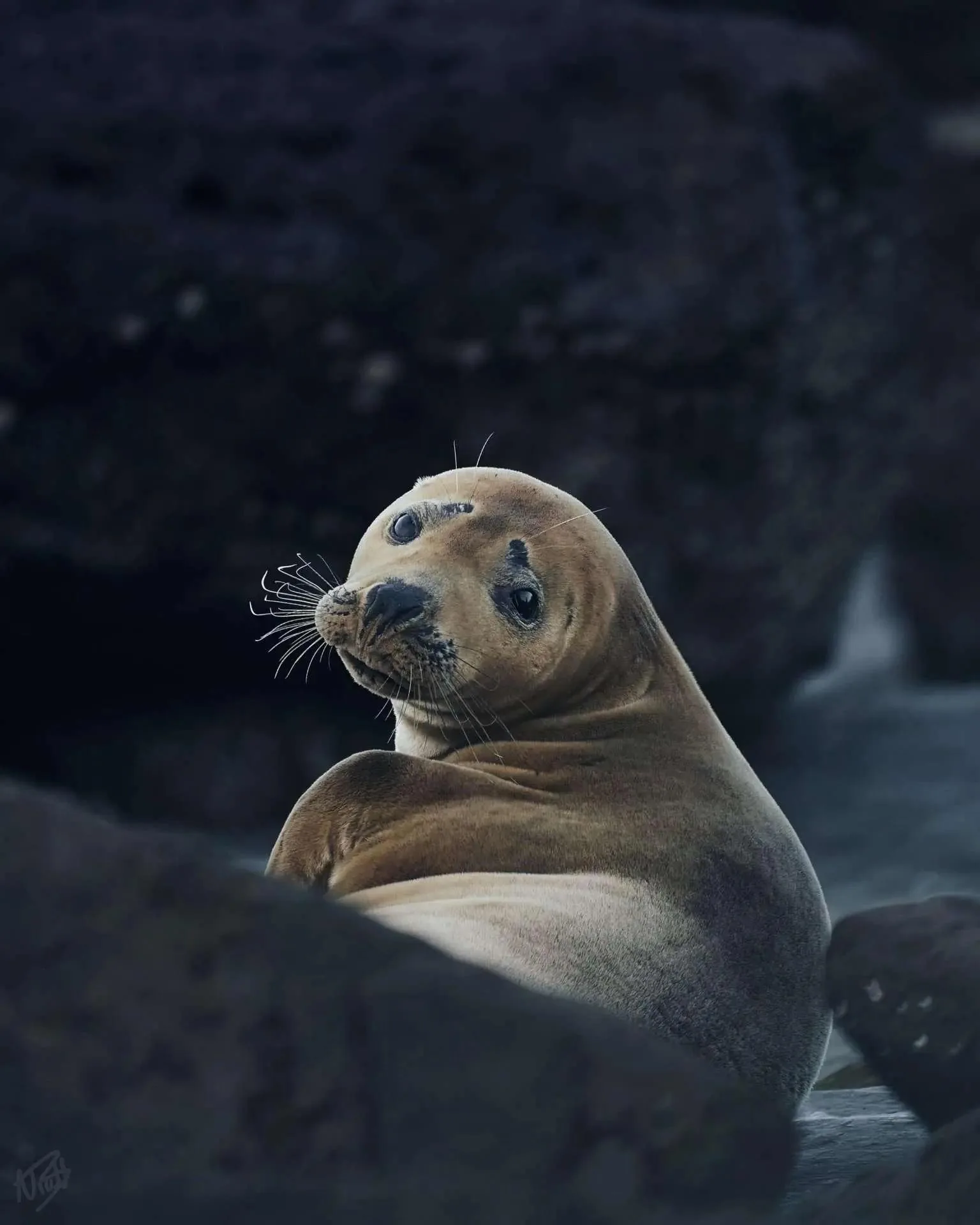
Alert on the Shore
A young grey seal sits up on coastal rocks with an inquisitive expression. Grey seals shed their puppy coat at around three to four weeks, emerging in spotted grey adult colouring. Their long, sensitive vibrissae detect water movement and vibration, helping them locate fish when hunting underwater.
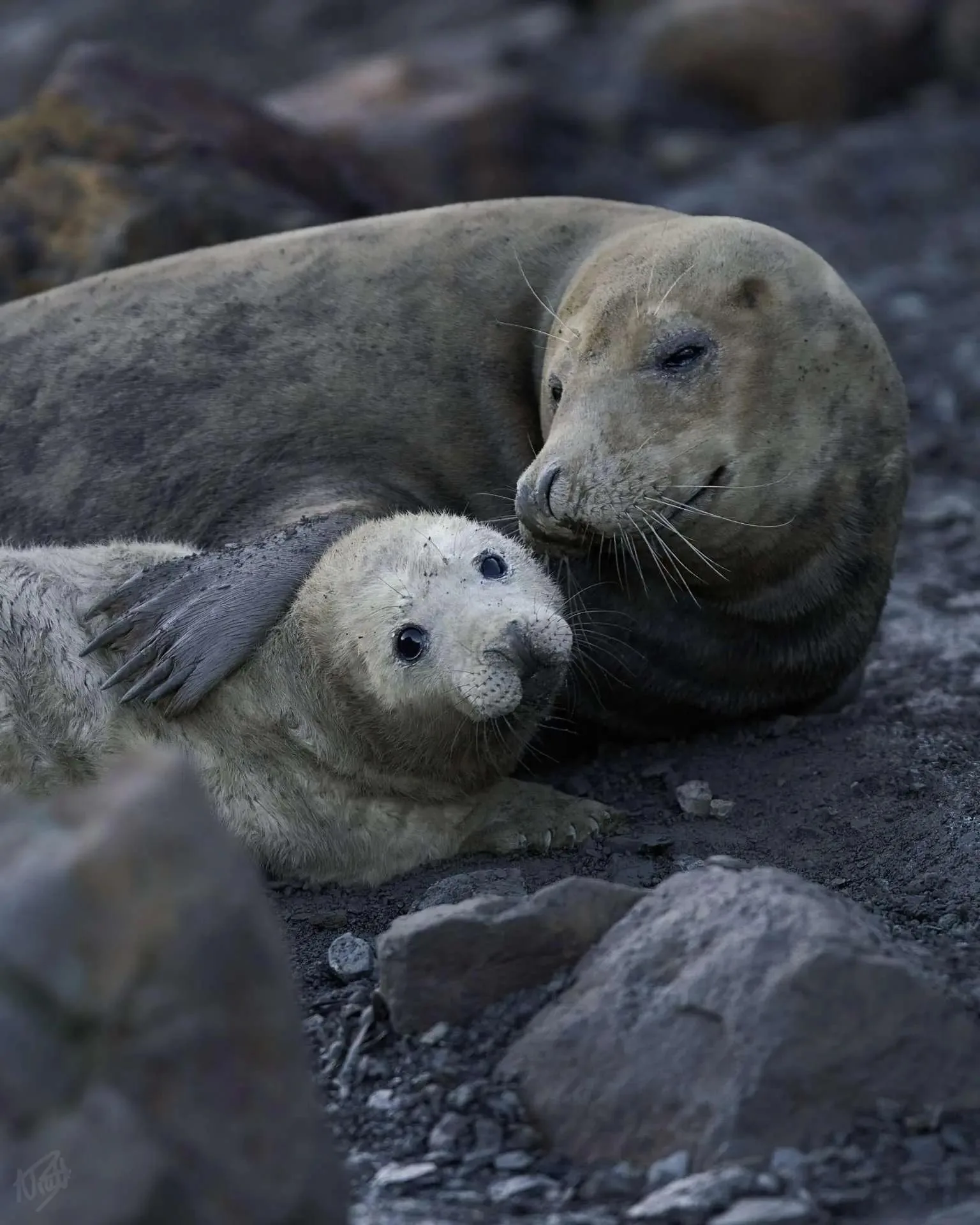
Cow and Pup
A grey seal cow rests with her newborn pup on a rocky shore. Cows return to the same breeding beaches each autumn and suckle their pup exclusively for around three weeks, losing significant body weight as they do not feed during this period. Bulls take no part in raising young.
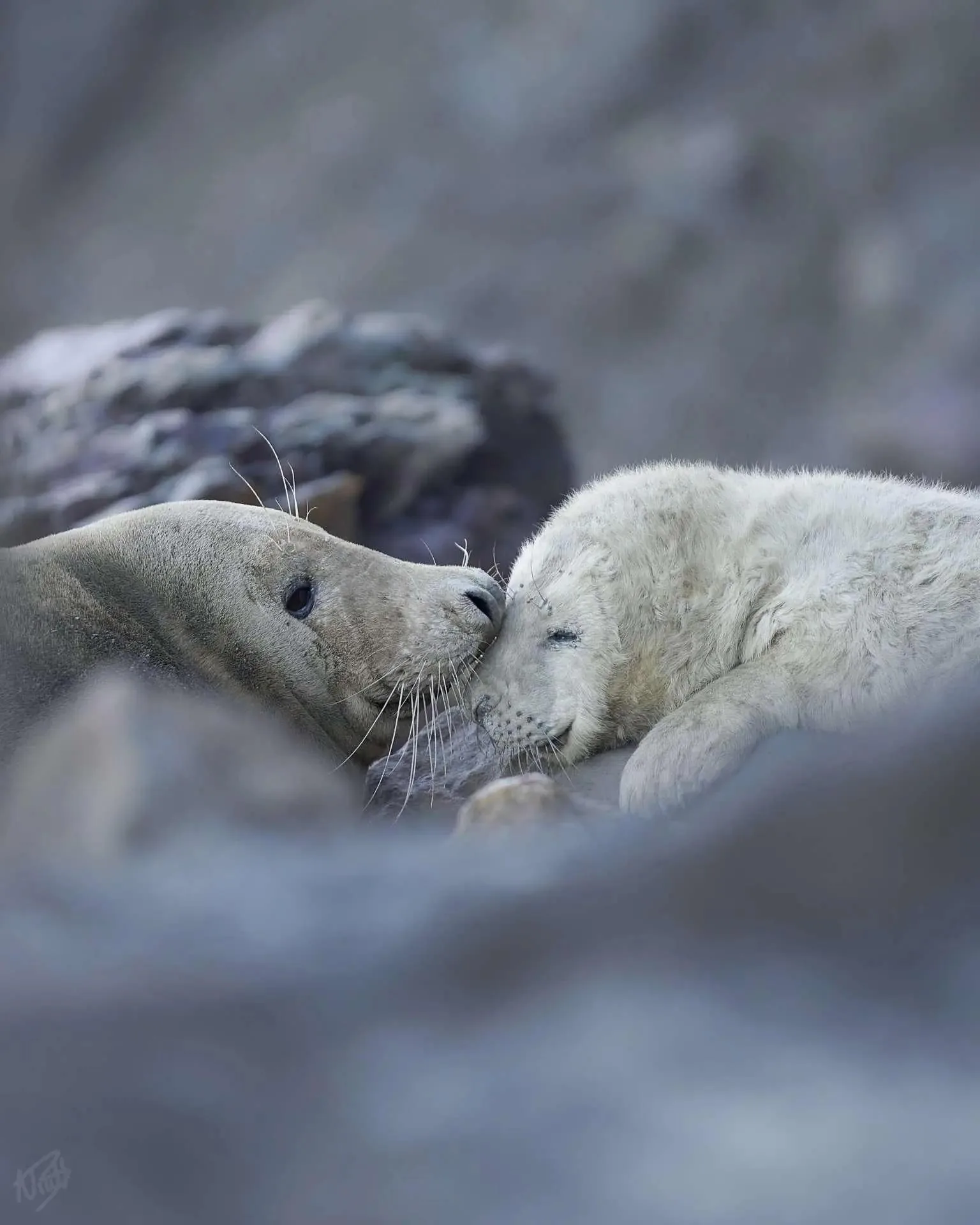
Mother and Pup
A grey seal cow nuzzles her white-coated pup nose to nose on the rocks. Mothers identify their pups primarily by scent, and nose contact reinforces the bond in a crowded colony. Pups left unattended are occasionally approached by other cows, so individual recognition is critical to successful nursing.
Pup in the Dark
A pale grey seal pup rests on dark coastal rocks, its coat catching the light. Britain holds around 40 percent of the world’s grey seal population, with major colonies on the Scottish islands, the Lincolnshire coast, and in Cornwall. The species is fully protected under British wildlife legislation.