
Gallery
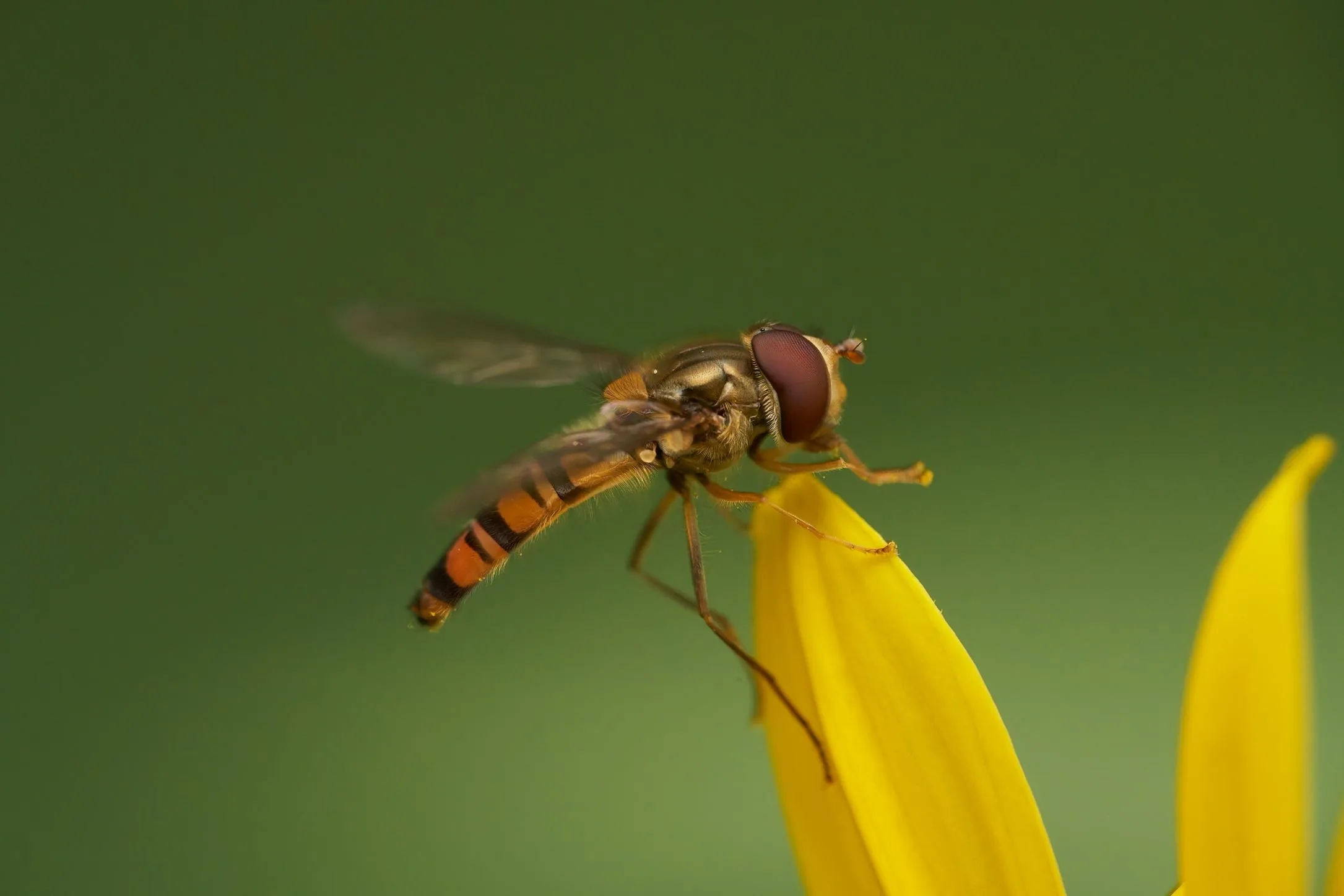
Hoverfly
A hoverfly (family Syrphidae) perches on a yellow flower petal, its wings a blur of rapid vibration. Hoverflies are important pollinators across Britain, visiting a wide range of flowering plants. Many species have evolved yellow and black banding that mimics the warning colouration of bees and wasps, providing protection from predators.
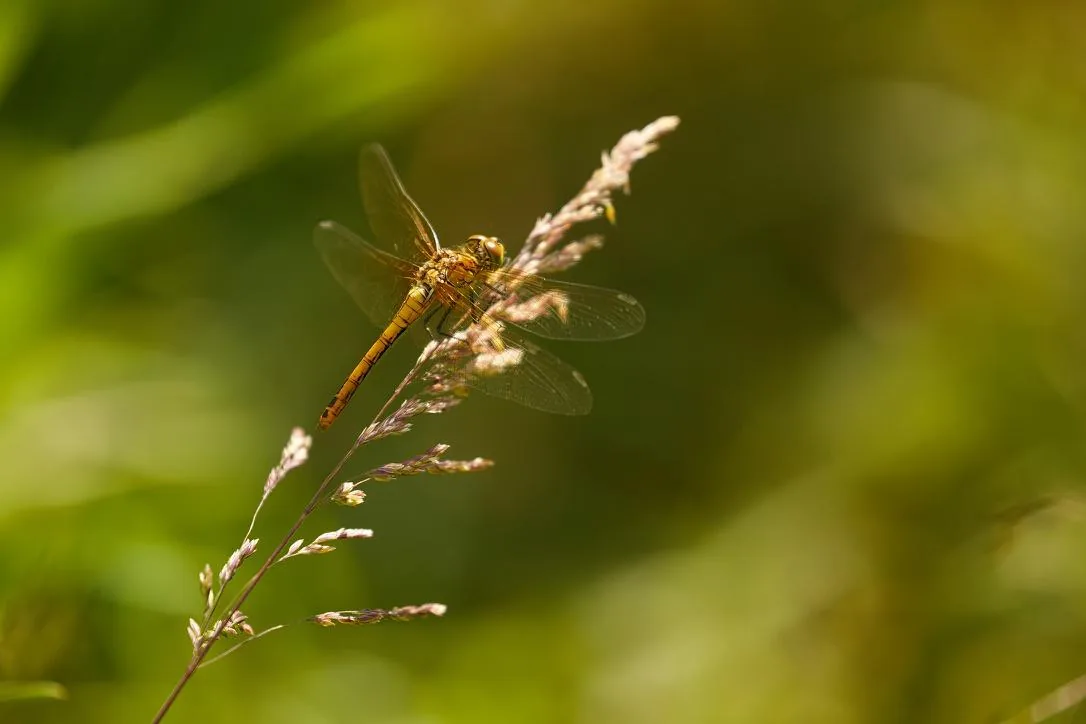
Common Darter
A common darter dragonfly (Sympetrum striolatum) rests on a grass seed head in warm afternoon light. One of Britain’s most widespread dragonflies, the common darter flies from July through to November and is often the last species on the wing as temperatures drop in autumn, able to fly at lower temperatures than most other species.
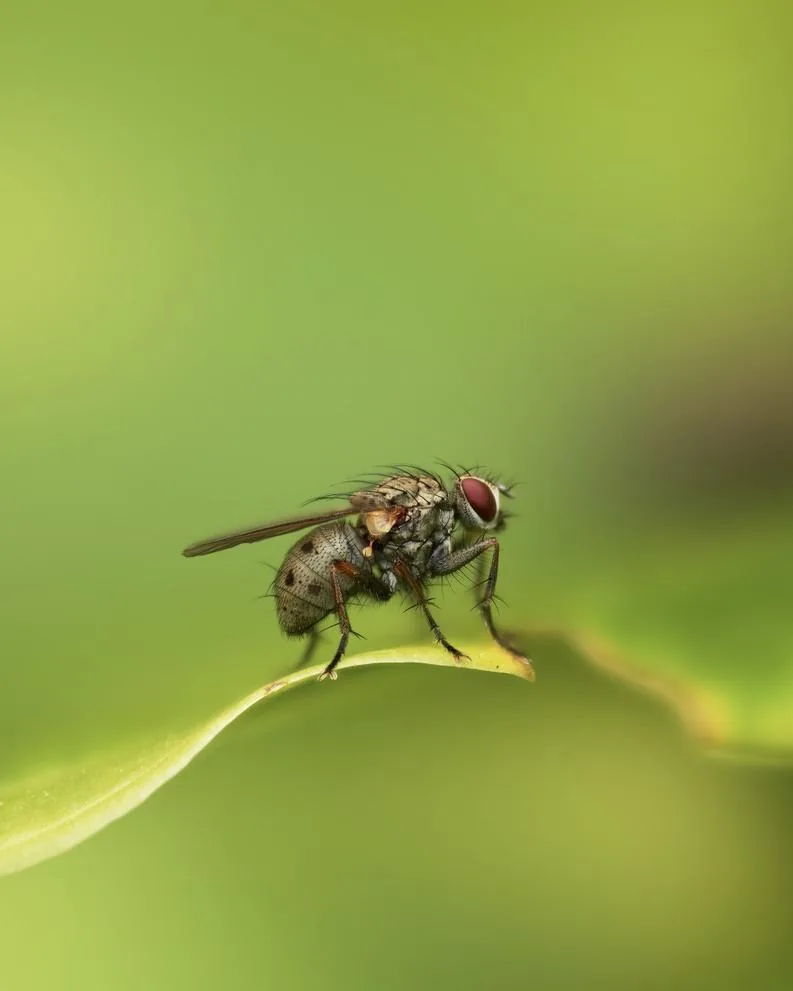
Tachinid Fly
A tachinid fly (family Tachinidae) perches on the tip of a leaf, its spotted abdomen and bristle-covered body clearly visible at close range. Tachinids are a large family of parasitoid flies whose larvae develop inside the bodies of other insects, including caterpillars and beetles, making them significant natural regulators of insect populations.
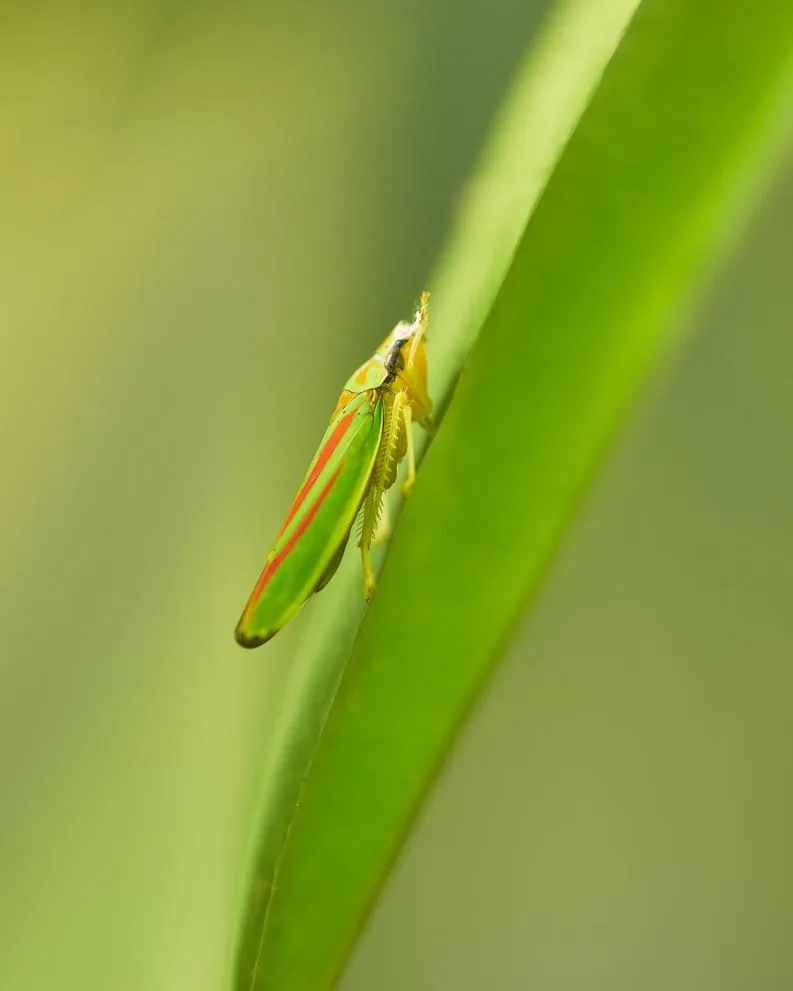
Green Leafhopper
A green leafhopper (Cicadella viridis) clings to a rush stem, its vivid green wings marked with a bold orange-red stripe. This species is common in damp grassland habitats where rushes and sedges grow. Leafhoppers feed by piercing plant tissue and extracting sap, and some species are important vectors of plant disease.
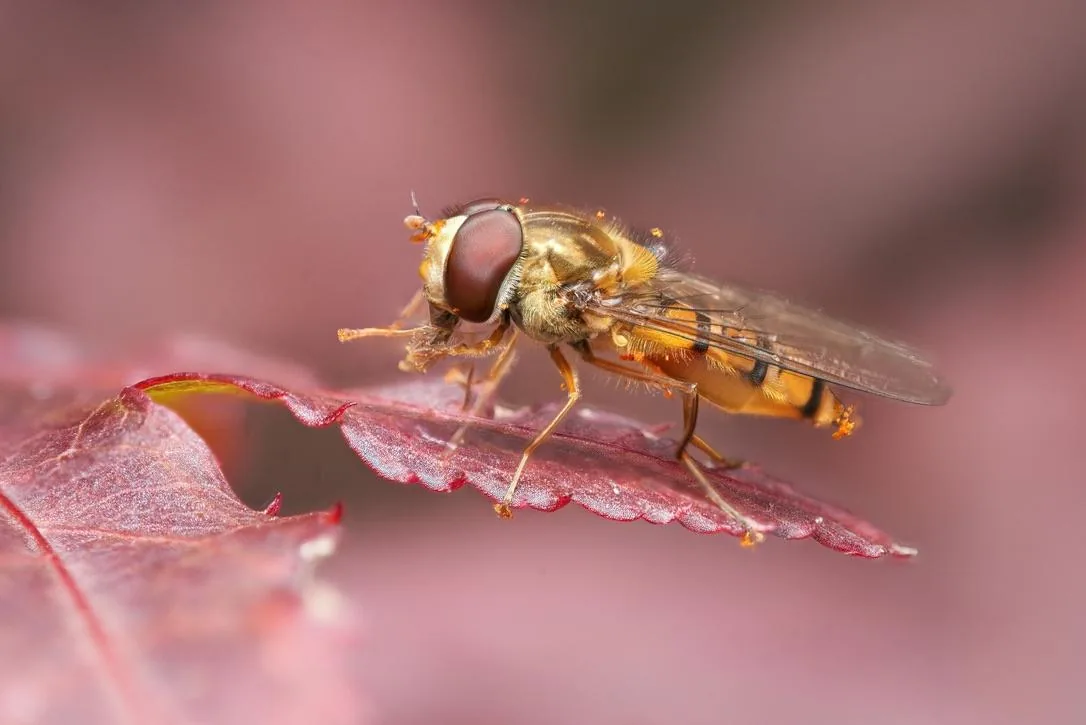
Pollen-dusted Hoverfly
A hoverfly rests on a red-tinted autumn leaf, its body and legs dusted with orange pollen grains accumulated during foraging. Hoverflies transfer pollen between flowers as an incidental consequence of feeding on nectar, and some plant species rely on hoverflies as their primary pollinator rather than bees or other insects.
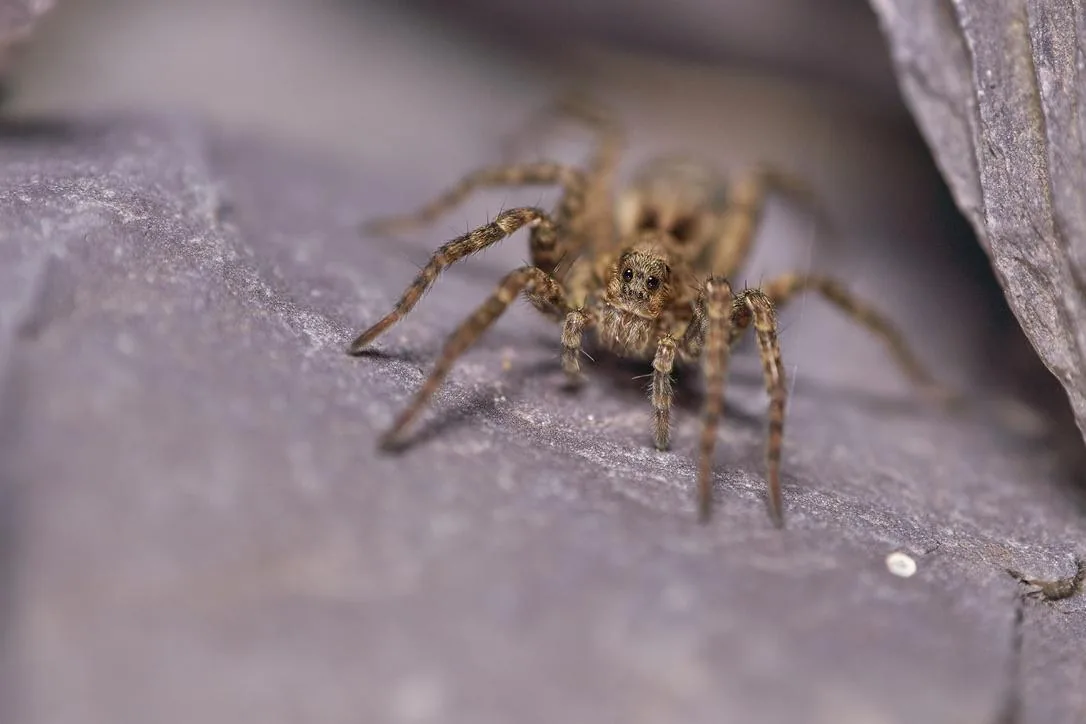
Wolf Spider
A wolf spider (family Lycosidae) faces the camera on a rock surface, its forward-facing eyes providing a wide field of binocular vision for hunting. Unlike web-building spiders, wolf spiders actively pursue prey at speed. Females carry their egg sac attached to the spinnerets, then carry the newly hatched spiderlings on their backs.
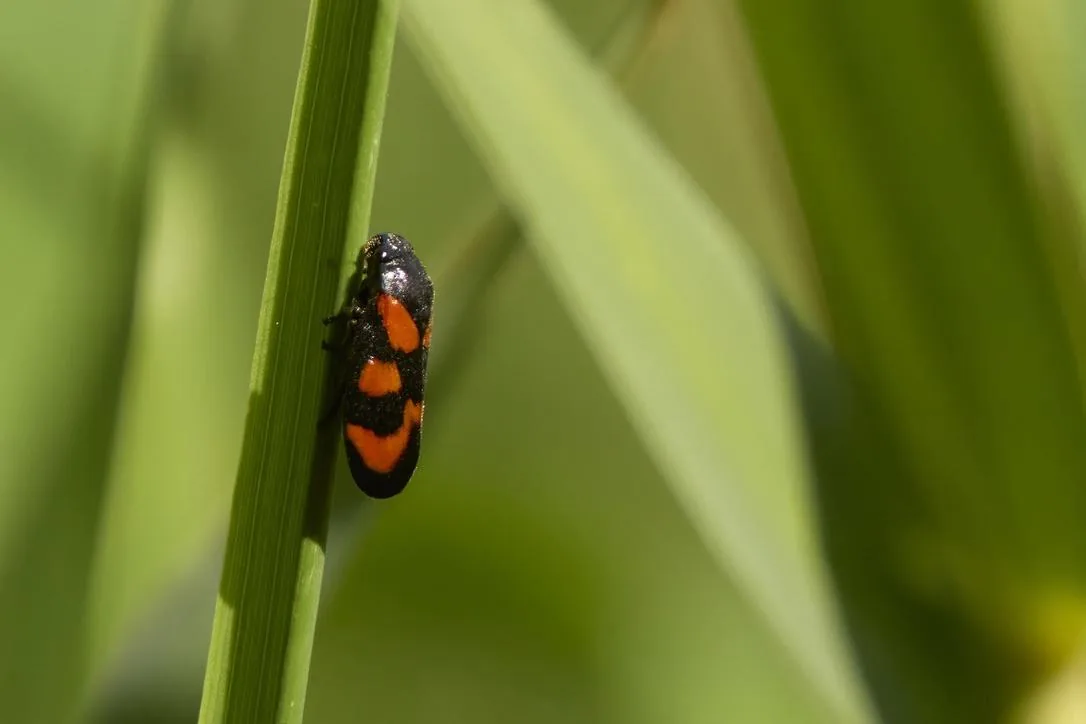
Black and Red Froghopper
A black and red froghopper (Cercopis vulnerata) clings to a grass stem, its bold warning colouration advertising unpalatability to predators. The larvae of this species feed underground on plant roots, while adults feed on sap above ground. Froghoppers are capable of jumping many times their own body length using powerful hind legs.
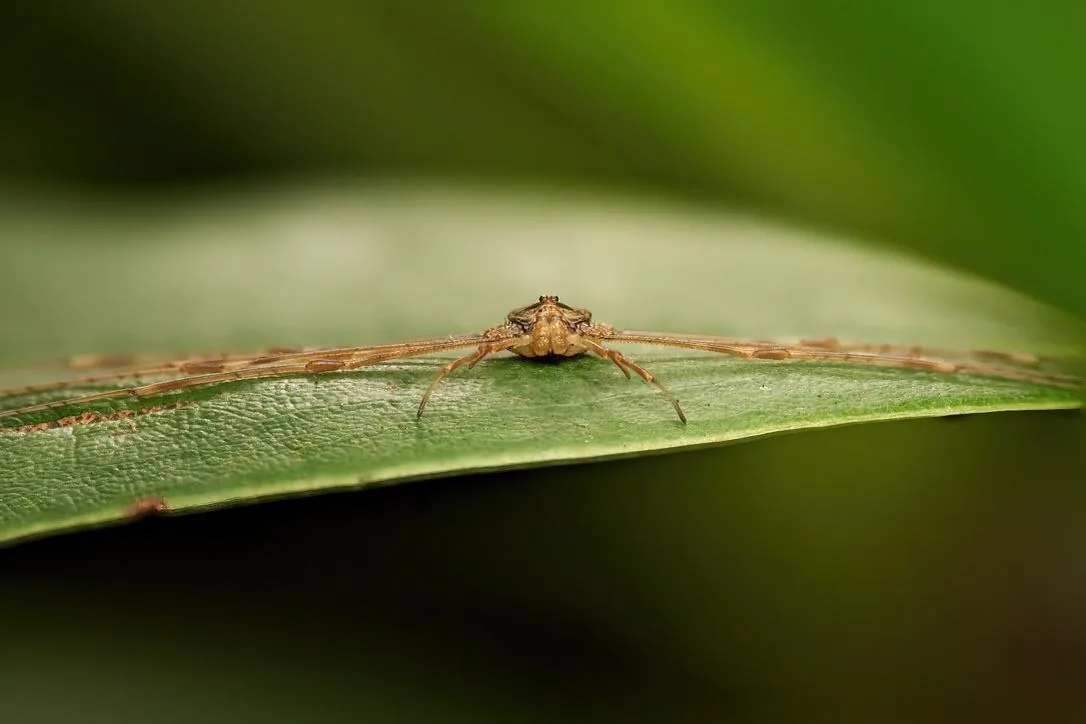
Long-jawed Orb Weaver
A long-jawed orb weaver (family Tetragnathidae) sits on a leaf with its exceptionally long front legs spread wide. These spiders rest with their legs extended along the body, resembling a fragment of dead stem. They are typically found near water, where they construct webs to catch flying insects emerging from the surface.
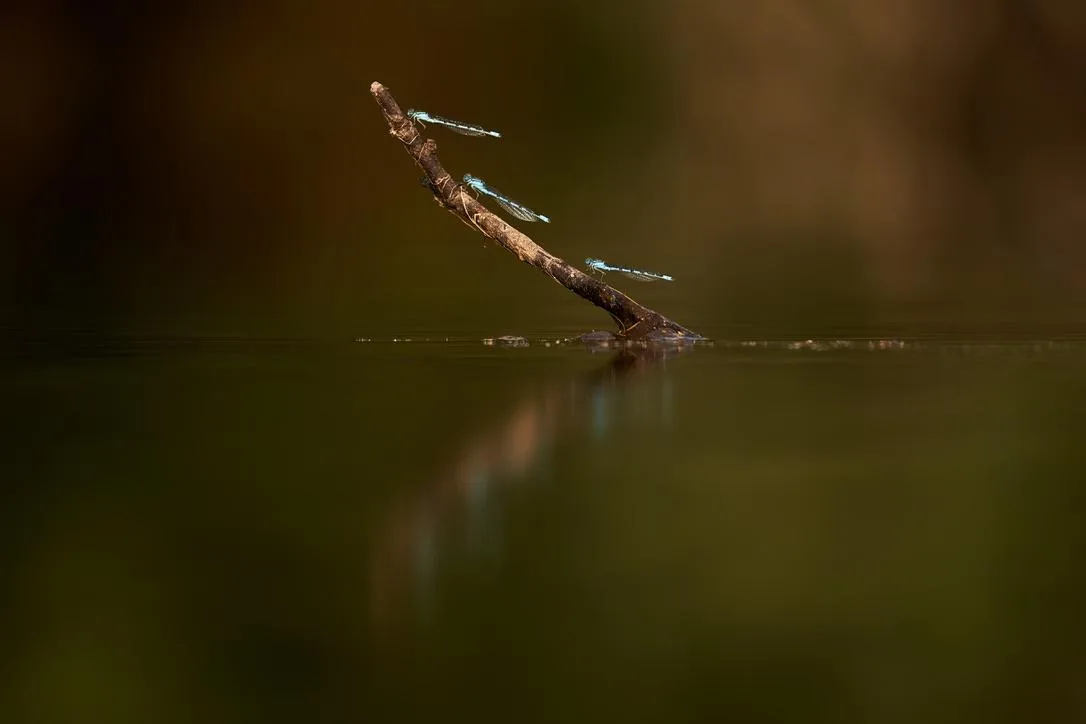
Damselflies on a Perch
Three blue damselflies share a stick rising from the surface of a still pond. Perch sites are a valuable resource for damselflies, used by males to survey for females and to thermoregulate in direct sunlight. Competition for prominent exposed perches frequently leads to brief aerial chases between rival males defending their position.
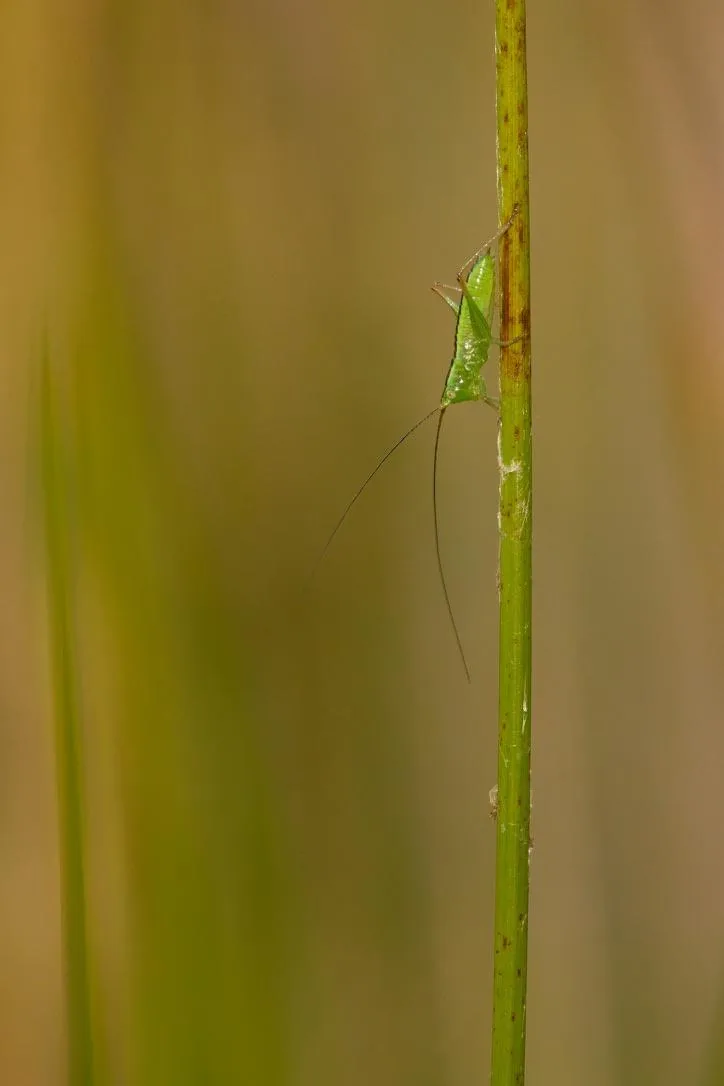
Bush-cricket Nymph
A bush-cricket nymph clings to a green stem, its triangular body and exceptionally long antennae characteristic of the family Tettigoniidae. Bush-crickets produce their song by stridulation, rubbing the base of one forewing against the other. This individual is a juvenile, not yet having developed the full-sized wings of the adult form.
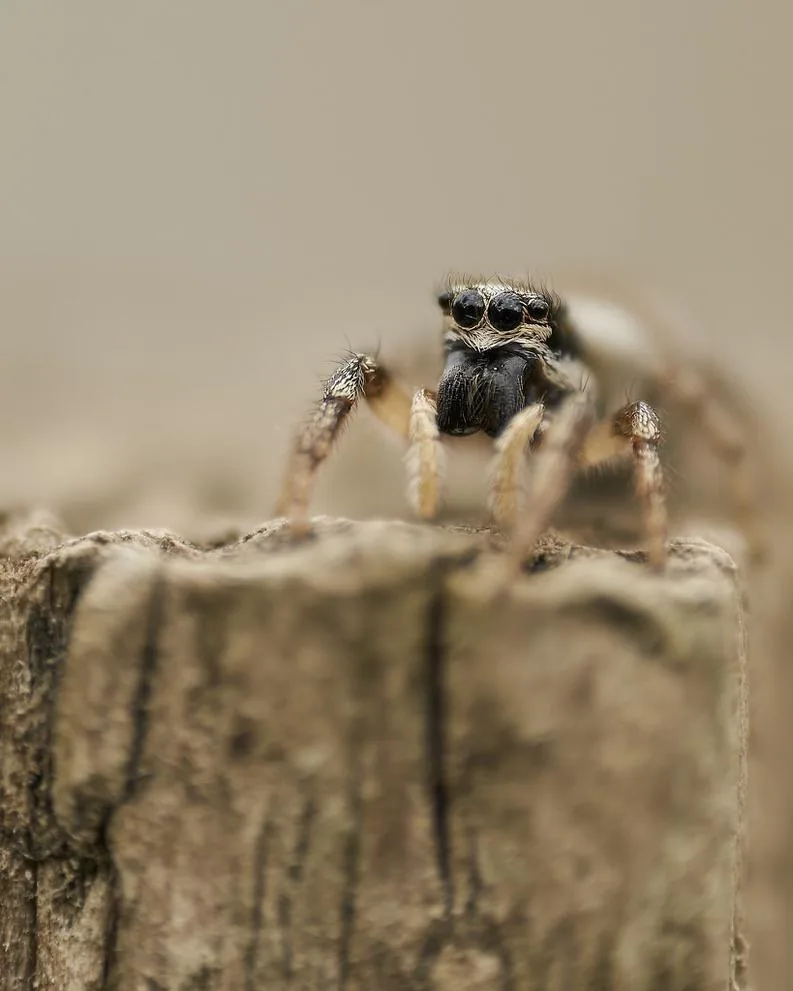
Jumping Spider
A jumping spider (family Salticidae) peers over the edge of a weathered wooden post, its four large forward-facing eyes giving it among the sharpest vision of any arthropod. Jumping spiders stalk prey directly rather than using webs, orienting on a target and leaping onto it with precision across distances many times their body length.
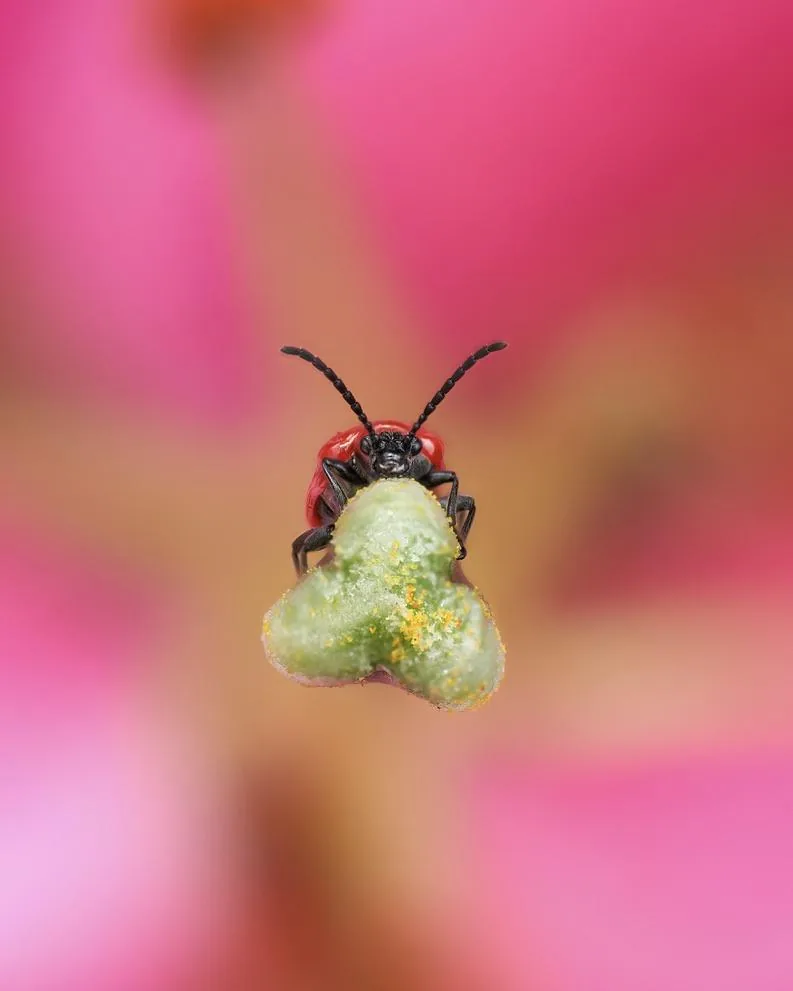
Lily Beetle
A lily beetle (Lilioceris lilii) straddles a flower bud, its vivid red elytra contrasting sharply with the pink blooms surrounding it. First established in Britain in the 1940s, the lily beetle is now widespread and a significant garden pest. Its larvae feed on lily foliage and cover themselves in their own excrement as a deterrent to predators.
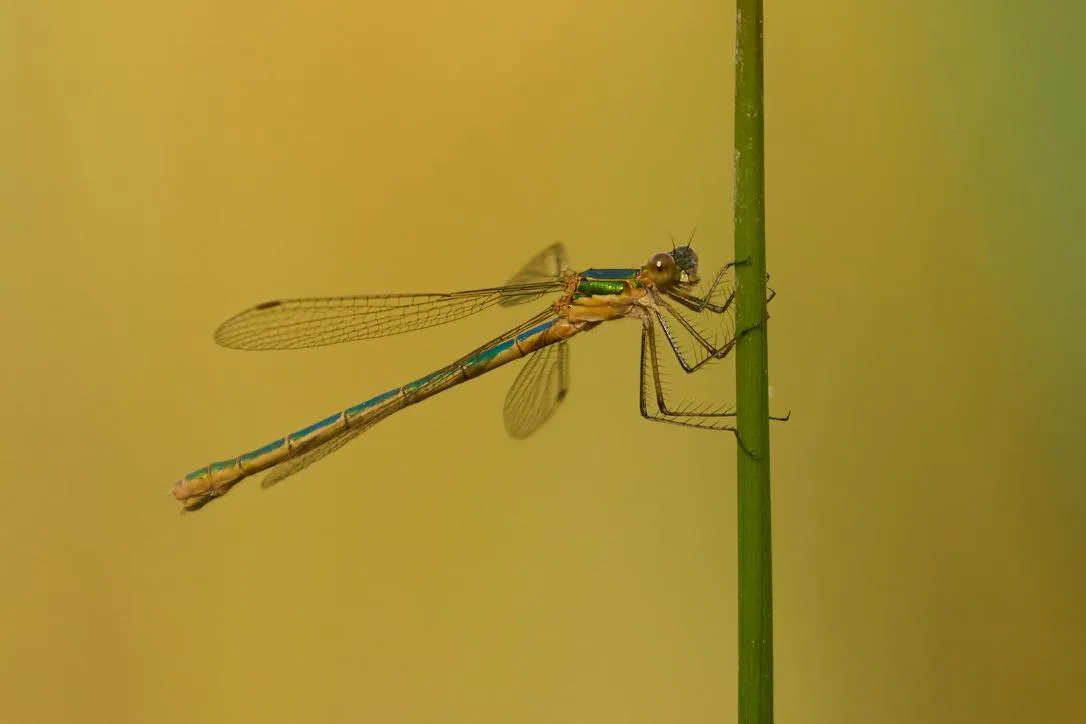
Willow Emerald Damselfly
A willow emerald damselfly (Chalcolestes viridis) clings to a reed stem, its metallic green thorax and long abdomen with blue tip clearly visible. One of Britain’s more recently established damselfly species, the willow emerald was first recorded breeding in the UK in 2007 and has since spread rapidly northward through England.
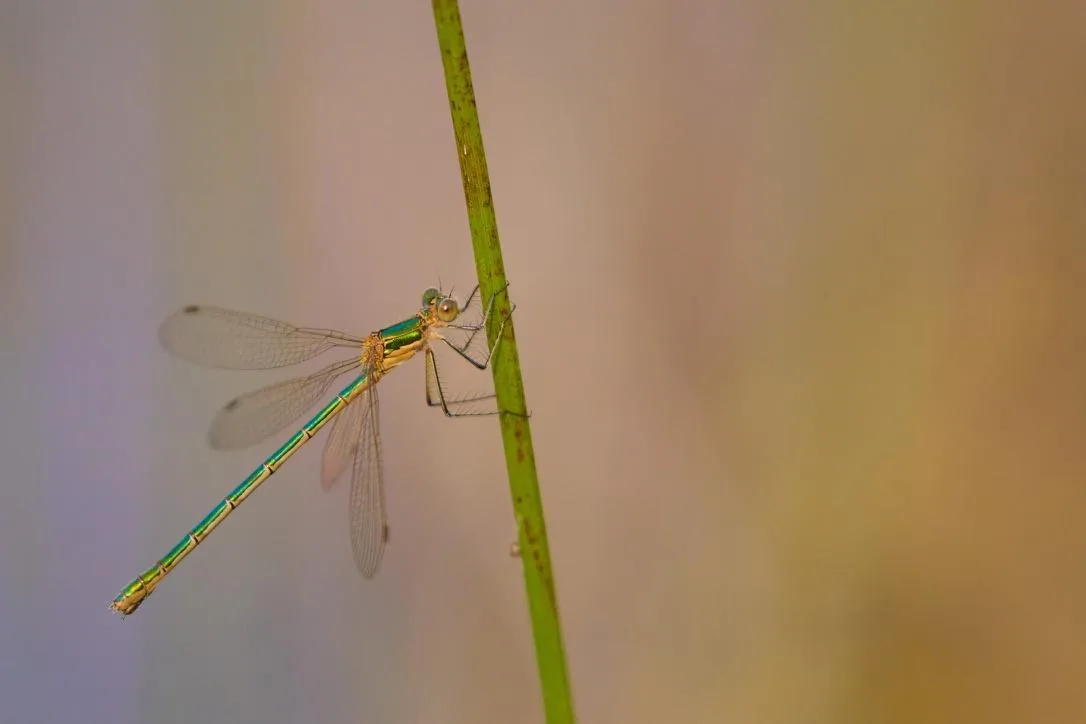
Emerald Damselfly
An emerald damselfly (Lestes sponsa) perches on a slender reed stem, its metallic green and gold body catching the soft light against a warm background. Emerald damselflies are unusual among British species in resting with their wings held half-open rather than folded along the body, a posture shared across the family Lestidae.