
Gallery
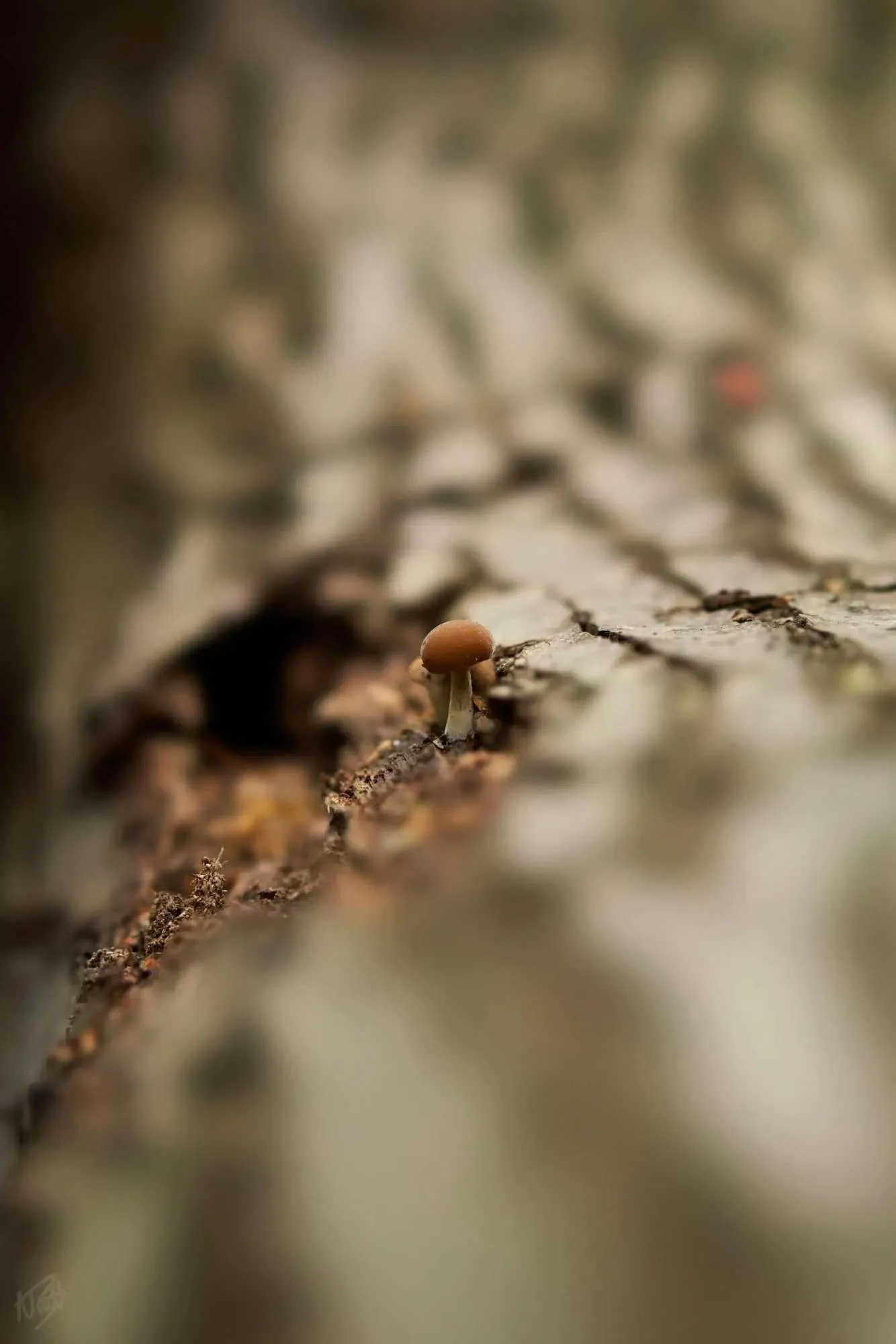
Tiny Mushroom in the Bark
A minute fungal fruiting body pushes through a crack in tree bark. Many fungi fruit directly on dead and decaying wood, playing a critical role in breaking down lignin and cellulose. The vast majority of a fungus’s body exists as a network of mycelium hidden within the substrate.
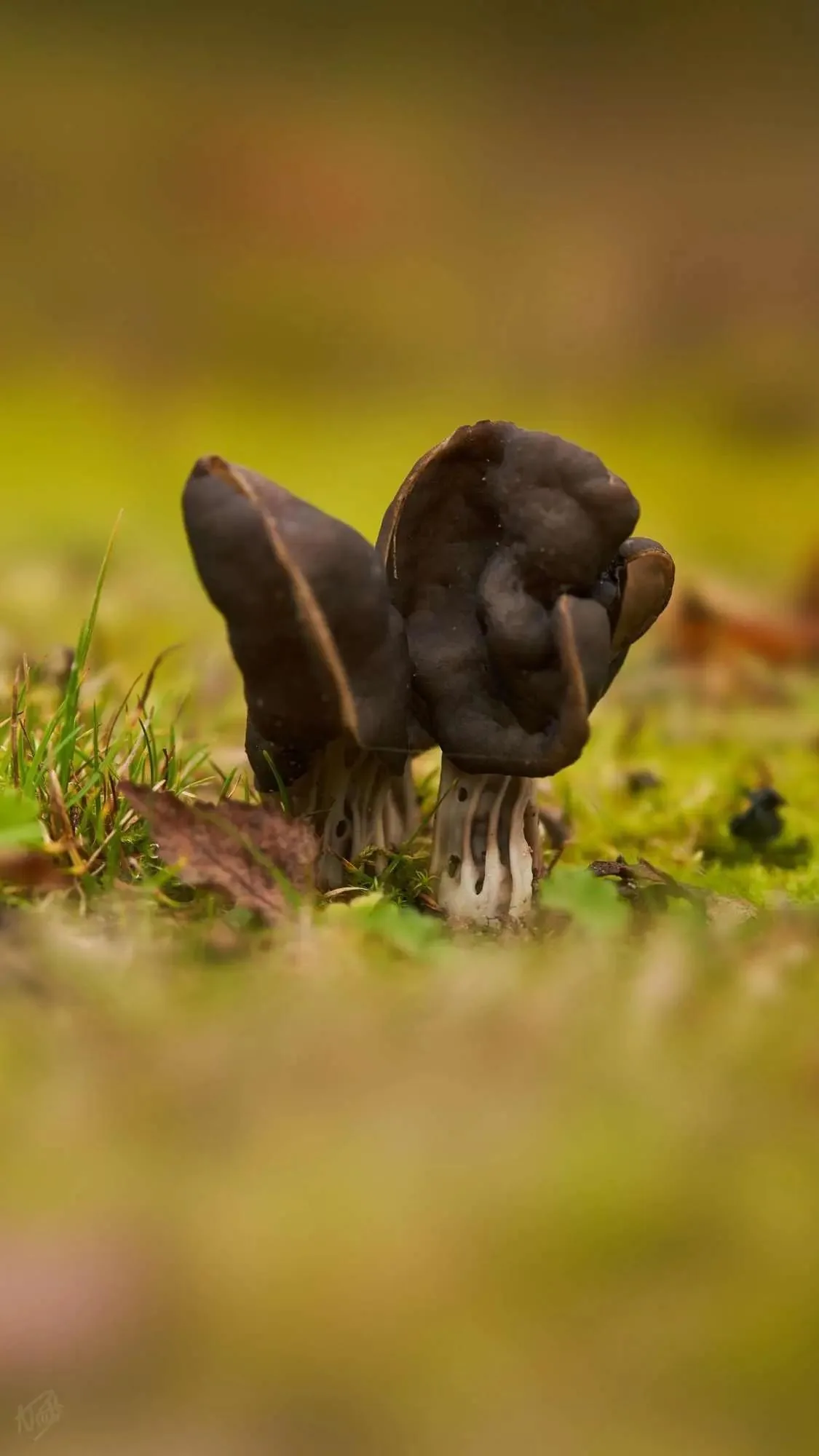
Black Saddle
A black saddle fungus (Helvella lacunosa) emerges from moss and leaf litter in woodland. Unlike gilled mushrooms, its spores are produced on the outer surface of the wrinkled, irregular cap. This distinctive species fruits in autumn, most often under deciduous trees and along woodland edges.
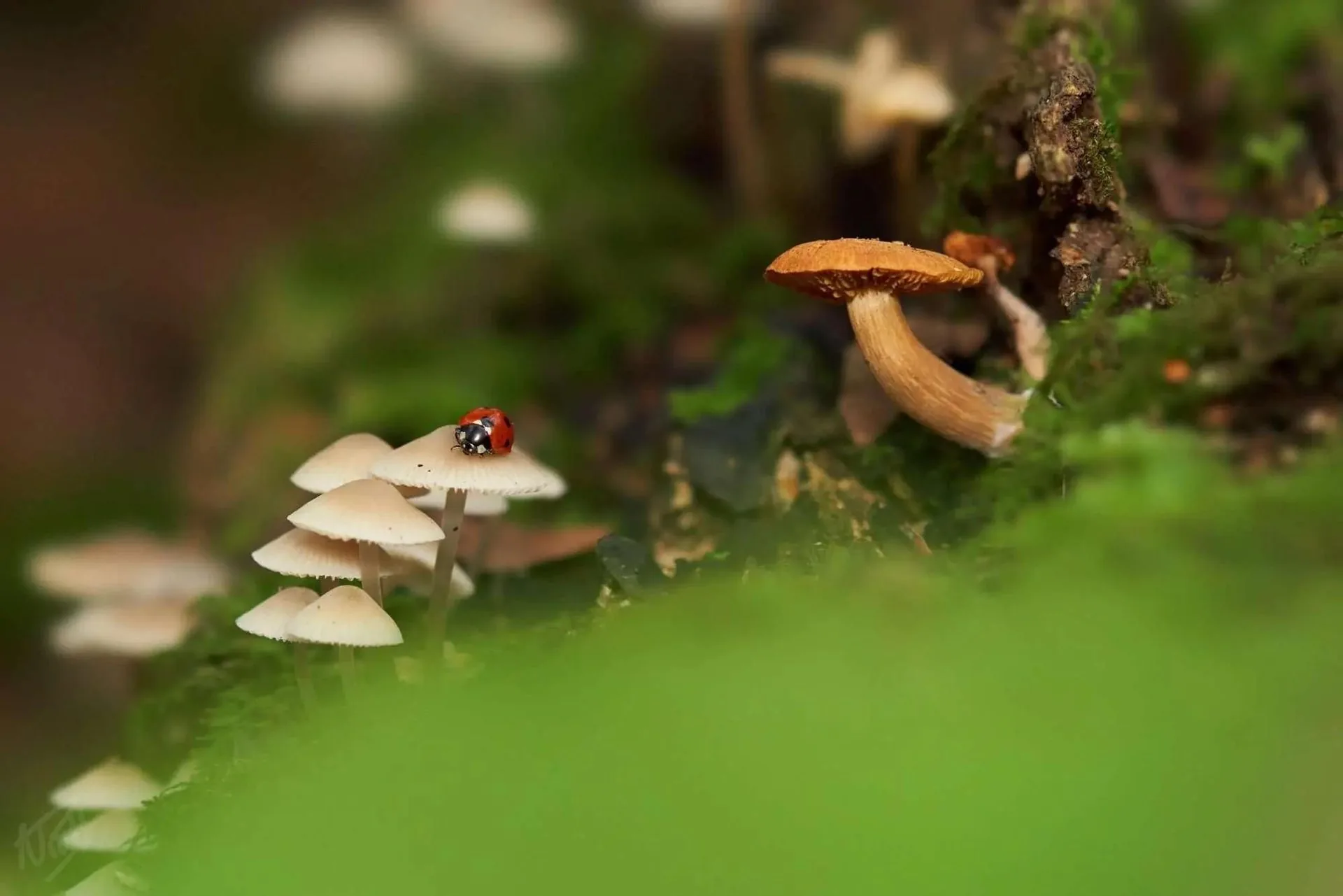
Ladybird on the Bonnets
A seven-spot ladybird perches on a cluster of small white bonnet mushrooms beside a larger brown-capped species on a mossy log. Bonnets (Mycena) are among the most diverse and abundant fungi in woodland, growing in dense clusters on decaying wood and leaf litter throughout autumn.
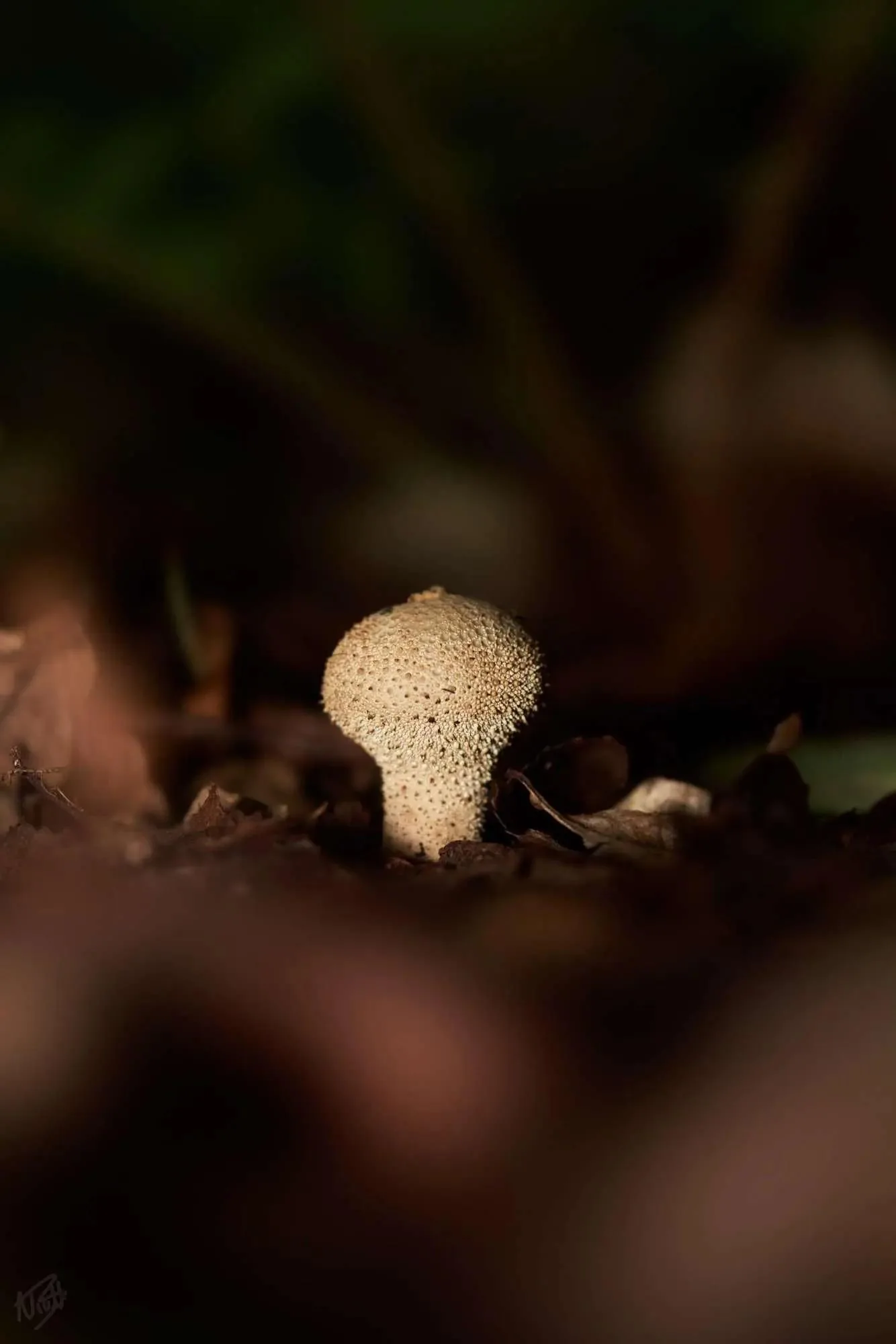
Puffball
A common puffball (Lycoperdon perlatum), covered in distinctive spiny warts, emerges from autumn leaf litter. Puffballs produce their spores internally rather than on gills, releasing them in a cloud when the skin ruptures at maturity. Young puffballs are edible when the interior remains pure white throughout.
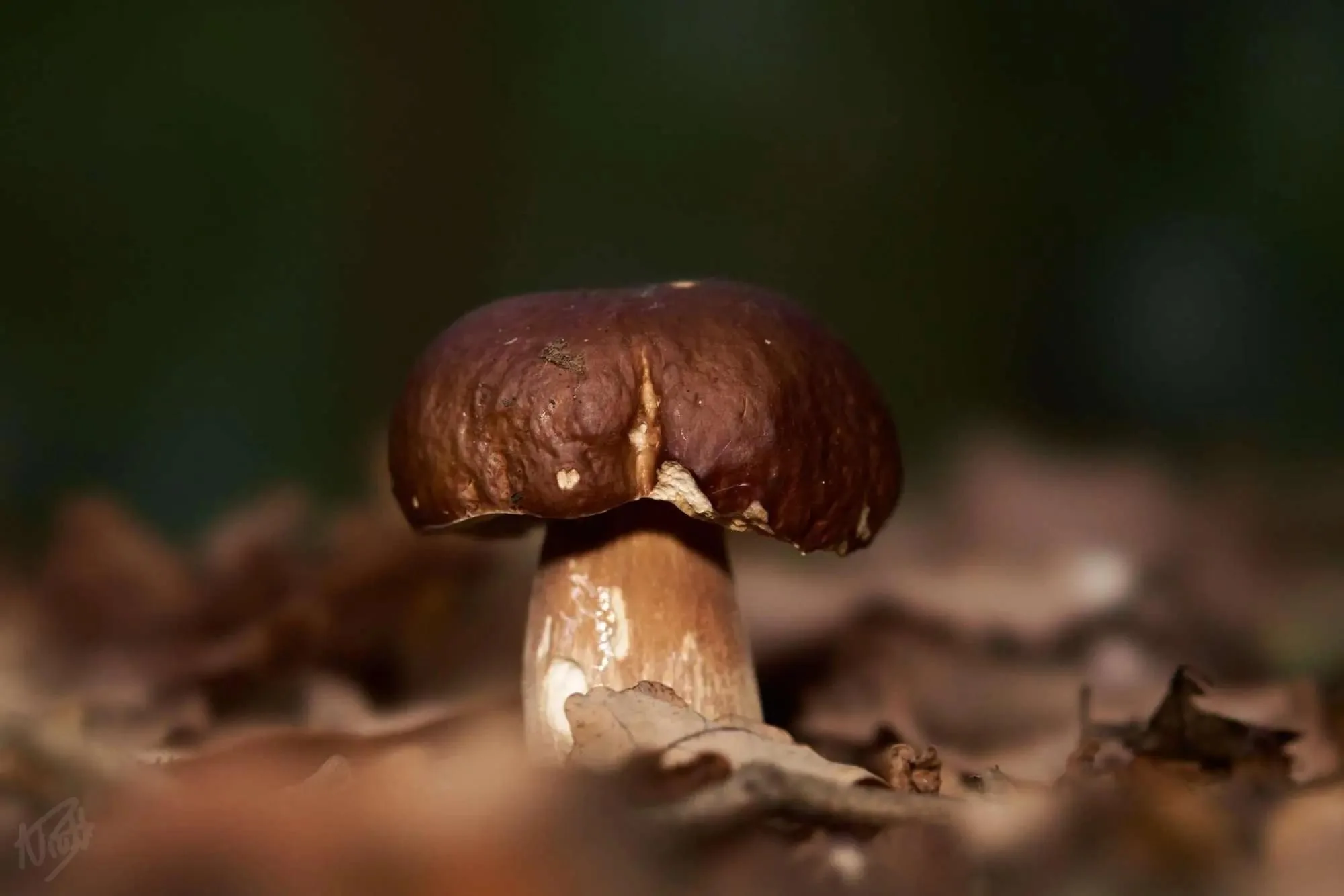
Bay Bolete
A bolete mushroom pushes up through damp autumn leaf litter in woodland. Boletes are distinguished by a spongy layer of tubes beneath the cap rather than gills. Many form mycorrhizal partnerships with tree roots, exchanging minerals and water for sugars produced by the tree through photosynthesis.
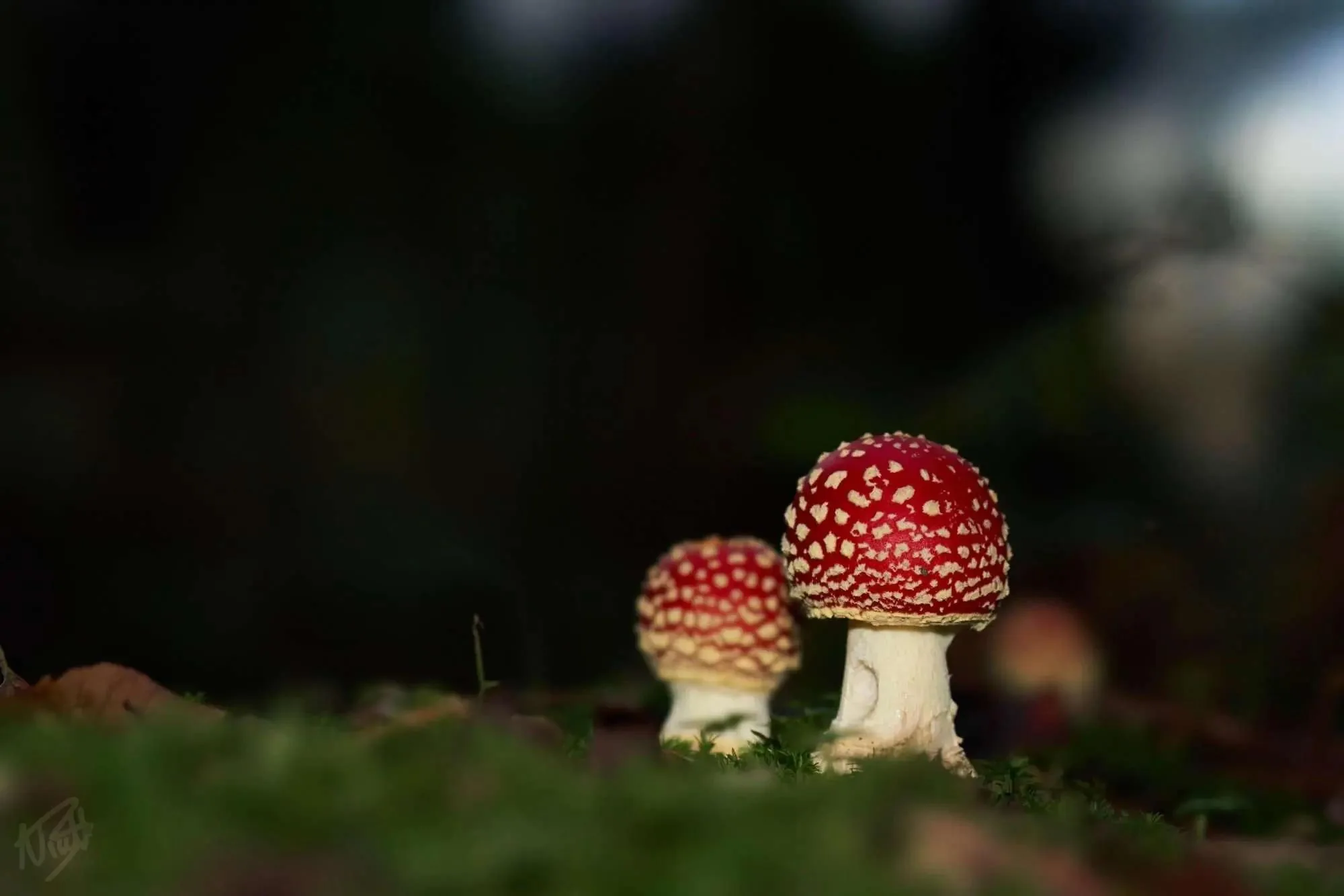
Fly Agaric
Two fly agaric mushrooms (Amanita muscaria) glow red against dark woodland moss. One of Britain’s most recognisable fungi, the fly agaric is toxic but forms important mycorrhizal relationships with birch and pine. The white spots are remnants of the universal veil that enclosed the developing mushroom.