
Gallery
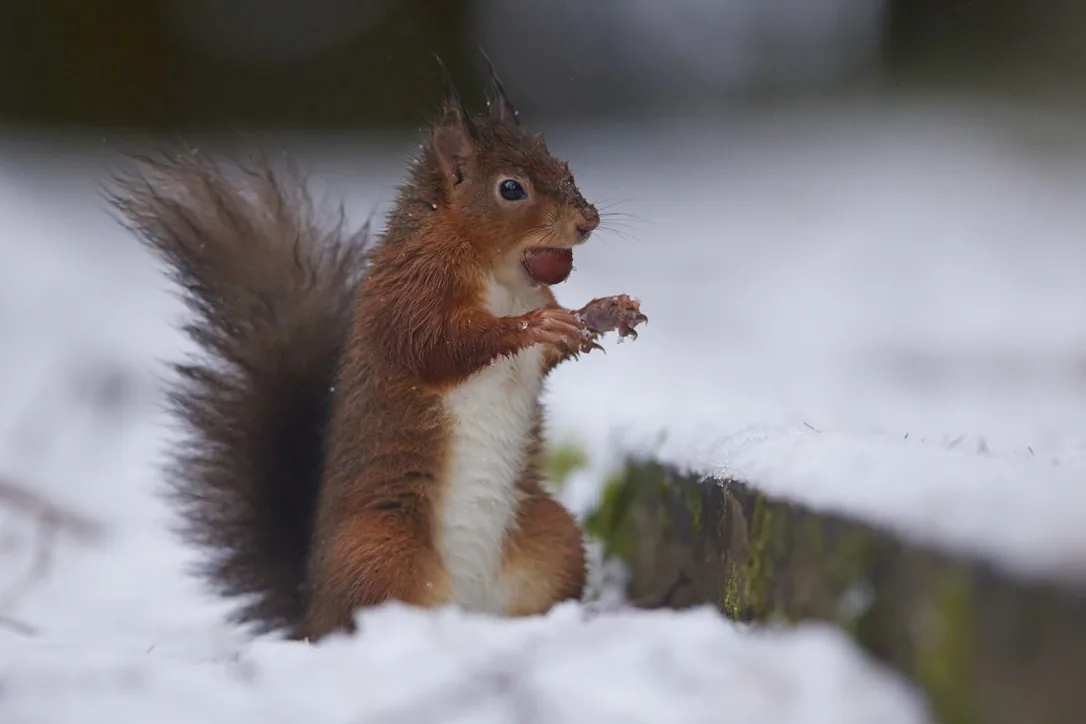
Eating in the Snow
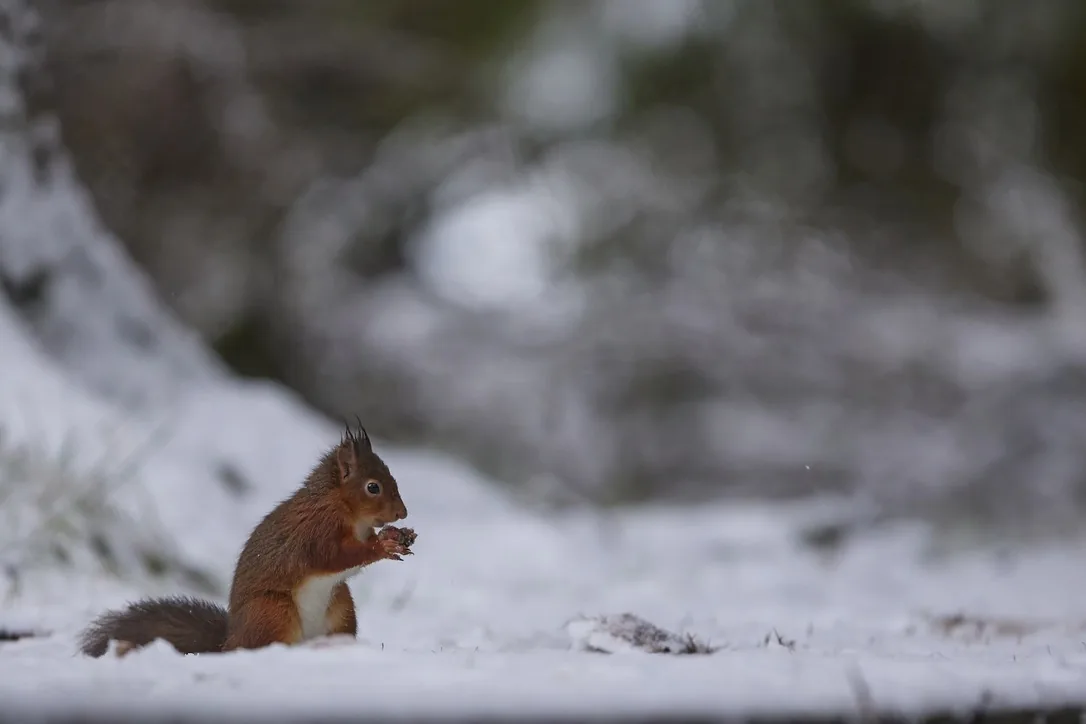
A red squirrel feeds in winter snow, its ear tufts prominent against the cold. Red squirrels do not hibernate but cache food in autumn to sustain them through winter. They have a less reliable memory for cache locations than grey squirrels, meaning a proportion of buried food is never recovered.
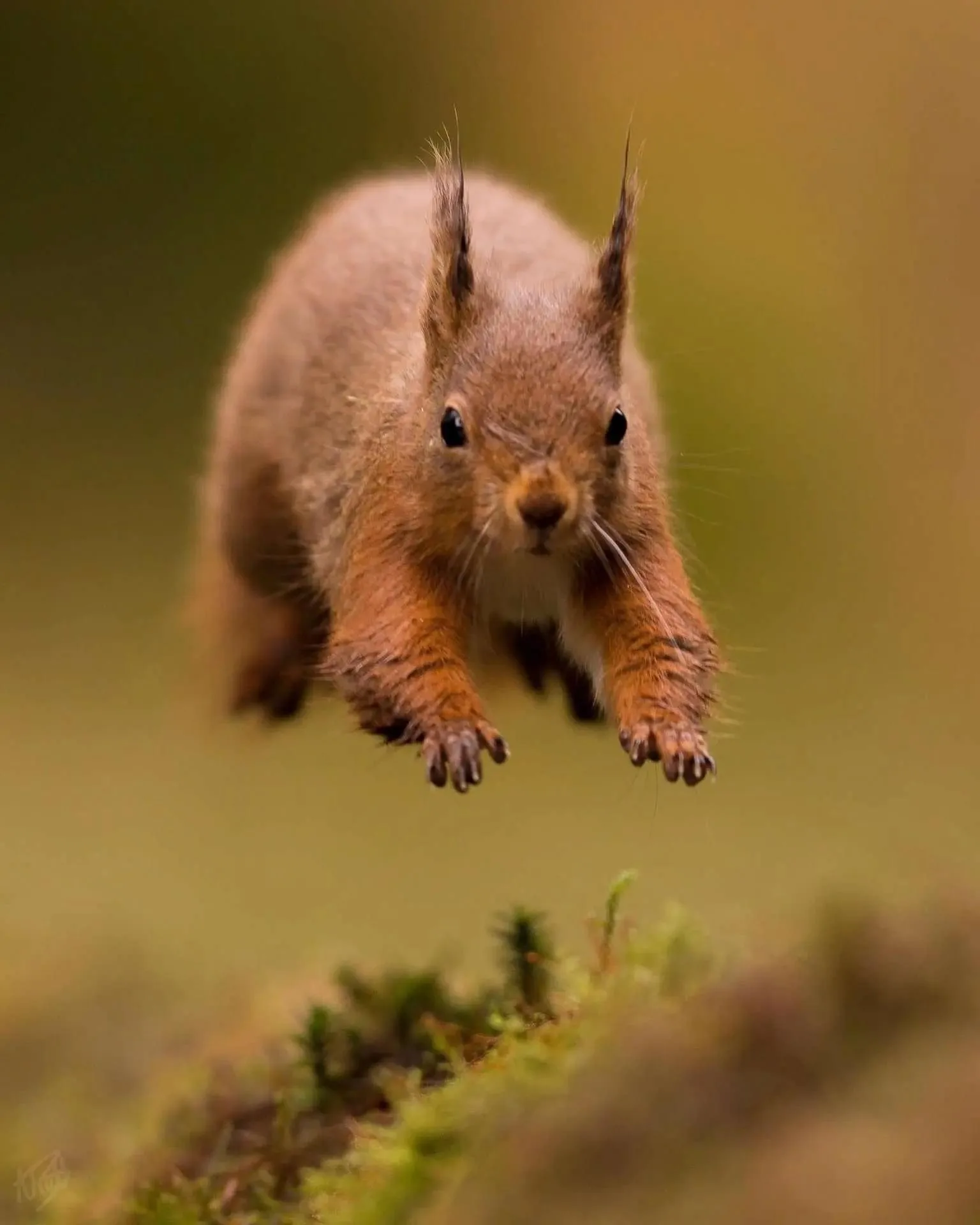
Mid-Air
A red squirrel leaps directly toward the camera. Red squirrels are agile climbers and confident jumpers, able to cross gaps between trees with ease. Their long, bushy tail acts as a counterbalance and rudder during fast movement through the canopy.
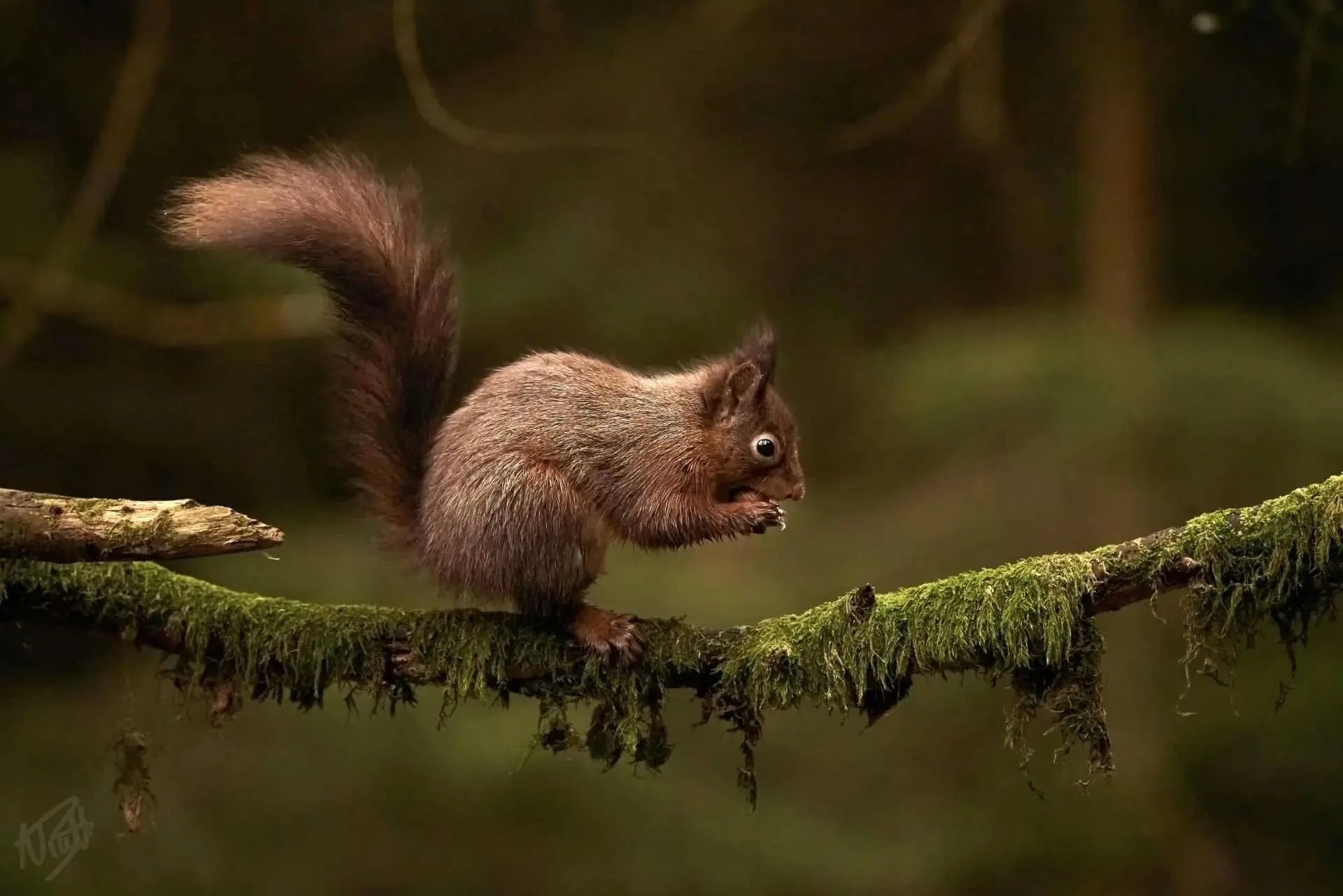
Feeding on the Branch
A red squirrel pauses to eat on a mossy branch in woodland. Their diet varies seasonally, from seeds and nuts in autumn to buds, shoots, fungi, and insects in spring. Pine seeds from conifer cones are a particularly important food source through the winter months.
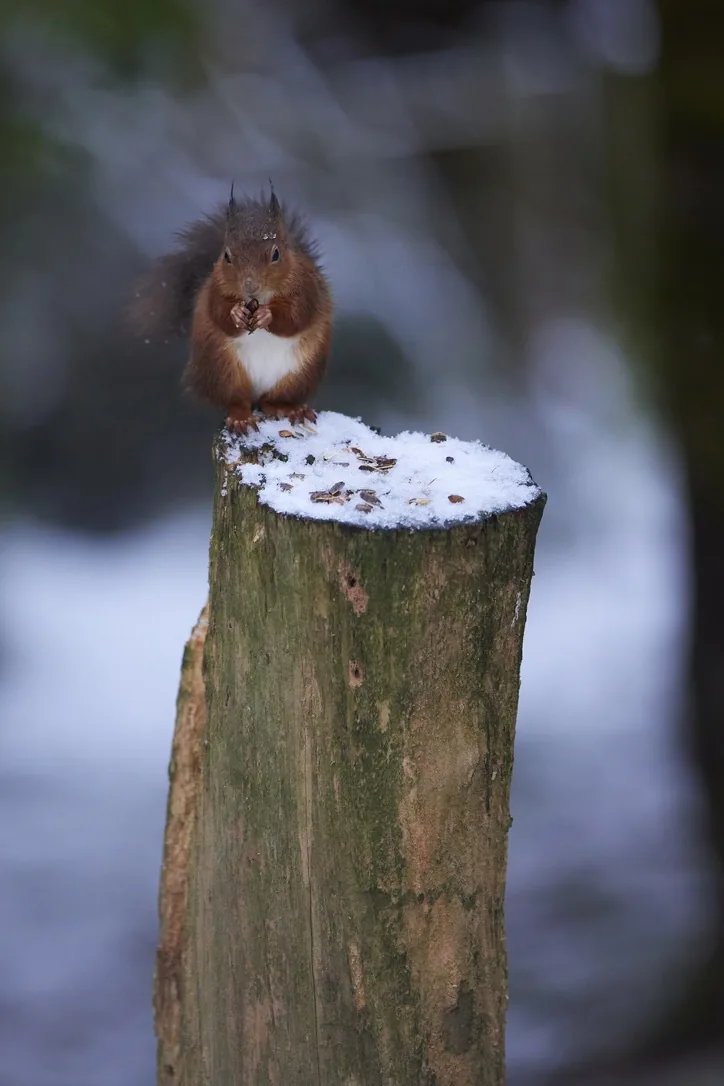
Winter Post
A red squirrel feeds on a snow-dusted post in a winter woodland. In Britain, red squirrels survive mainly in Scotland, northern England, and a few islands where grey squirrels have not yet become established. They rely heavily on coniferous woodland for their winter food supply.
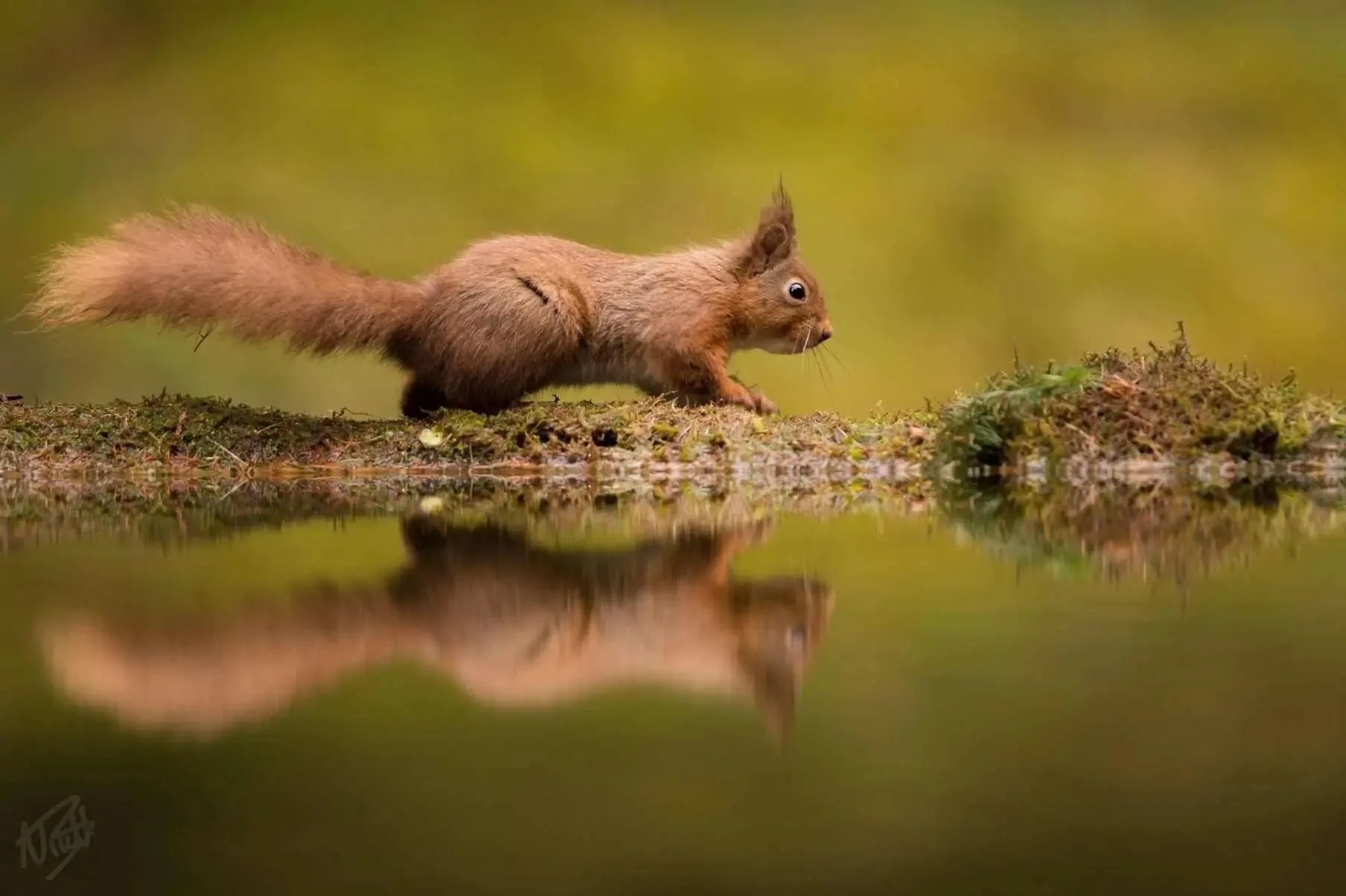
Running at the Water’s Edge
A red squirrel moves quickly along mossy ground at a water’s edge, its reflection below. Red squirrels are highly active and may cover a home range of up to 30 hectares, moving constantly in search of food and suitable caching sites across their territory.
Drinking
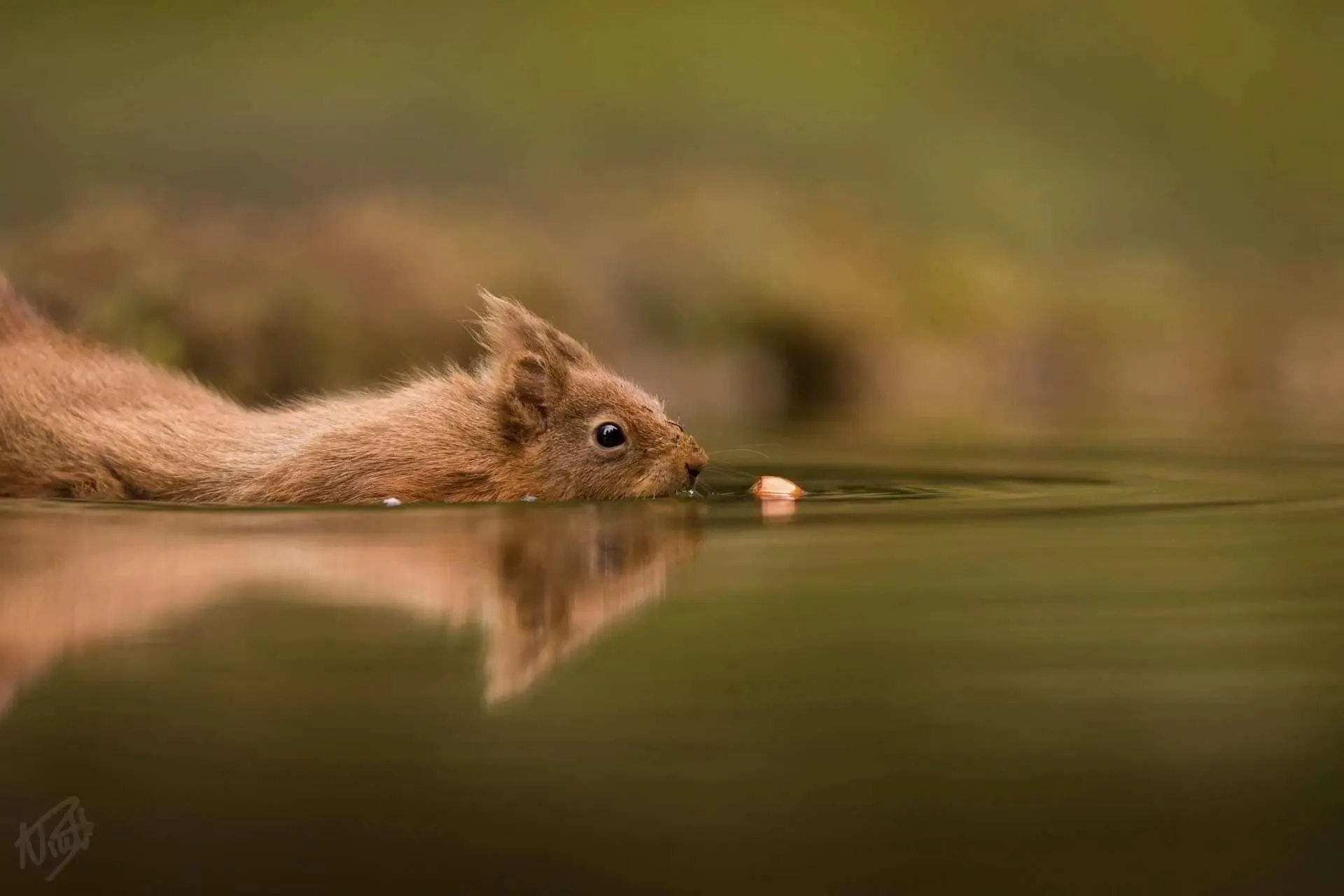
A red squirrel stretches flat to drink from a still pool, face just touching the surface. Red squirrels drink regularly, particularly in dry weather, and will descend to the ground to access water even though they spend much of their time foraging and moving in the canopy.
Reflected
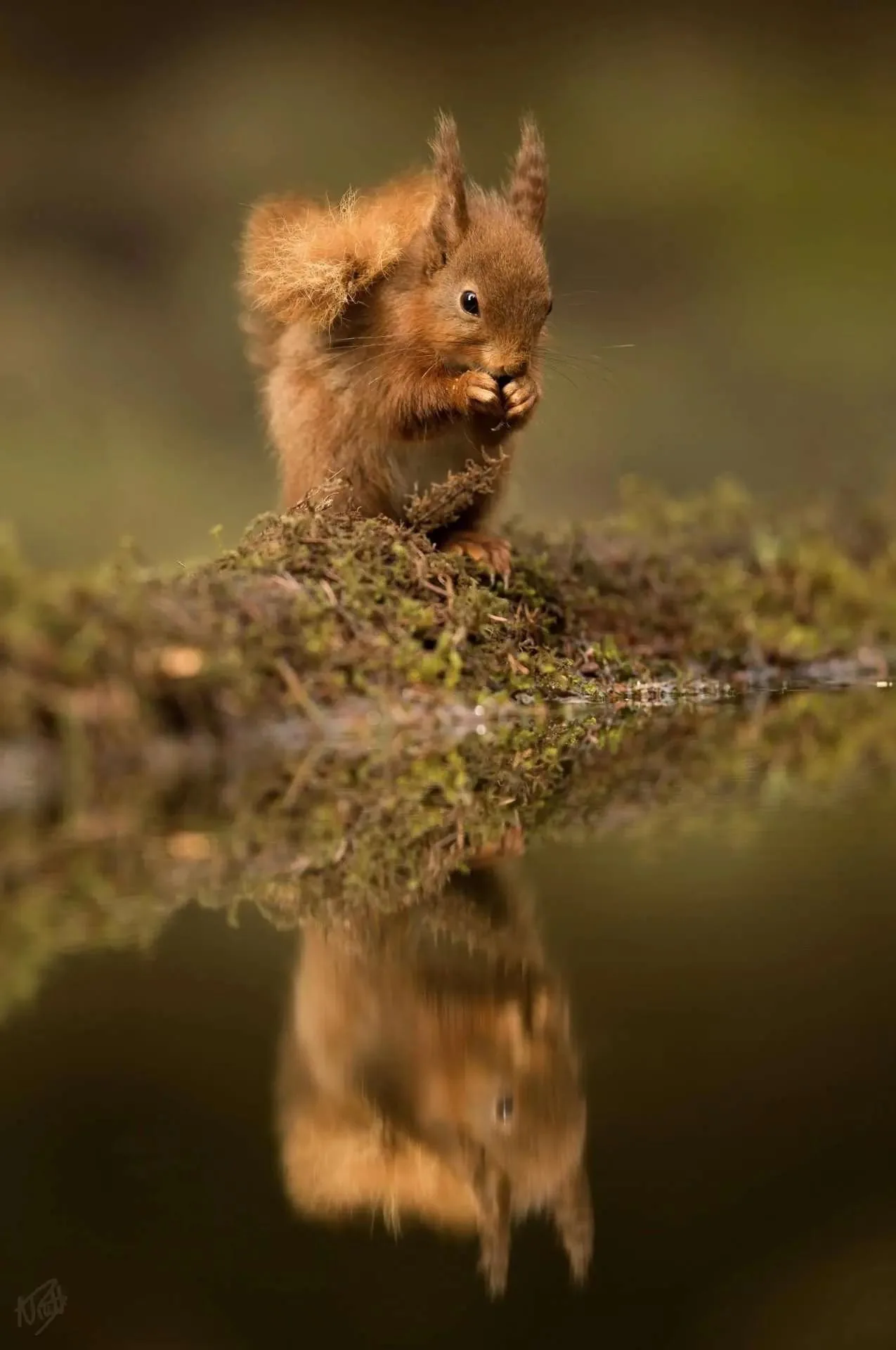
A red squirrel feeds on a mossy log above still water, its reflection mirrored below. Red squirrels are solitary outside the breeding season, each defending its own territory. They communicate using chattering calls and tail-flicking displays when encountering rivals at their boundaries.
On the Stump
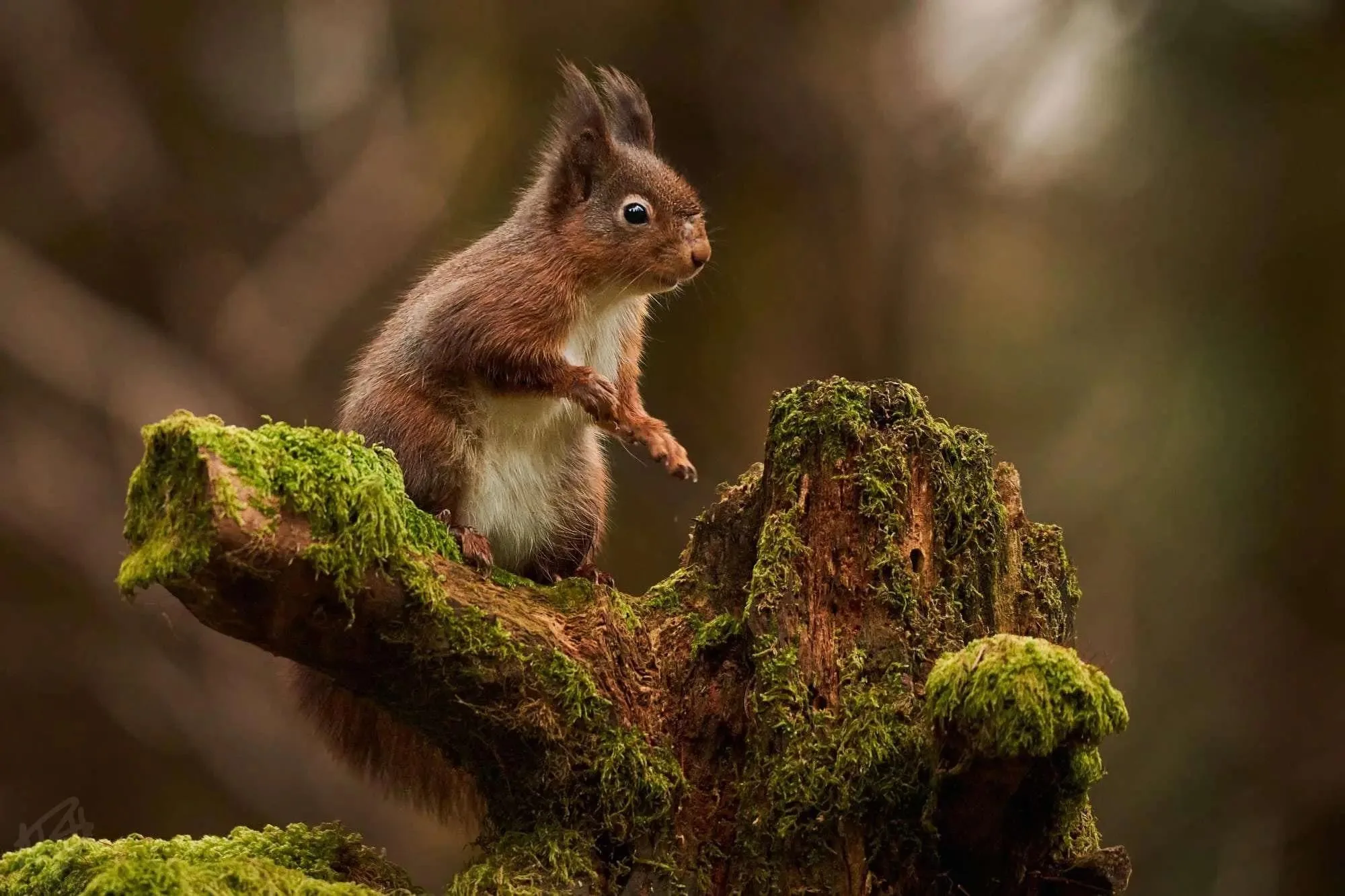
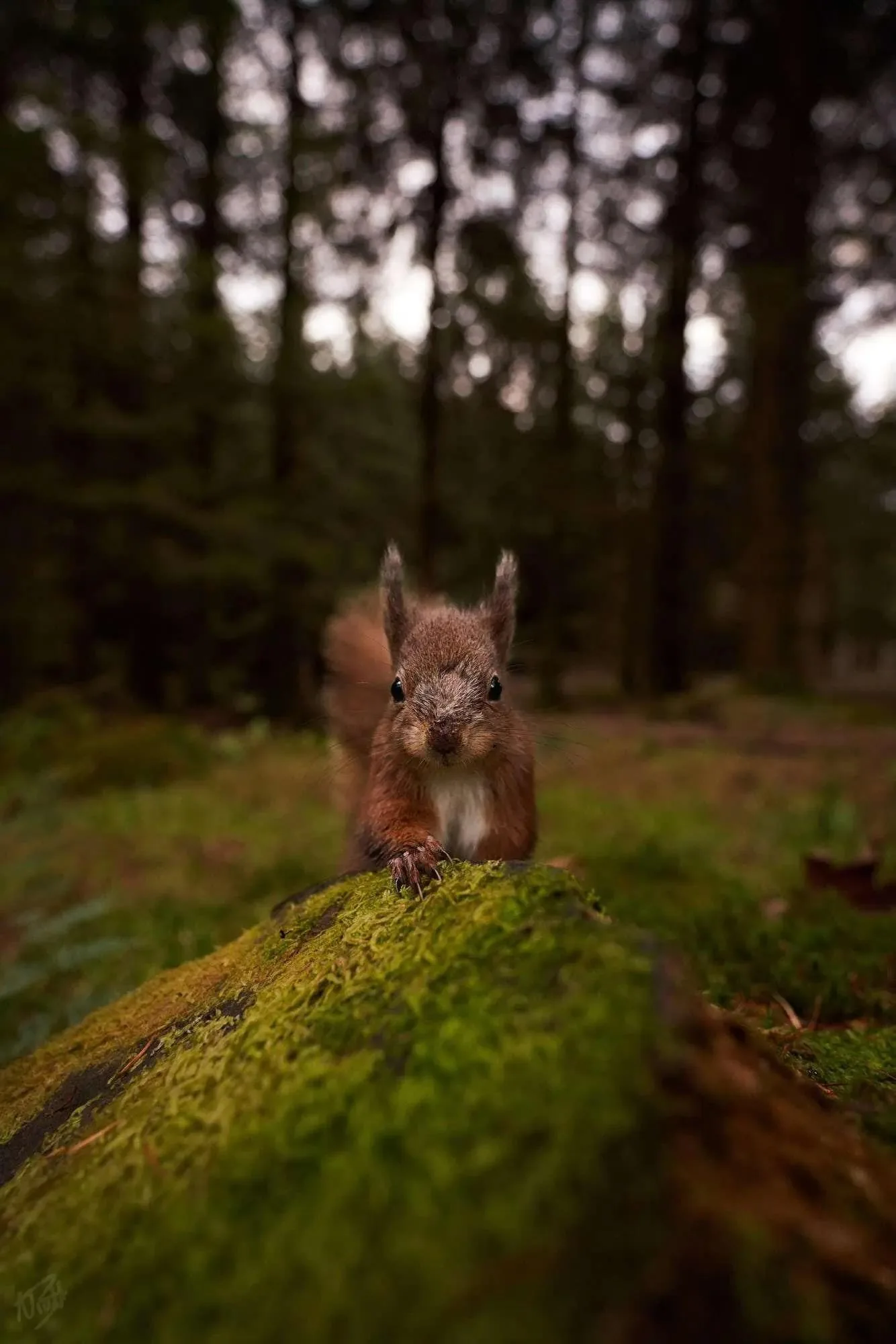
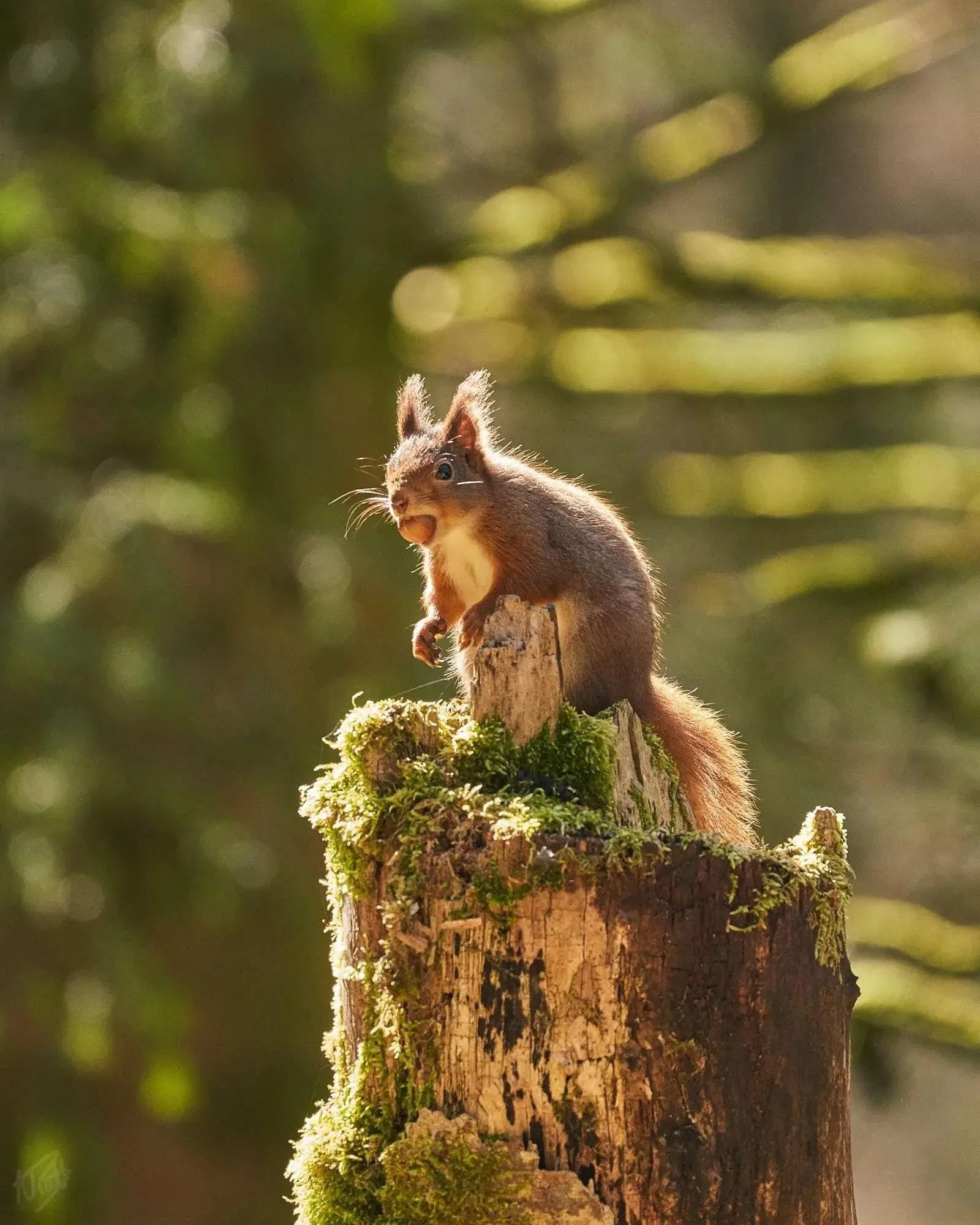
A red squirrel perches on a mossy woodland stump, alert and upright. Red squirrels build large nests called dreys from twigs and leaves, lined with grass and moss. A squirrel may maintain several dreys within its home range, switching between them regularly throughout the year.
In the Snowfall
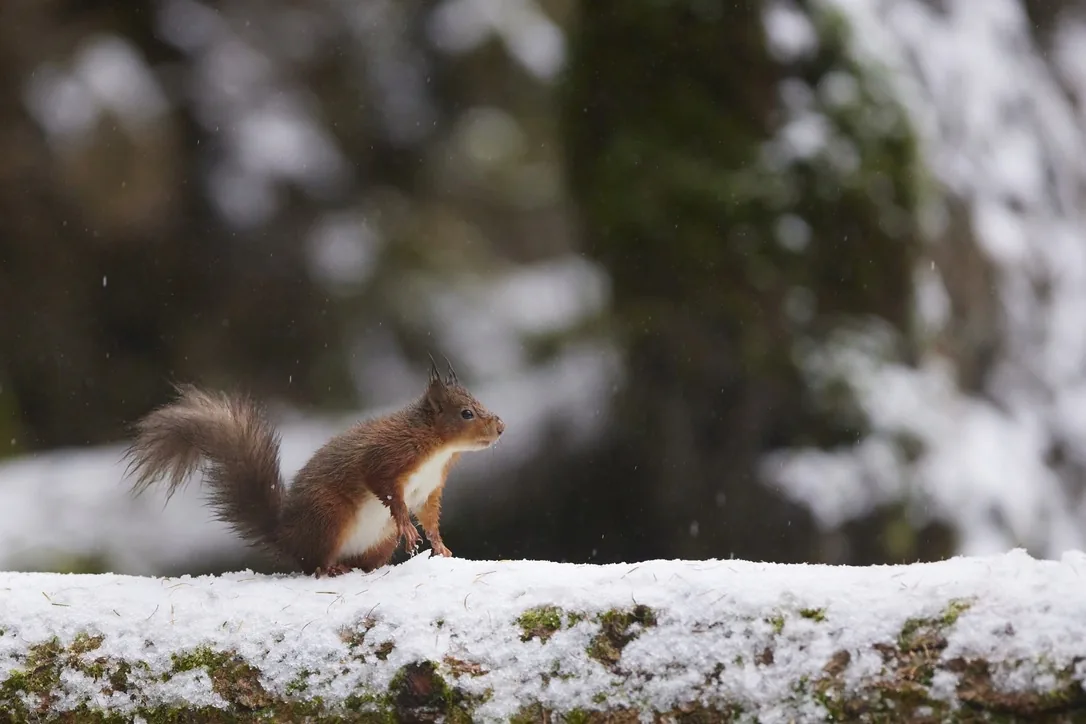
A red squirrel sits upright on a snow-covered log as snow falls around it. Red squirrels remain active throughout winter, spending more time foraging on the ground in search of cached food. Deep snow can make foraging difficult and is a key driver of winter mortality.
Close Approach
A red squirrel investigates from a mossy log at ground level. Red squirrels have excellent spatial memory and are quick to investigate new objects in their environment. They are naturally inquisitive and can become habituated to calm, patient observers who visit regularly over time.
Sunlit Stump
A red squirrel feeds on a mossy stump in warm woodland light. The characteristic ear tufts, most prominent in winter, help distinguish the red squirrel from the grey. Red squirrels are also noticeably smaller and lighter, weighing between 280 and 340 grams when fully grown.
On the Moss
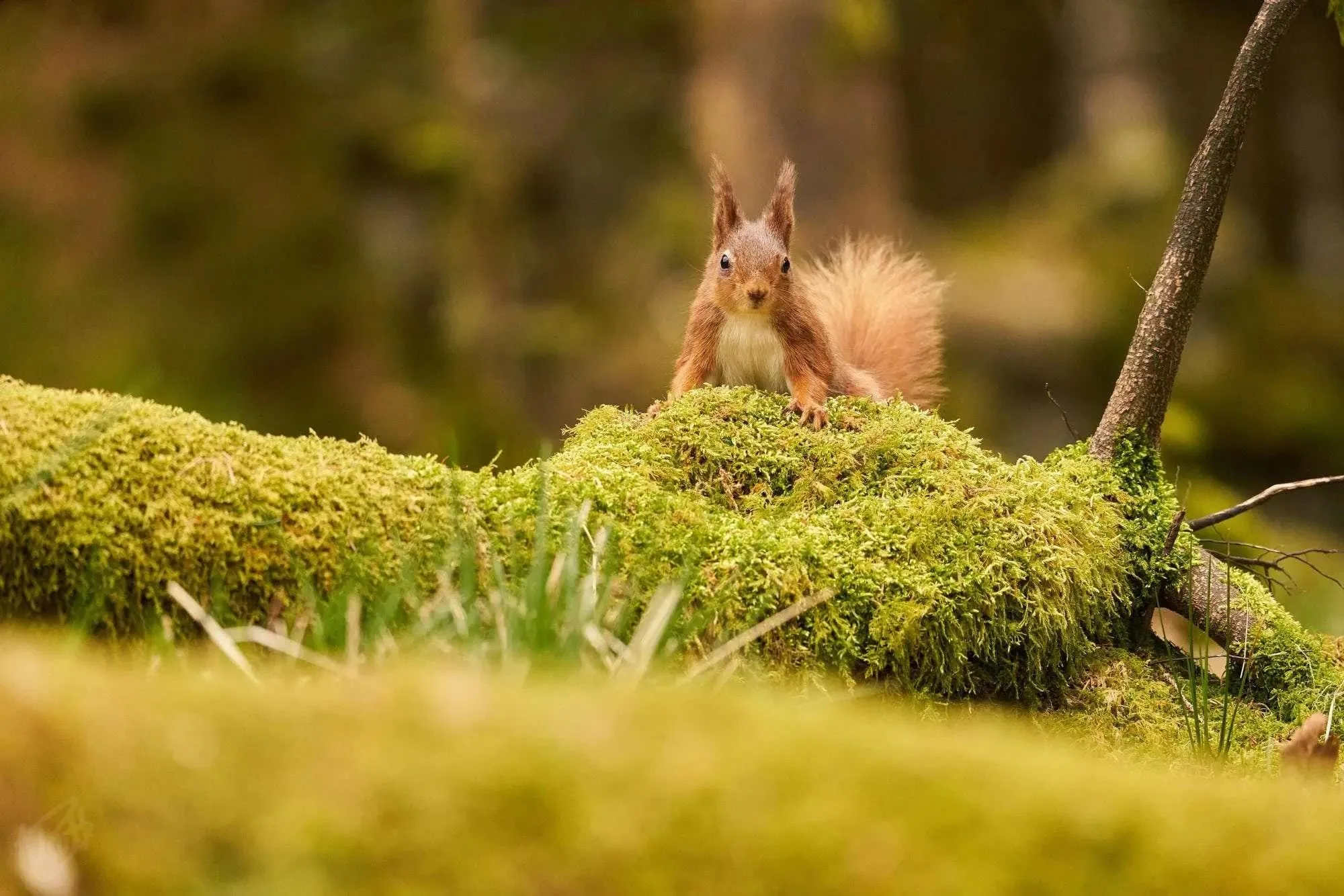
A red squirrel pauses on a mossy hummock in open woodland. In Britain, red squirrels have been displaced from most of England and Wales by the introduced grey squirrel, which competes more effectively for food and carries the squirrelpox virus, fatal to reds but harmless to greys.
Feeding in Snow
A red squirrel eats in a snowy conifer forest. Scotland’s Cairngorms hold the largest British population of red squirrels. Caledonian pinewood is ideal habitat, providing a reliable supply of pine seeds while remaining relatively hostile to grey squirrels, which struggle to thrive in pure conifer stands.
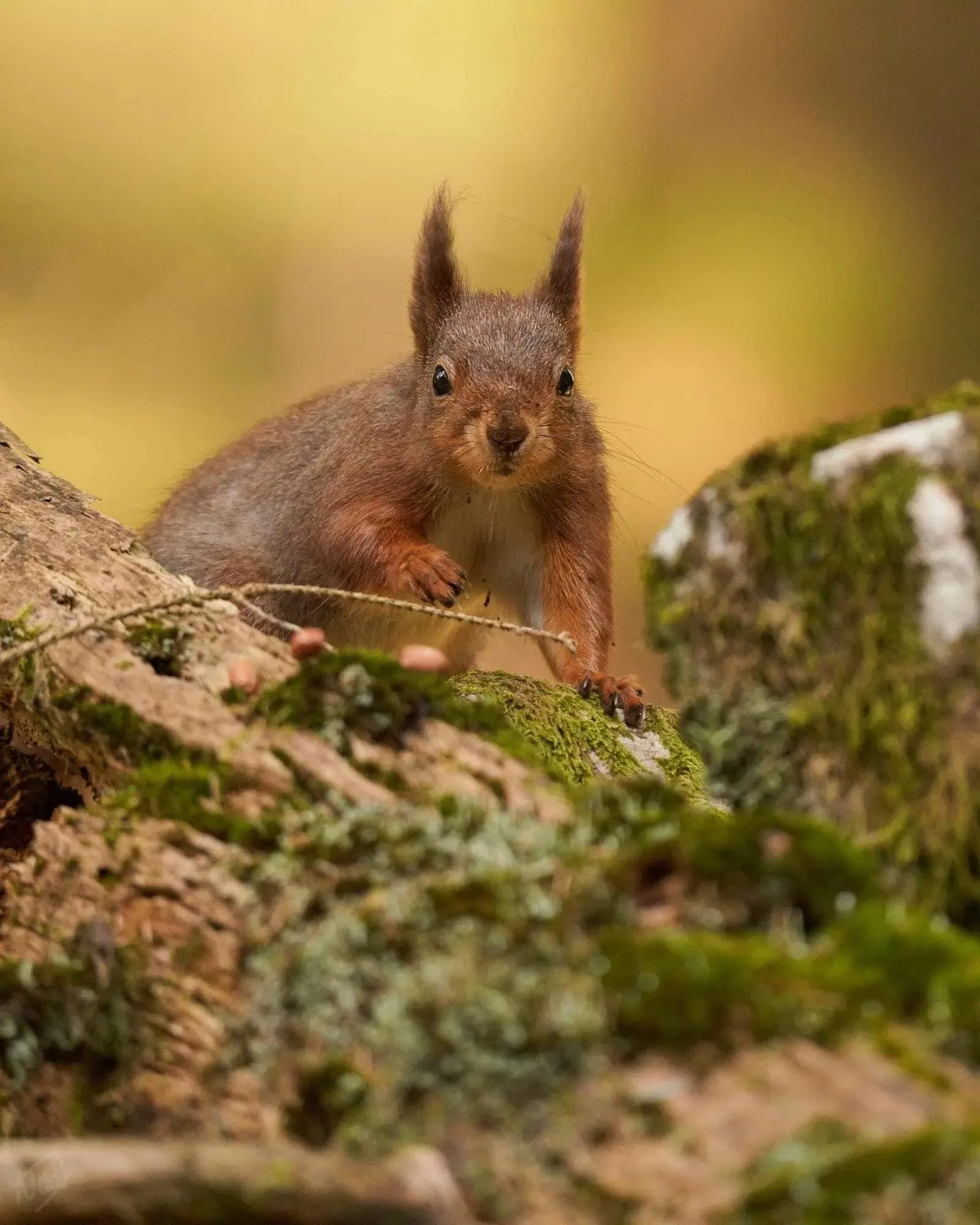
Autumn Portrait
A red squirrel looks up from a mossy log against a warm autumn background. Red squirrels moult twice a year, acquiring a thicker, greyer winter coat in autumn and a brighter reddish-brown summer coat in spring. The ear tufts grow with the winter coat and are shed in spring.
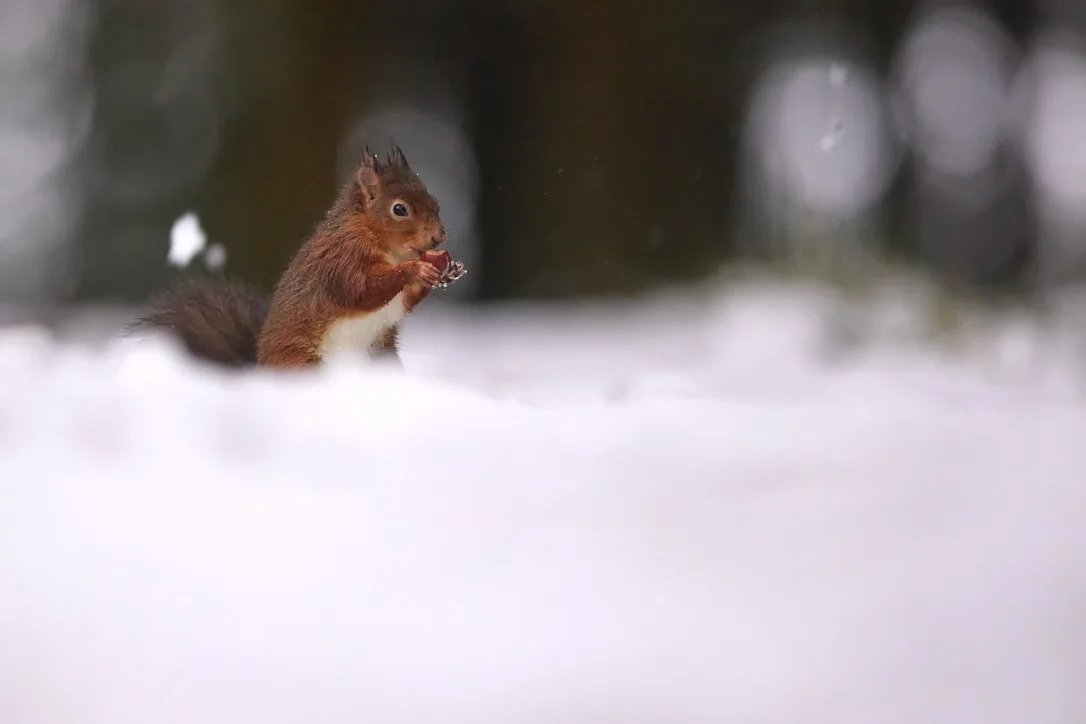
Eating in the Cold
A red squirrel feeds in open snow with a soft bokeh winter background. Red squirrels bury food individually rather than in communal caches, relying on spatial memory to recover it later. They can lose significant body weight during prolonged cold spells when cached food supplies run short.
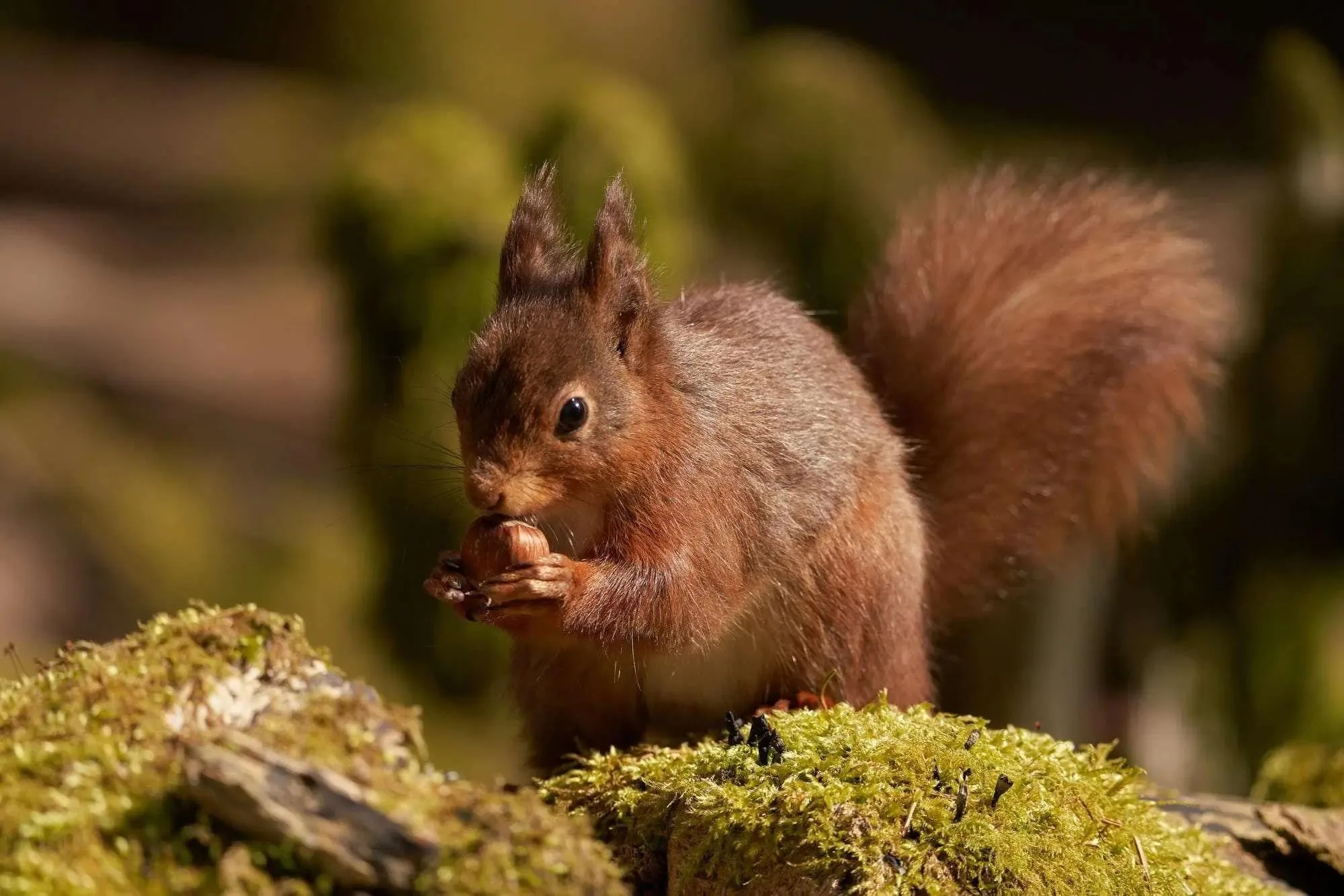
Hazelnut
A red squirrel holds a hazelnut in its forepaws while feeding on a mossy log. Hazelnuts are a favoured autumn food, providing a rich store of fat and protein. Red squirrels gnaw a characteristic clean hole in one side of the shell, a tell-tale sign distinct from the splits left by mice.
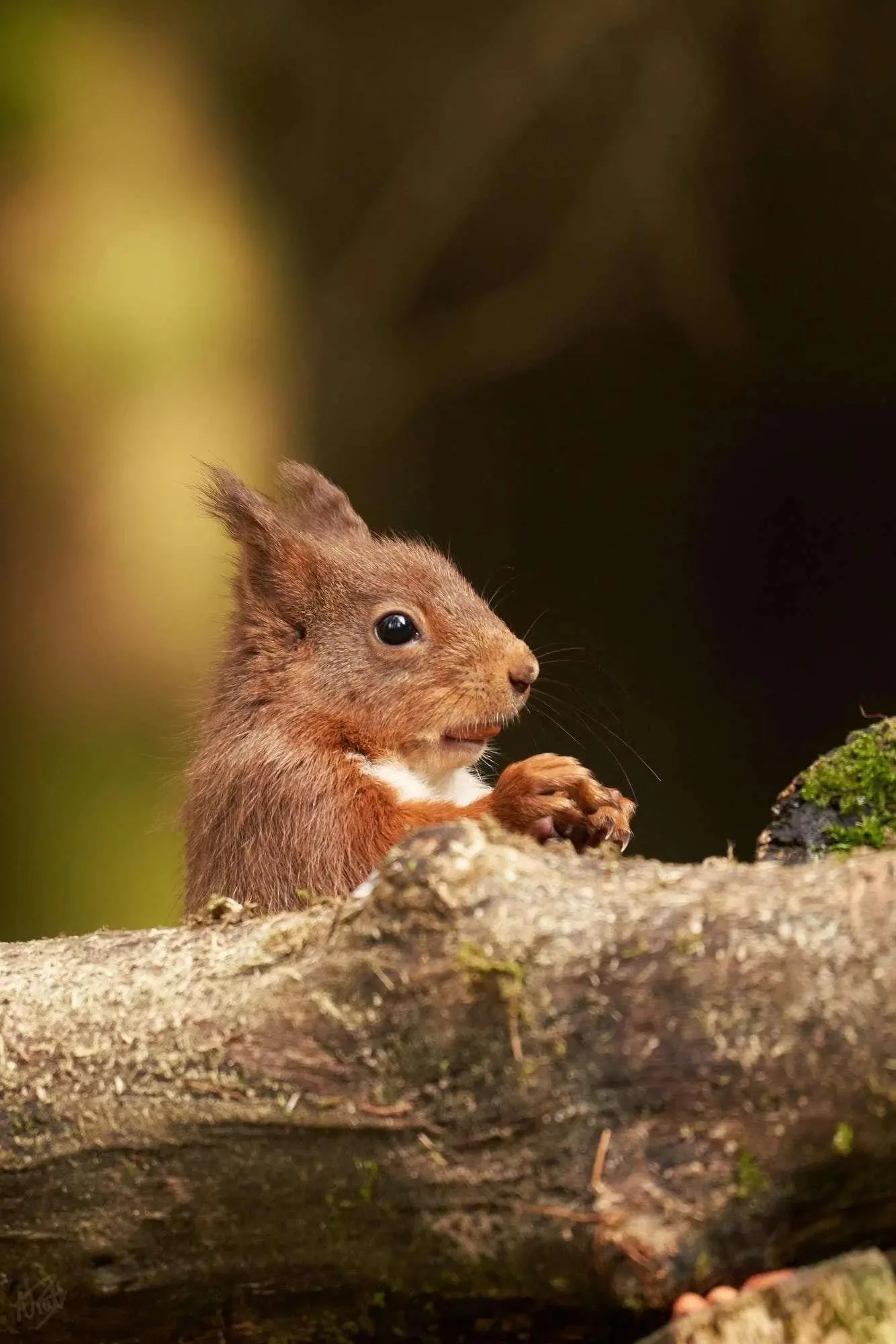
Peering Over the Branch
A red squirrel peeks over a branch, holding food in its forepaws. Red squirrels are highly vigilant and pause regularly to scan for predators. Pine martens, goshawks, and stoats are their main natural enemies in Britain, keeping squirrels alert and quick to take cover at the first sign of danger.